
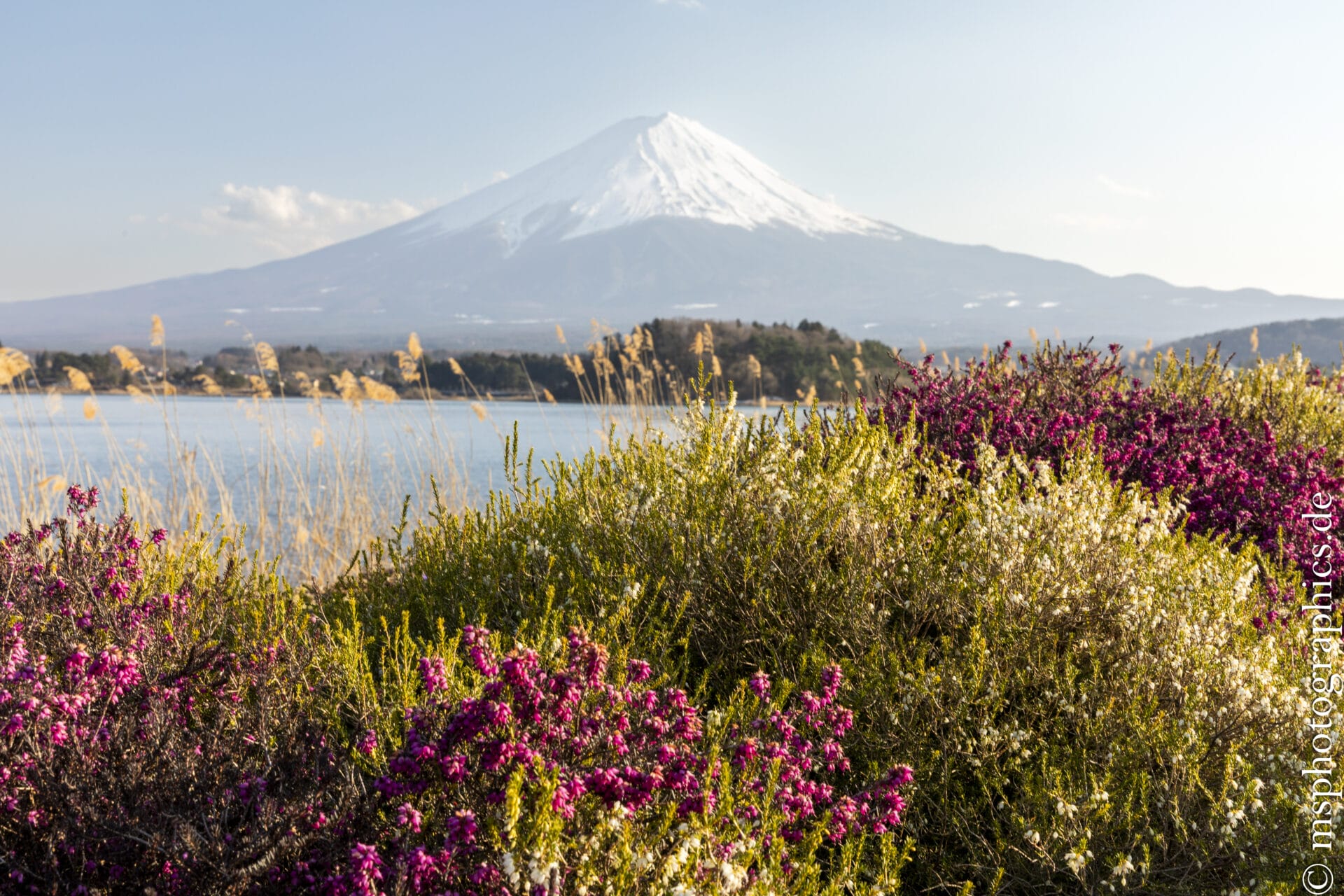

Tokyo, Mount Fuji and Kamakura:
We have planned 4 days to visit Tokyo, including a trip to Mount Fuji and Kamakura, before continuing by train towards Kyoto and Osaka.
The easiest way to reach Japan is by plane. Tokyo itself has two airports with international connections: Tokyo Haneda Airport, which is located relatively close to the city center, and Narita Airport, located about 60 kilometers east of Tokyo.
From Narita Airport, you can reach Tokyo city center in about an hour by regional train.
In terms of price, Narita Airport usually offers the more attractive deals, so it is definitely worth comparing.
Entering Japan is easy. A German passport is sufficient to visit Japan for 90 days without a visa. Advance registration is no longer required.
Arrival in Tokyo:
Tokyo, the vibrant capital of Japan, is not only a political and economic center, but also a cultural melting pot that combines tradition and modernity.
With over 13 million inhabitants, Tokyo is one of the largest metropolitan areas in the world. Its unique districts, diverse culinary delights, and countless opportunities for exploration make Tokyo a perfect destination for travelers and culture vultures.
On the road in Tokyo:
If you plan to explore Japan extensively using public transportation and regional trains, you should get a Suica or Pasmo travel pass in advance. You can purchase one either with your smartphone's wallet or locally in credit card format.
We chose the Akihabara district as the starting point for our tour . It's also known as a mecca for tech and anime lovers. The shops offer everything from the latest gadgets to manga, gaming, and merchandise.
There are numerous hotels here, some of them at reasonable prices. Whether you book with or without breakfast depends on your personal travel plans. Getting up early is usually advisable, as the sights are much less crowded in the morning.
The hot spring (Onsen):
Onsen are traditional Japanese hot springs or a thermal bath, usually filled with hot mineral water that comes from the earth.
These bathing sites are known for their relaxing and healing properties and are very popular in Japan. Onsen can be found both in natural settings, often in picturesque settings, and in modern facilities or hotels.
Onsen often have different baths with varying temperatures and minerals, and they are usually used with special etiquette, including thorough body cleansing before entering the pools. There are often both indoor and outdoor pools. They are not only places for relaxation, but also for social interaction and cultural experiences.
Some accommodations also offer private onsen for free use.
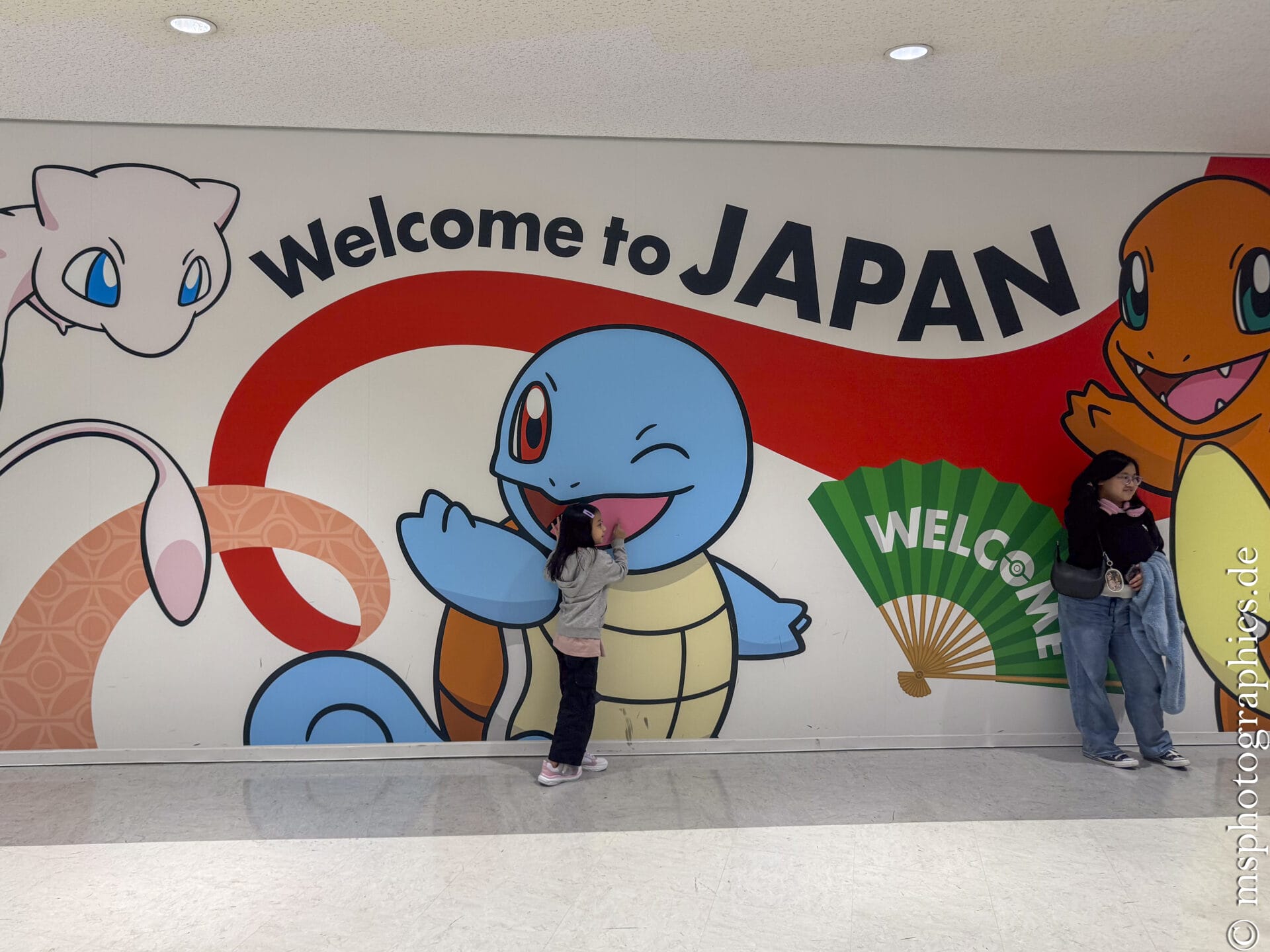
The Senso- ji, Tokyo's oldest temple:
Senso- ji is the oldest and most famous Buddhist temple in Tokyo. Located in the Asakusa district, it was founded in 628 AD. The temple is dedicated to Bodhisattva Kannon, who represents compassion and mercy.
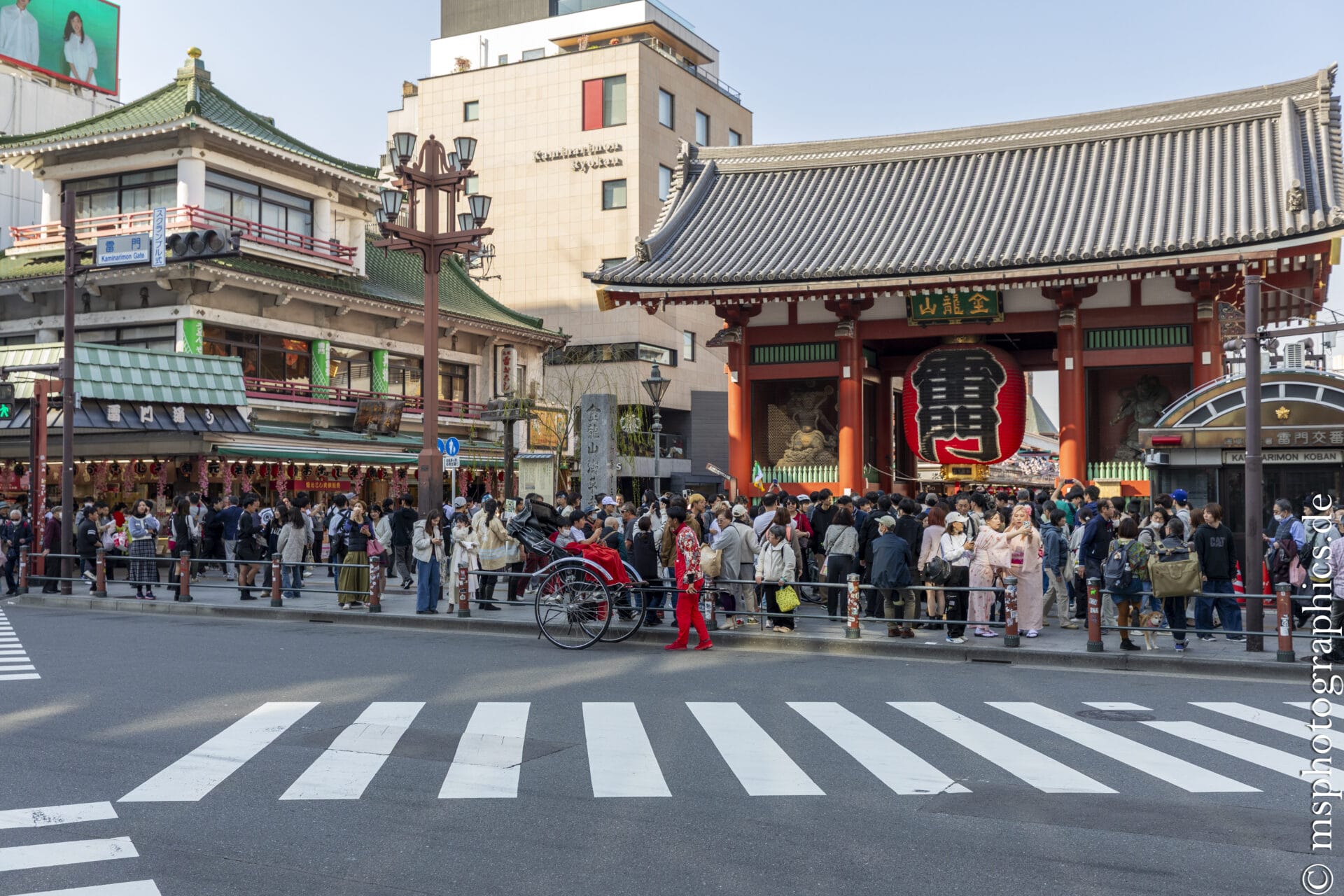
The main attraction is the large red gate, the Kaminarimon, which marks the entrance to the temple complex. A path leads past numerous souvenir shops and traditional food stalls before reaching the temple. The temple's architecture is impressive and showcases typical Japanese design.
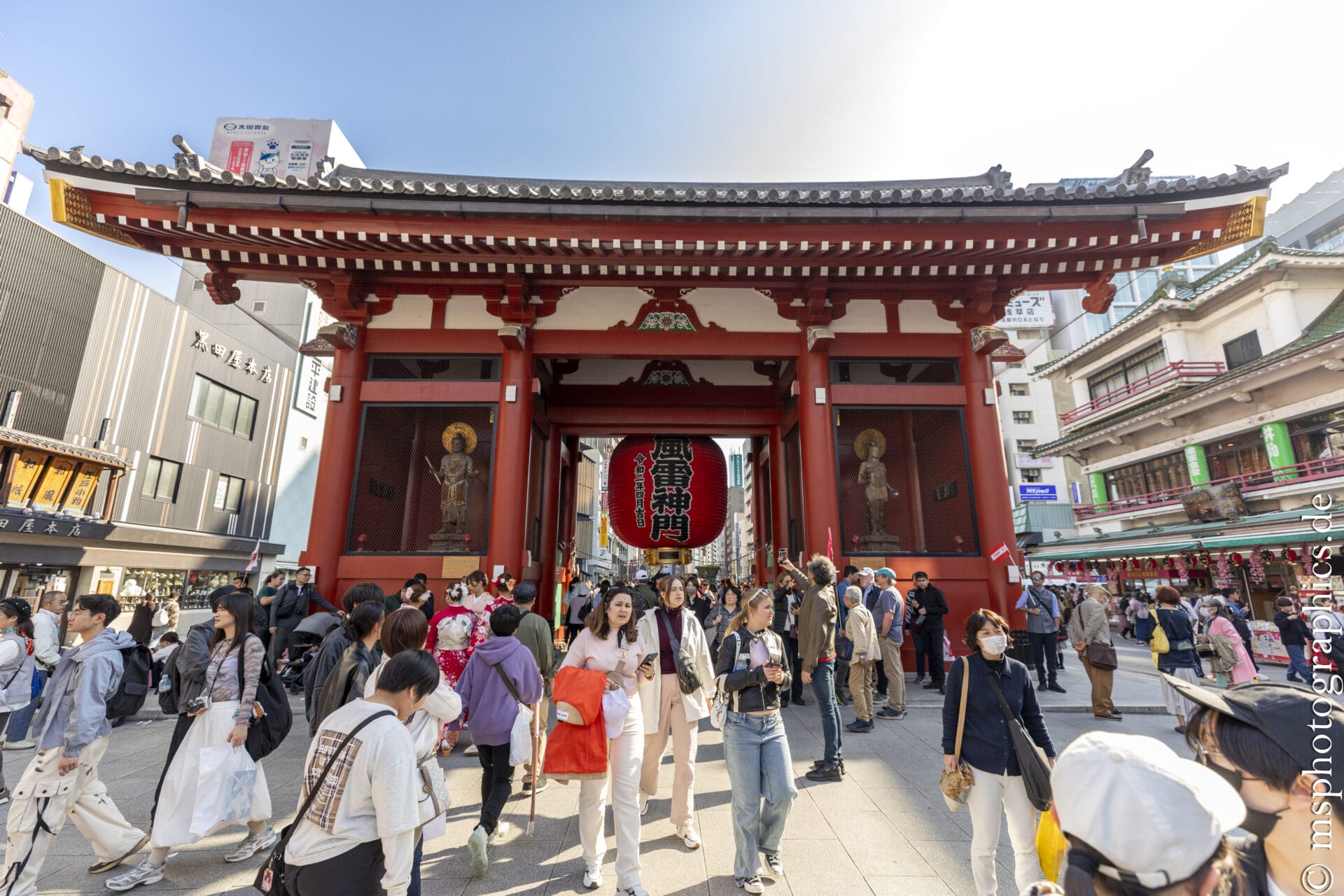
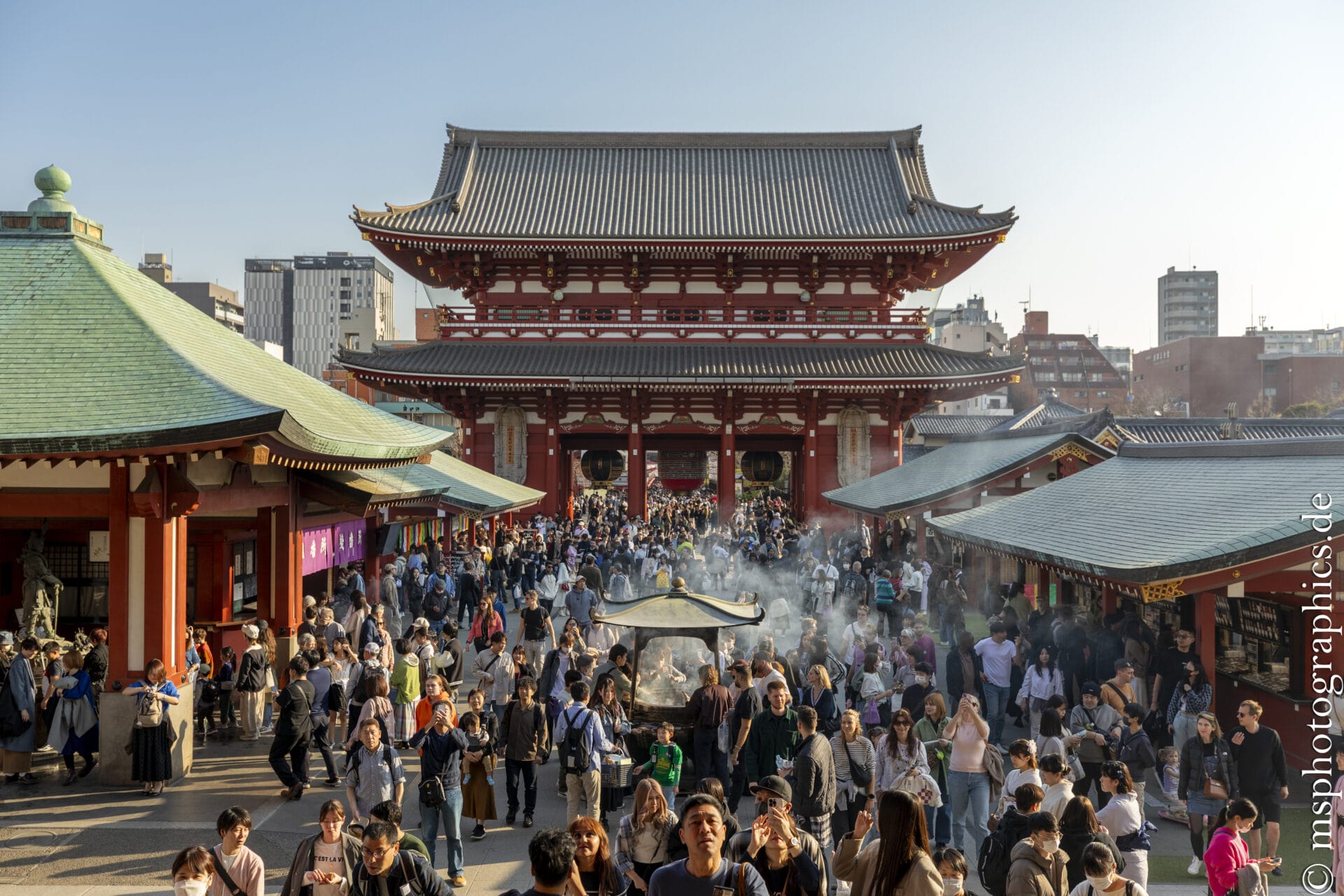
Senso-ji Temple attracts millions of visitors each year, both locals and tourists. The complex is especially busy during the New Year celebrations and the Hanami (cherry blossom festival).
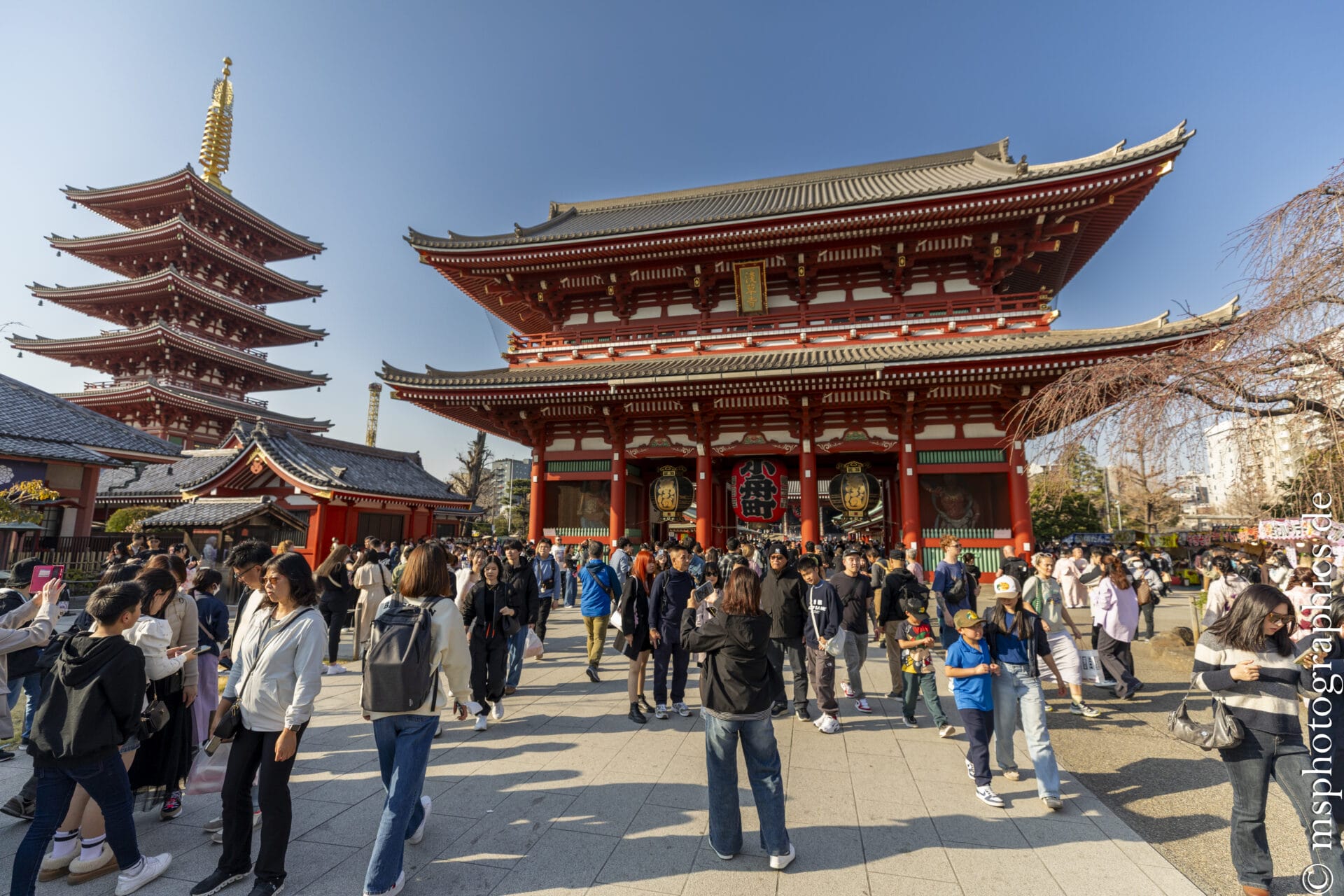
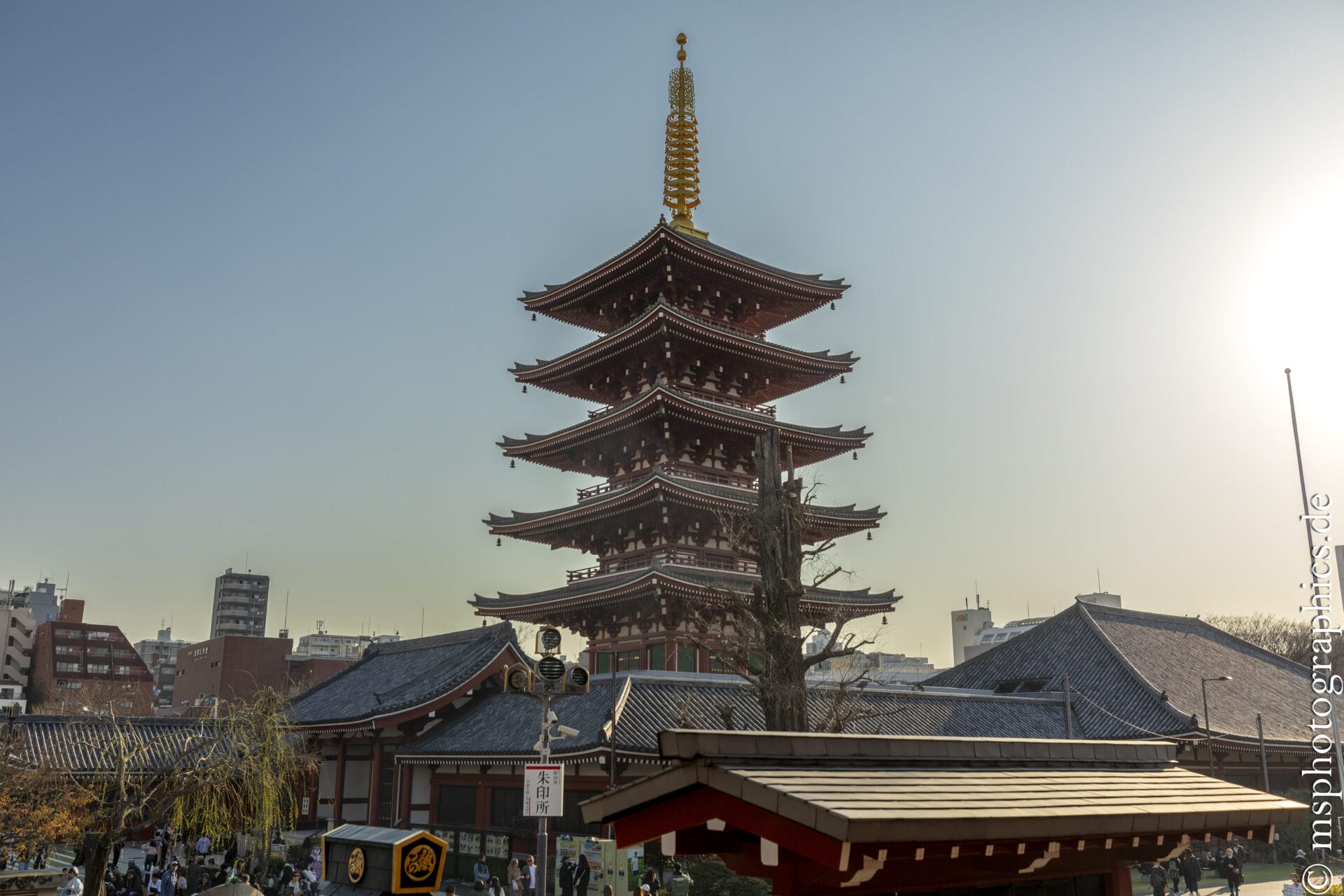
The temple is an important part of Tokyo's cultural heritage and a popular place for pilgrims and travelers.
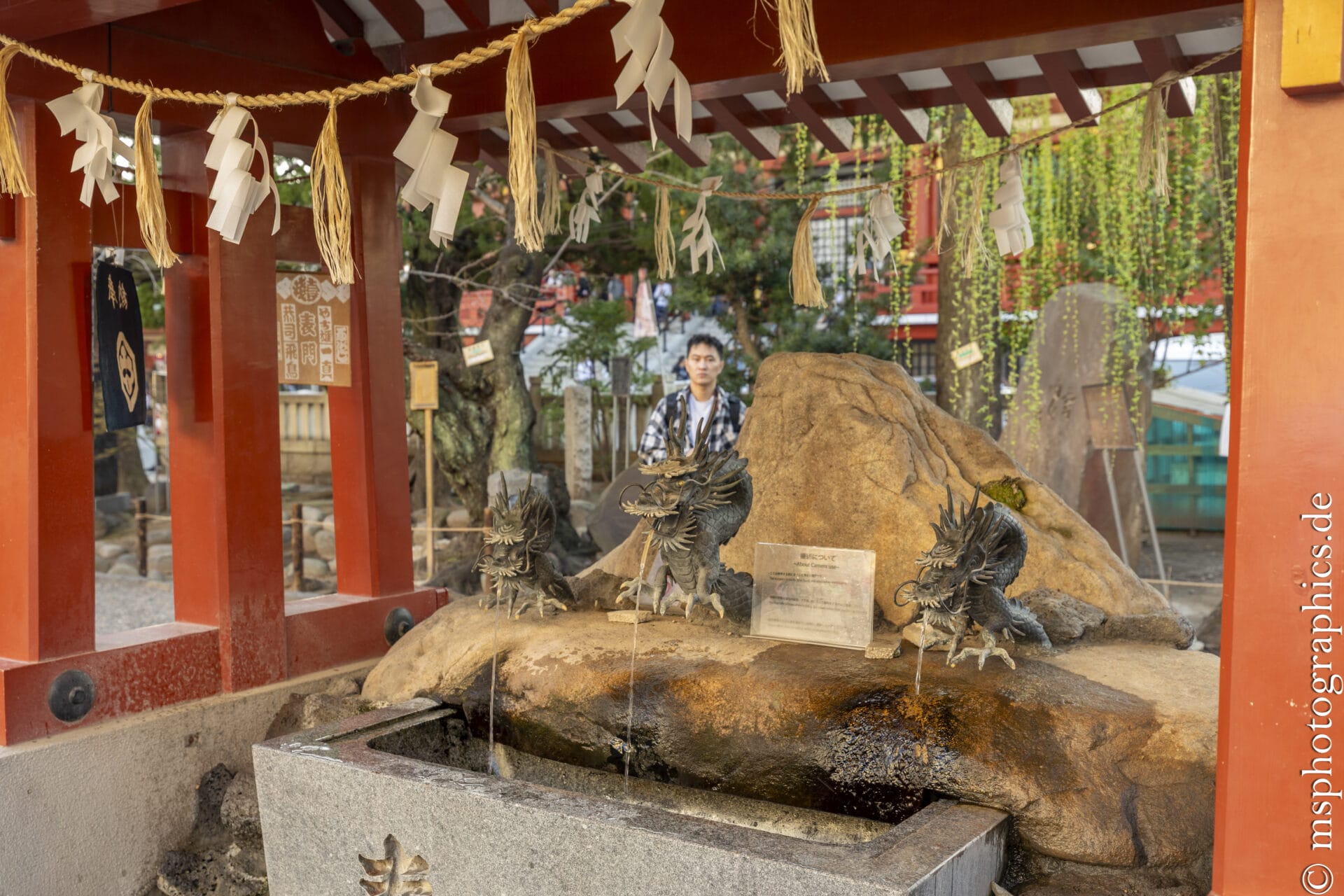
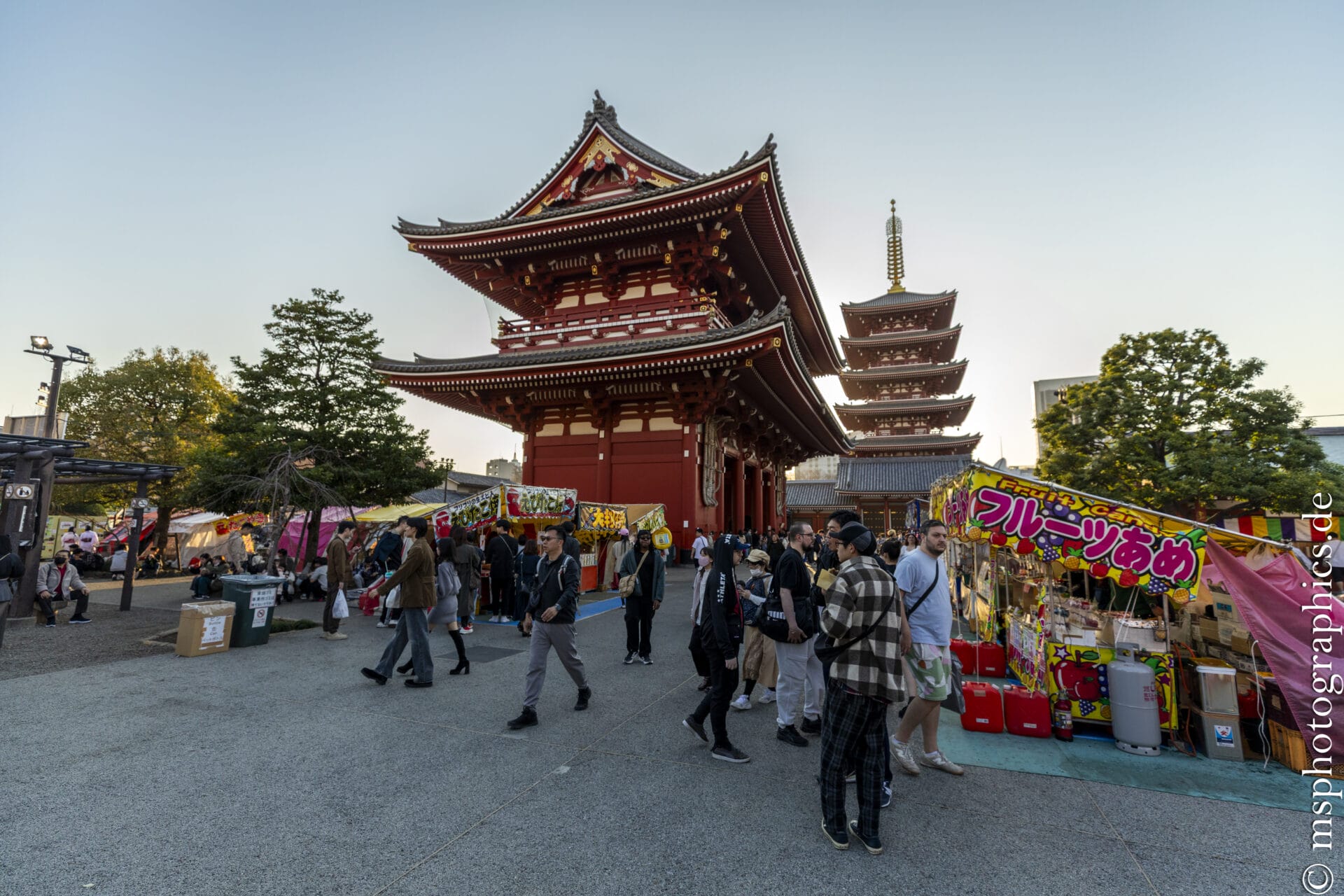
An important part of the culture is to wash your hands at the well and rinse your mouth before praying.
Ueno Park:
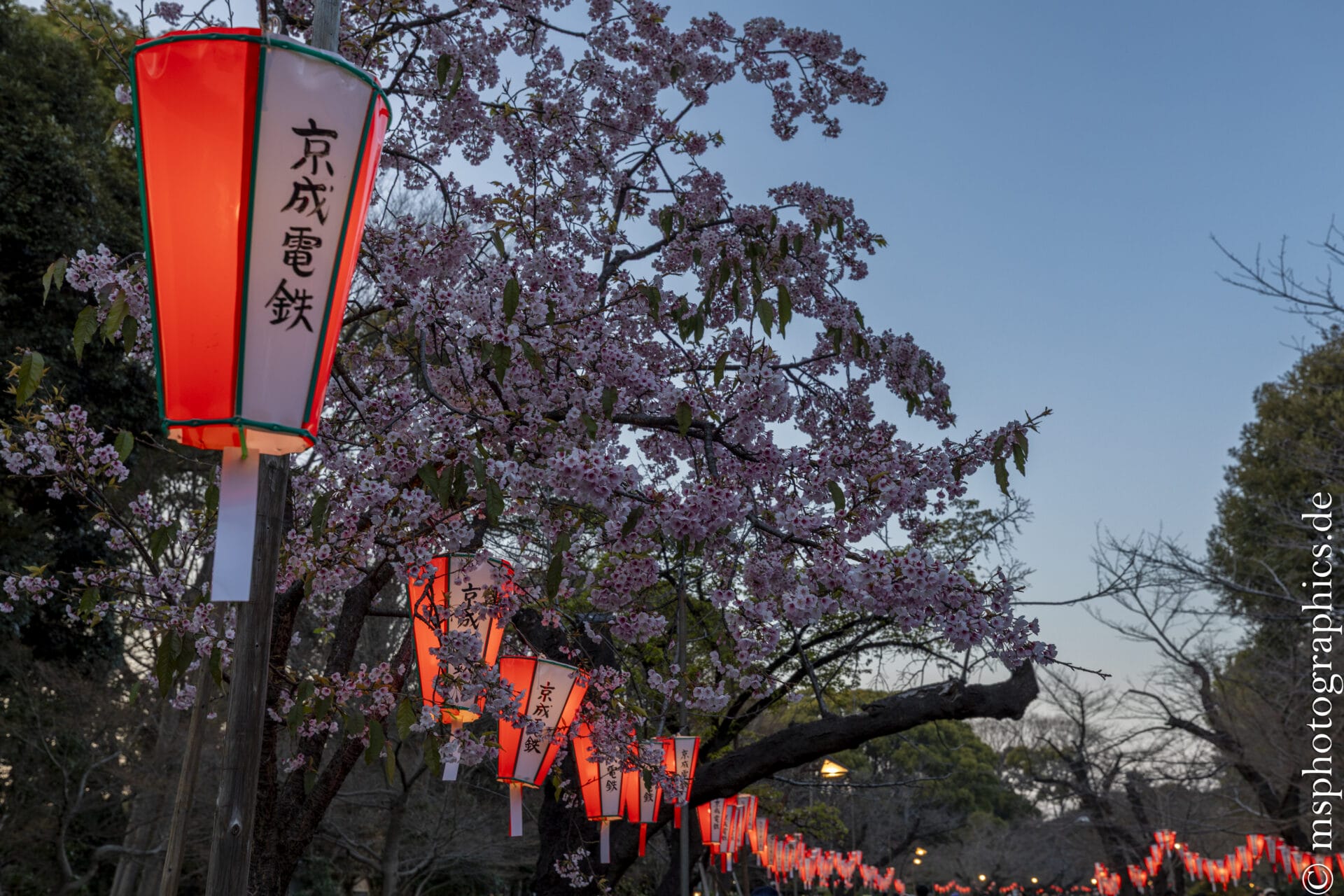
Founded in 1873, Ueno Park is one of the city's most popular parks and is known for its beautiful cherry blossoms in spring, its various museums and cultural sites.
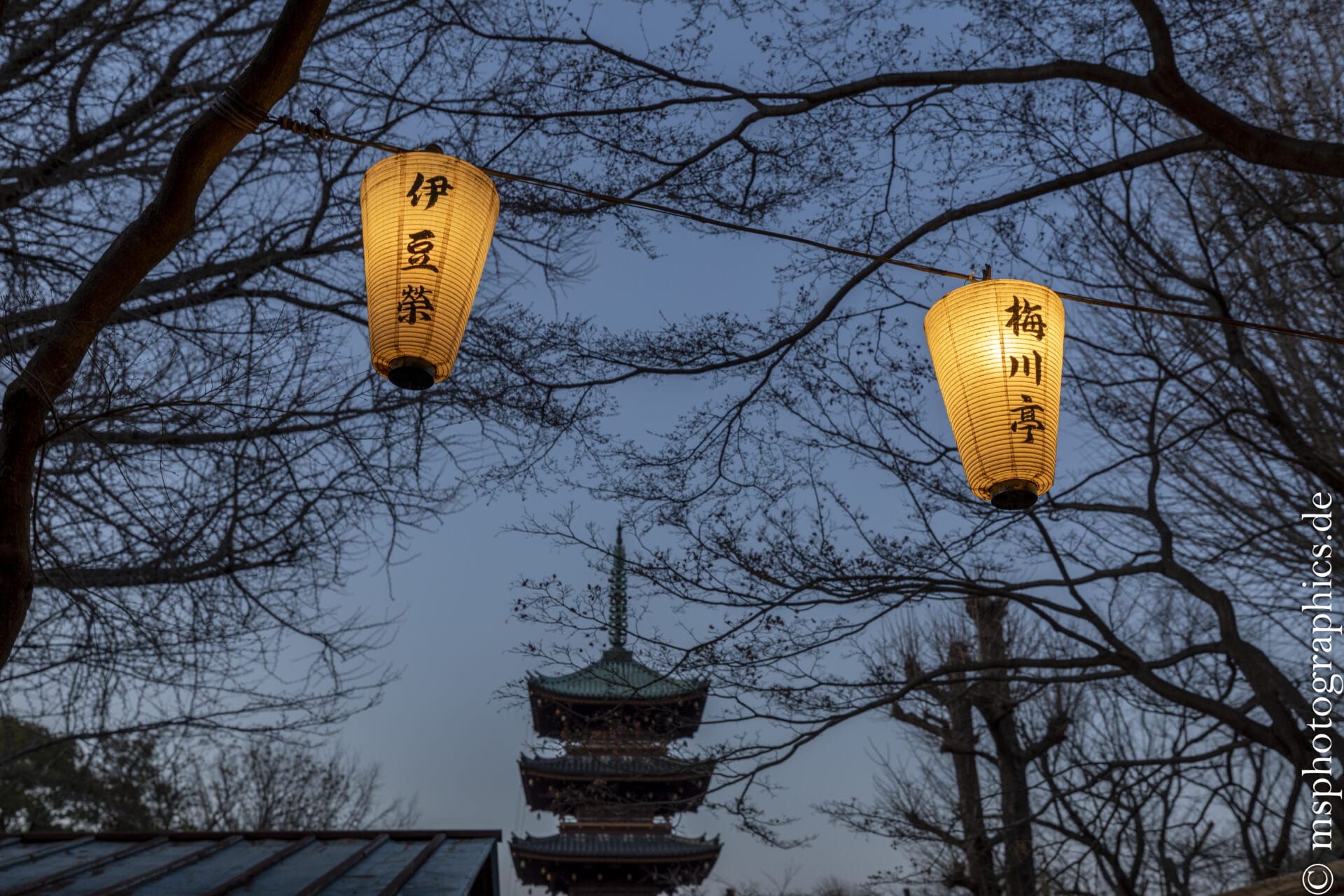
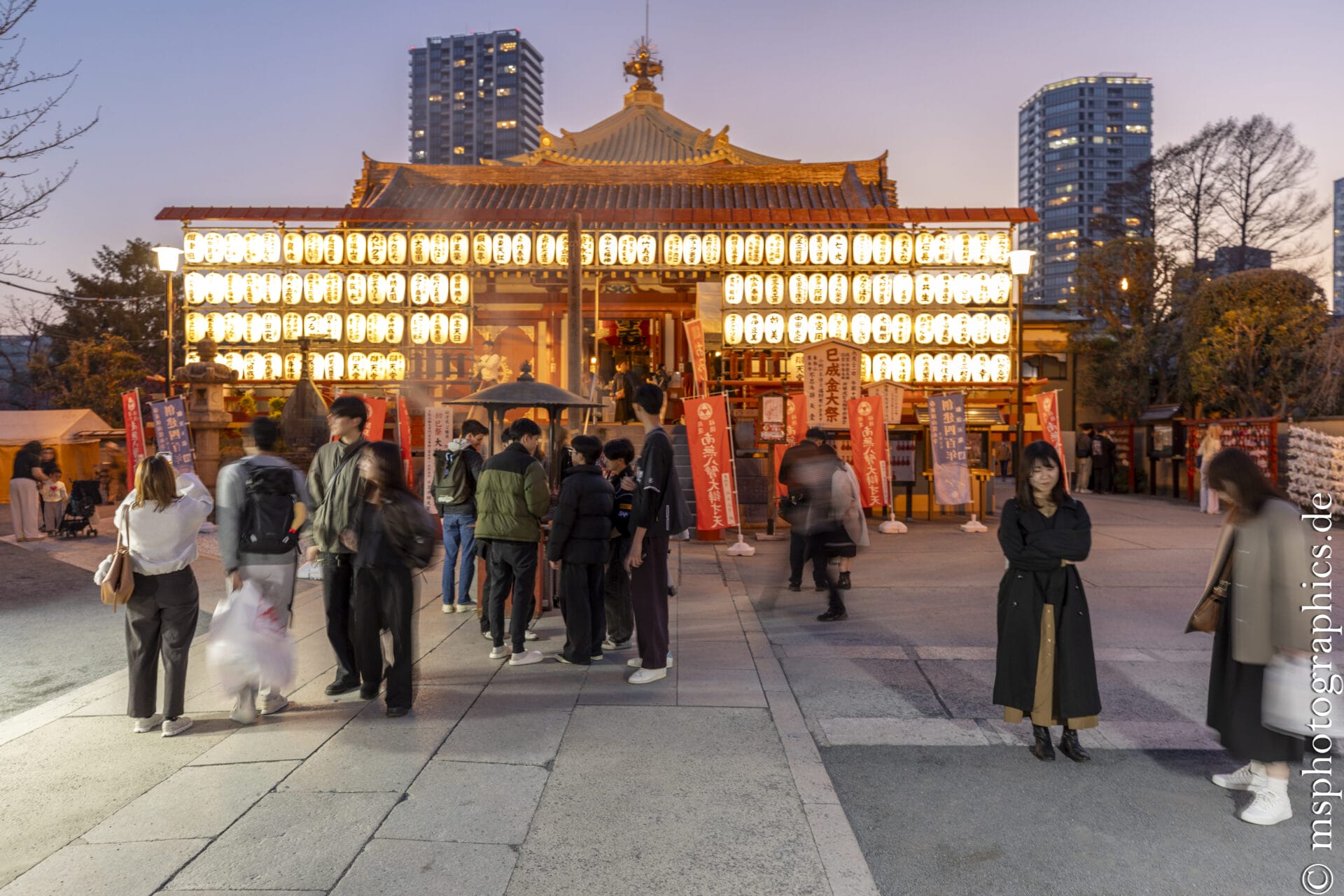
The main highlights of Ueno Park include:
Ueno Zoo: Japan's oldest zoo, home to a variety of animals, including giant pandas.
Museums: The park is home to several renowned museums such as the Tokyo National Museum, the National Museum of Western Art and the Tokyo Metropolitan Art Museum.
Cherry blossoms: The park is famous for its cherry blossom trees, which attract many visitors during the hanami (flower viewing) season from late March to early April.
Shinto shrines: Ueno Park is home to historical sites such as the Toshogu Shrine, dedicated to Tokugawa Ieyasu.
The park offers a tranquil escape from the hustle and bustle of city life, making it a popular spot for locals and tourists alike. Whether you're interested in nature, culture, or history, Ueno Park offers a variety of experiences.
Trip to Mount Fuji:
From Tokyo, Mount Fuji can be reached by train or bus in about two and a half hours.
If you want to travel by bus, you should book bus tickets about a week before your planned trip, otherwise the trips will be fully booked at the most popular times.
It's important to check the weather forecast before booking and monitor for possible changes. Even a perfect forecast is no guarantee that Mount Fuji will actually be visible. High humidity or light haze can obscure the mountain or make it completely invisible.
It is recommended to take the bus at least in the morning and get off at Shimiyoshida. Most tourists go directly to Lake Kawaguchi. This way you can avoid the main rush to the Chureito Pagoda, the most famous viewpoint in Japan.
From Shimiyoshida to Chureito Pagoda:
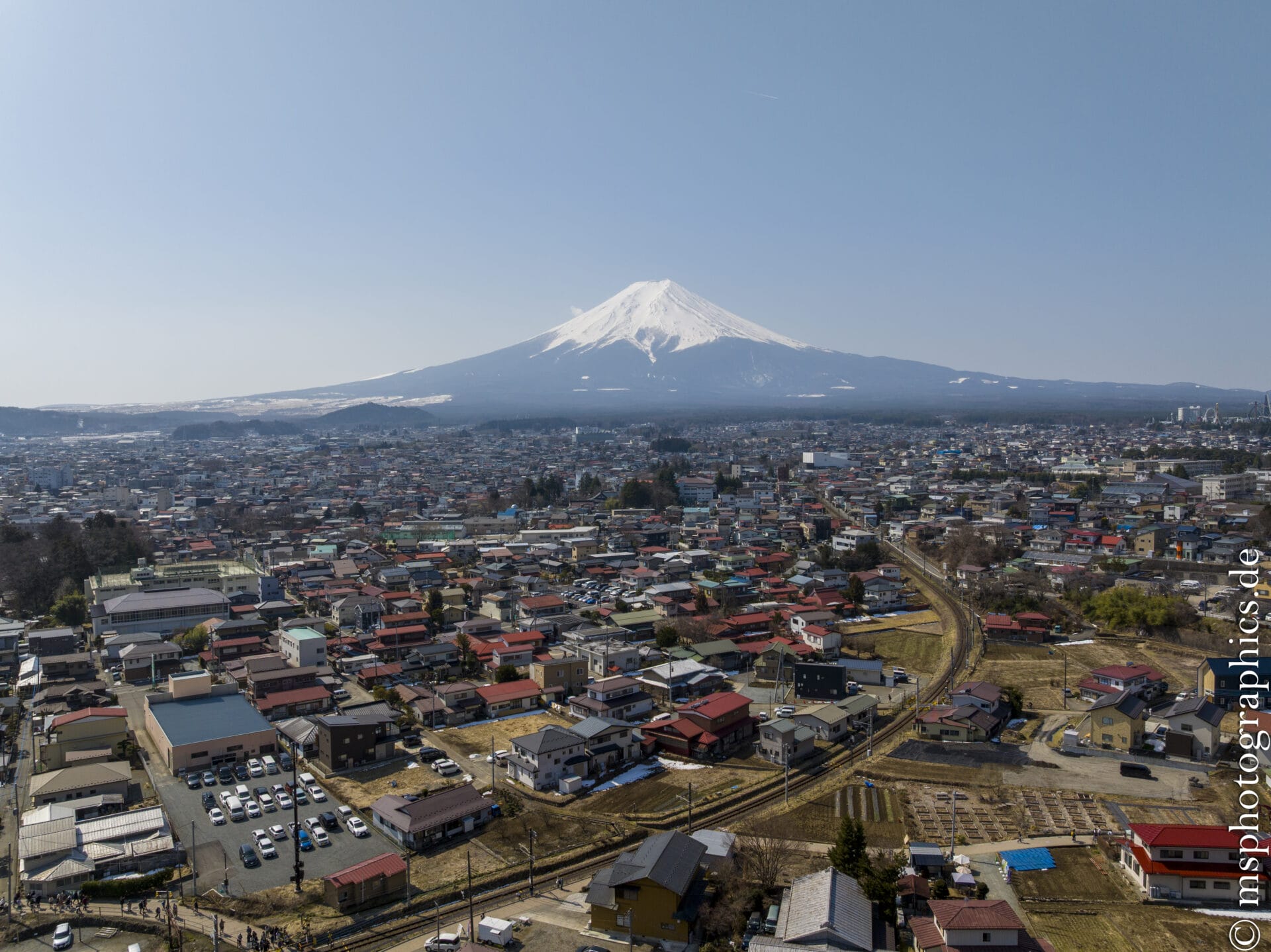
From the bus stop on Shimoyoshida the Expressway provides easy access to both the Chureito Pagoda and several viewpoints in Fujiyoshida City. From the station, you can then easily continue to Lake Kawaguchi.
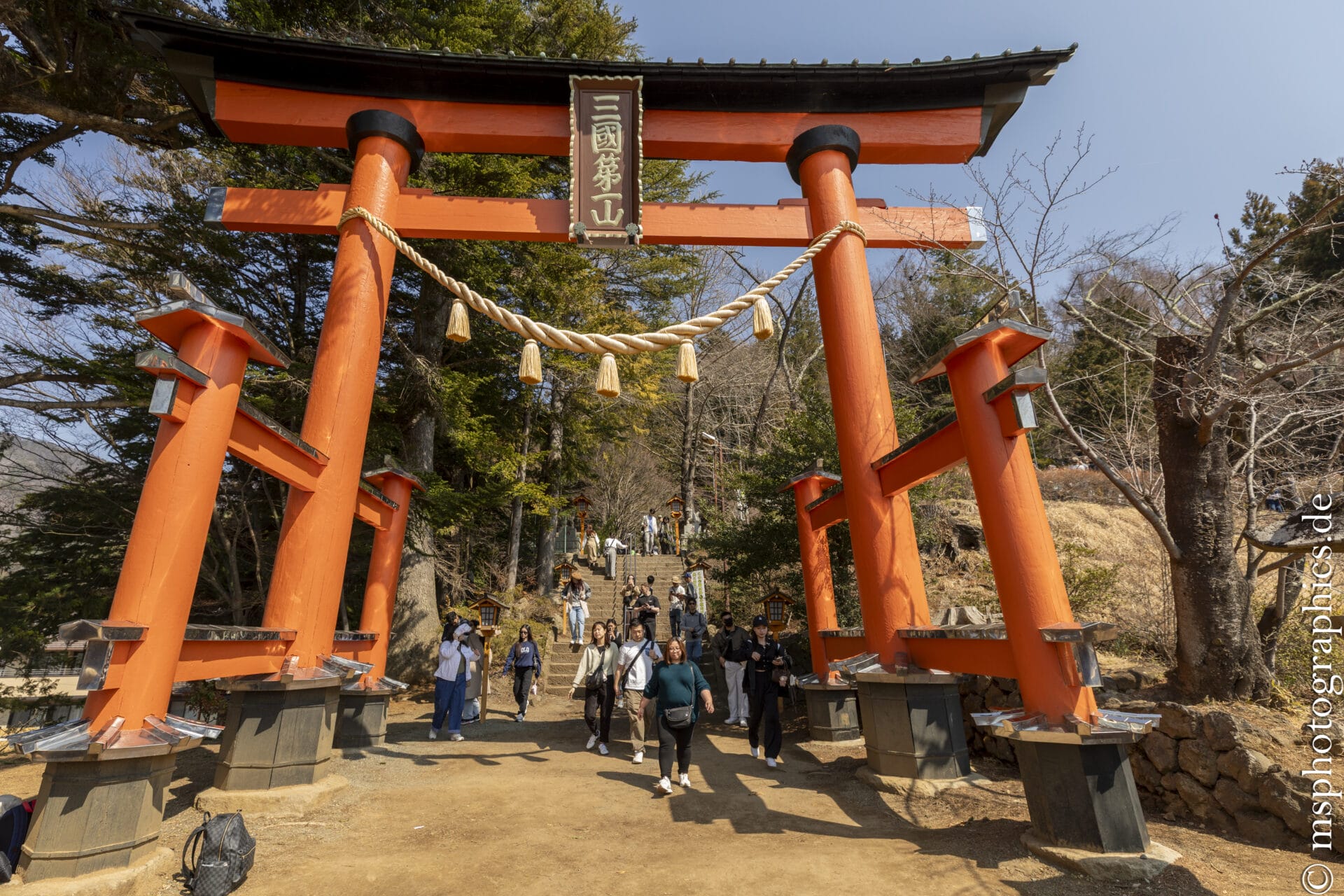
The wooden, red gates are often seen in Japan and usually represent the entrance to one of the numerous shrines and temple complexes.
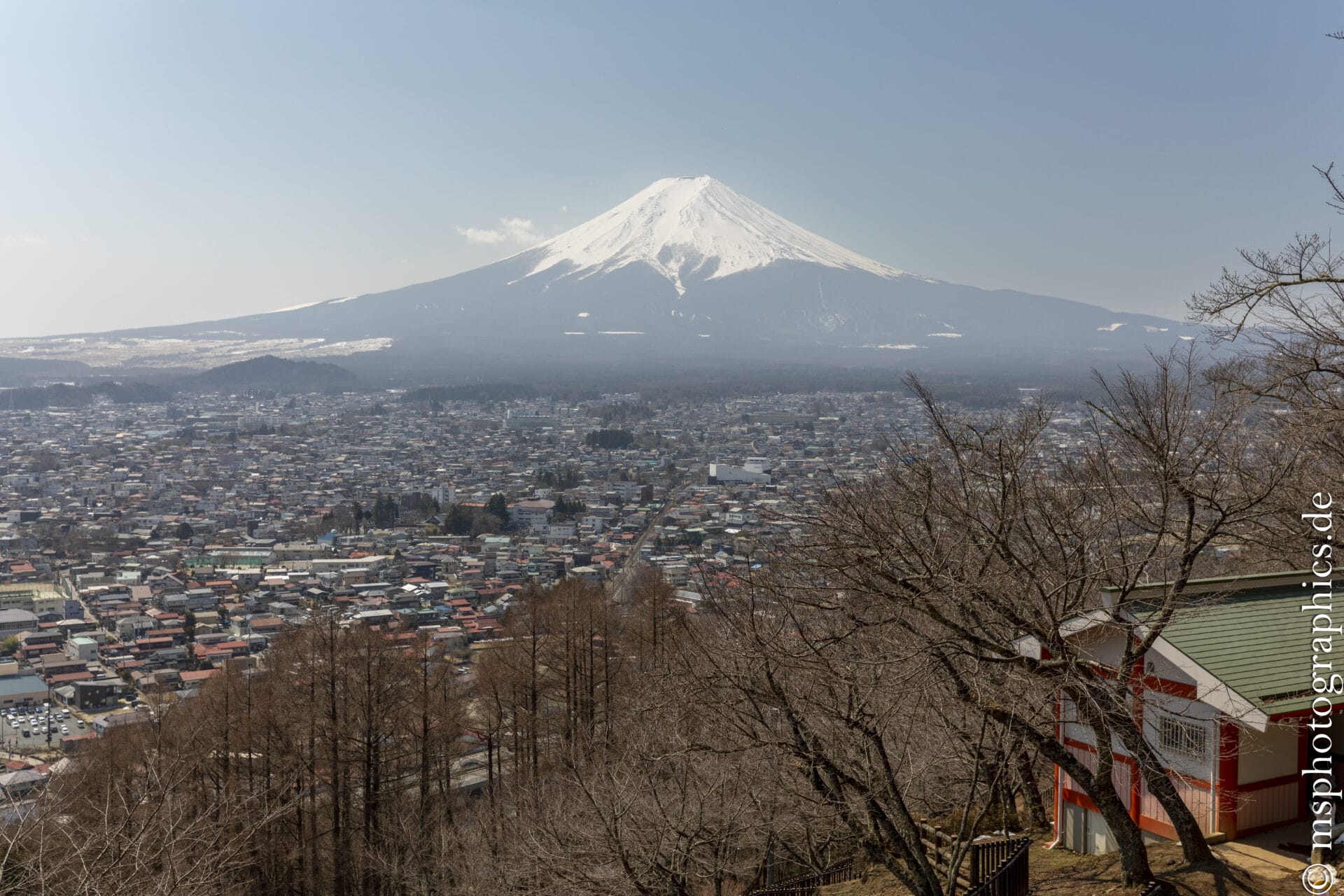
This marks the entrance to the Chureito Pagoda, which can be reached after a stair-filled climb in about a quarter of an hour. From the top, you have a magnificent view of Fujiyoshida and Mount Fuji.
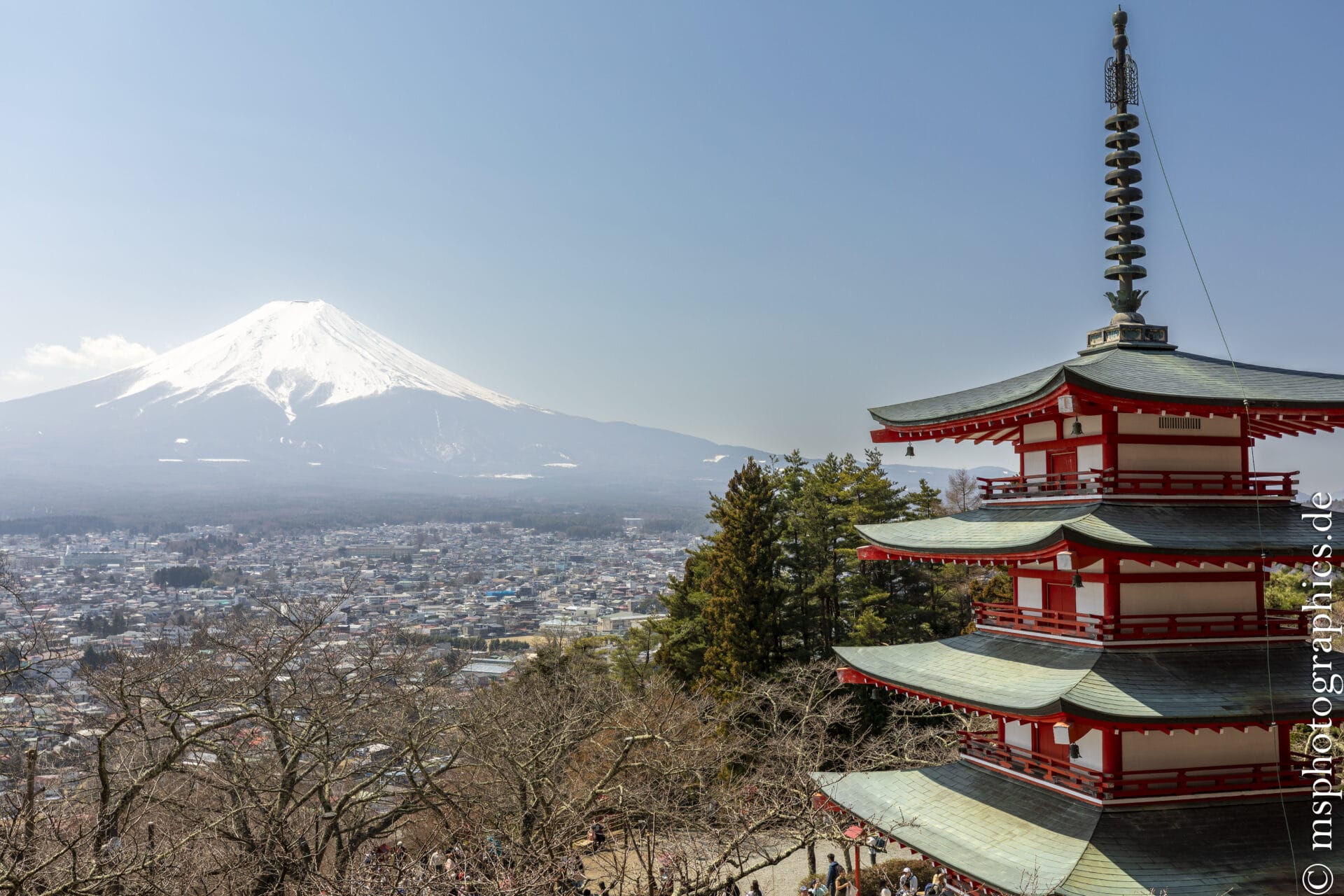
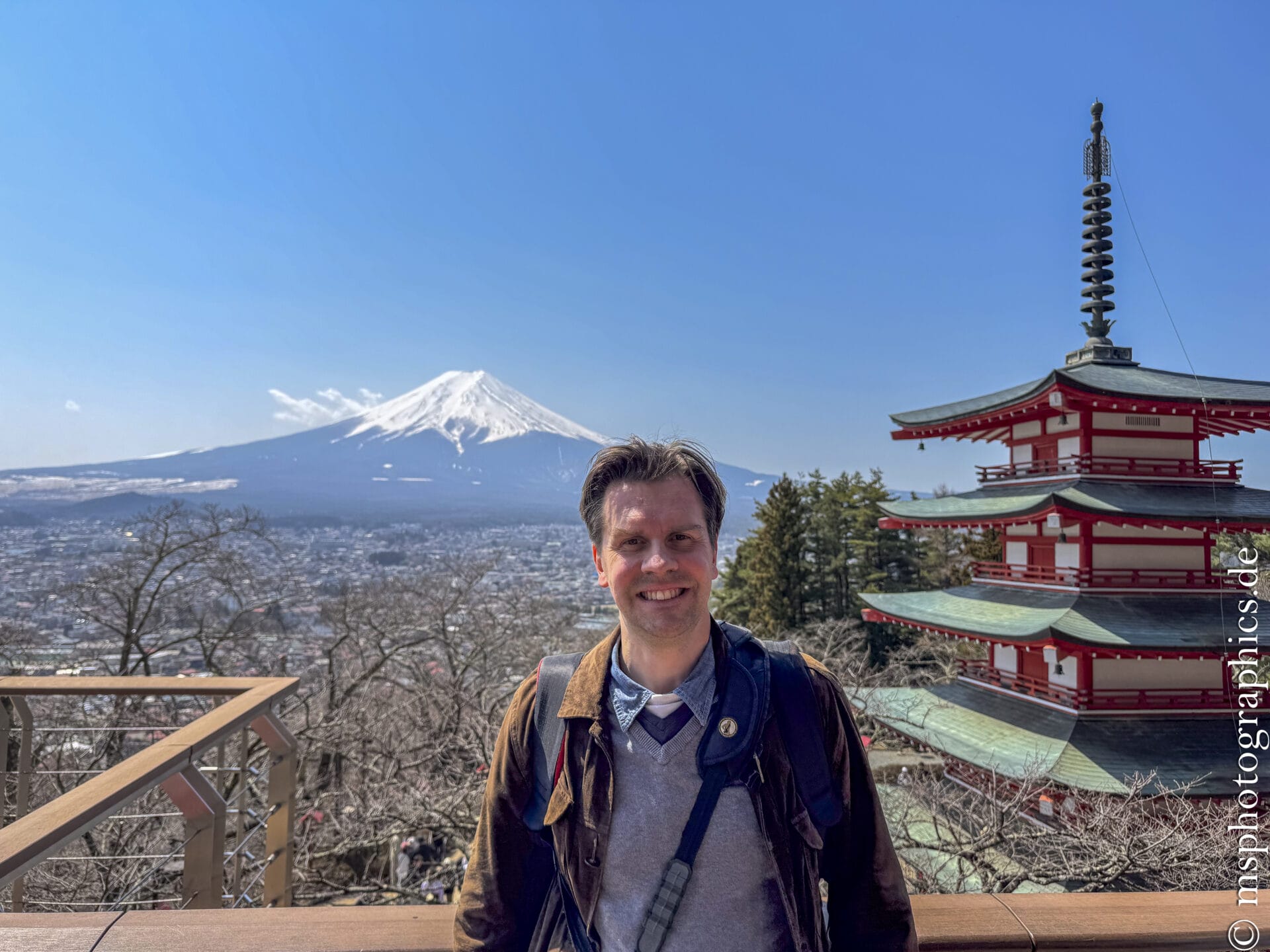
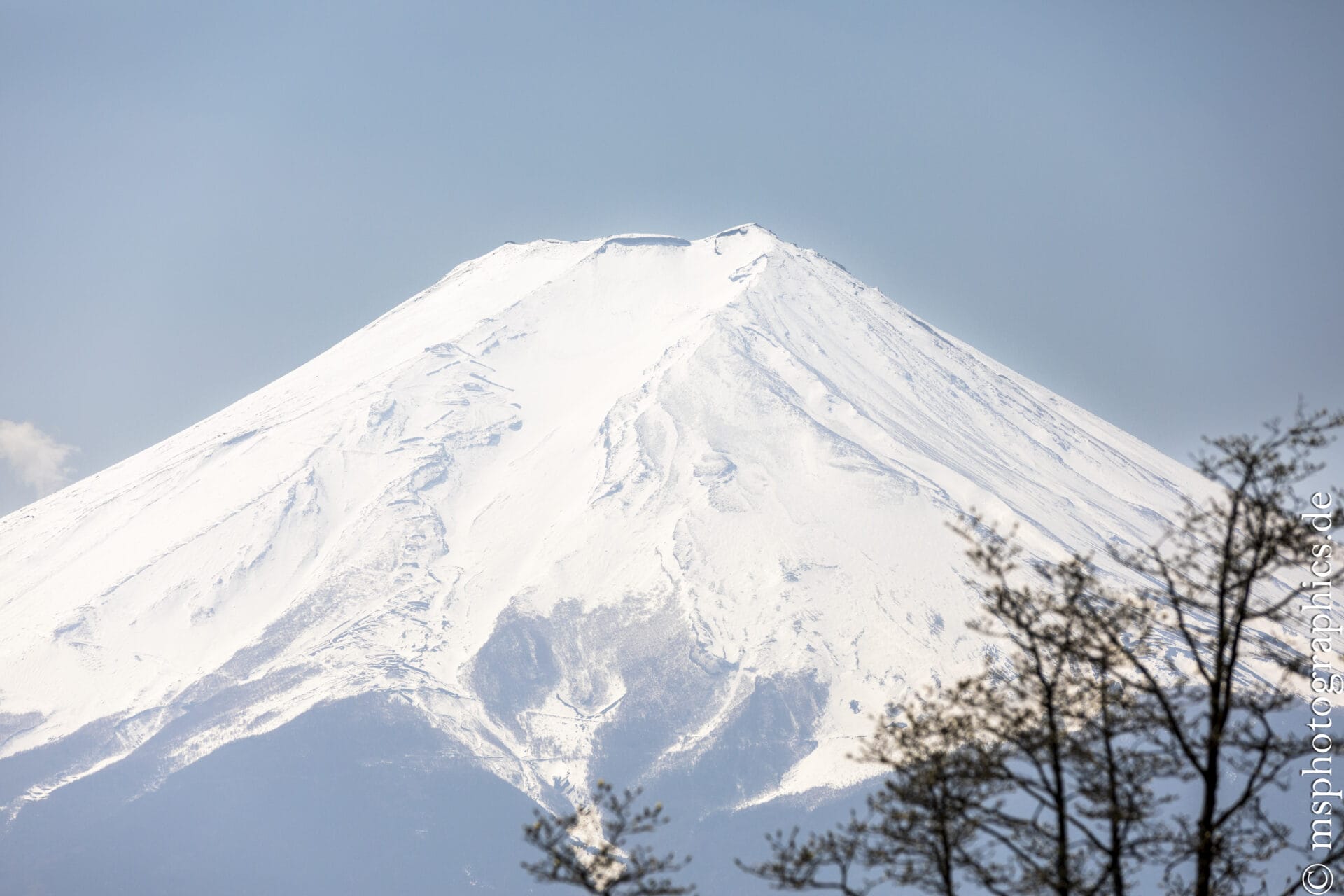
From the observation deck, the view, along with the pagoda, is even more impressive. Mount Fuji is usually still covered in snow and ice until early summer. If you want to climb the summit, you should plan your trip in July or August.
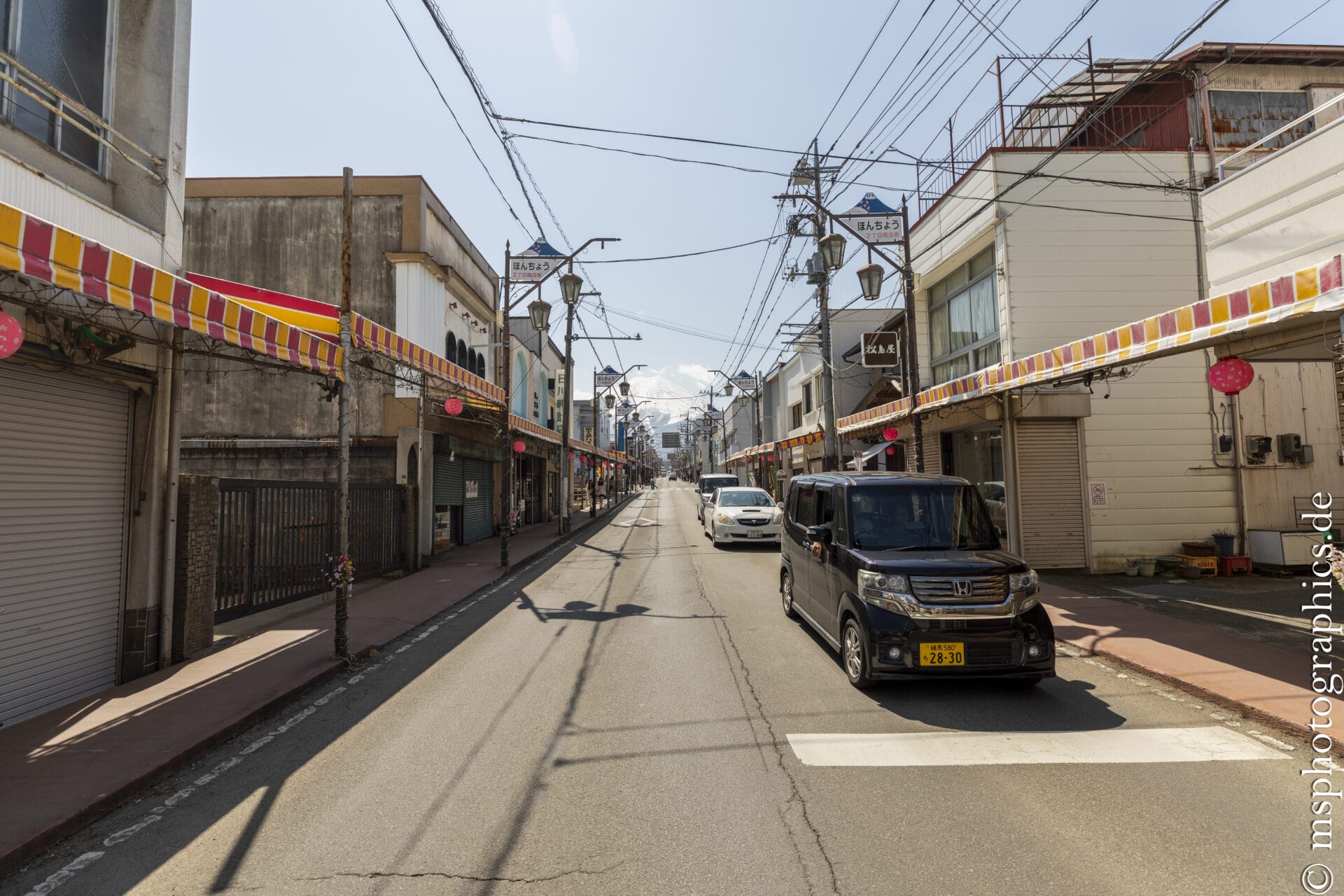
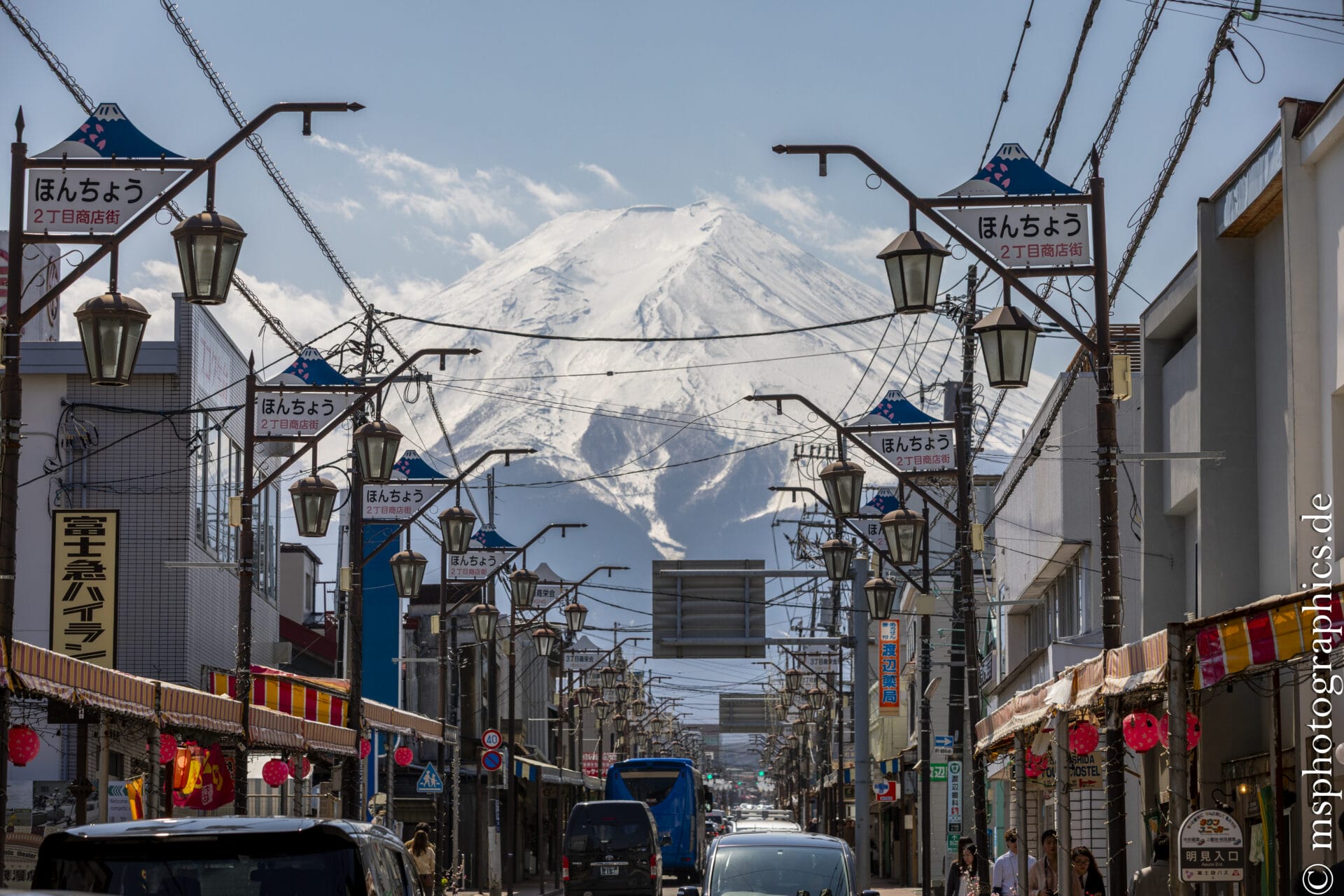
After visiting the Chuerito Pagoda, it's worth taking a stroll through the streets and alleys of Fujiyoshida, enjoying the view of the volcano at every turn. Afterwards, continue by train toward Lake Kawaguchi.
On the way to Lake Kawaguichi:
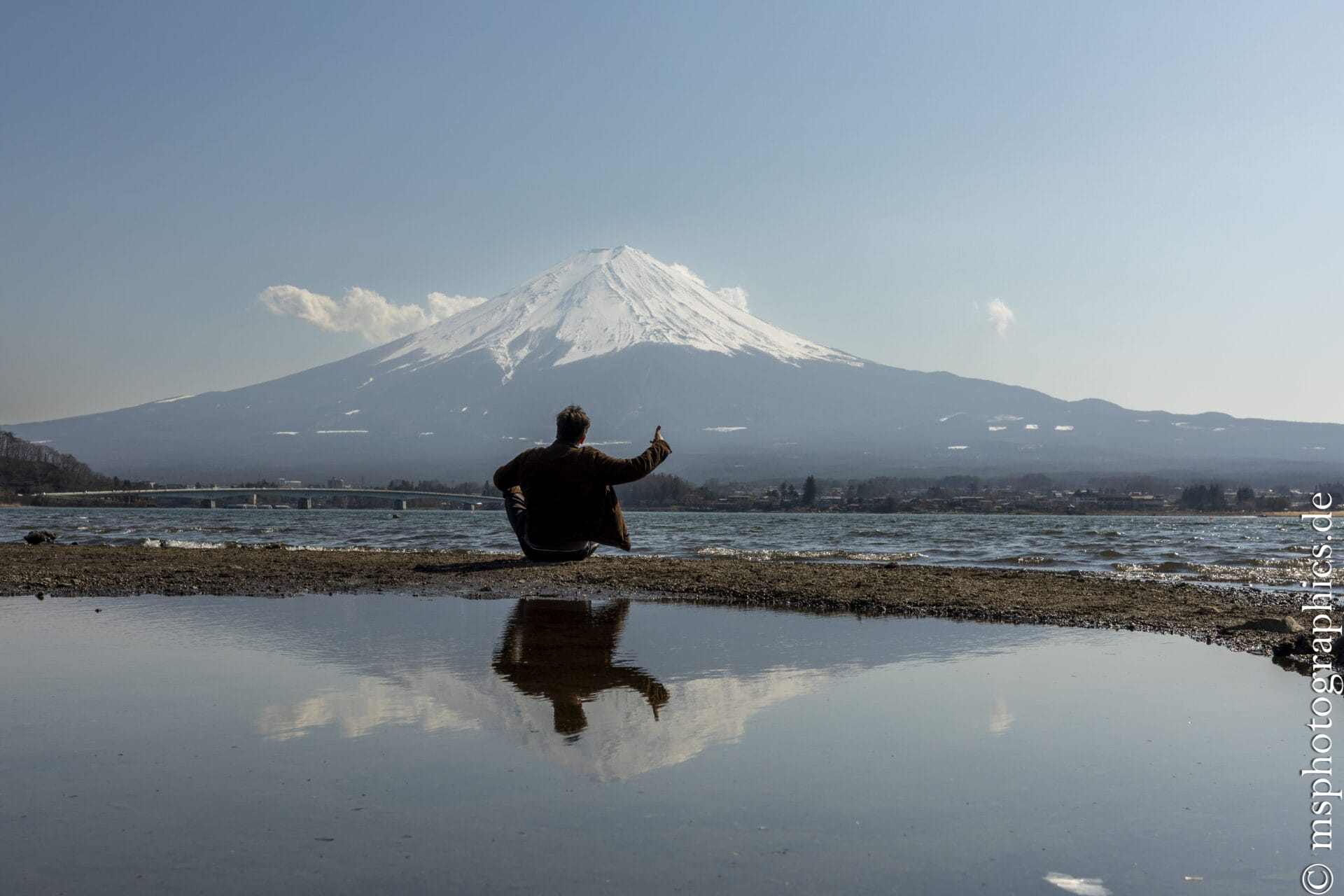
To get to the lake, take a sightseeing bus from Kawaguchiko Station. There are several bus lines to choose from, so you can choose the route that best suits your needs. Along the lake, you can hop on and off at various stops and explore the individual locations at your leisure.
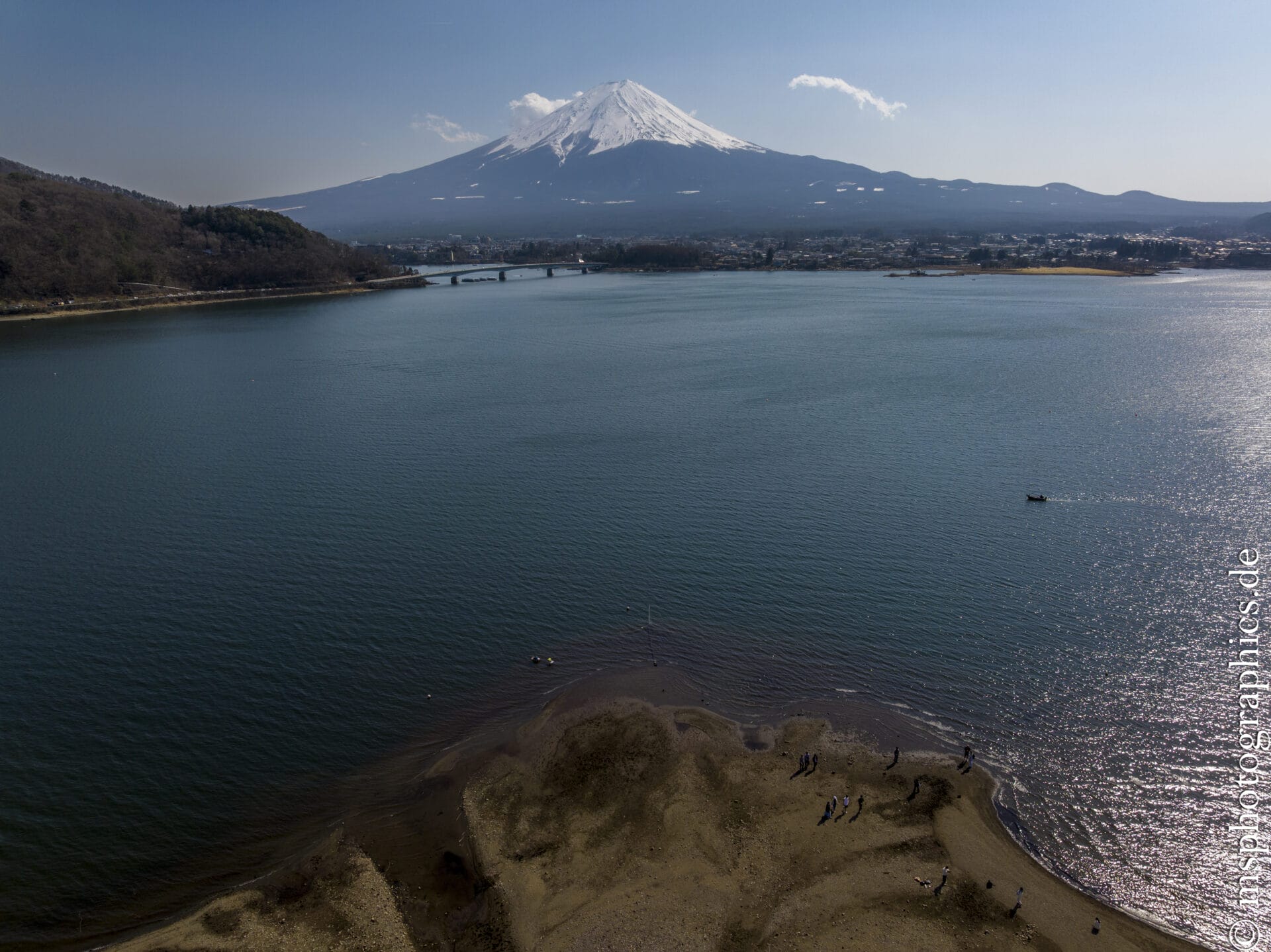
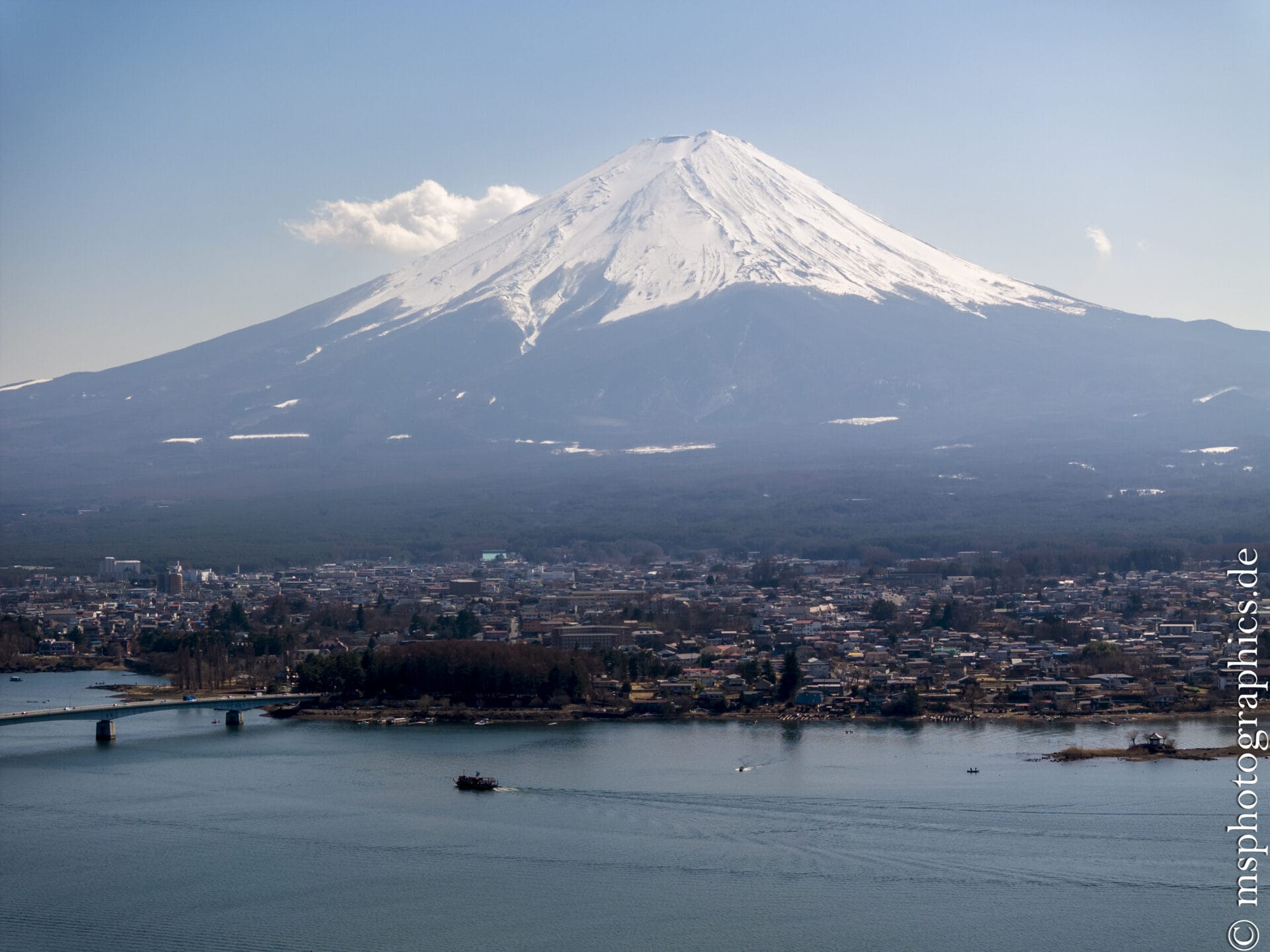
Lake Kawaguchi offers several options for spending an afternoon there. Besides boat rides, you can also rent a bike and explore the landscape on your own.
Several lakeside cafés offer the perfect setting for a relaxing break. Oishi Park offers magnificent views of Mount Fuji and is ideal for photo opportunities, especially during the cherry blossom season and the fall foliage.
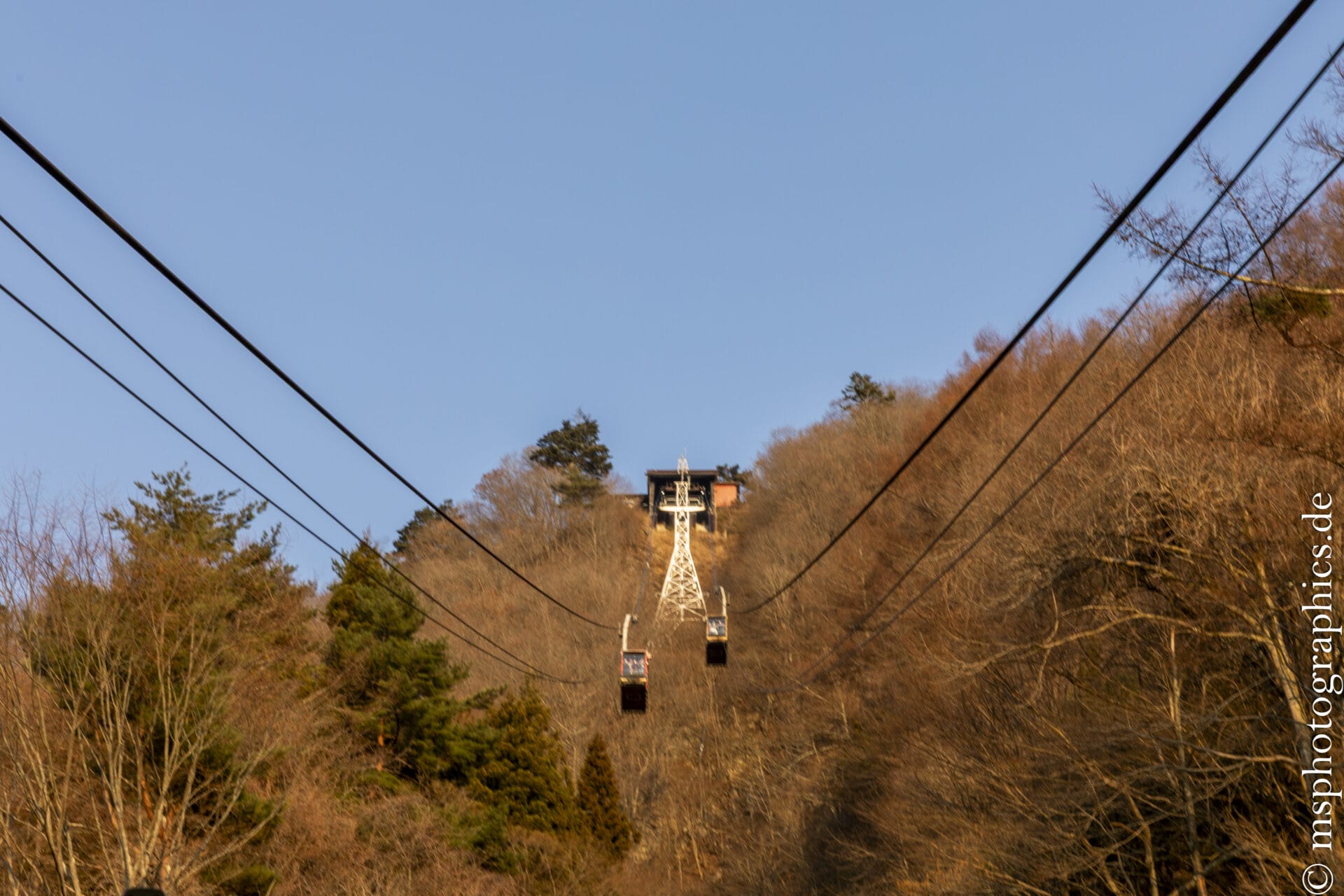
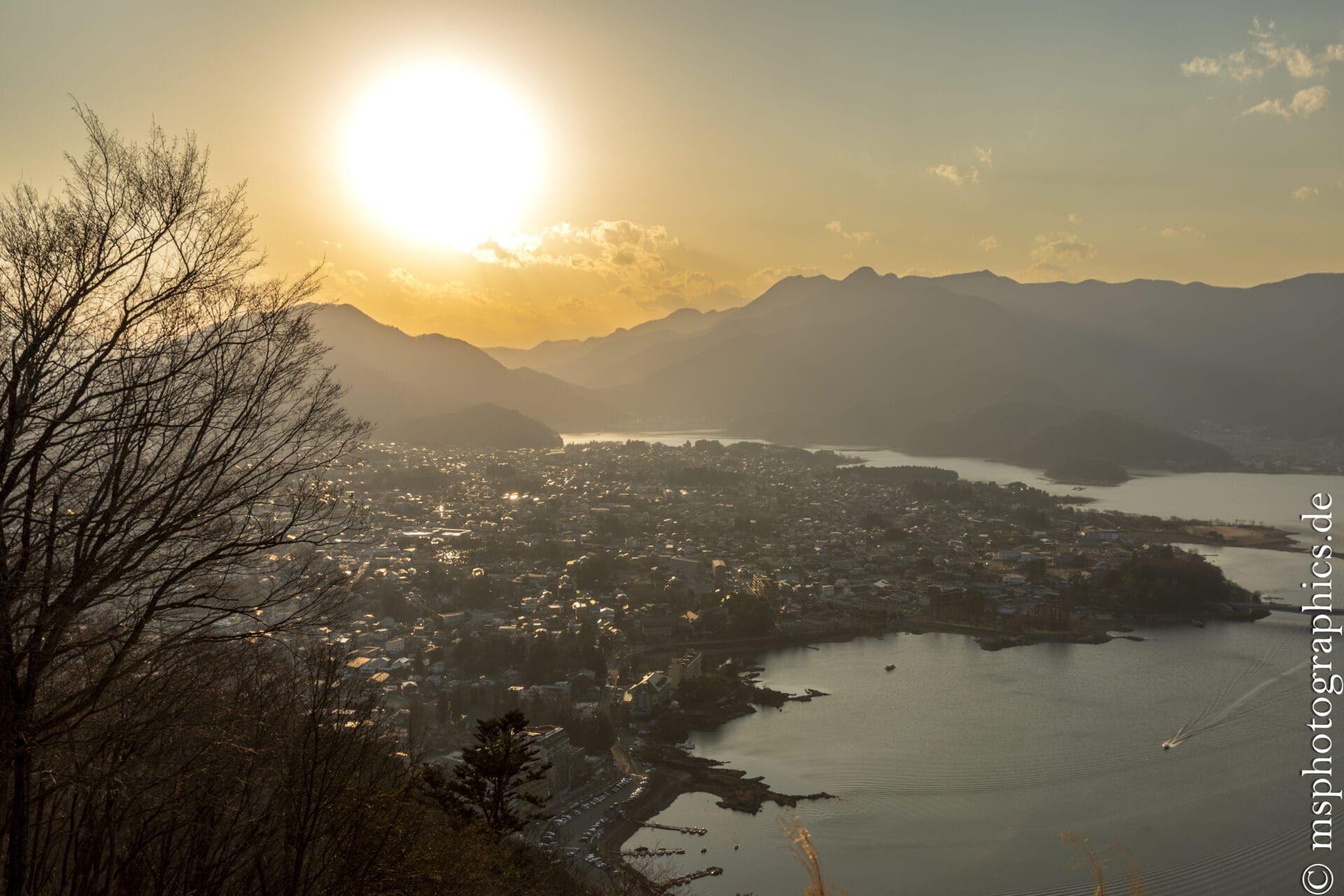
The Mount Fuji Panorama Ropeway is a popular attraction on Lake Kawaguchi, offering breathtaking views of Mount Fuji and the surrounding scenery. It is located about a 15-minute walk from the train station and sightseeing bus terminal.
The mountain station is located at an altitude of 1,075 meters, which offers spectacular views of Mount Fuji and Lake Kawaguchi.
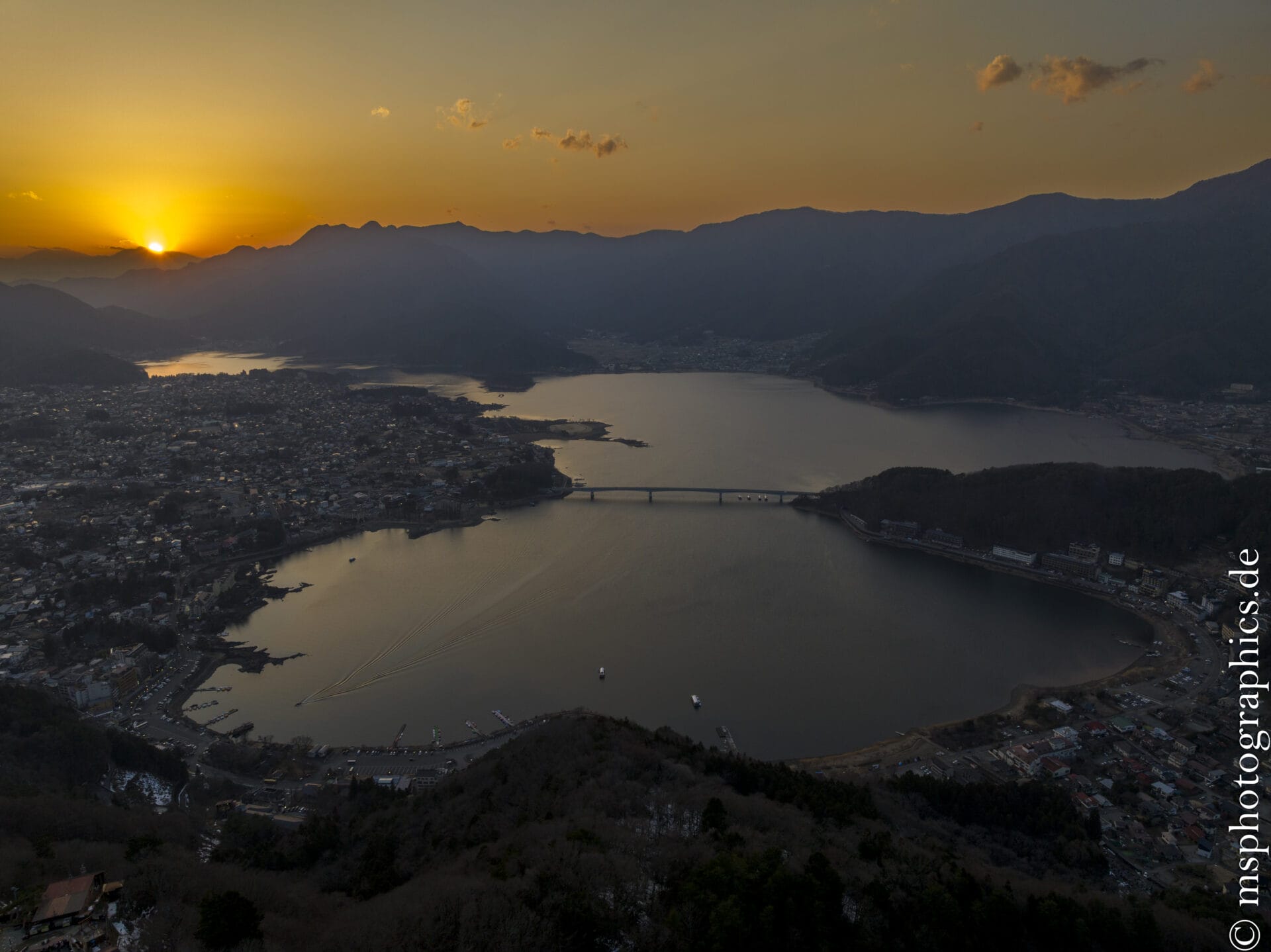
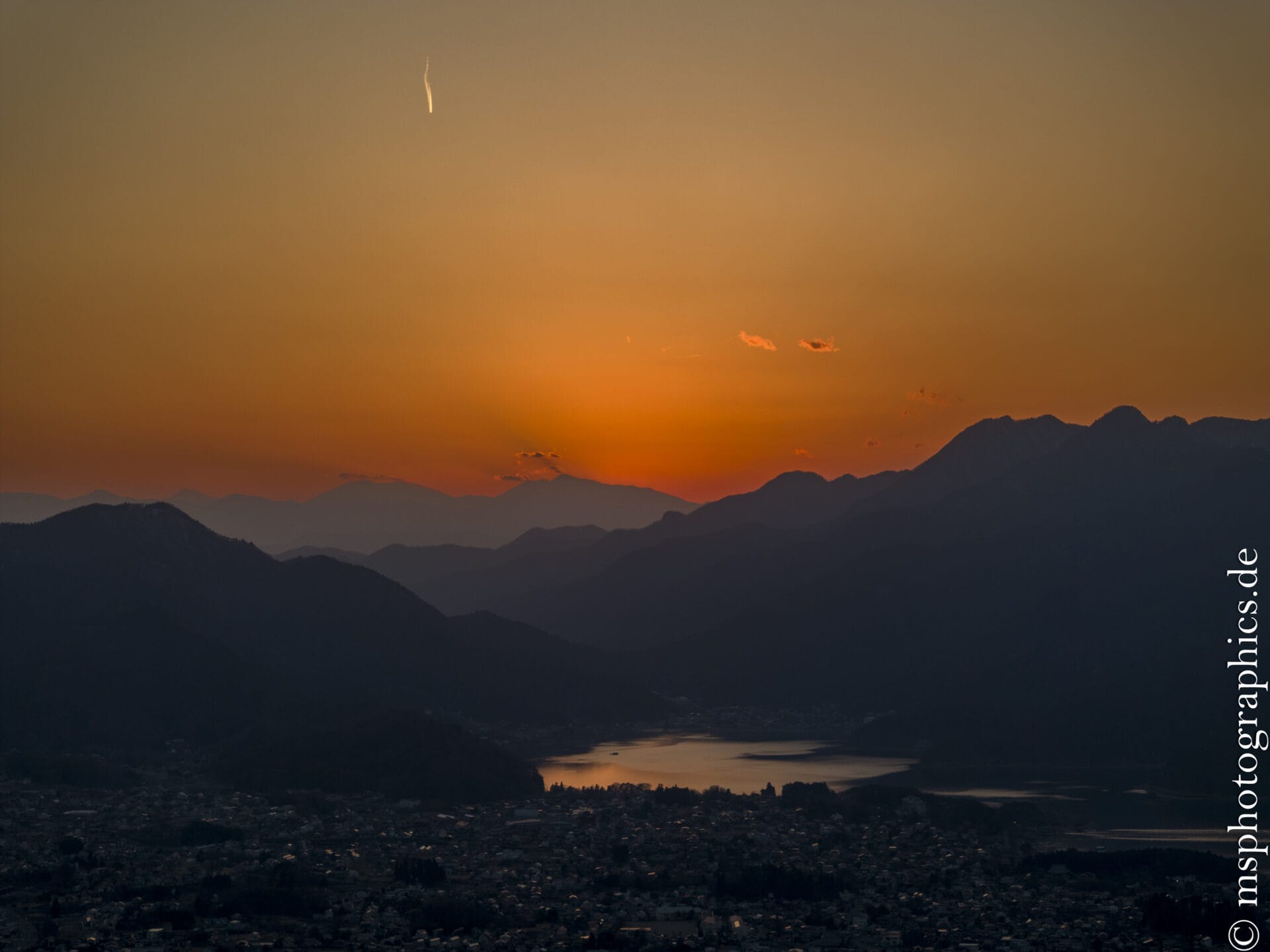
Amazingly, there was no wait at all in the late afternoon just before sunset. The view from the observation deck is unique and one of the highlights of the trip to Mount Fuji.
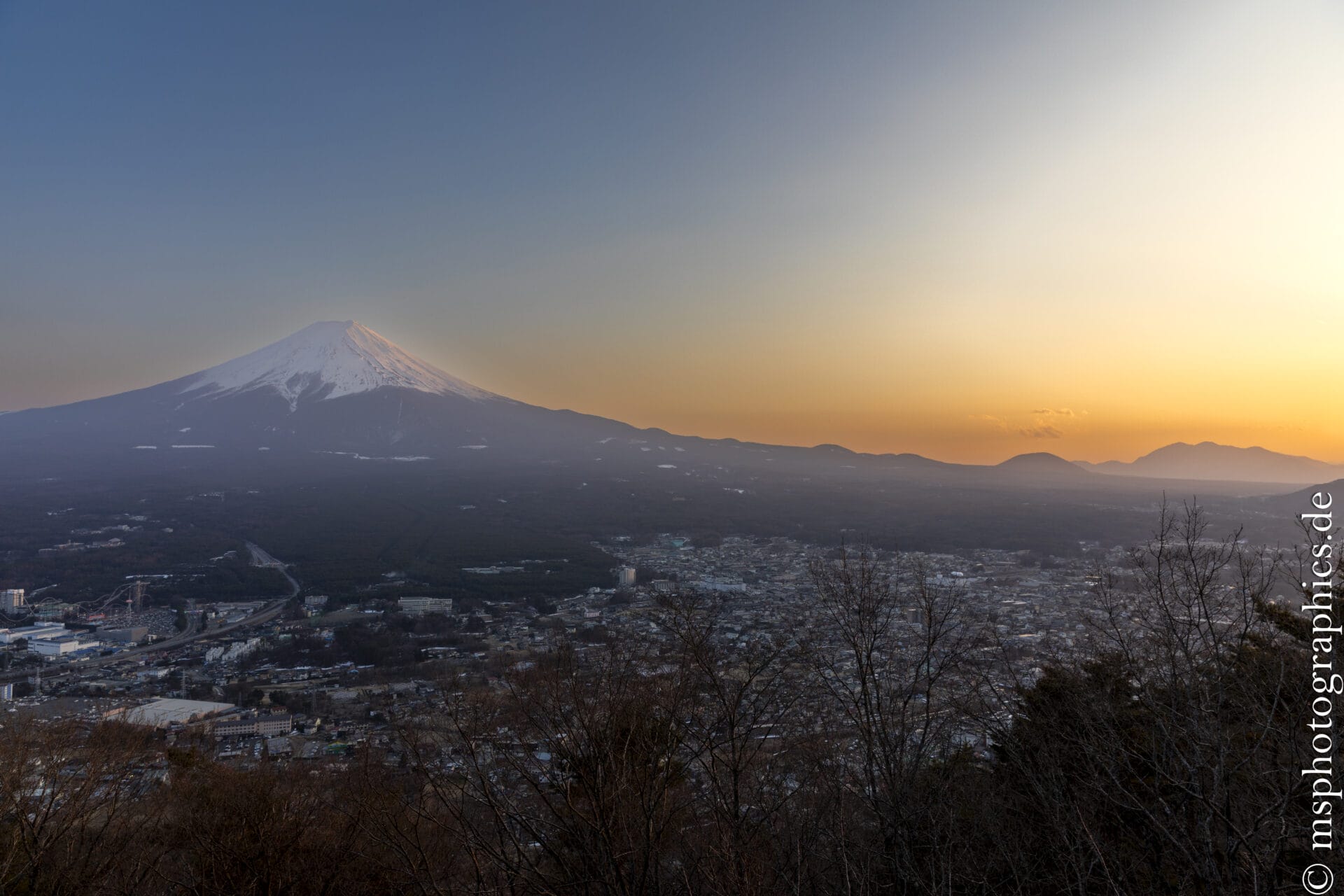
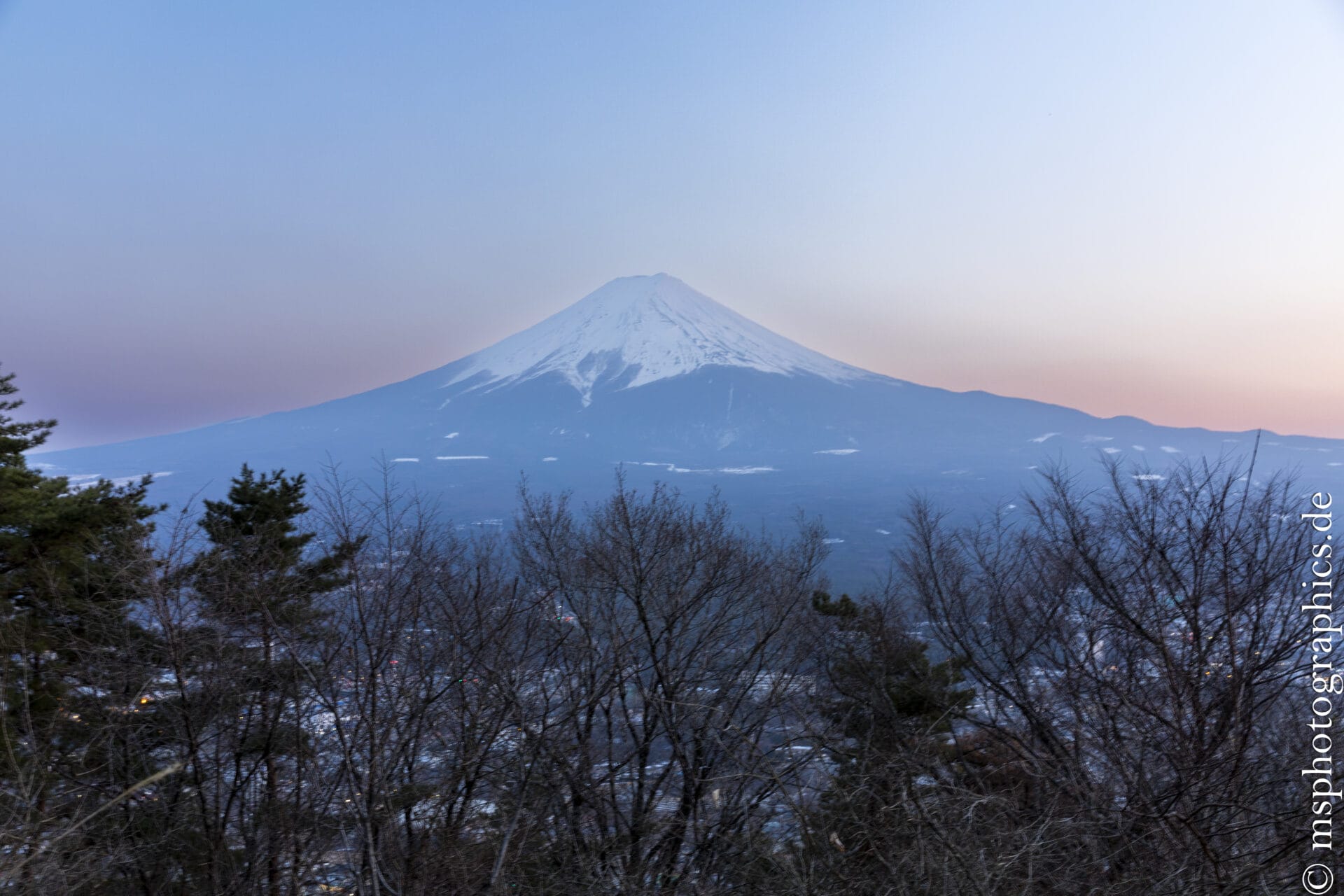
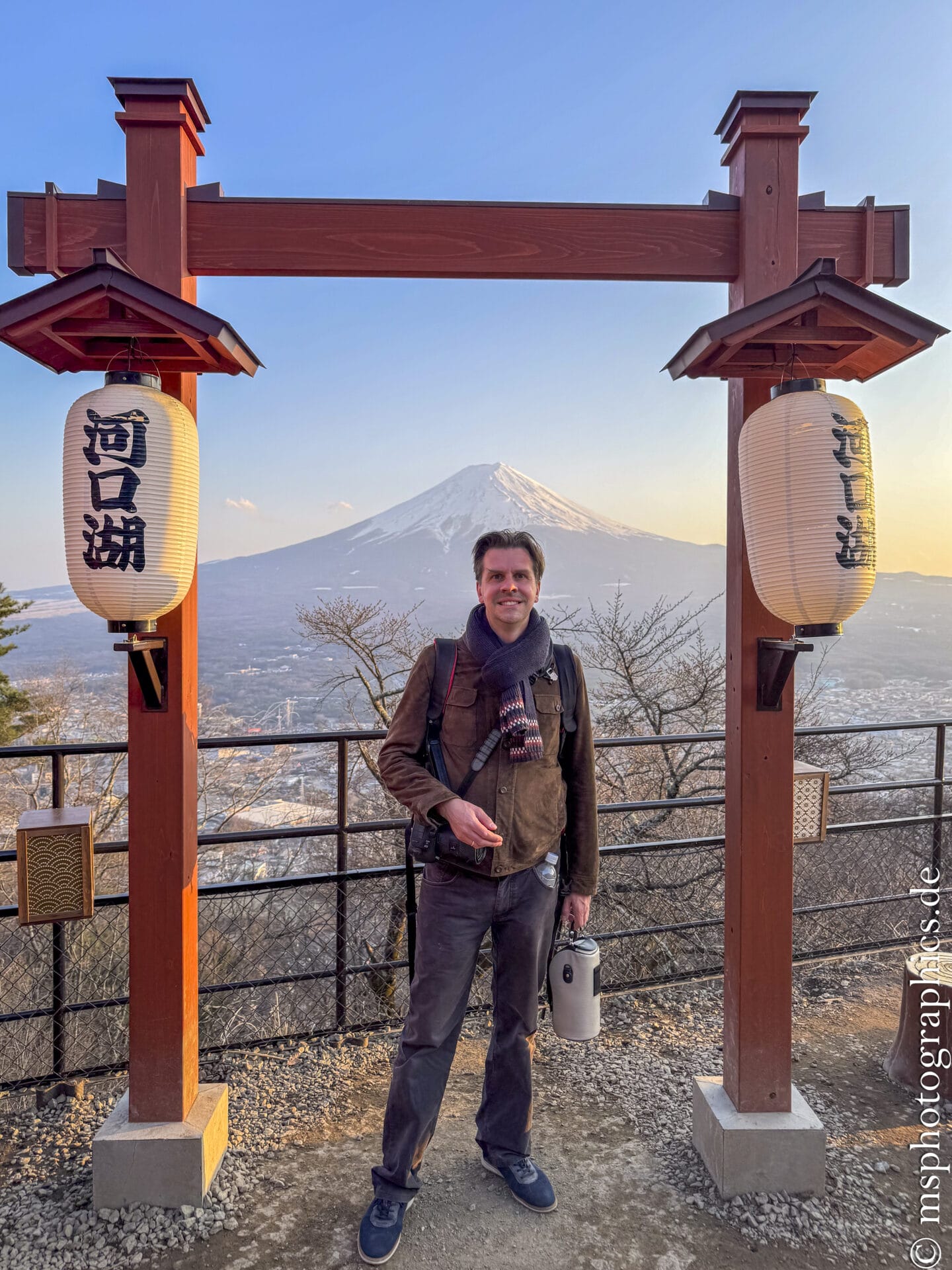
After sunset, we took the train from Kawaguchi Station back to Tokyo in just under three hours.
The Shibuya Crossing:
Shibuya Crossing is one of the most famous and busiest intersections in the world and a true expression of the vibrant life of Tokyo.
It is located directly in front of Shibuya Station, one of the busiest stations in Tokyo.
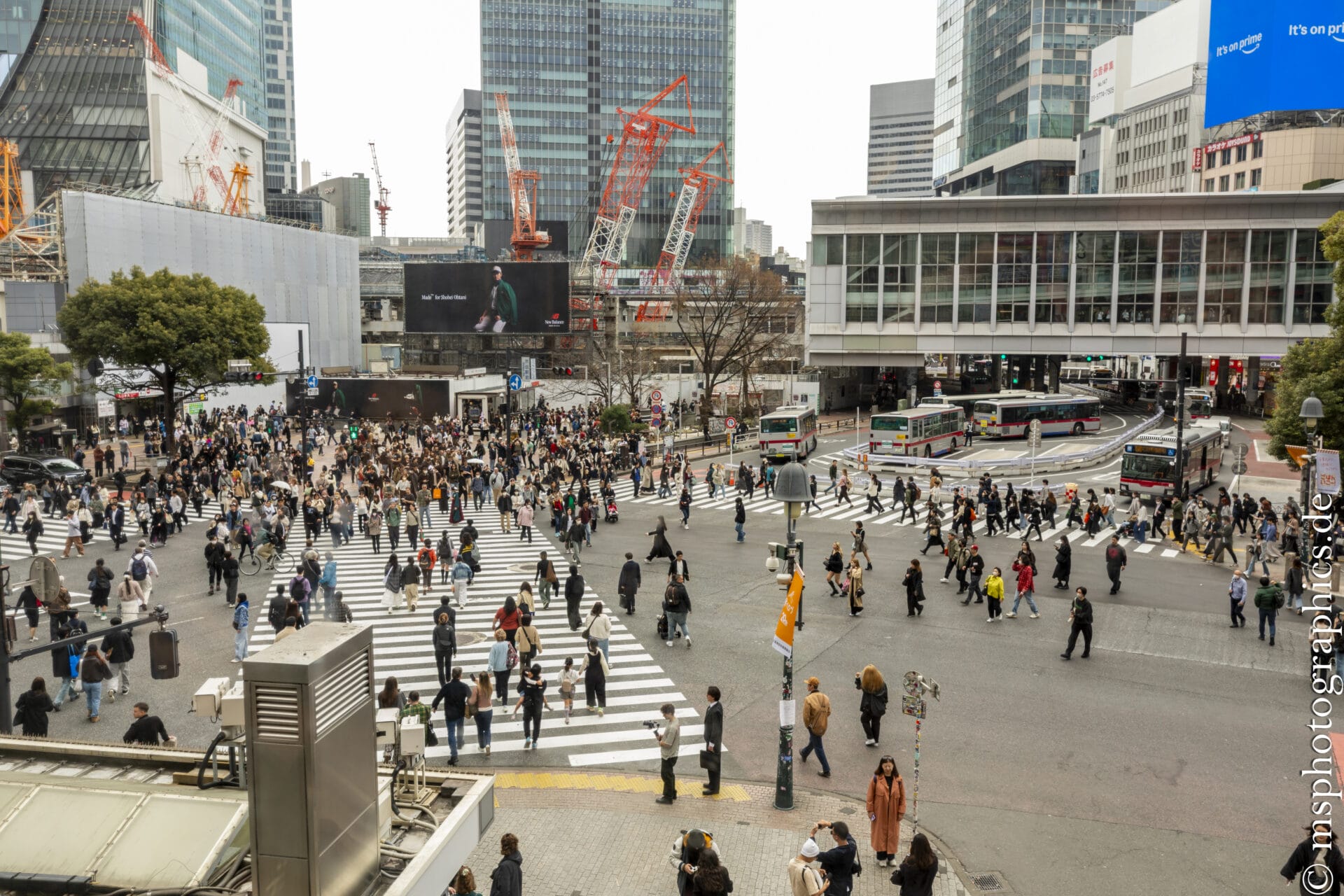
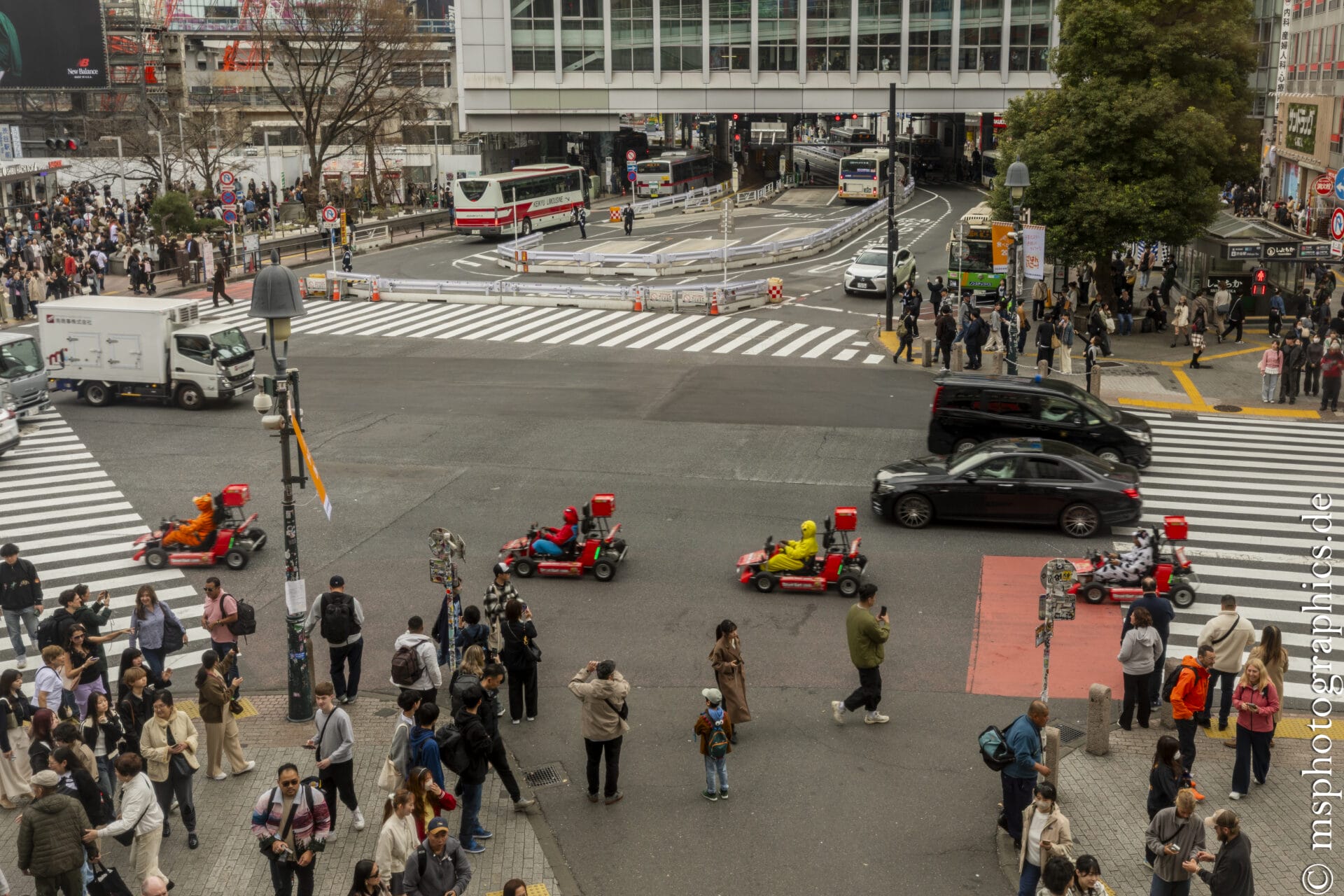
At the traffic lights, hundreds of pedestrians cross in all directions at the same time, which is an extremely impressive and rather chaotic spectacle.
Shibuya Sky, a newly opened observation deck in Shibuya Scramble Square, offers fantastic views of the intersection and the Tokyo skyline. This is an ideal spot to take in the scenery. However, tickets are scarce and must be booked several weeks in advance.
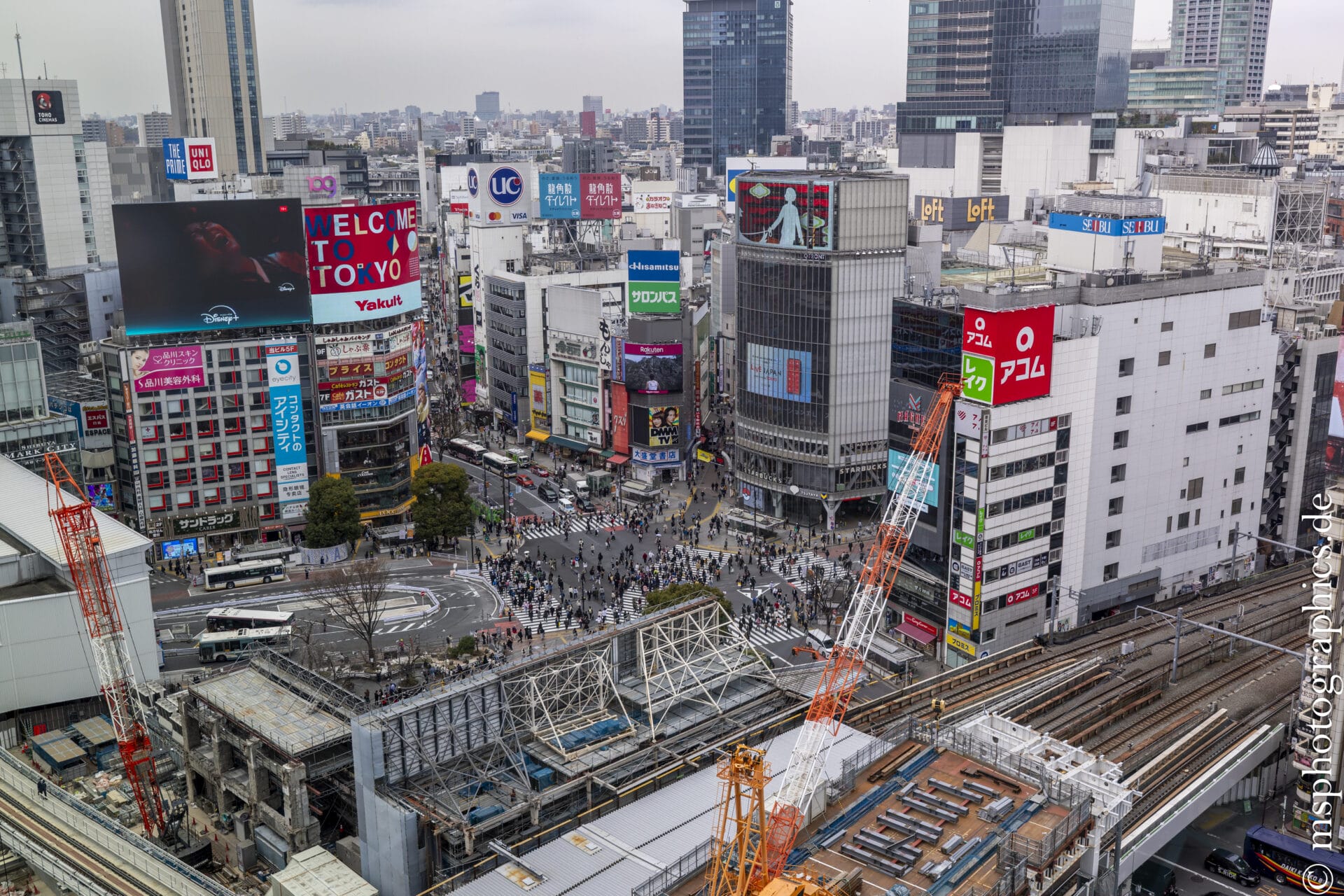
Alternatively, there are plenty of cafés and restaurants in the neighboring buildings, such as Shibuya 109 and QFRONT. These also offer beautiful views of the intersection, and some are even completely free.
The Meiji Shrine:
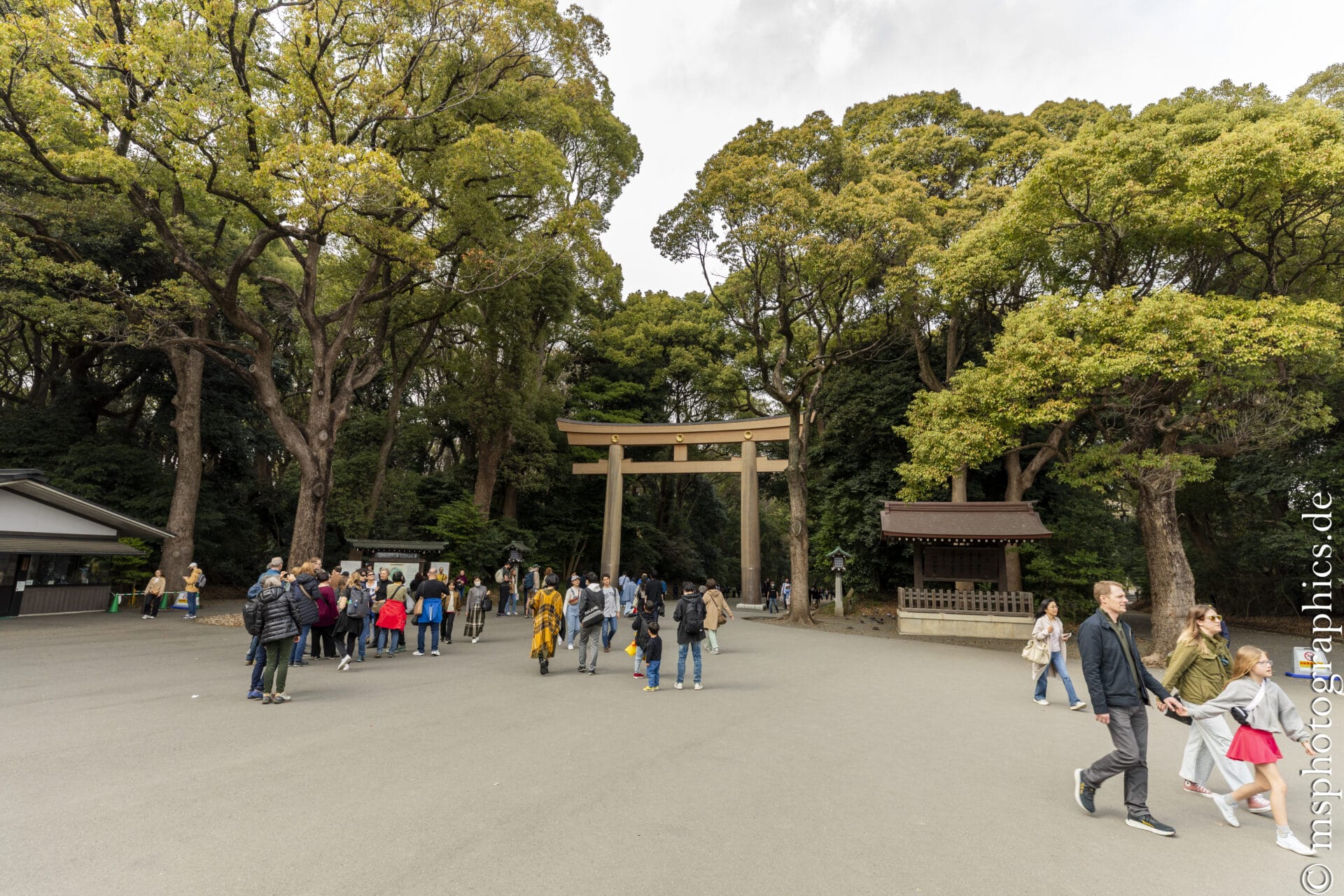
The Meiji Shrine (Meiji Jingu) in Tokyo is one of the most important Shinto shrines in the country and a popular destination for tourists and locals.
It is located in the Shibuya district, in a large forest area that offers a quiet oasis in the bustling city. It is only about a 15-minute walk from Shibuya Station.
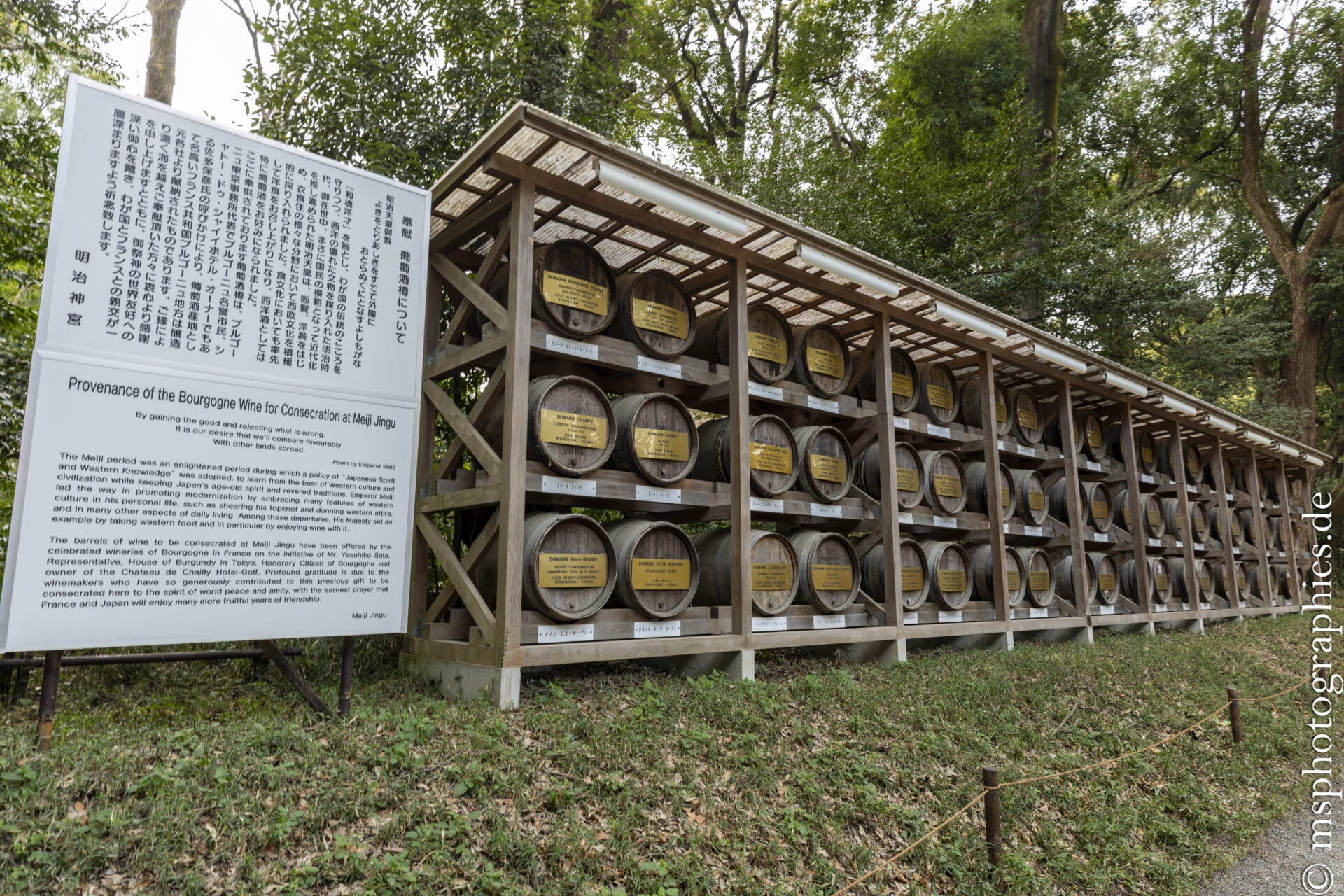
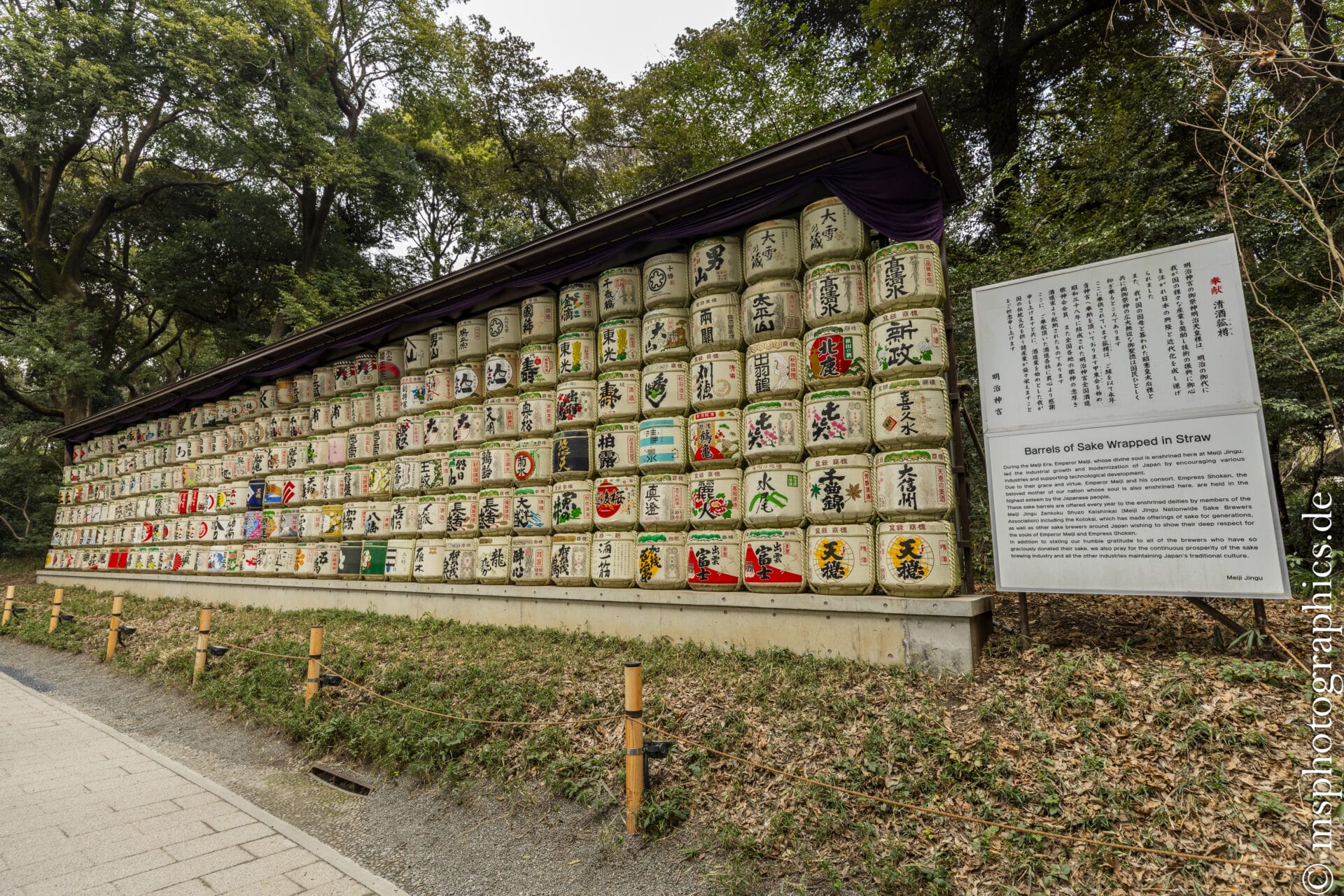
The shrine is dedicated to Emperor Meiji and his wife, Empress Shoken. It was built in 1920 to honor and immortalize them after their deaths.
The shrine's architecture is typical of Shinto shrines and is characterized by the use of natural materials and harmonious design. The large torii gates that mark the entrance to the shrine are particularly impressive.
Access to the shrine is via a picturesque forest path lined with numerous trees planted specifically for the shrine. The walk leads into a peaceful atmosphere, making the visit particularly enjoyable.
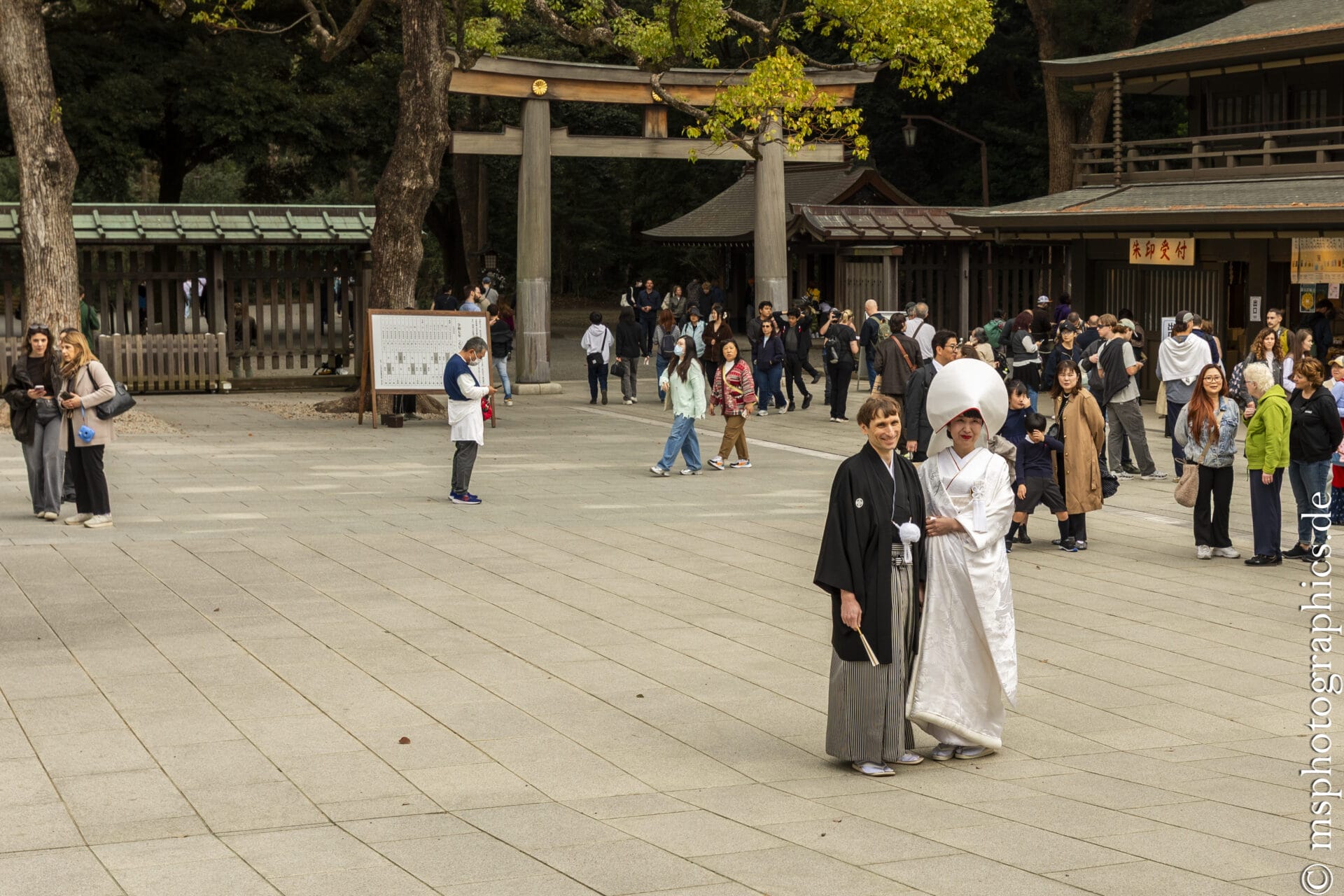
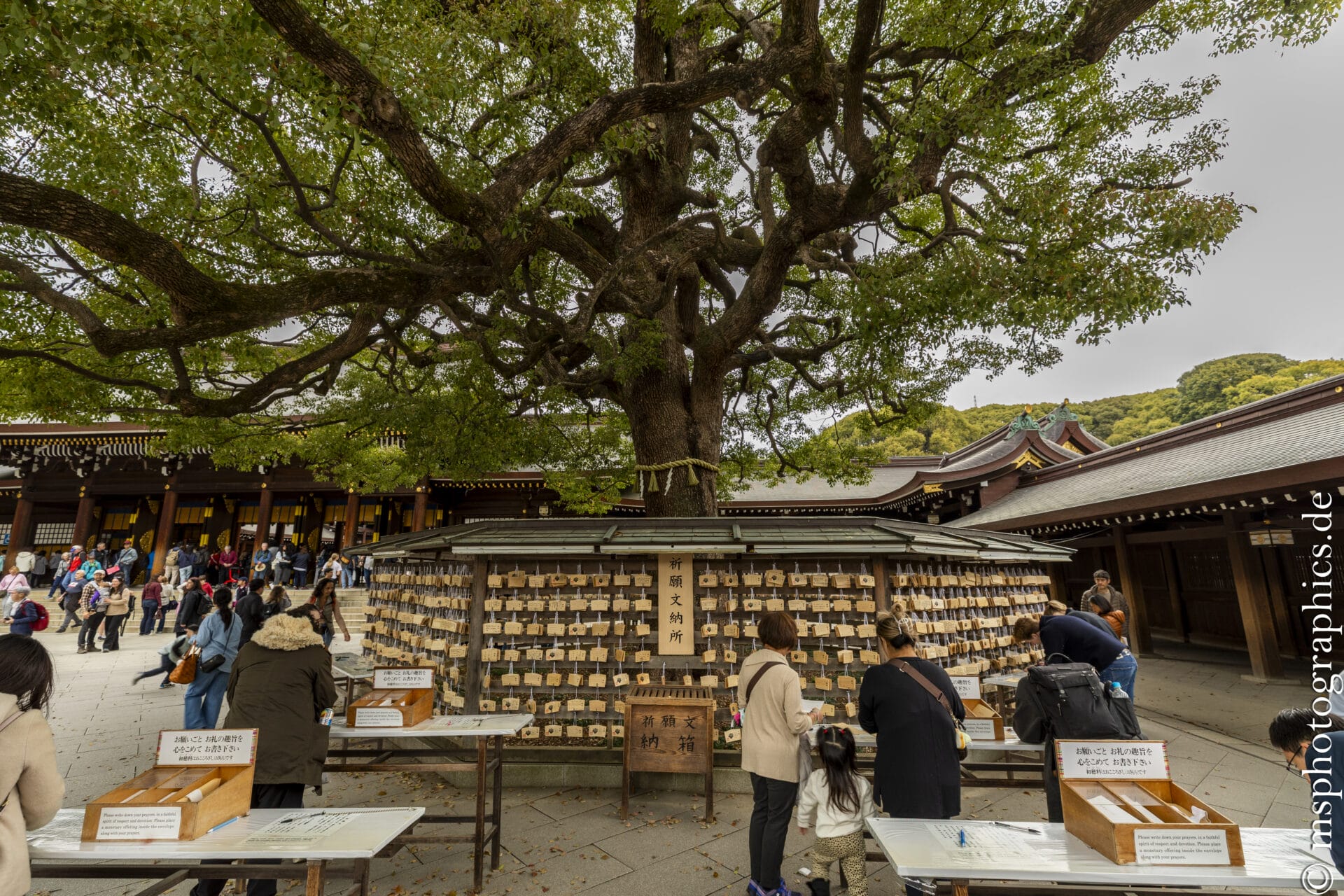
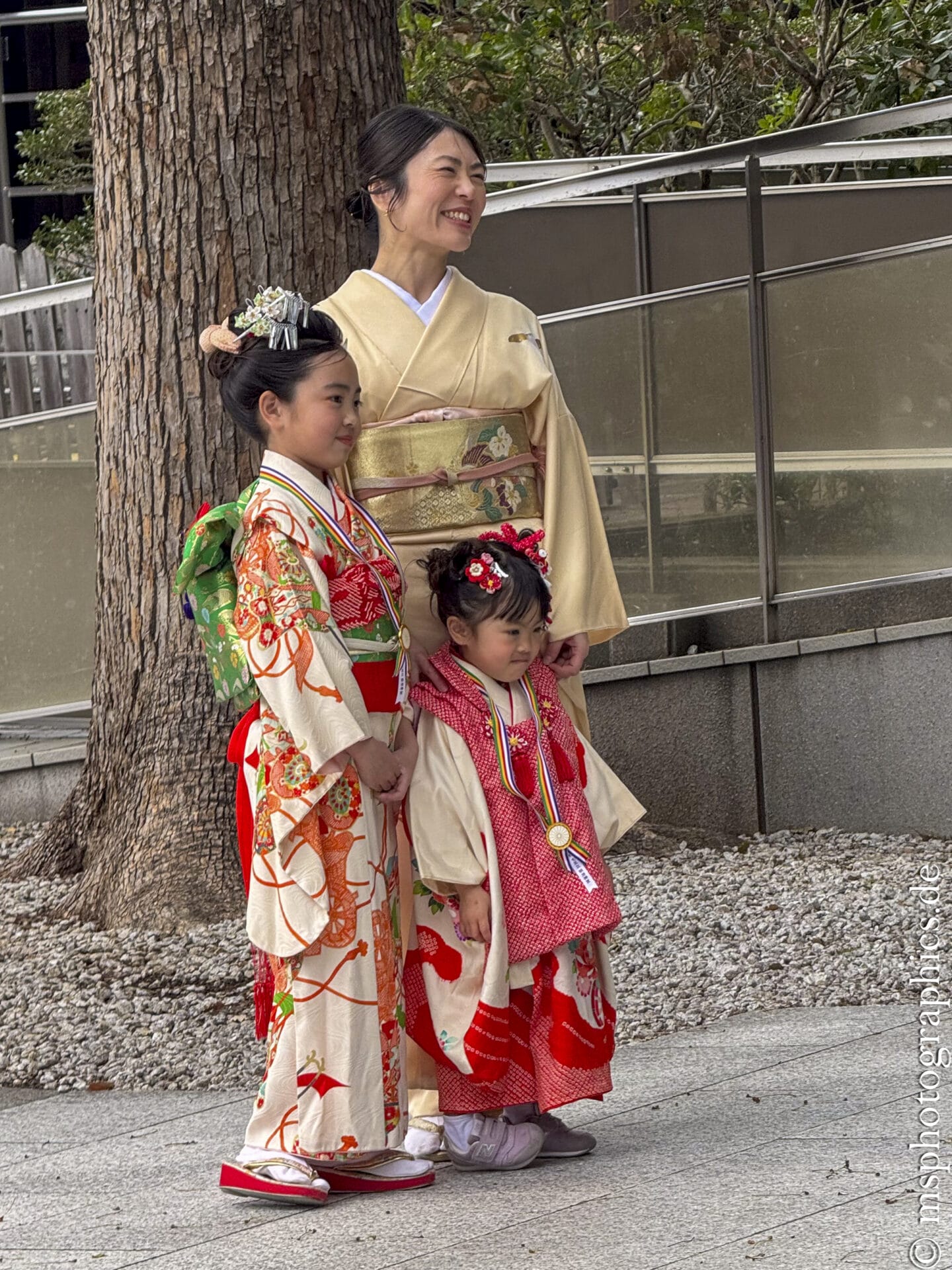
Visitors have the opportunity to observe Shinto rituals and offer their own prayers. The shrine has an area for purification rituals and a main hall where ceremonies take place.
Meiji Shrine is also a popular venue for traditional Japanese weddings. With a bit of luck, you might even witness one of these celebrations firsthand.
Nearby is Yoyogi Park, another popular spot for recreation and outdoor activities. The connection between Meiji Shrine and the park is seamless, inviting you to take a long stroll.
You should visit the shrine early in the morning to experience the full peace and spiritual atmosphere.
Meiji Shrine is not only a cultural heritage site, but also a place of reflection and peace amidst the hustle and bustle of Tokyo. It's an absolute must-see for every visitor!
Out and about in the Shibuya district:
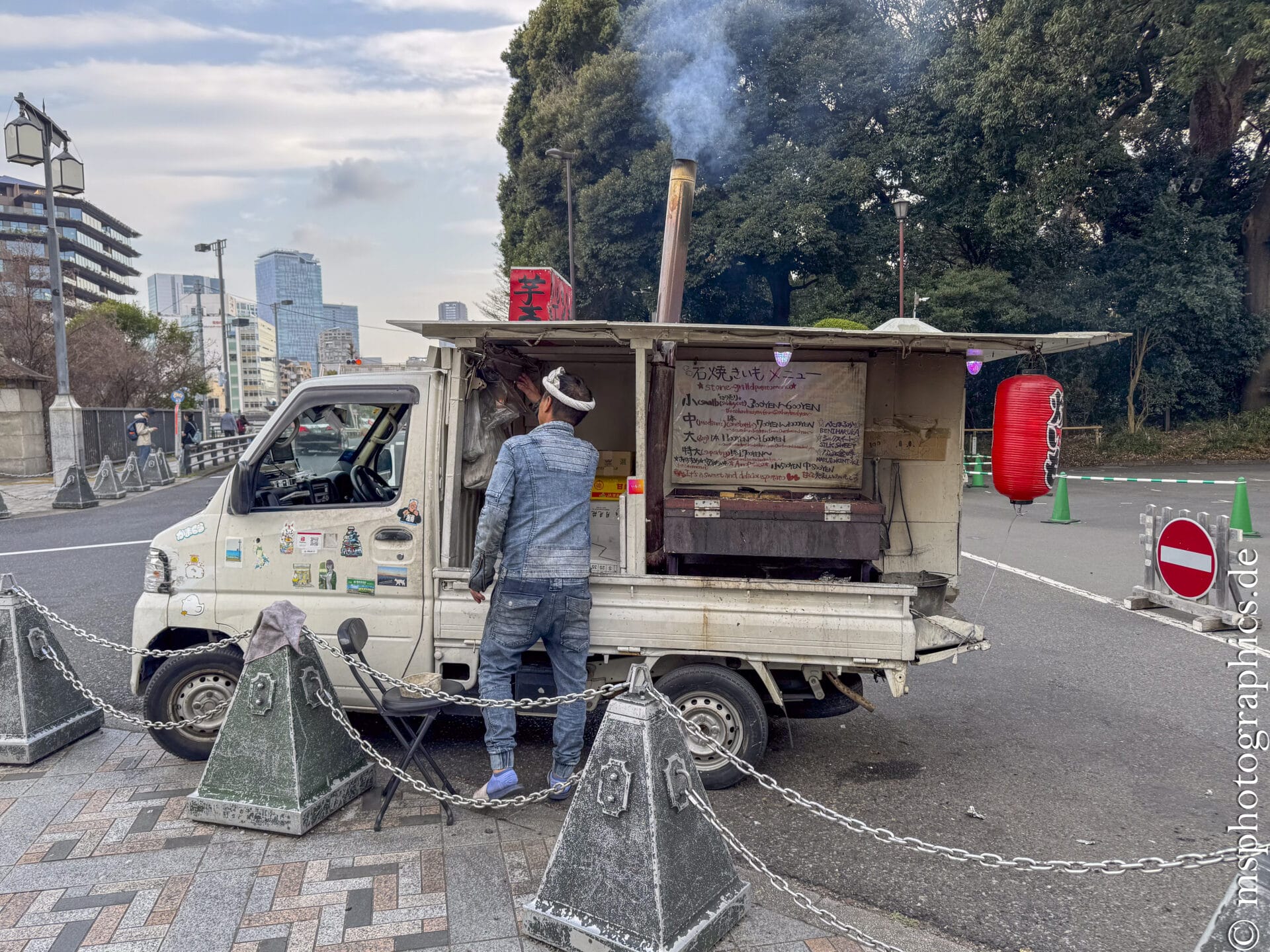
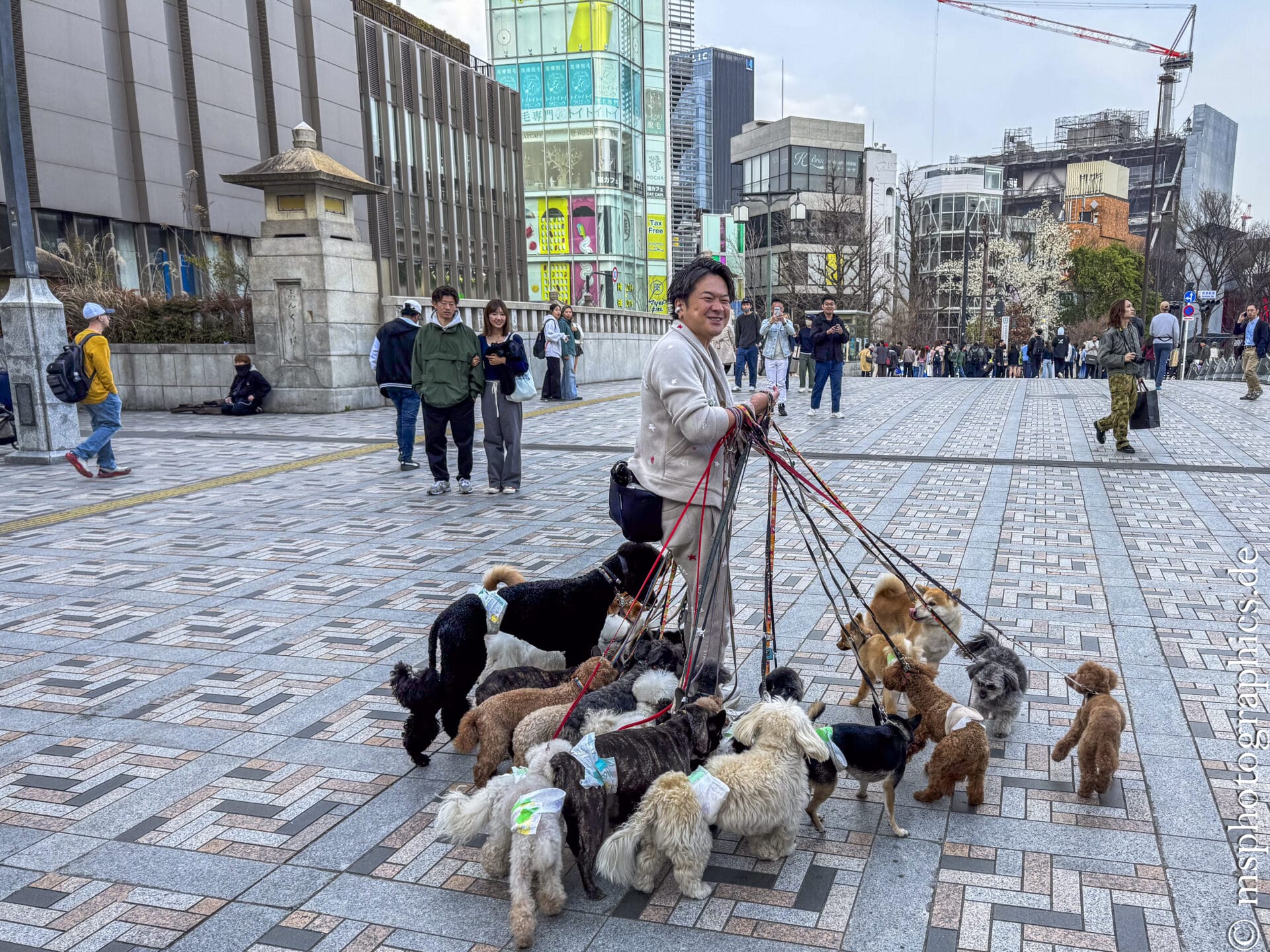
The Shibuya district is one of Tokyo's most exciting and well-known neighborhoods, offering a variety of attractions and experiences. There's something to discover around almost every corner. From small street-side barbecue carts offering snacks to a man walking 23 dogs.

Shibuya is a lively district that offers something for everyone with its mix of tradition, modernity, art, shopping and gastronomy.
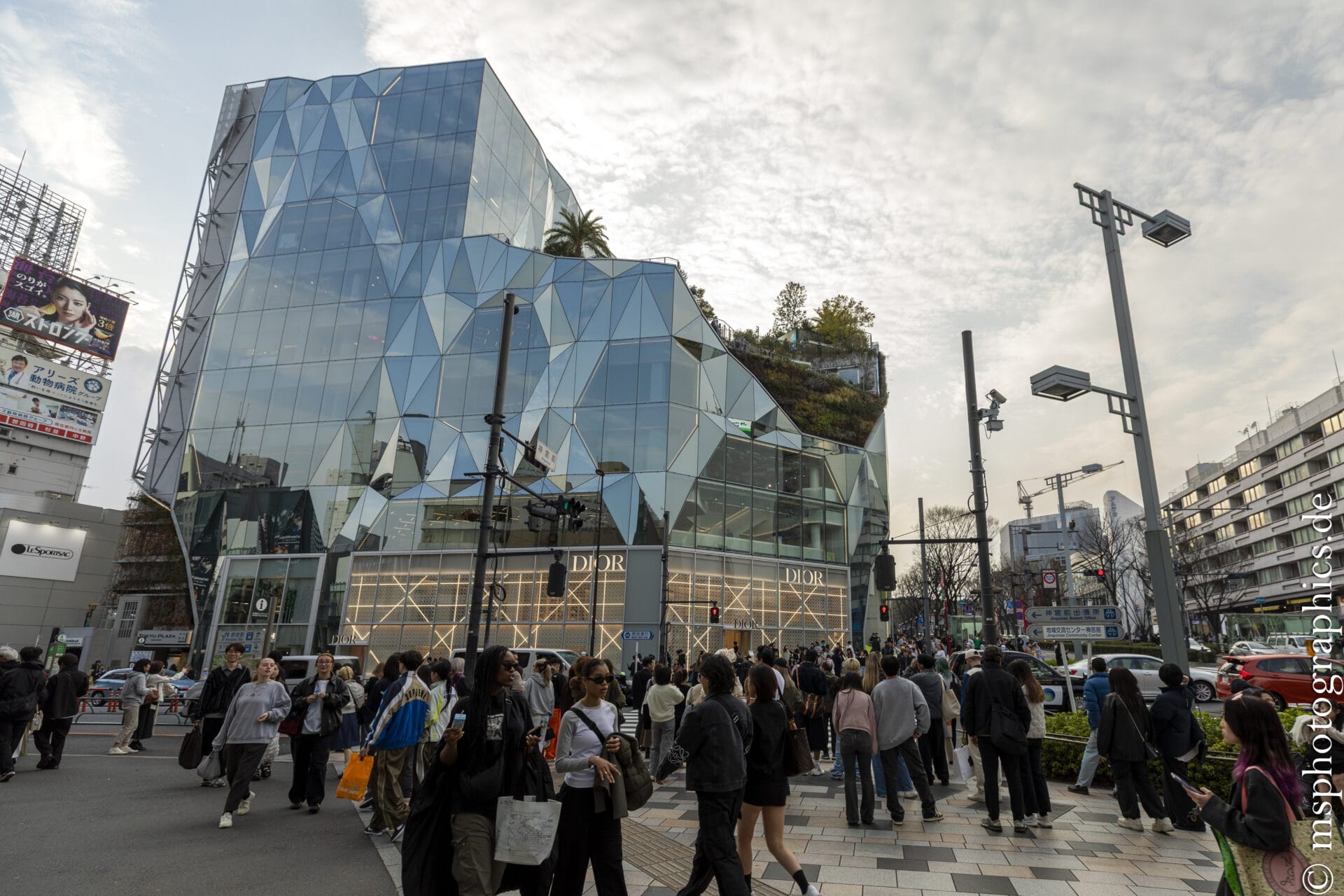
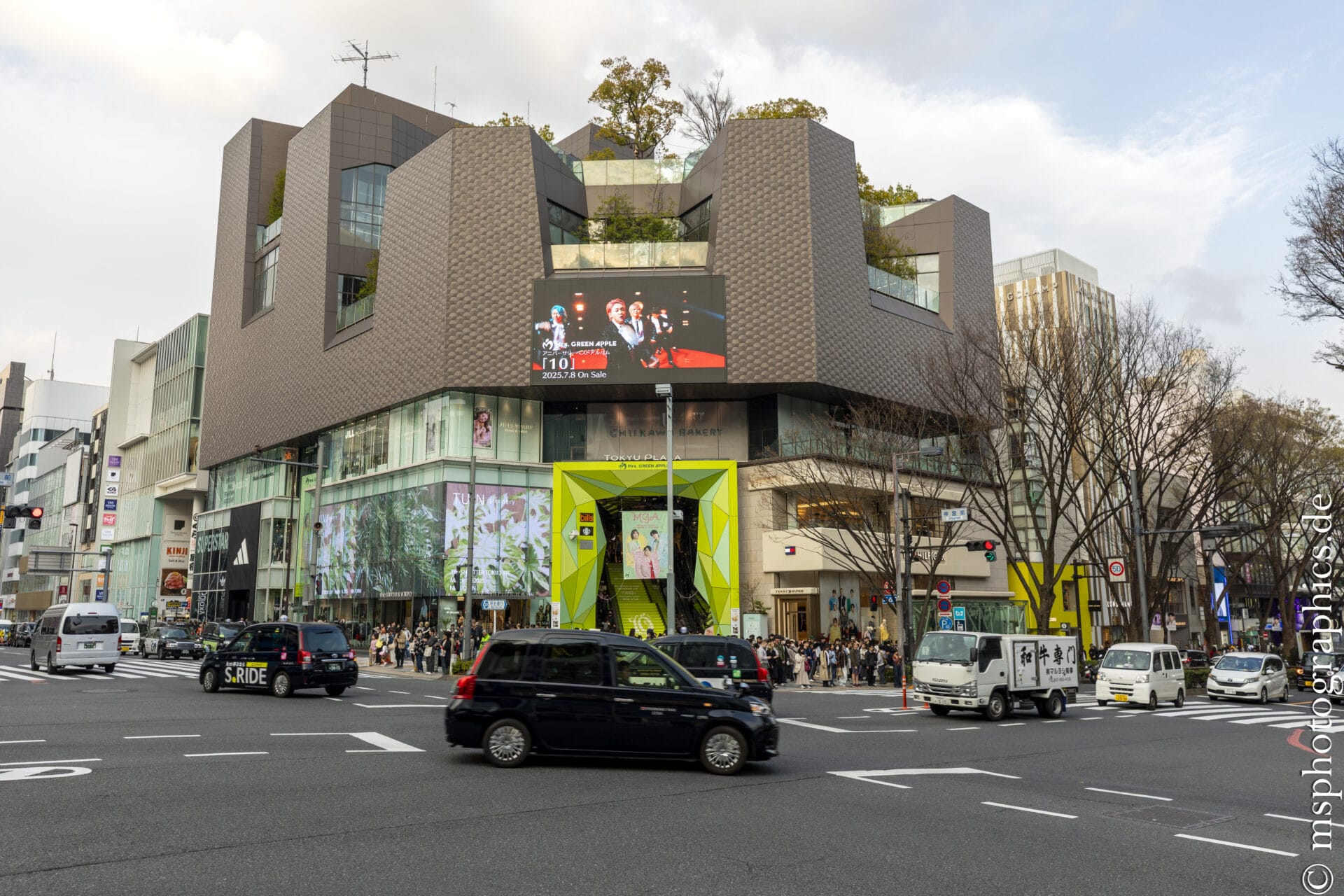
Modern malls, countless cafes and restaurants as well as bars and clubs offer entertainment for every time of day.
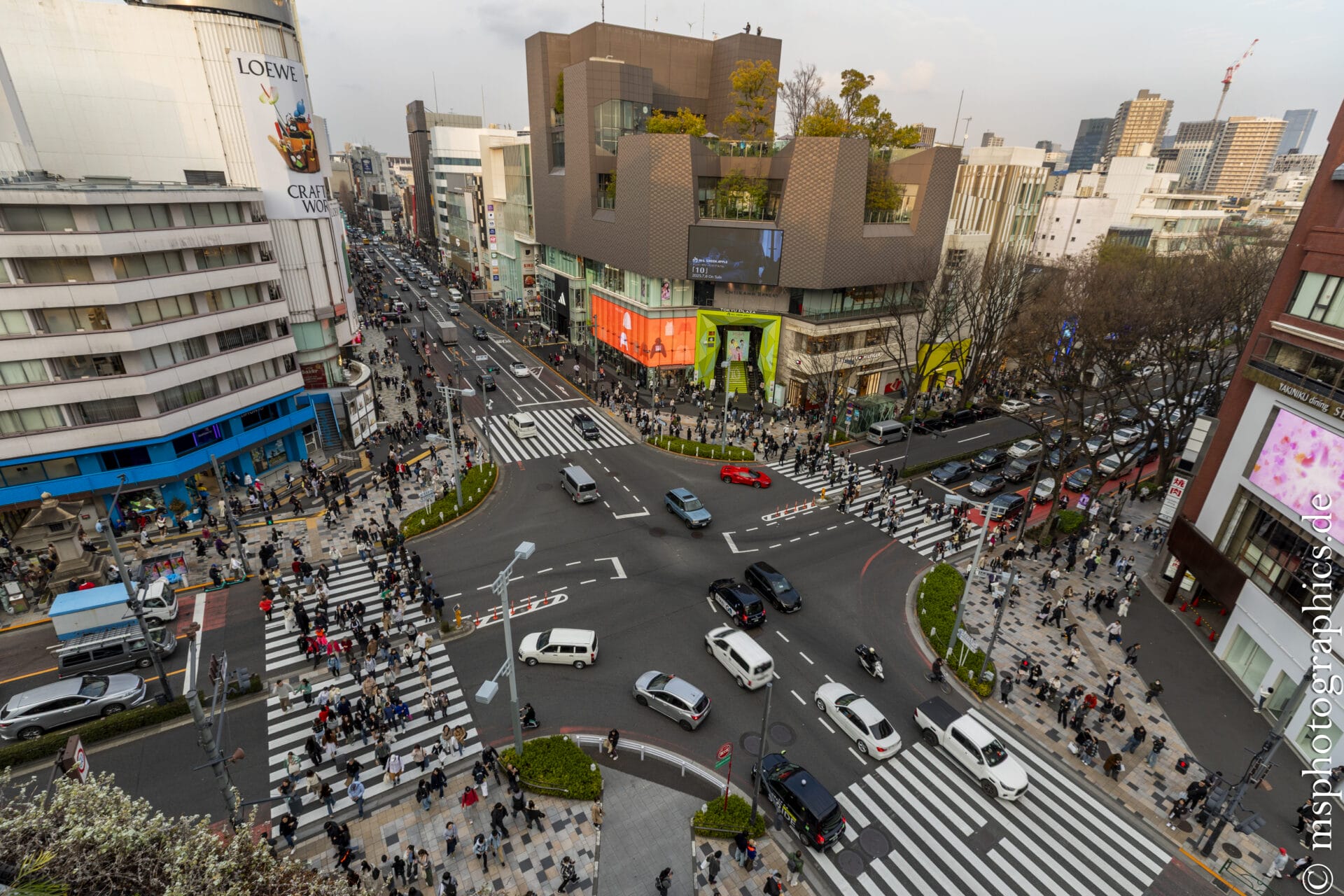
From the roof terraces of the shopping centers you have a fascinating view over Shibuya and can observe the hustle and bustle on the streets.
The Tokyo Tower:
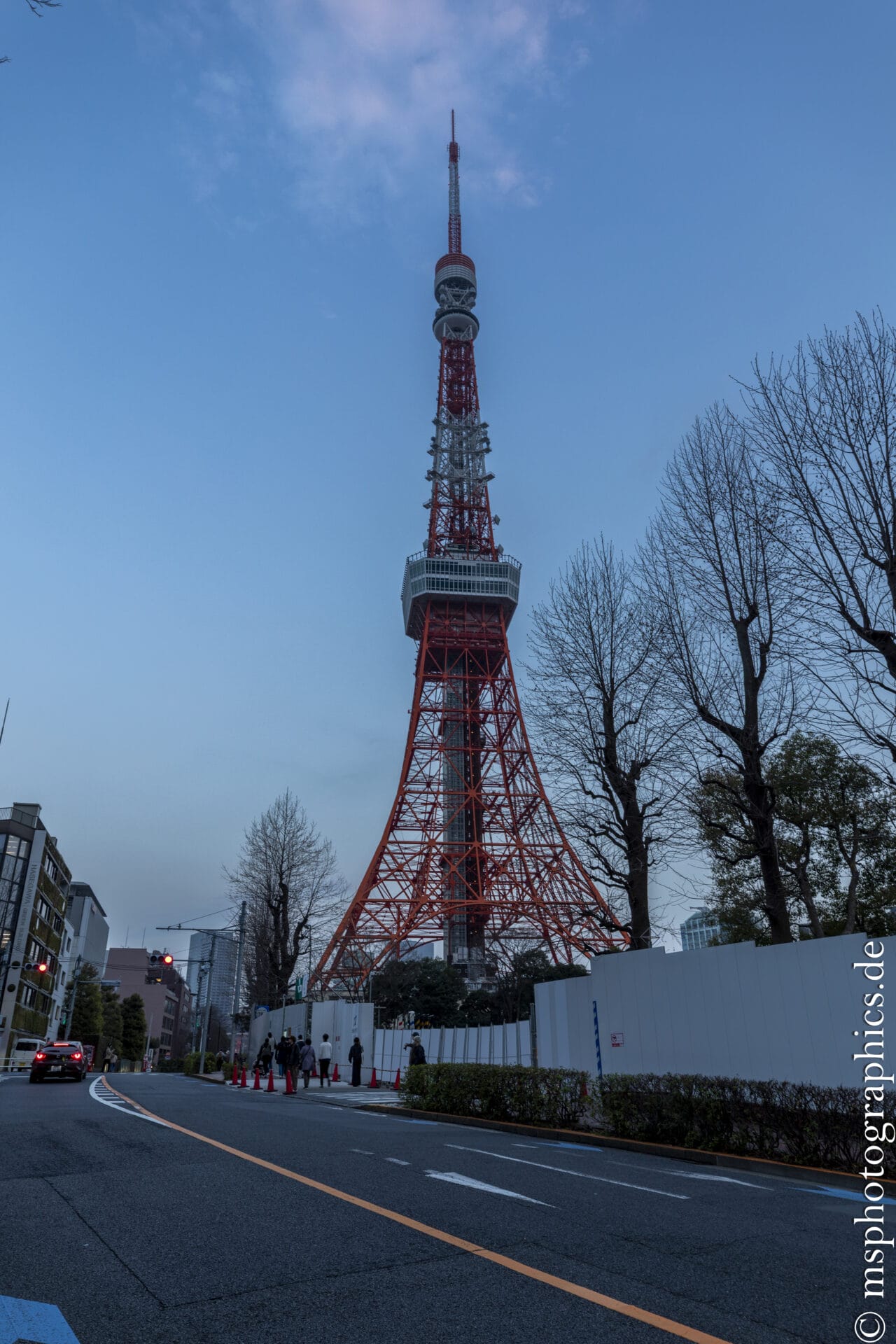

Not far from Shibuya is the Tokyo Tower. It is one of Japan's most iconic buildings and a popular landmark of Tokyo.
The Tokyo Tower was opened in 1958 and was originally designed as a radio tower for television broadcasts.
It is 333 meters high and was the tallest tower in Japan until the opening of the Tokyo Skytree in 2012.
Inspired by the Eiffel Tower in Paris, the Tokyo Tower has a distinctive orange and white color that complies with aviation regulations.
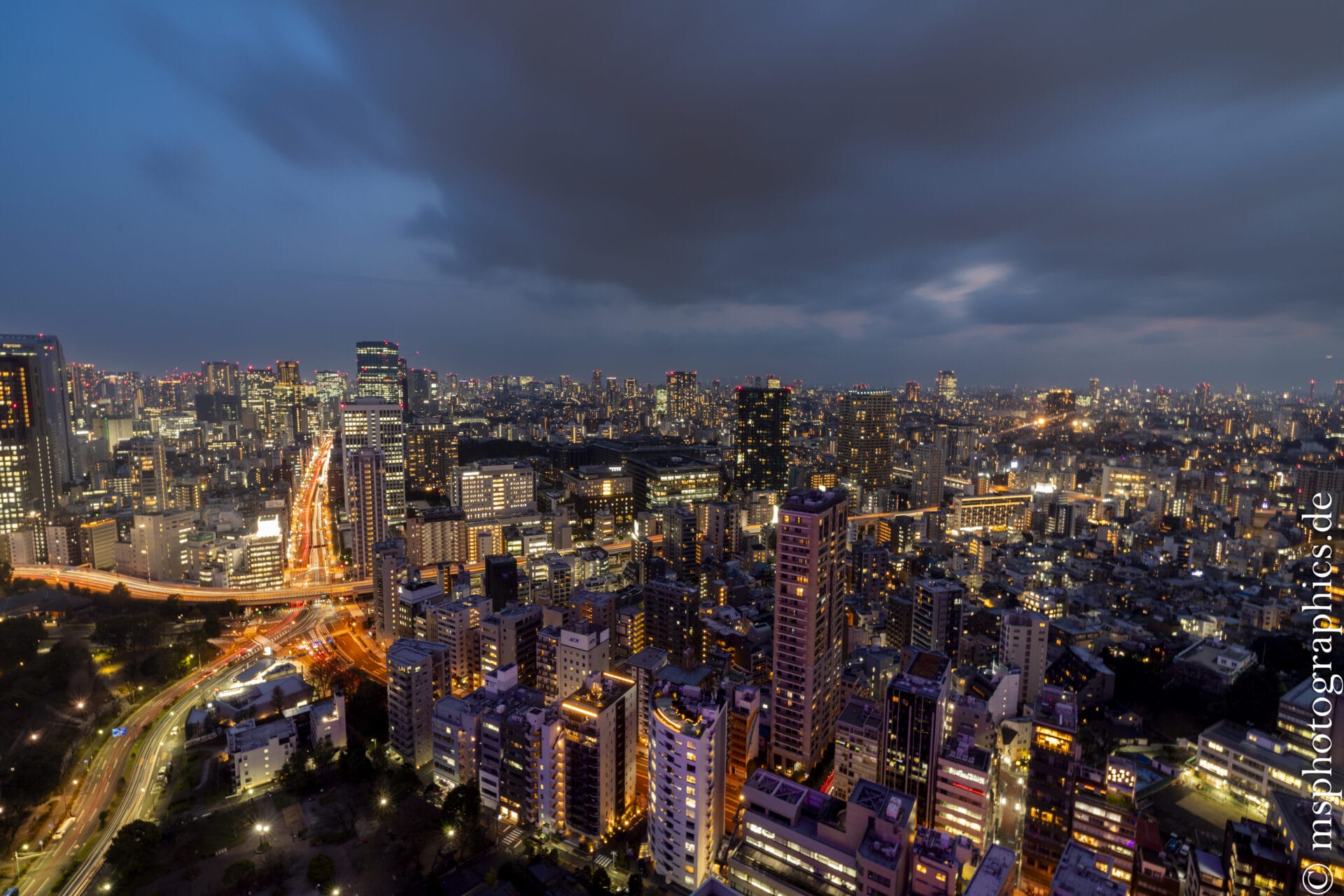
The Tokyo Tower has two observation decks.
The main platform, at a height of 150 meters, offers a panoramic view of Tokyo, including landmarks such as the Imperial Palace, the Tokyo Skytree and Tokyo Bay.
The special platform at a height of 250 meters offers an even more impressive perspective of the city and on clear days you can even see as far as Mount Fuji.
Ginza district:
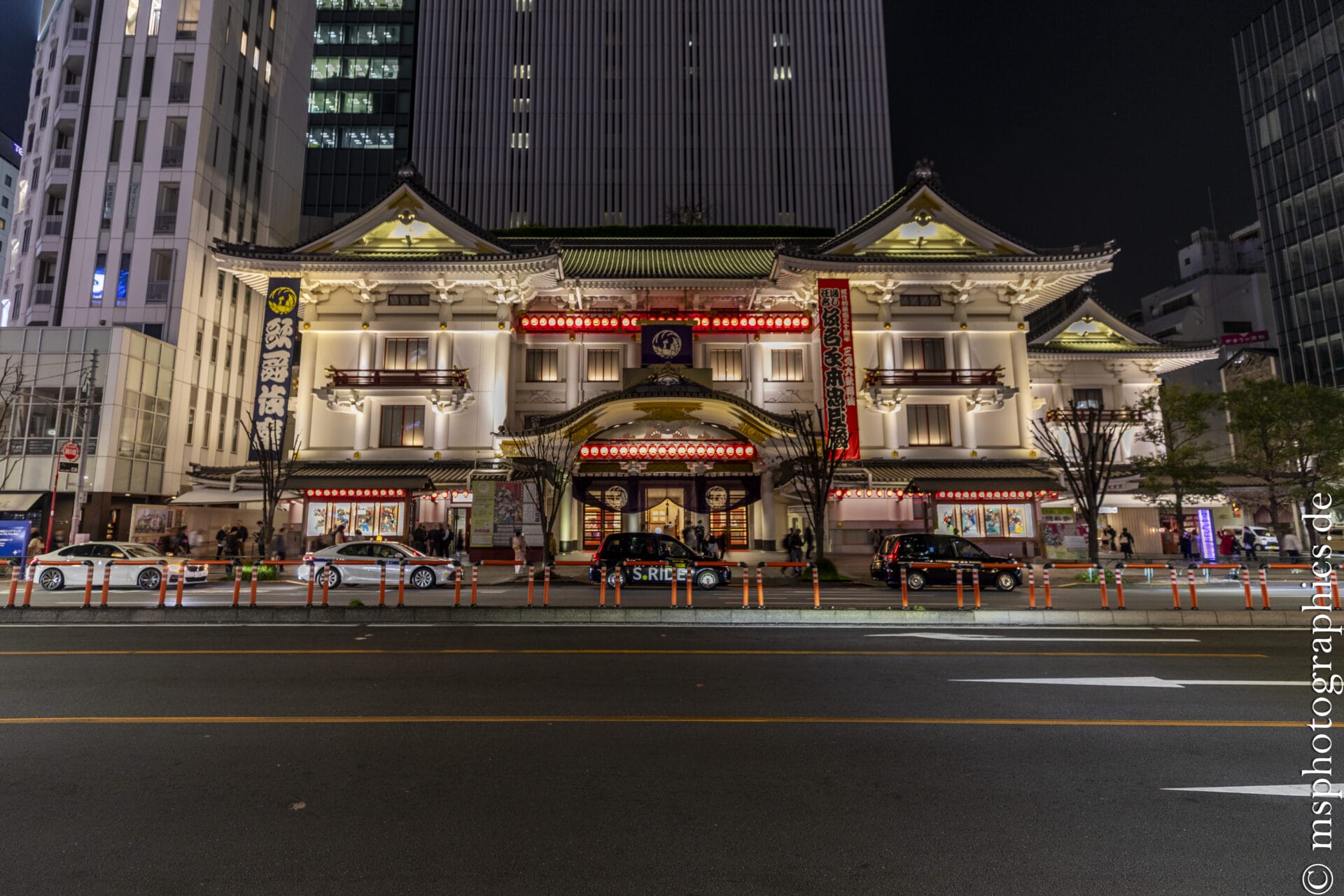
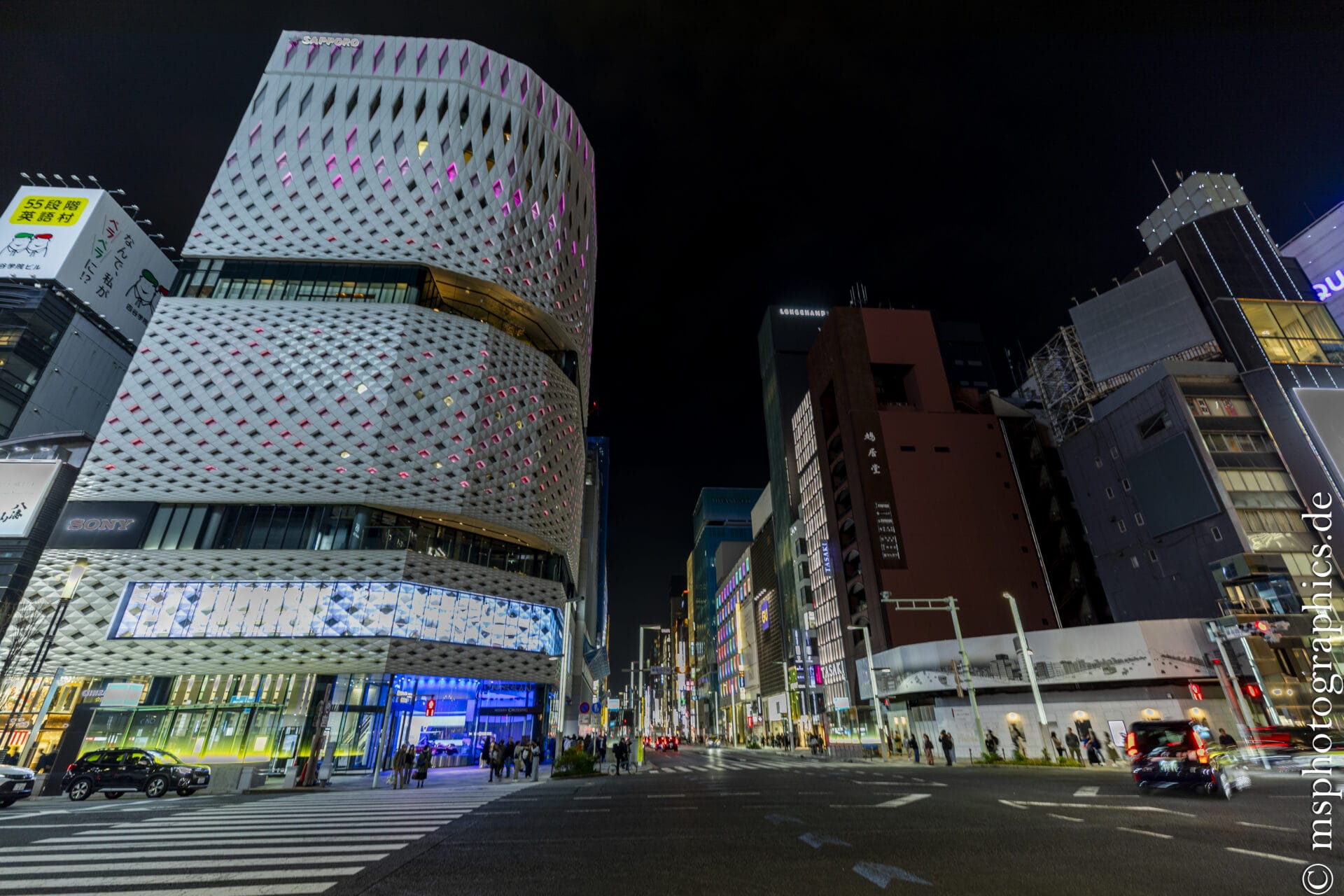
Ginza is one of the wealthiest areas of Tokyo. It's a luxury department store district with high-end brands and stylish cafes. Ginza is also a center for fine dining, with a variety of fine, high-class, and expensive restaurants.
Sushi at Tsukiji Fish Market:
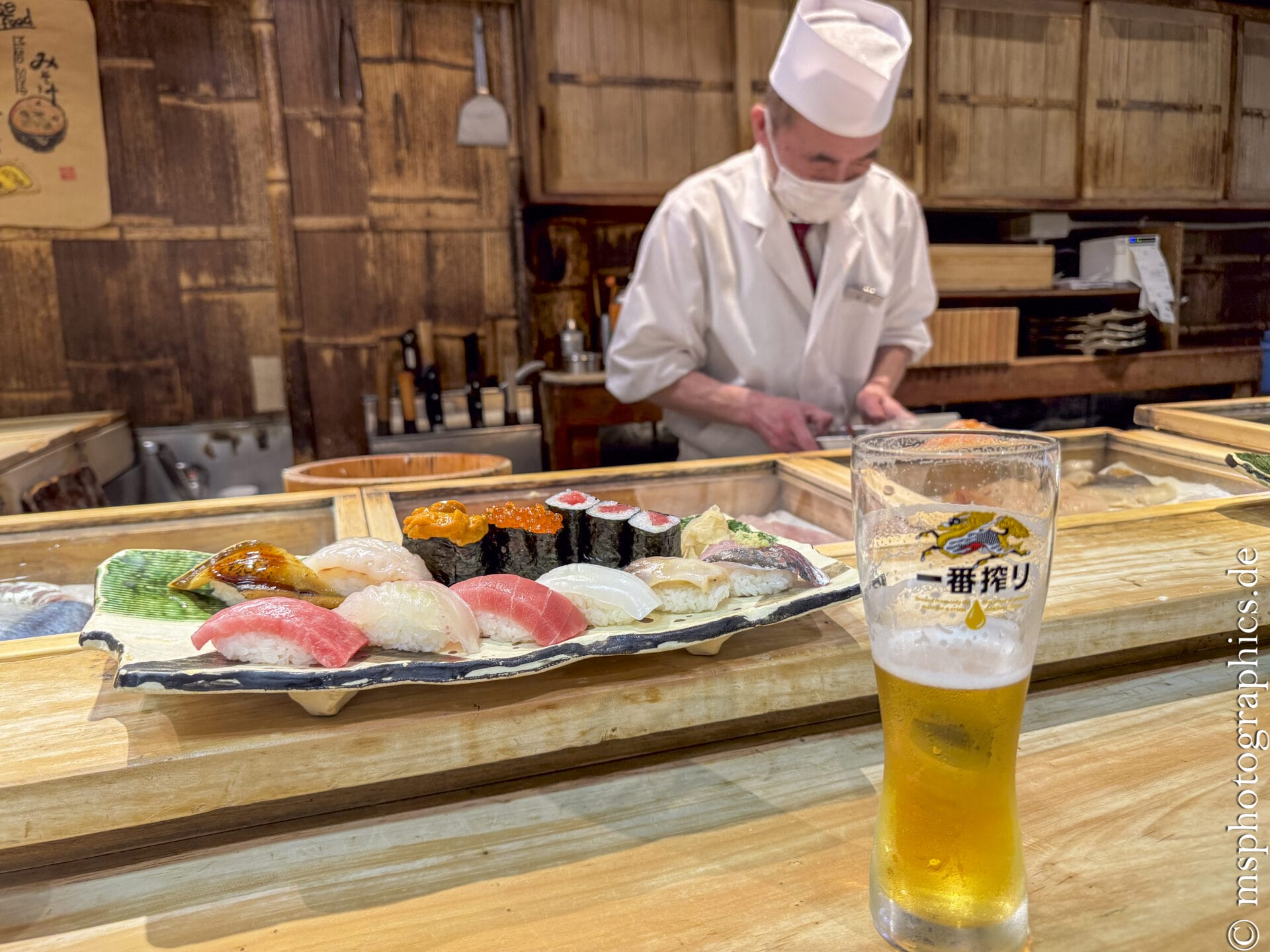
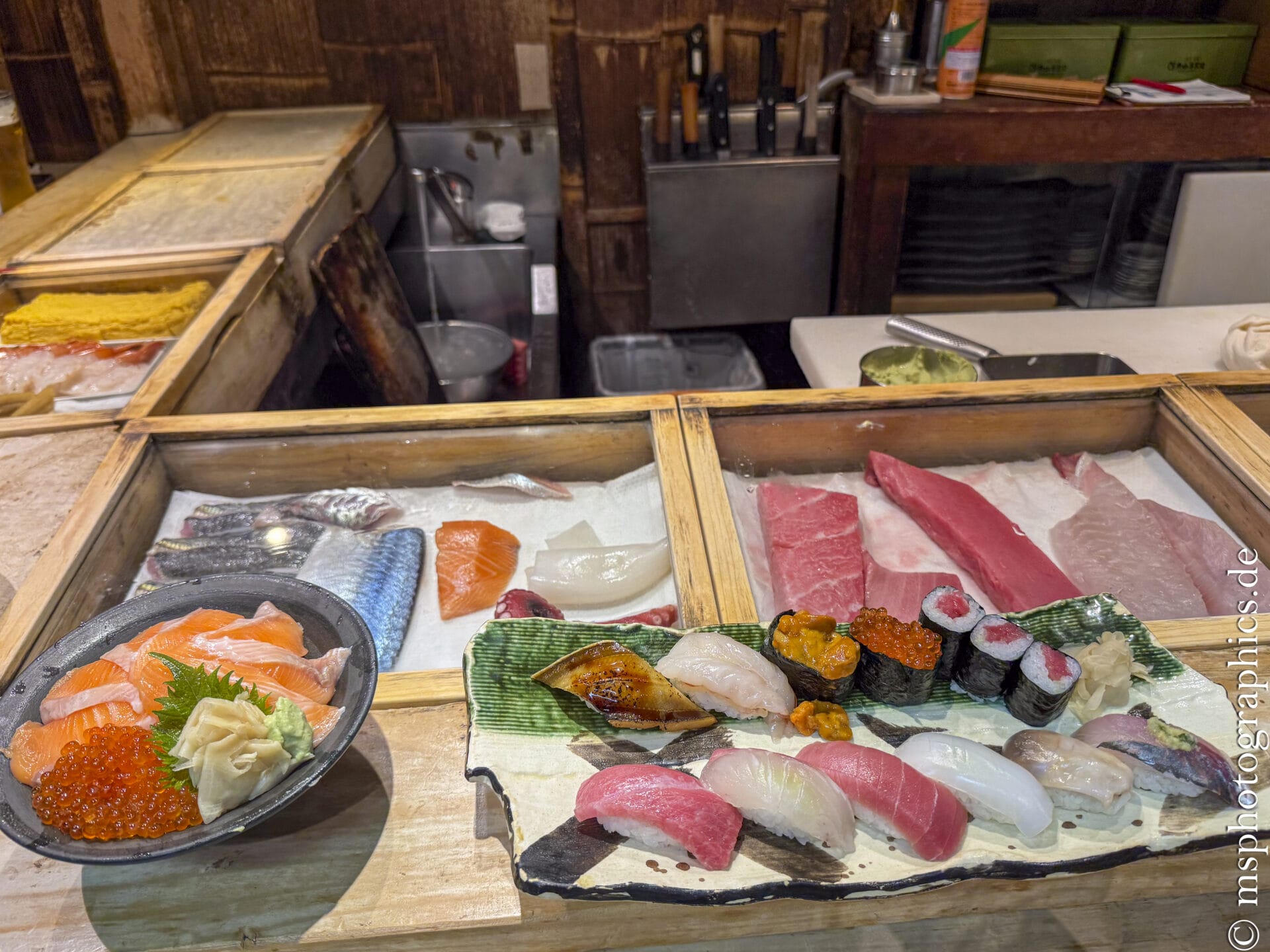
Once the largest fish market in the world, Tsukiji Fish Market is a fascinating destination in Tokyo known for its fresh seafood, lively atmospheres, and culinary experiences.
You can hardly get sushi that is fresher, more authentic and more delicious than here.
Trip to Kamakura:
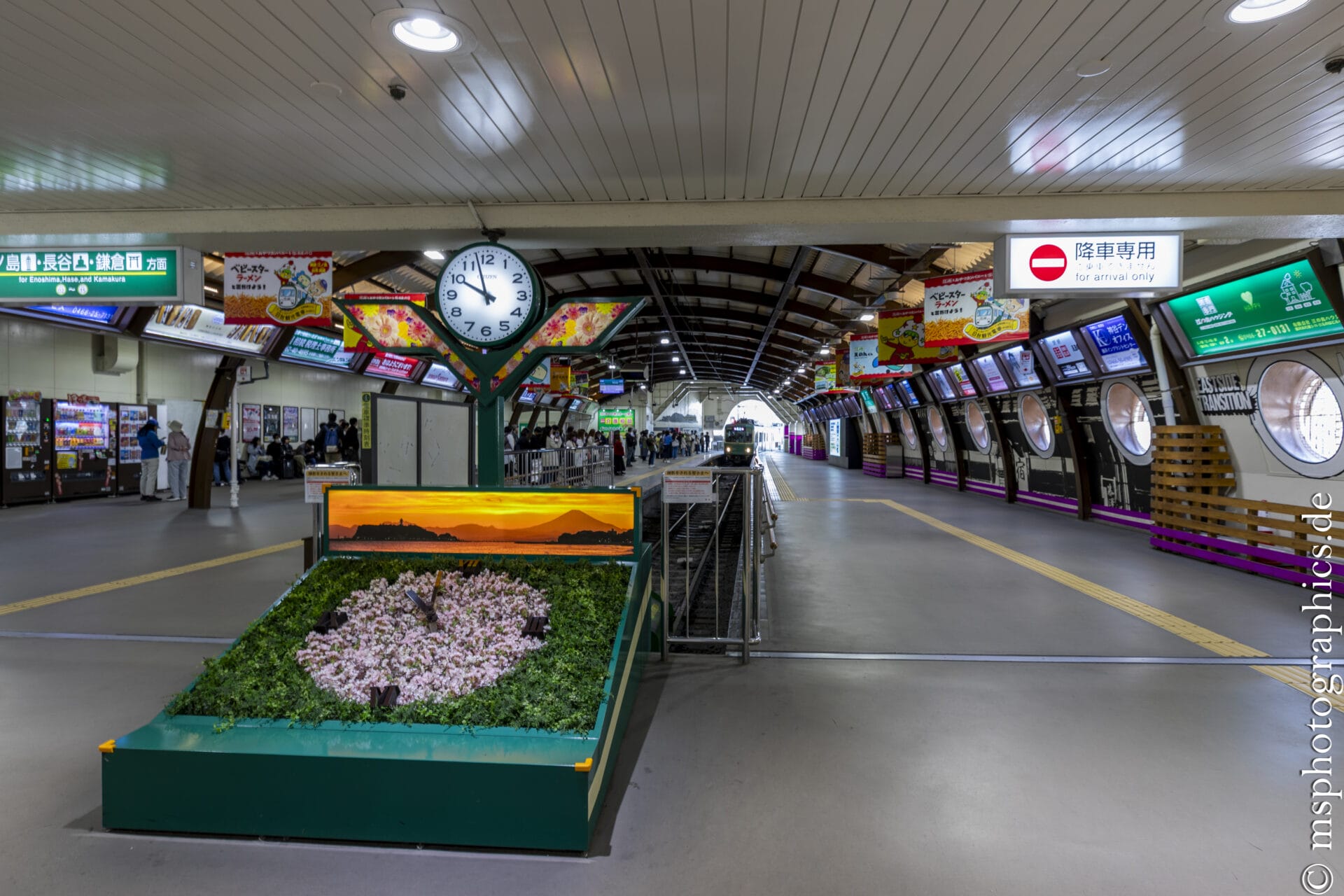

Kamakura is a charming coastal town south of Tokyo, rich in history, nature, and culture. It was the seat of the Kamakura Shogunate from the 12th to 14th centuries and today offers a wonderful mix of temples, beaches, and narrow alleys.
The Enoden – the tram of Kamakura:
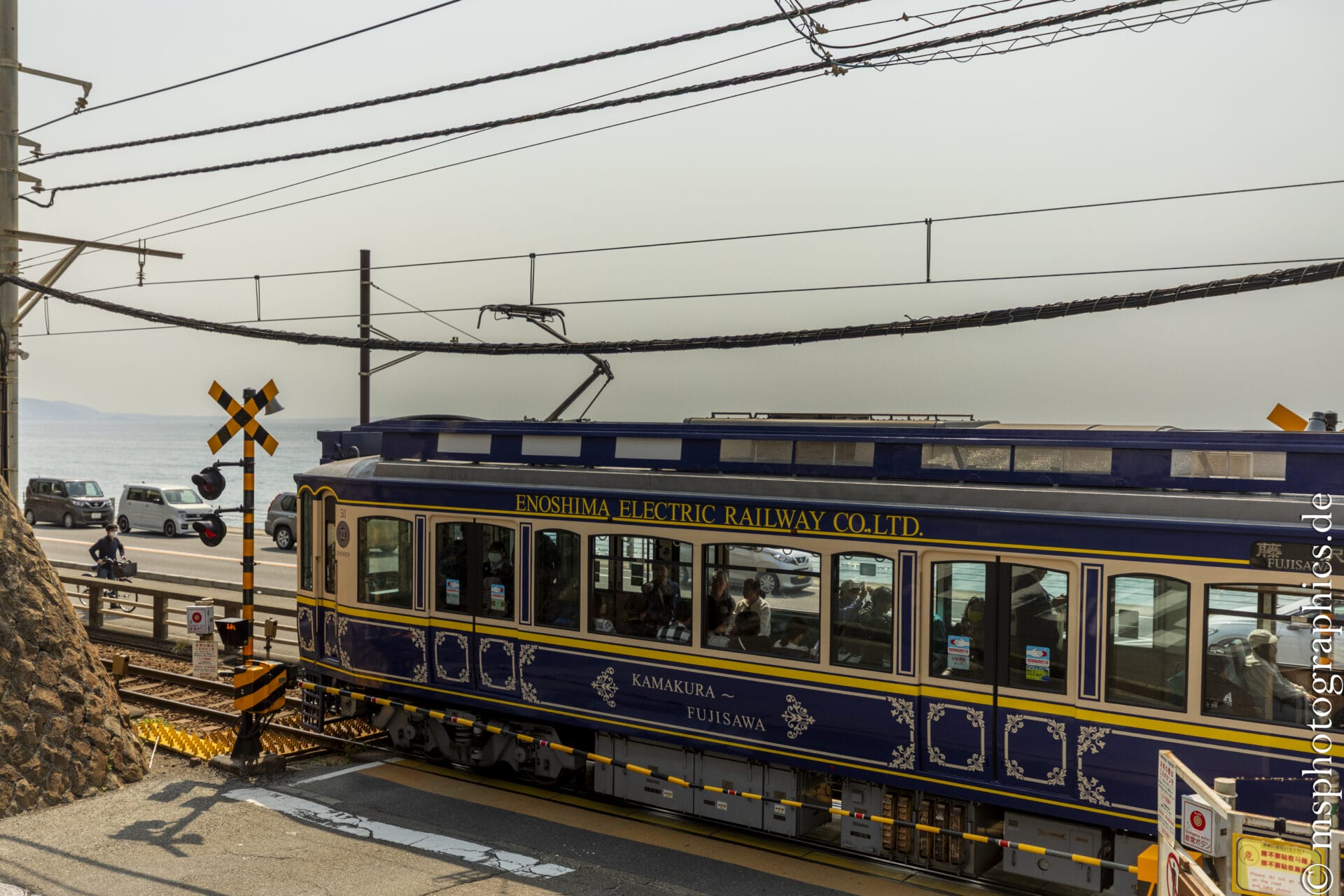
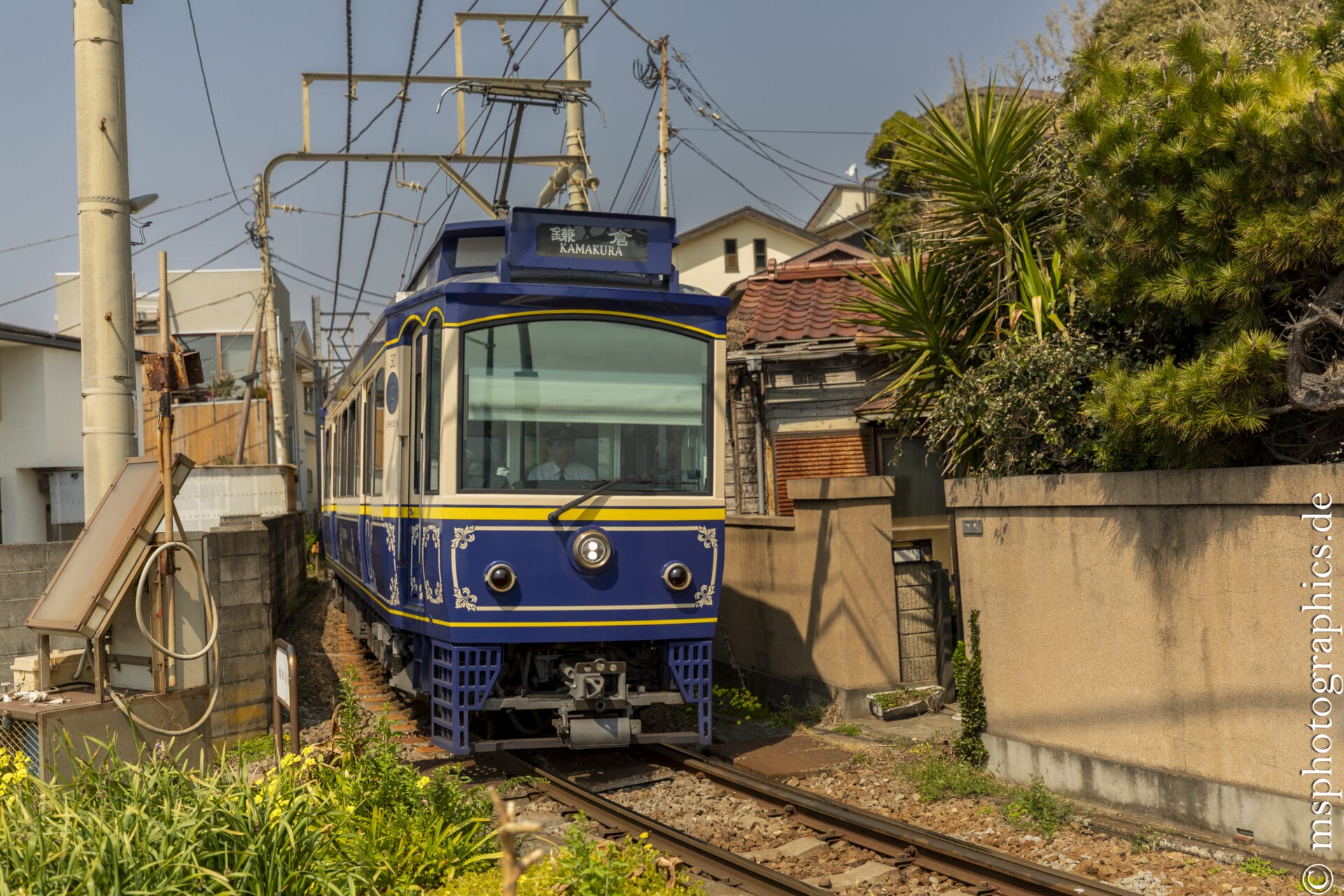
The Kamakura tram – officially Enoden (short for Enoshima Dentetsu) – is something really special and has a lot of charm.
A ride on the Enoden feels like a mini-journey back in time. The trains are relatively compact, some have a retro look, and travel through narrow streets, residential areas, past temples, and along the coast. Many people are reminded of old movies or anime.
The line connects Kamakura with Fujisawa and stops at Enoshima, a popular coastal island. Along the way, there are stops where you can discover temples and shrines, beaches with ocean views, and small, cozy stations located right in residential areas.
At times the train even runs through narrow streets right next to houses – that’s quite unique in Japan.
Enoden is famous from anime and films such as "Slam Dunk"—the railway crossing near Kamakurakōkōmae Station is a pilgrimage site for fans. The area also appears in "Your Name" and "Elfen Lied".
With an Enoden day pass (“Noriorikun”) or the Suica card, you can hop on and off flexibly to visit the Great Buddha, various temple complexes or the island of Enoshima.
When visiting Kamakura, a ride on the Enoden is not just a means of transport – it is almost a sight in itself.
The island of Enoshima:
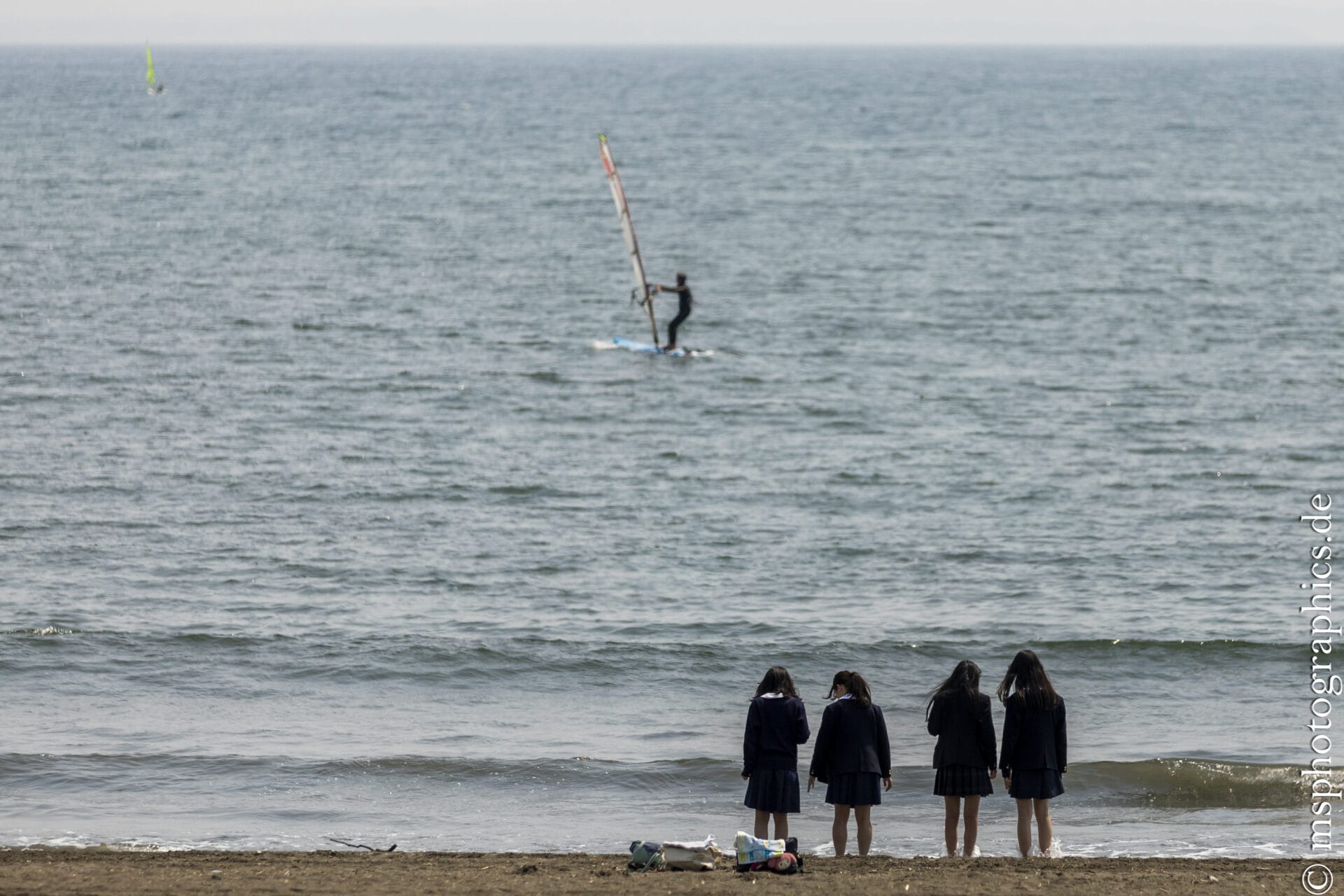
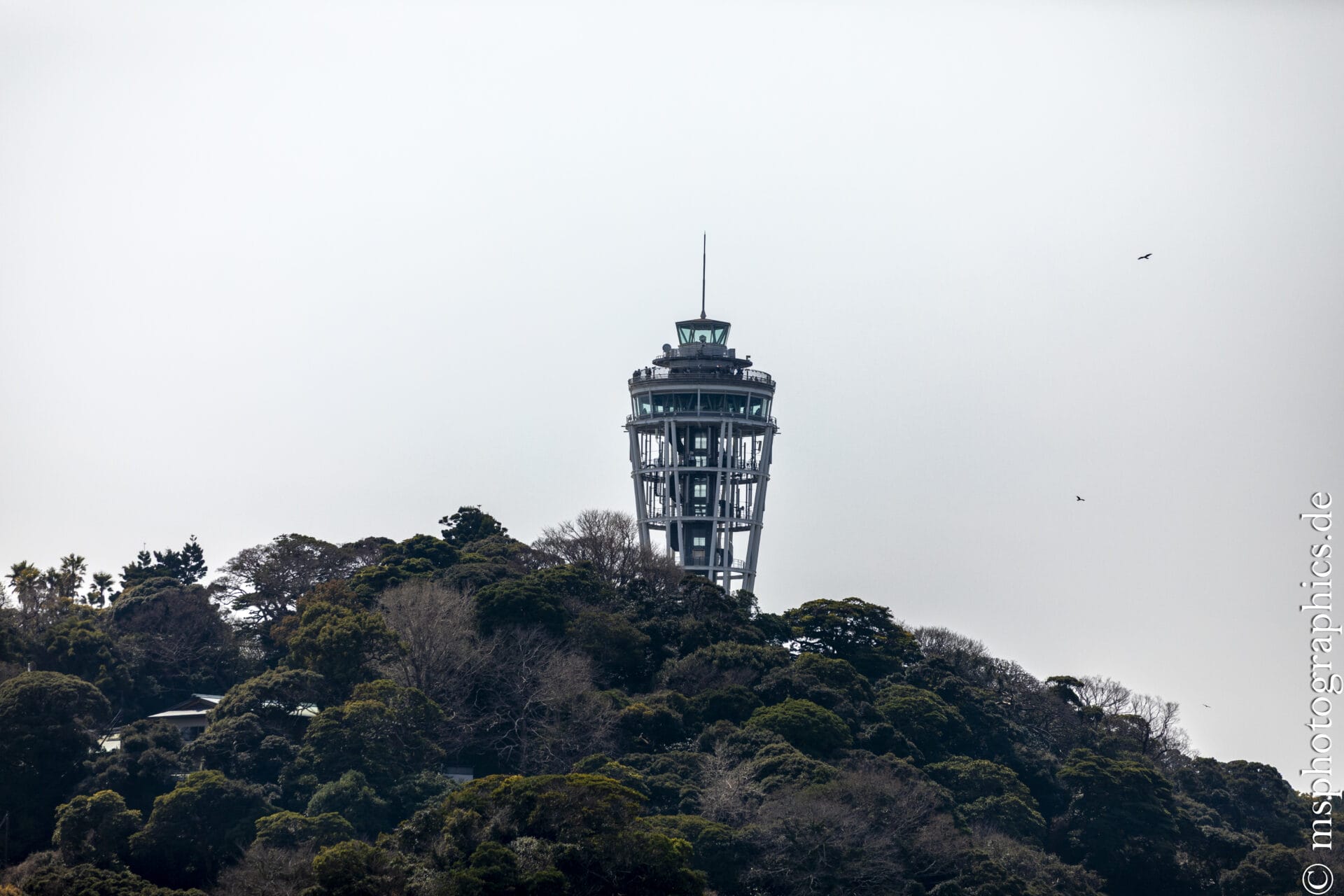
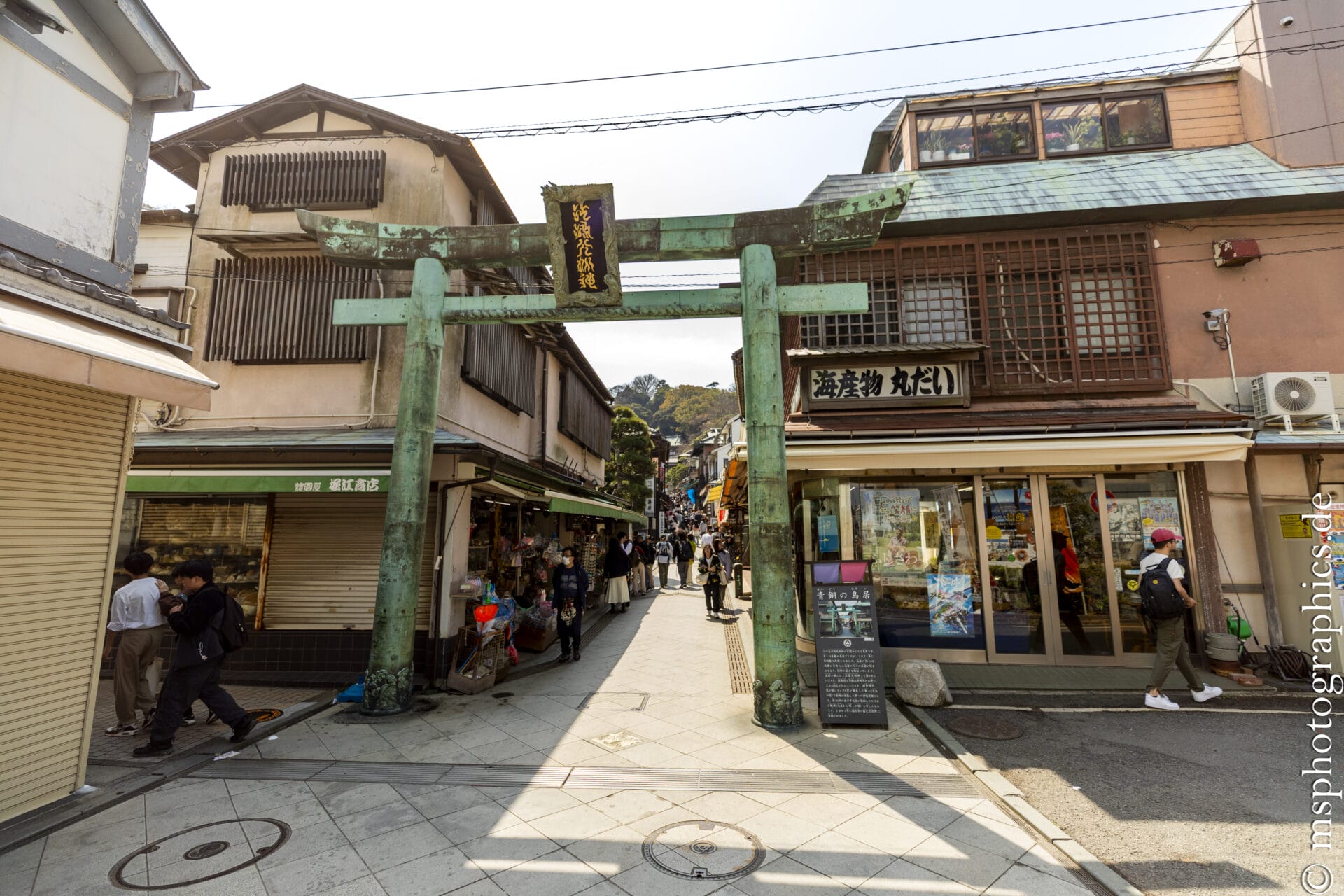
From the Enoden, the island of Endoshima is easily accessible on foot.
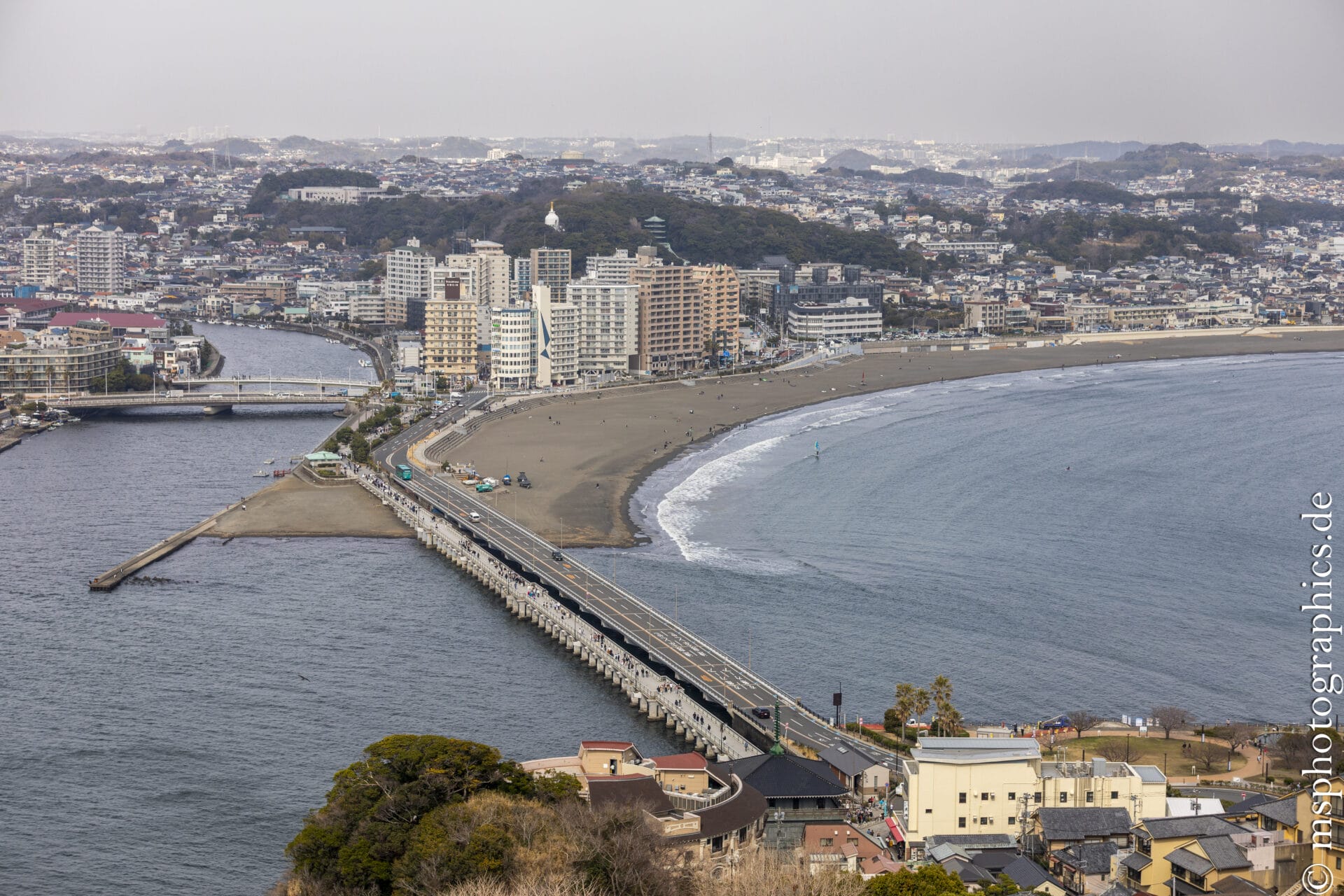
In addition to the Enoshima Sea Candle, a modern lighthouse with a viewing platform, there is a lot more to discover on the island. From the Sea Candle platform you have an impressive view of Sagami Bay and, if the weather is clear, even of Mount Fuji. The view is spectacular, especially at sunset.
The Sea Candle is surrounded by the Samuel Cocking Garden, a botanical garden with a variety of exotic plants and flowers. An ideal spot for nature lovers and photographers.
Enoshima is also known for its beaches, which are especially popular with surfers in the summer. Along the coast, there are also numerous cafés and restaurants with sea views, where you can relax or enjoy local delicacies.
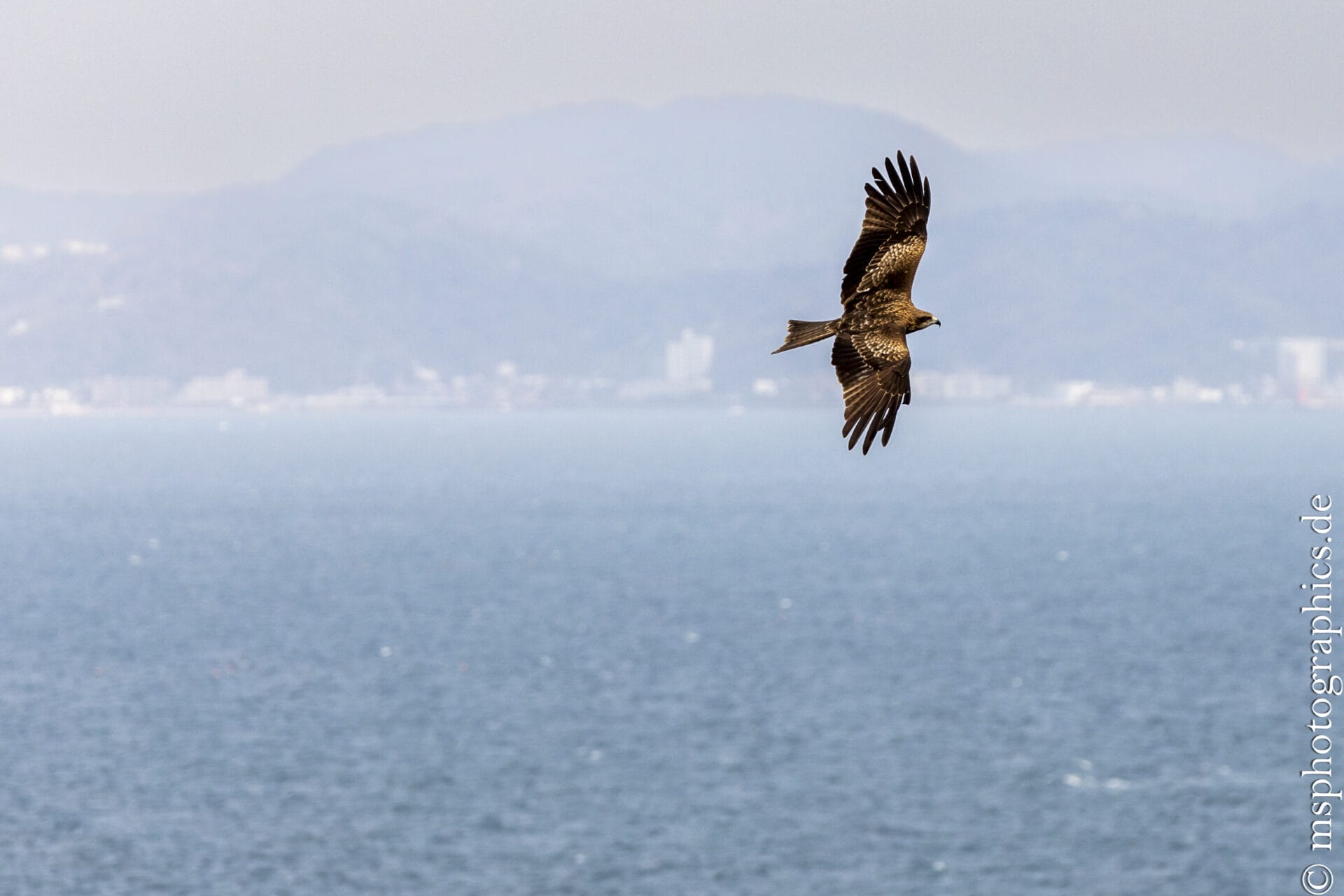
In addition to seabirds, there are also numerous birds of prey on the island. These often keep an eye on the snacks of the many tourists, hoping to snag a bite for themselves.
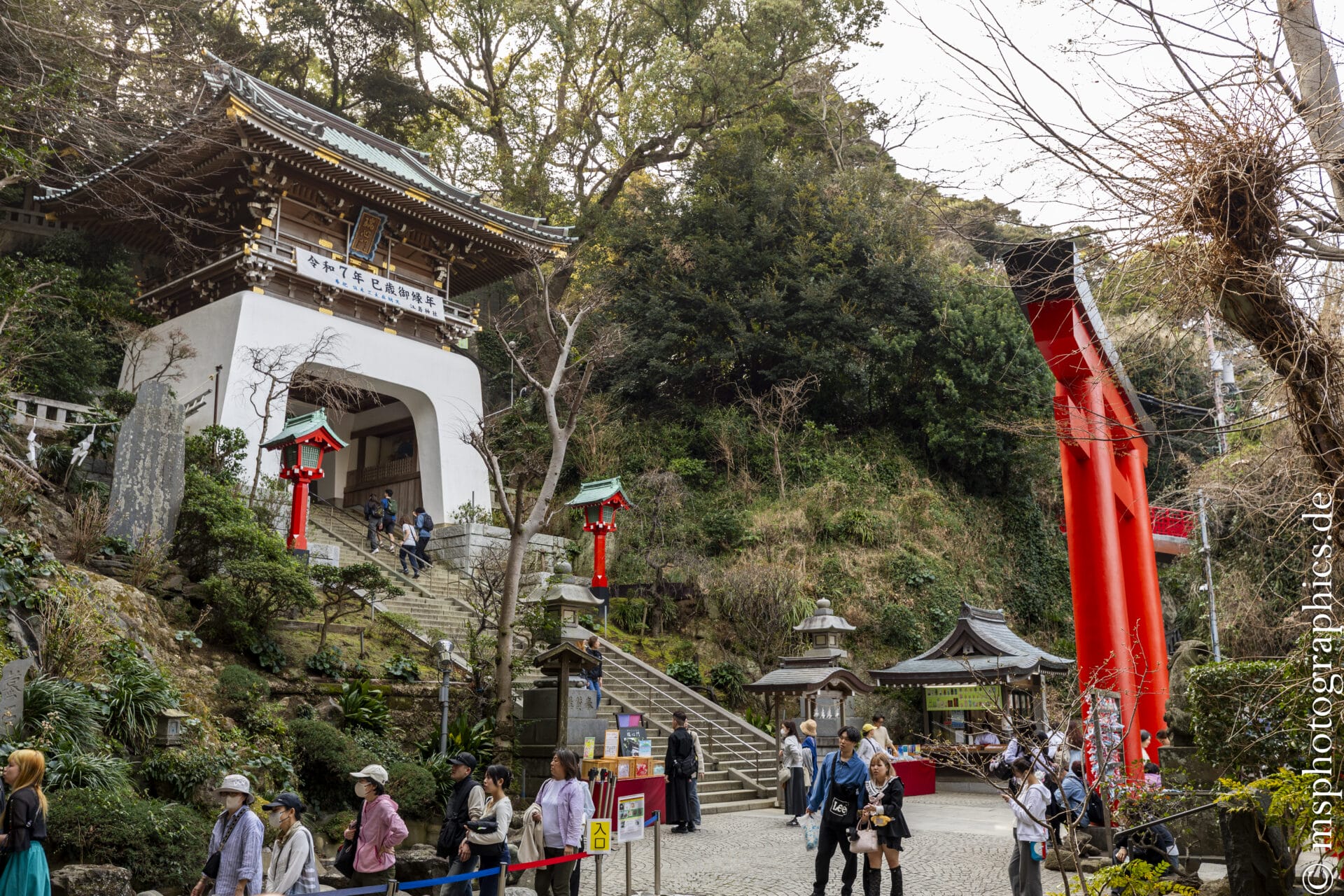
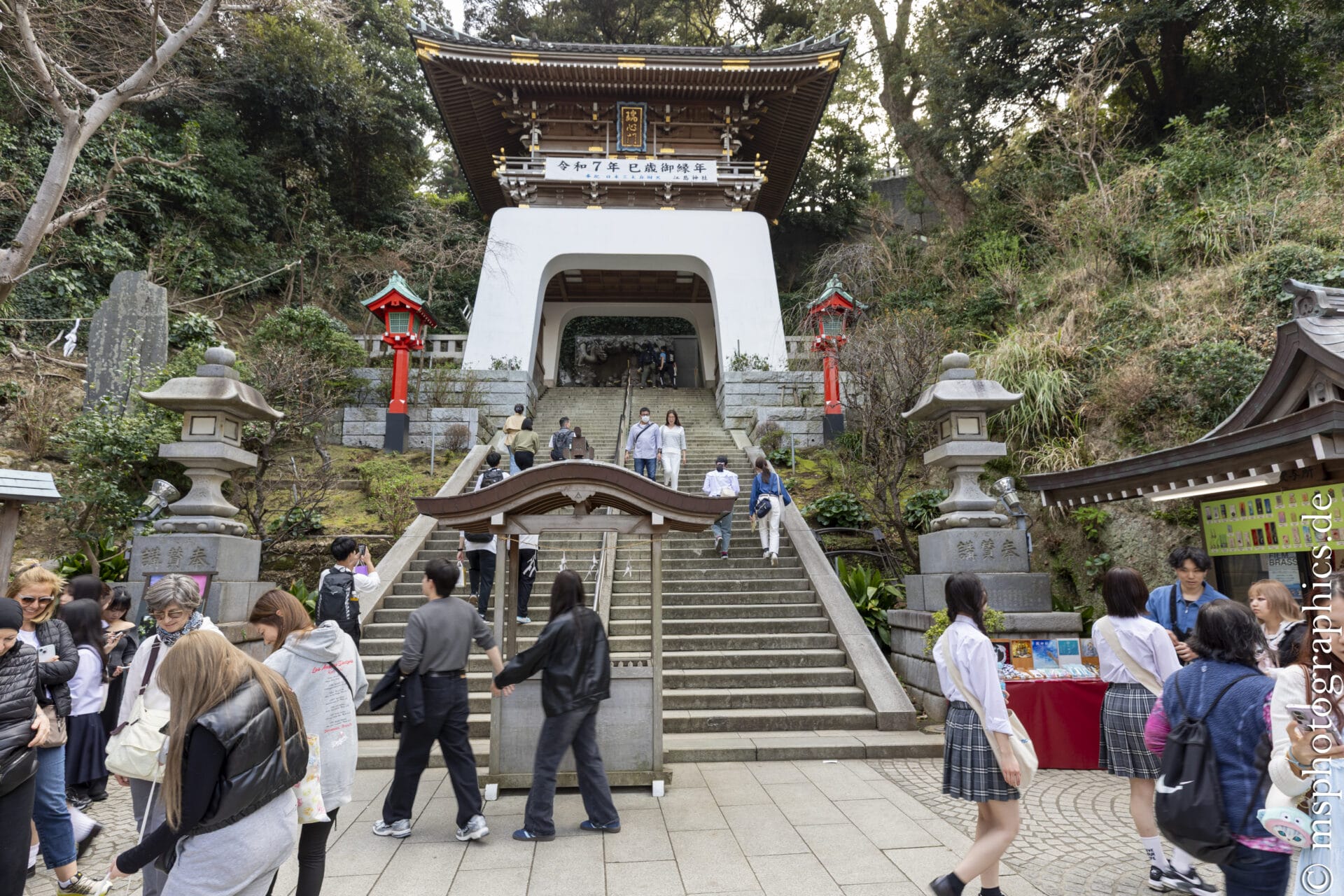
With the Enoden to the Bronze Buddha:
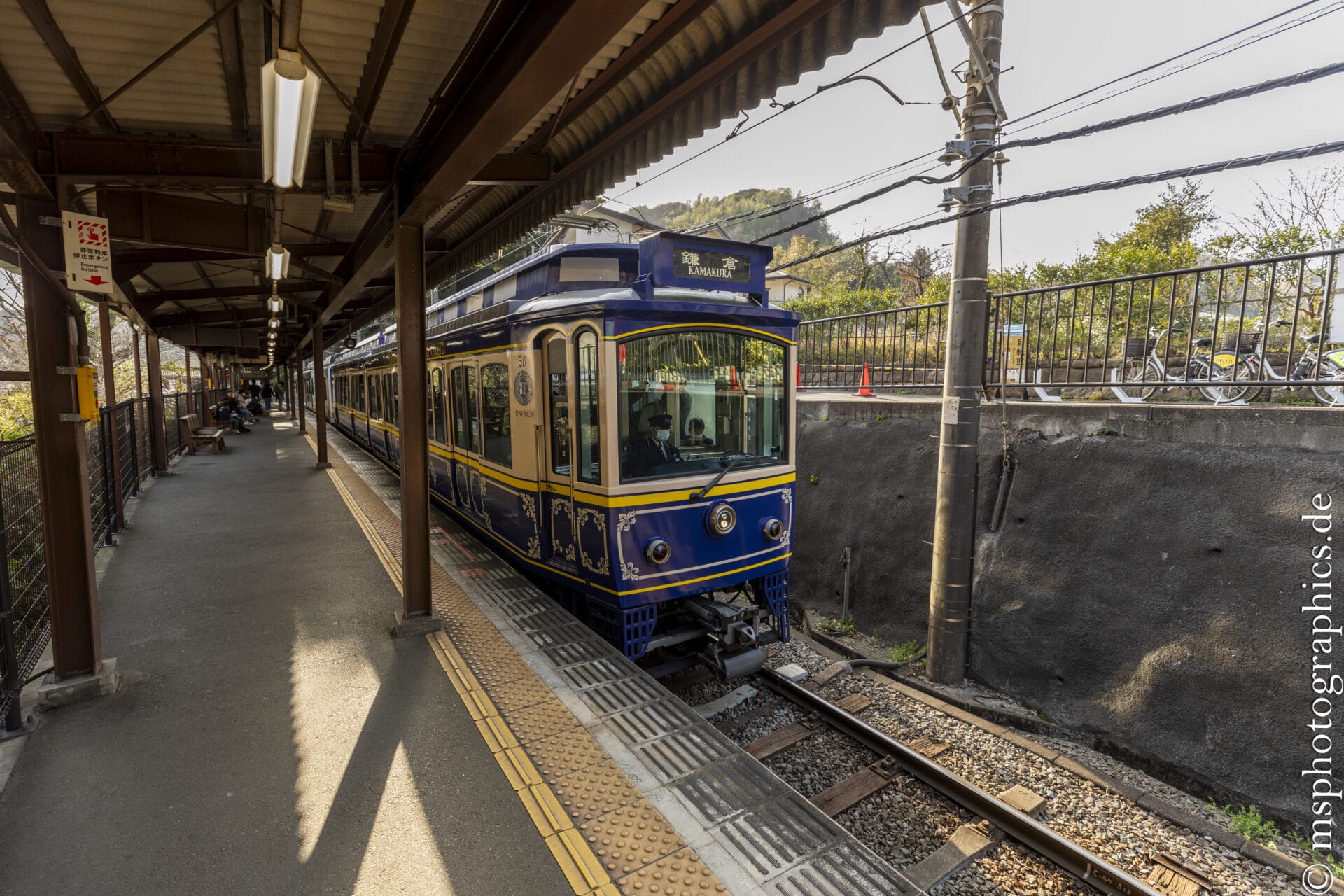
From Enoshima you can easily take the Enoden to the large bronze Buddha, the symbol of Kamakura.
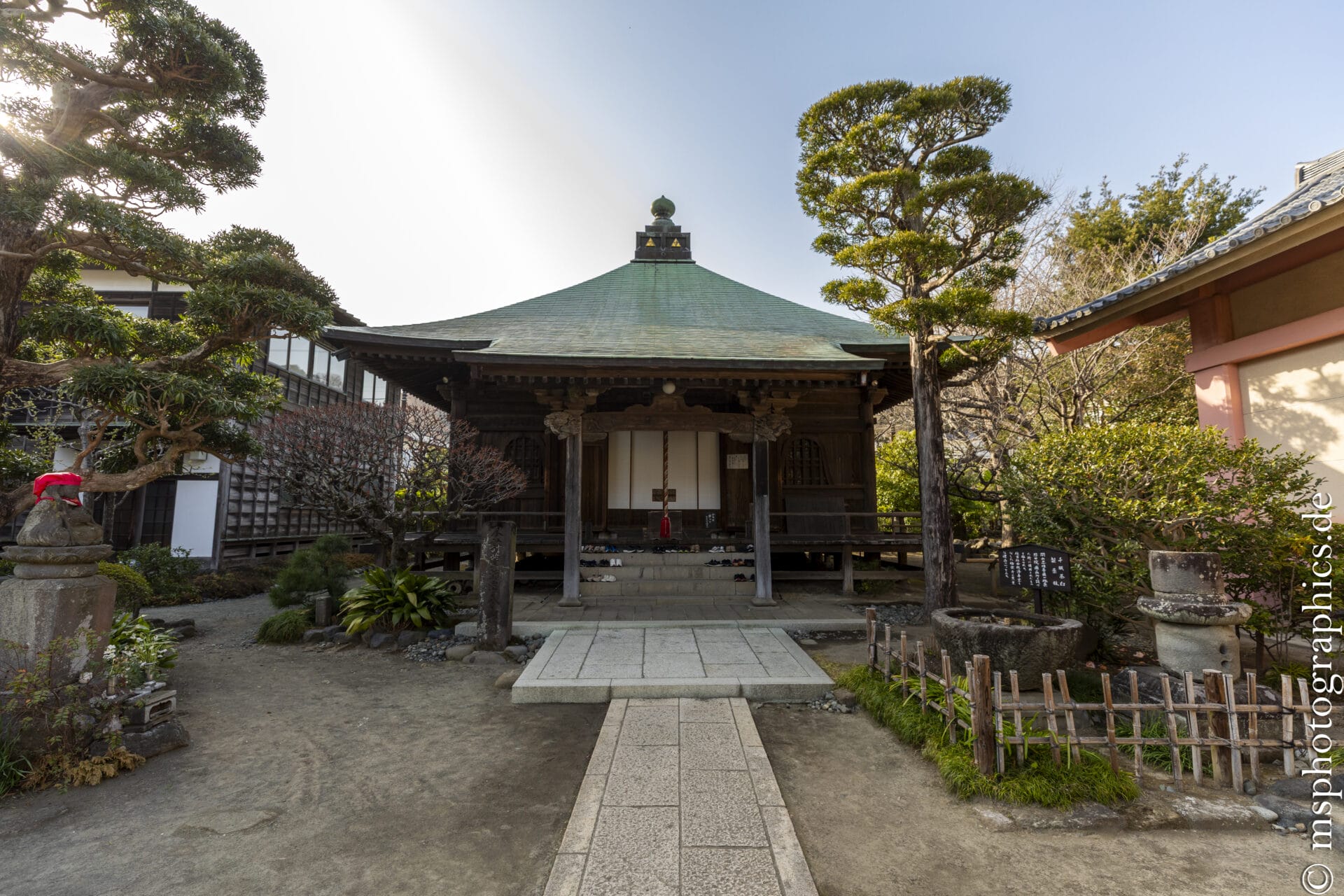
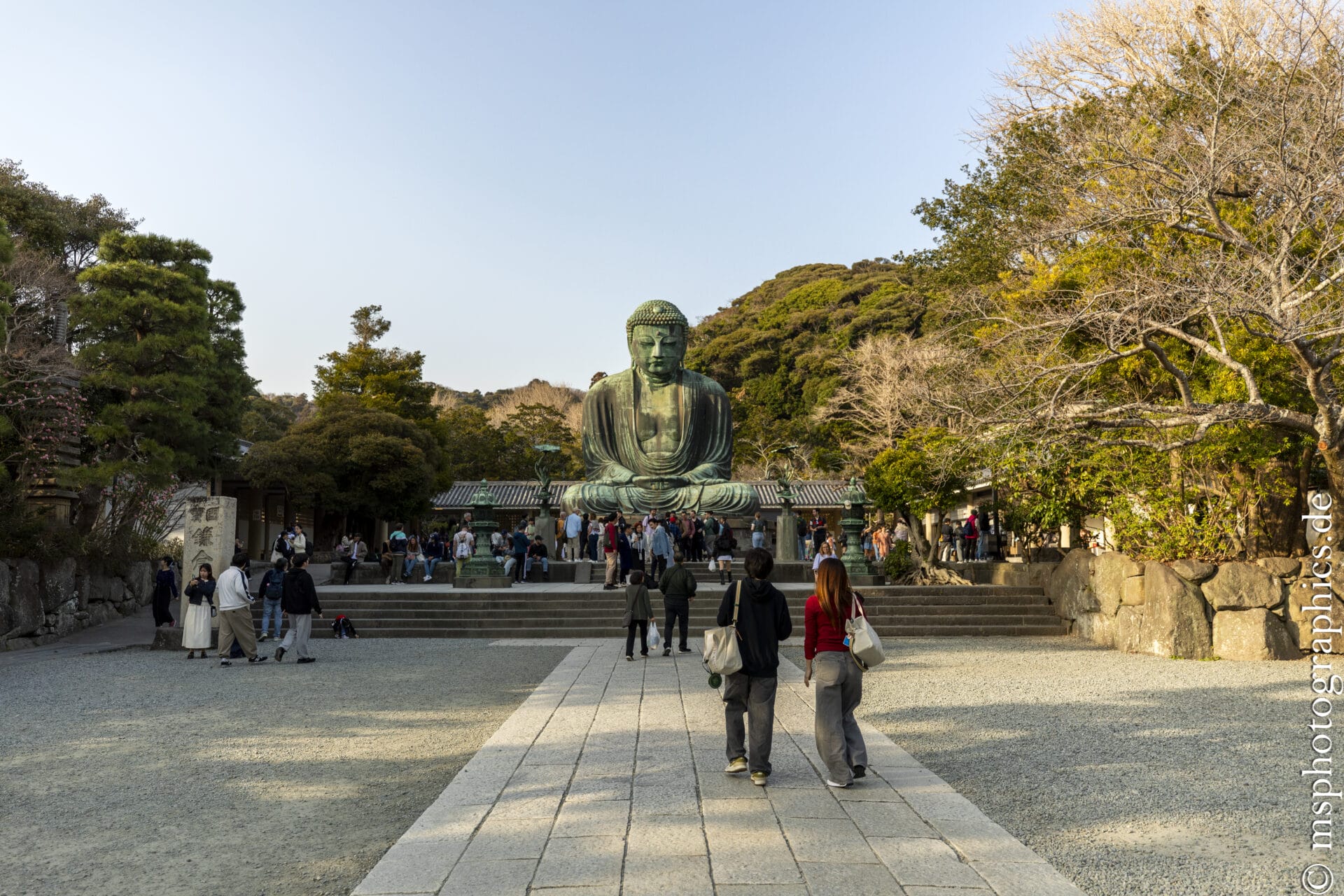

The Great Bronze Buddha of Kamakura (Kōtoku-in) is a gigantic, approximately 13-meter-tall bronze Buddha statue (Daibutsu) and the symbol of the city of Kamakura. One can even enter the statue to pray. The statue is located in a beautifully landscaped park, which is especially magnificent during the cherry blossom season.
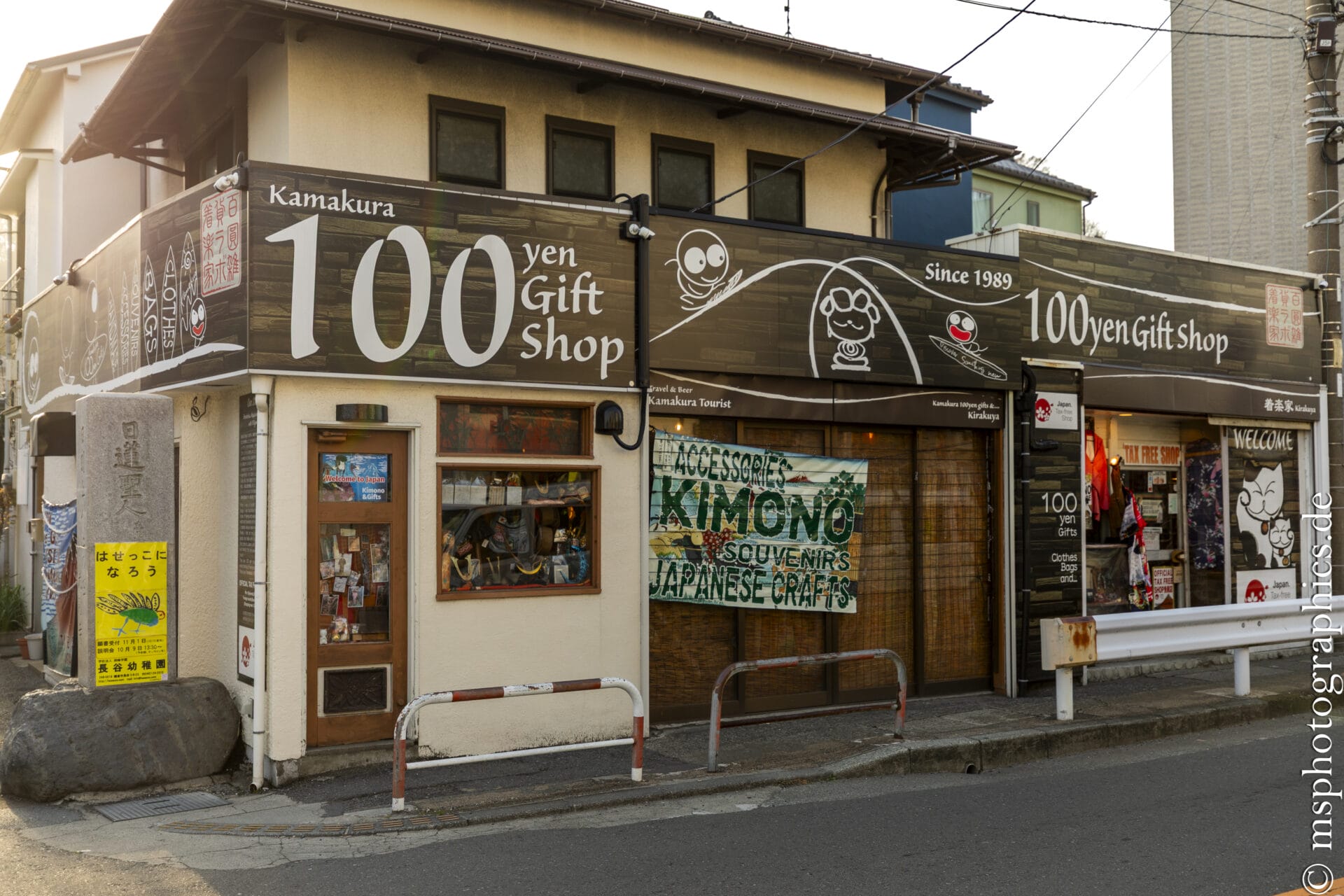
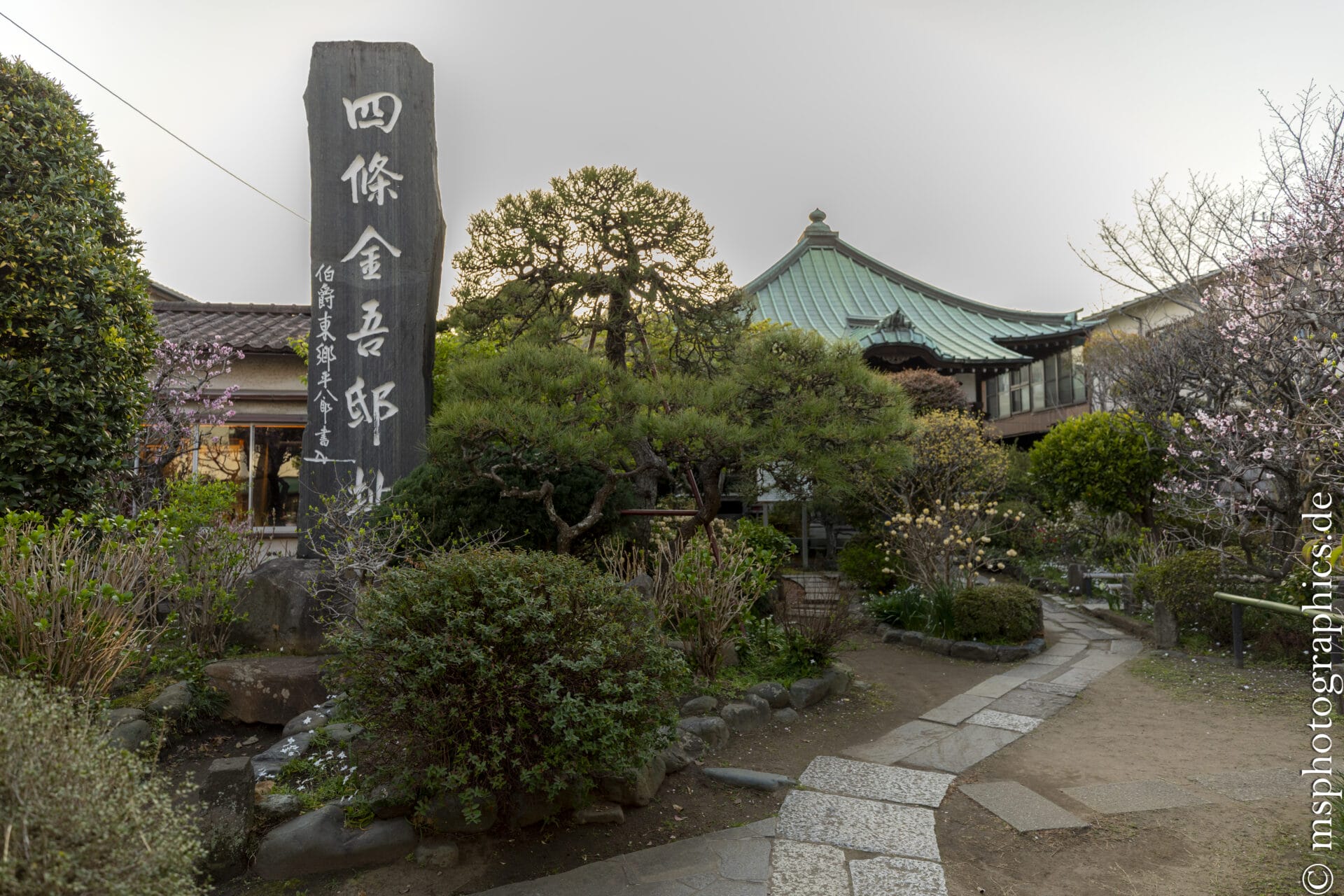
On the way from the Bronze Buddha back to the Enoden station , there are several souvenir shops, cafes and beautifully landscaped gardens along the road.
The Tsurugaoka Hachiman-gu:
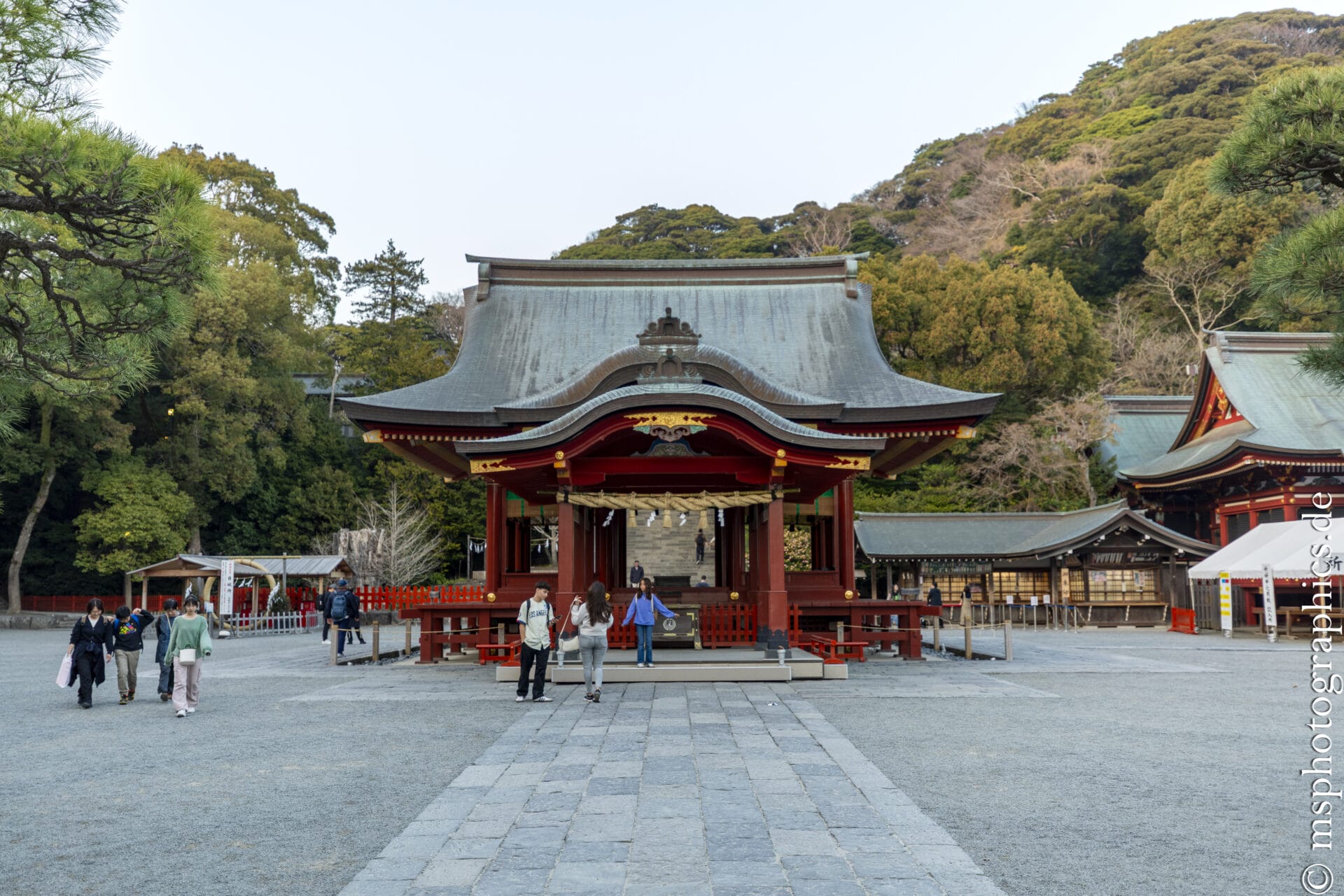
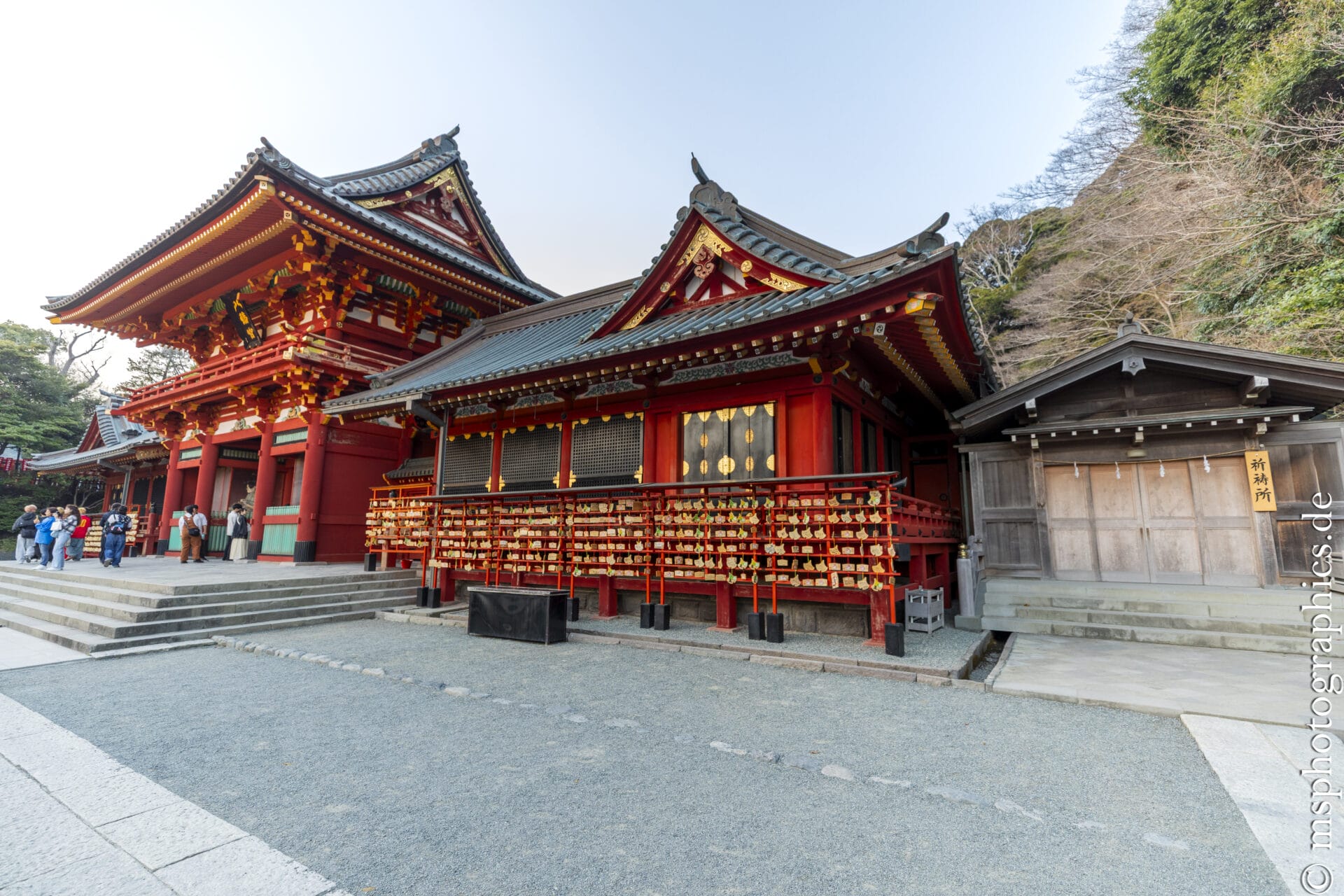
The Tsurugaoka Hachiman-gū is the most important Shinto shrine in Kamakura, at the end of the main street Wakamiya Ōji is located here. This is especially popular during New Year's and for weddings.

It is located in a beautifully landscaped park and offers a very special, spiritual atmosphere at sunset.
Nihonbashi district:
Nihombashi district, the most important sights are the Koami Shrine and the Nihonbashi Bridge.
The Koami Shrine:
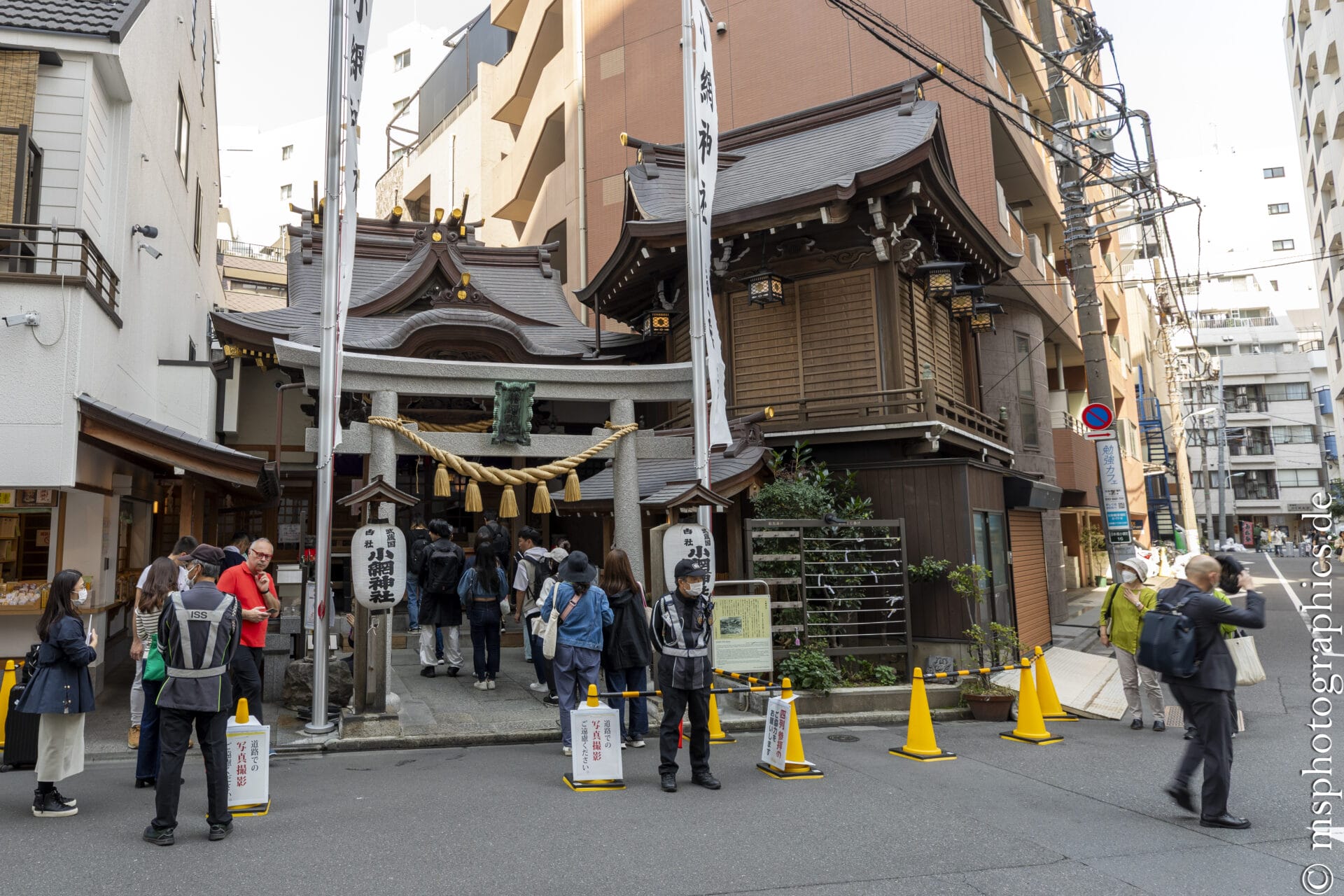
The current building of the Koami Shrine dates from 1929 and is the only surviving pre-war period wooden building in the Nihonbashi district.
It survived the Great Kanto Earthquake of 1923 and the air raids on Tokyo in 1945 unscathed, giving the shrine its reputation as a place of protection.
It is dedicated to the deities
Ukanomitama-no-Kami, for protection against misfortune and the promotion of great good fortune;
Ichikishimahime-no-Kami, for prosperity, the arts, music, and academic success; and
Fukurokuju, for longevity, health, and spiritual well-being.
Furthermore, the ritual serves to bring financial blessings through *Zeni-arai* (money washing). Visitors wash coins or banknotes in the "Zeni-arai no I" (money-washing well) to create "seed money," which is believed to multiply and bring good fortune when kept in one's wallet.
Tip: Keep unspent laundered coins for a year and do not spend them immediately.
The Nihonbashi Bridge:
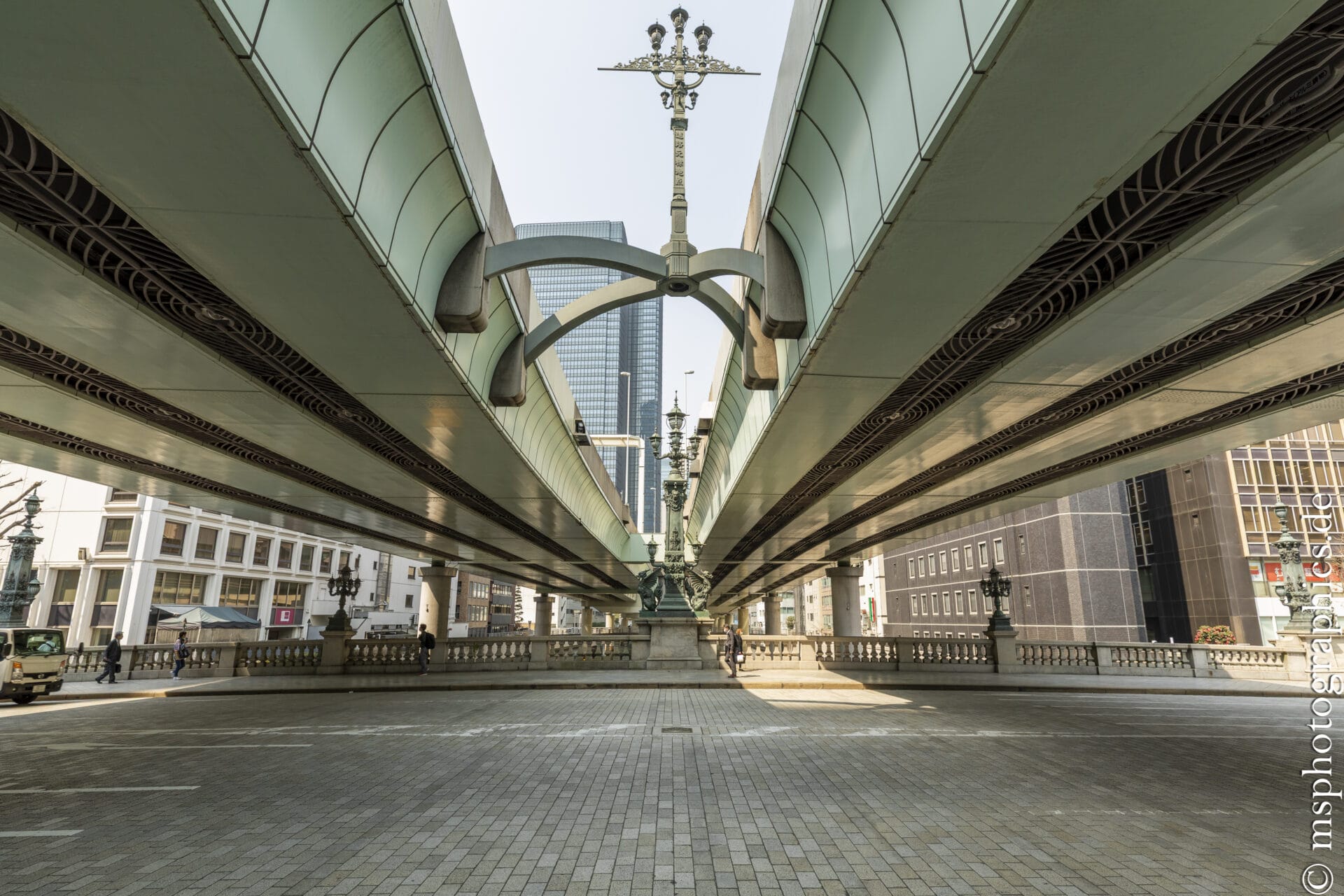
The Nihonbashi Bridge, located in the center of the eponymous commercial district of Chūō, has connected both banks of the Nihonbashi River since the 17th century. Today, it marks the kilometer zero point of the Japanese road network.
The first construction of the wooden bridge in 1603 under Tokugawa Ieyasu was the starting point of the five main roads of Edo.
The present bridge was built in 1911 according to a design by Tsumaki Yorinaka as a stone structure on a steel frame.
Kilometer Zero is marked by a bronze relief in the center of the bridge. It represents the official zero-meter point for measuring distances in Japan.
The Nihonbashi Bridge survived the Great Kanto Earthquake of 1923 largely unscathed.
It largely withstood the firestorm of 1945. A section of the stone balustrade still bears burn scars today, one of the few visible traces of the air raid.
The expressway over the bridge was elevated for the 1963 and 1964 Olympic Games. Plans to relocate it underground are in place and are expected to be completed by 2041.
Departure from Tokyo Station:
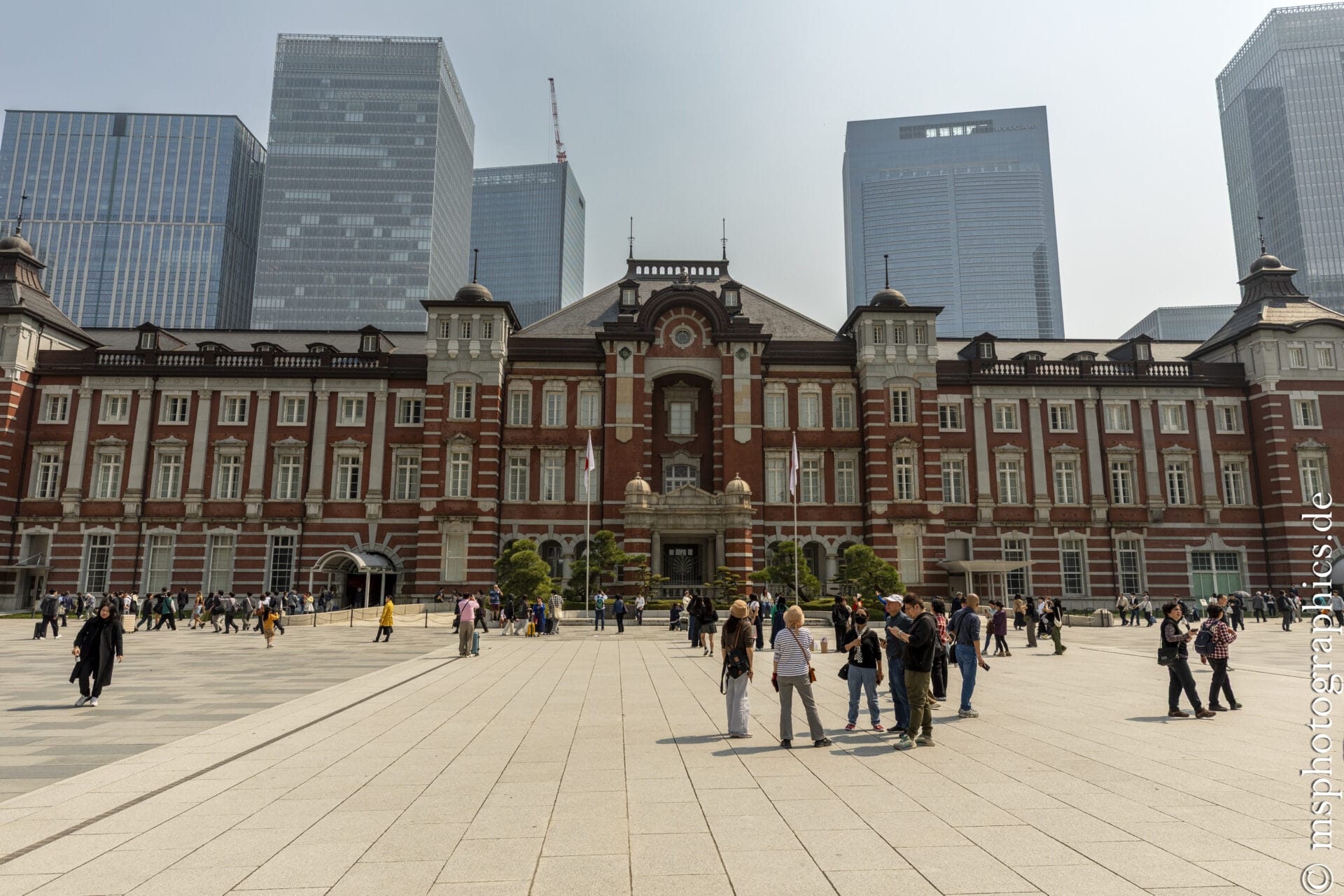
Tokyo Station is the central railway hub in the Chiyoda district and serves as the starting point of the Japanese railway network. The brick facade on the Marunouchi side, which still stands today, dates back to its opening in 1914 and was designed by Tatsuno Kingo.
The station was opened in 1914 as a common terminus for the Tōkaidō, Tōhoku and Chūō lines.
During World War II, the roof domes and the upper floor were destroyed in fire attacks in 1945. Reconstruction until 1947 reduced the building to two upper floors.
In 2012, the original domes were reconstructed, and a representative forecourt was created in front of the Marunouchi entrance.
For us, the journey continued from this historic station to Kyoto on the Shinkansen, Japan's high-speed train.
Conclusion:
Tokyo rightfully enjoys a reputation as a cosmopolitan city. Four days are far from enough to discover everything the city and its surroundings have to offer.
Nevertheless, there was enough time to form a positive first impression, from the culture and history to the lives of the people, their culinary customs, fascinating nature and breathtaking views.
Not having seen everything is definitely a reason to come back and discover more of Tokyo.
This report is part of my series Southeast Asia travel reports – there you will find an overview of all countries.
0 Comments