

Bali & East Java in 12 days - Travel planning:
For the round trip Bali & East Java from Beijing , I planned a total of 12 days. After intensive research, I contacted a friend of mine from Indonesia, who also lives and works in Beijing, to check the travel plans for feasibility and adjust them if necessary. After the final preparation, I was able to get an English-speaking driver organized by my colleague, who led the tour including pick-up from the airport in Denpasar on Bali.
From Beijing, Denpasar Airport on the Indonesian island of Bali can be reached in around 7 hours by plane.
I took the trip in late September to early October to avoid the national holidays in China. The rainy season in Bali actually starts in October, but the weather was excellent and the temperatures very pleasant.
Nevertheless, warm, weatherproof clothing and sturdy shoes are a must for climbing the volcanoes in the east of the island of Java. In particular, the path to the Ijen volcano, where the hike to the crater begins at around 1 a.m., can be damp and slippery at times. At the latest, however, the descent into the crater, to the local sulfur mine, is impossible without appropriate footwear.
It is also advisable to have head or hand lamps with appropriate replacement batteries in your luggage. Charcoal tablets or a remedy for an upset stomach should also not be missing in your luggage. Anyone visiting Indonesia for the first time runs the risk of getting to know the “Bali Belly”, a kind of gastrointestinal virus that can quickly destroy a fixed travel plan.
Arrival in Denpasar on the island of Bali:
The arrival in Denpasar on the island of Bali was in the evening, so after being picked up by the driver we went directly to the hotel near the airport.
The accommodation “The Anvaya Beach Resort Bali”:
For the first and last two nights, the choice fell on the accommodation "The Anvaya Beach Resort Bali". The hotel is located directly at the beach and is only about one kilometer away from the airport, making it ideal for avoiding long drives to and from the airport on arrival and departure.
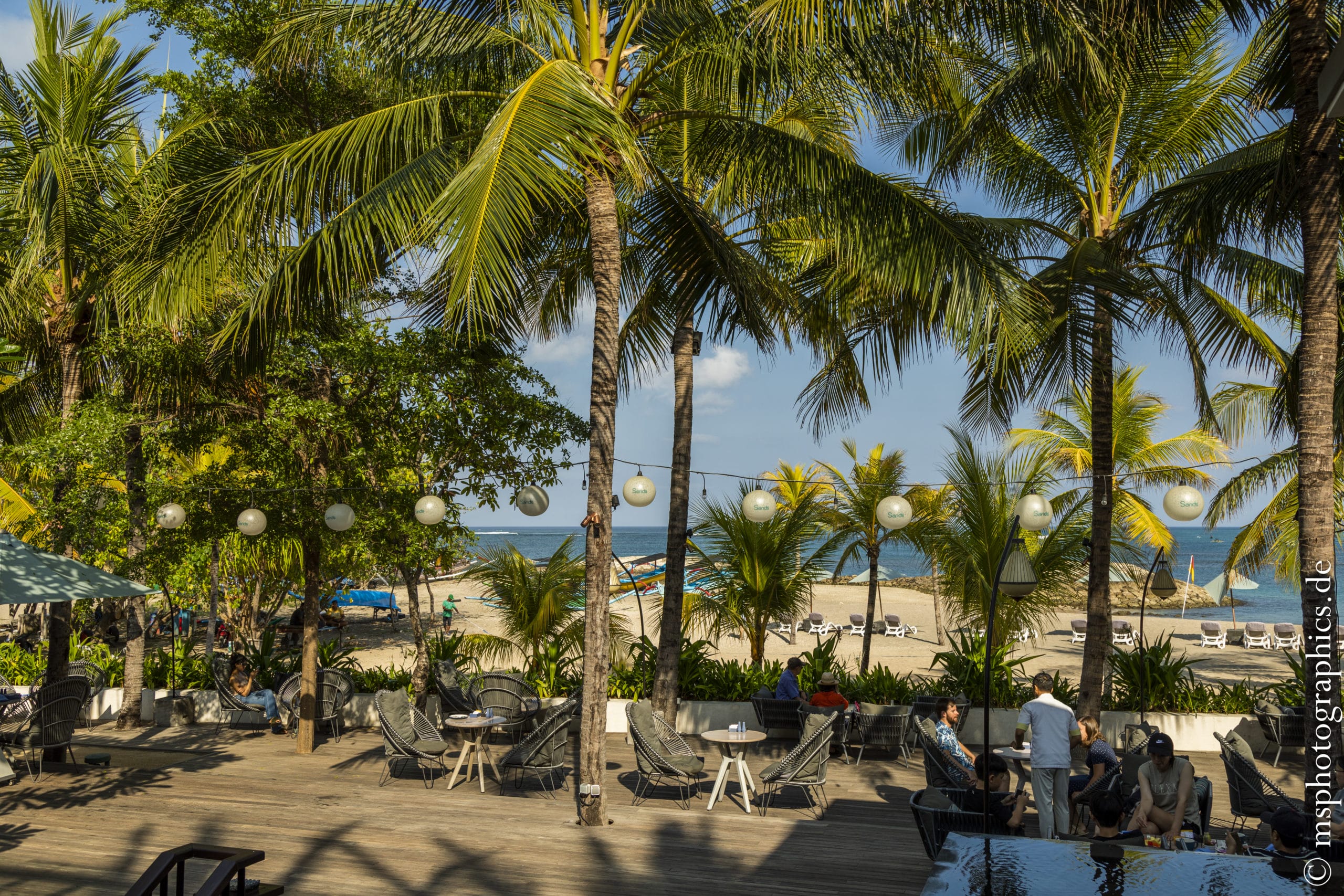

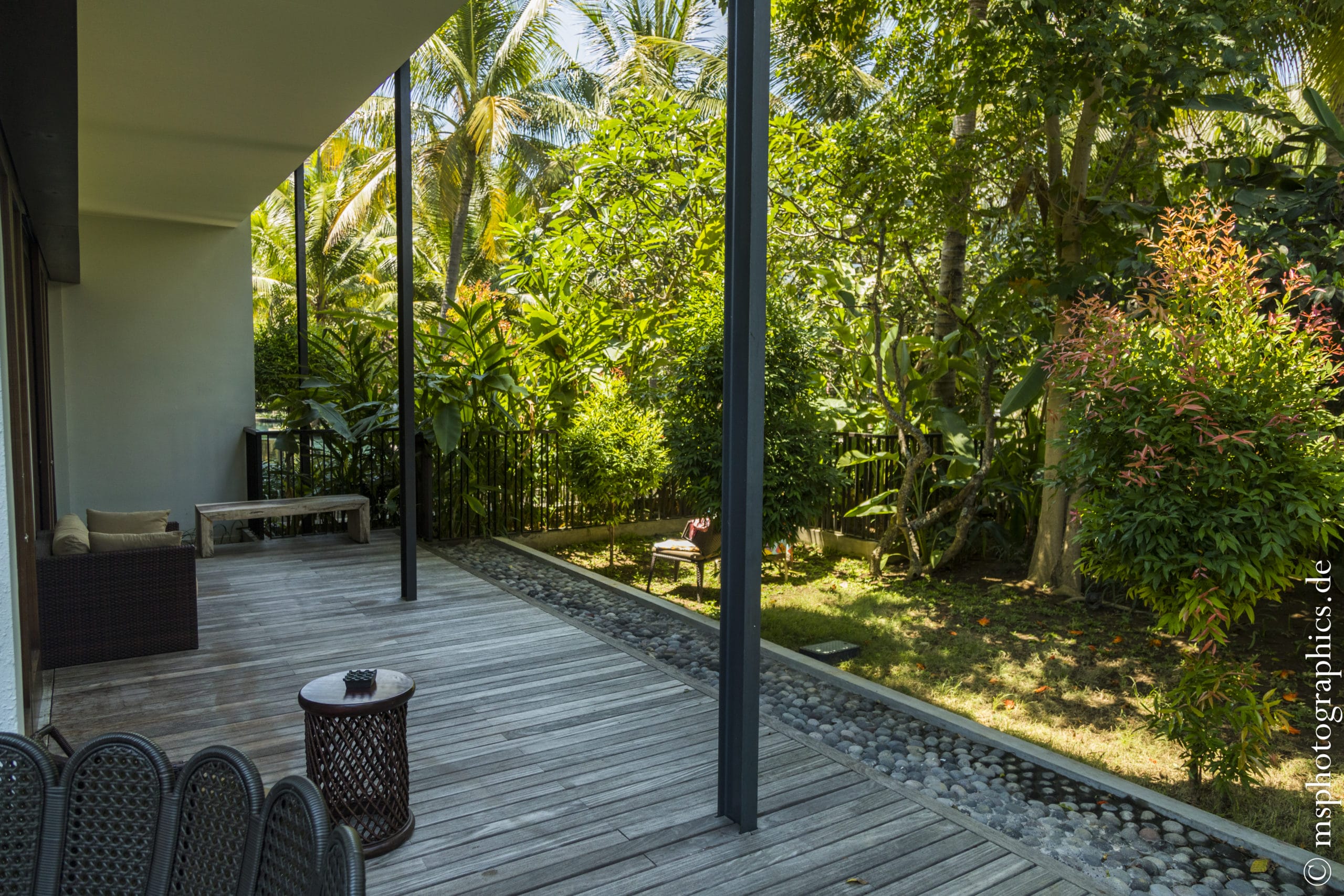

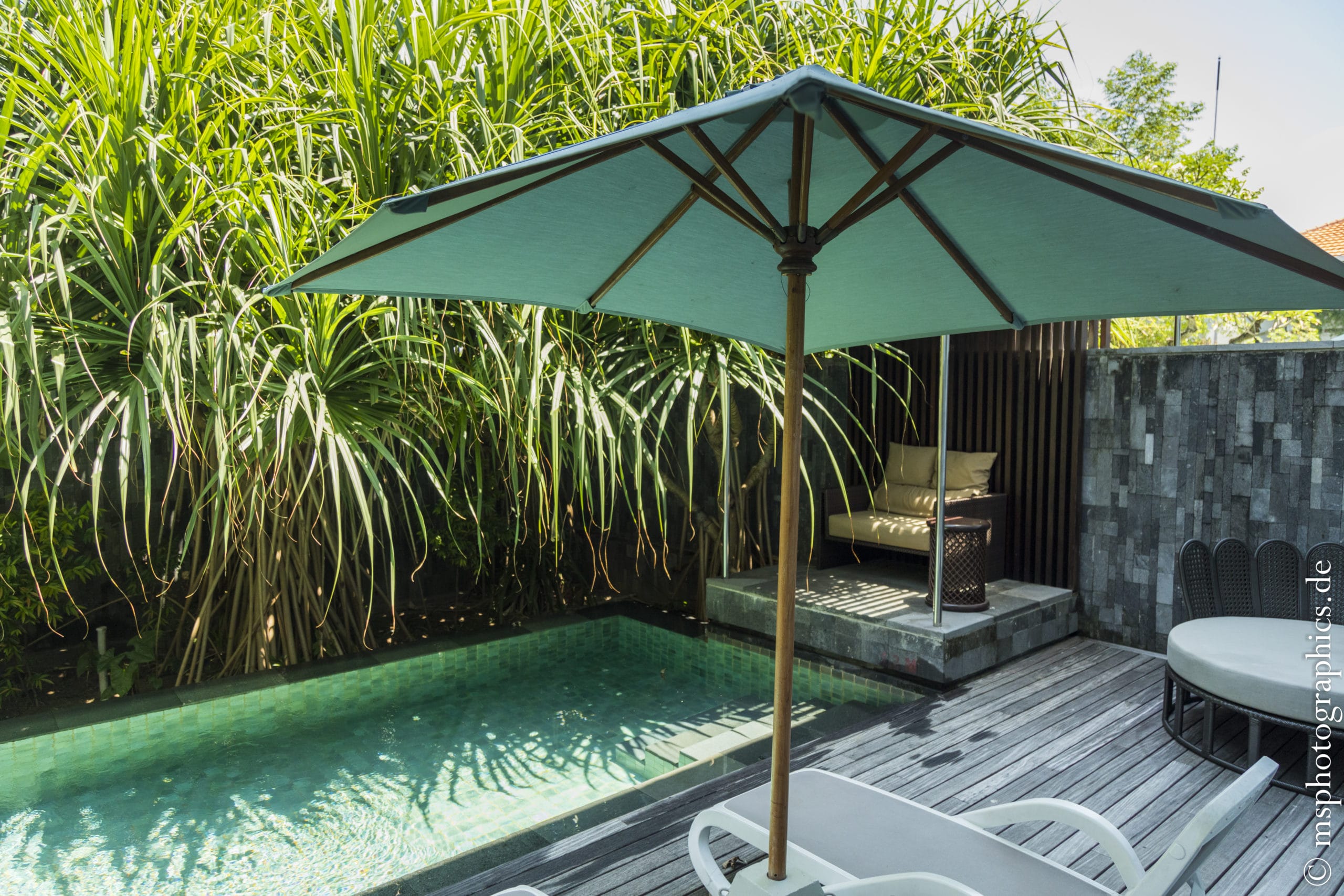
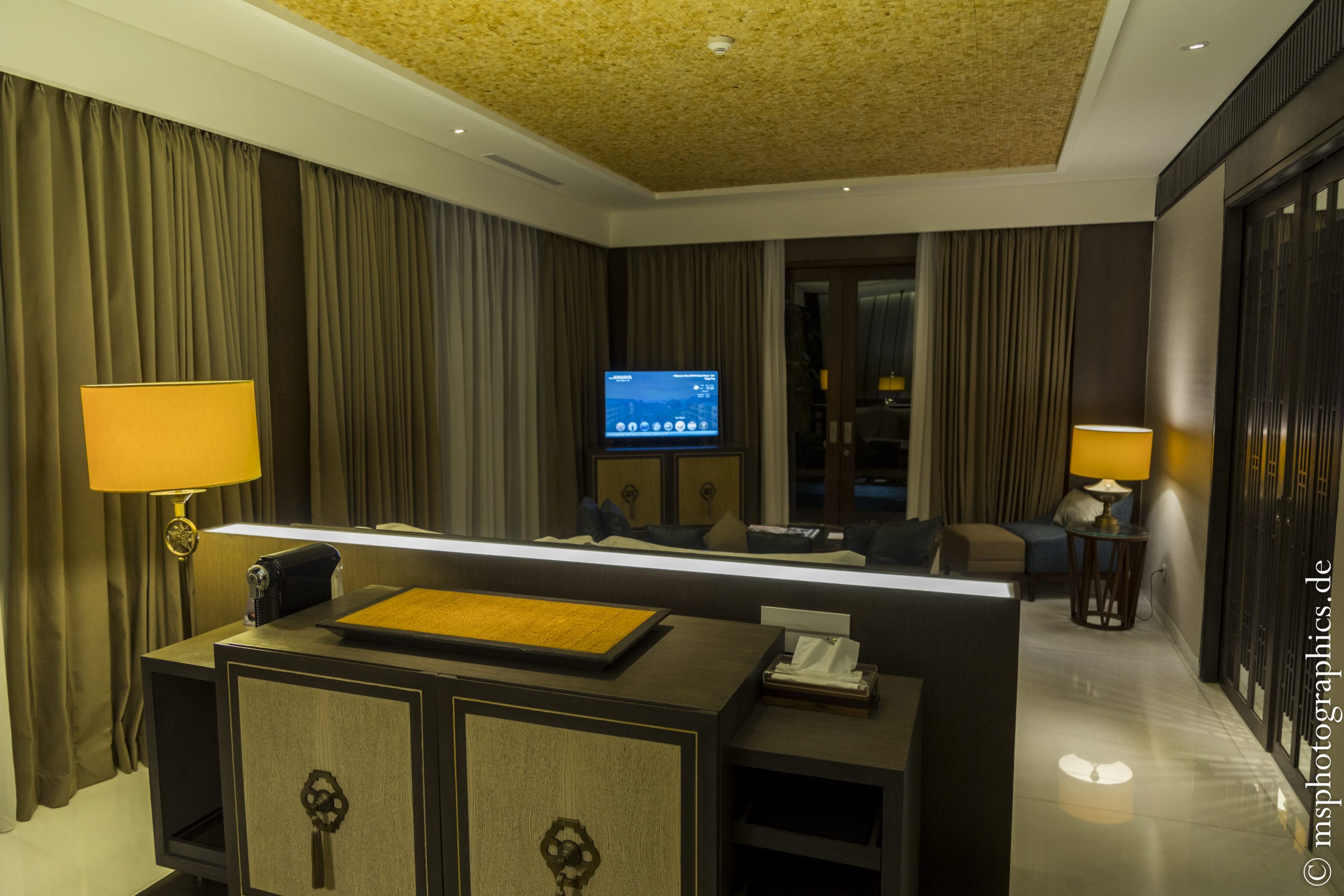
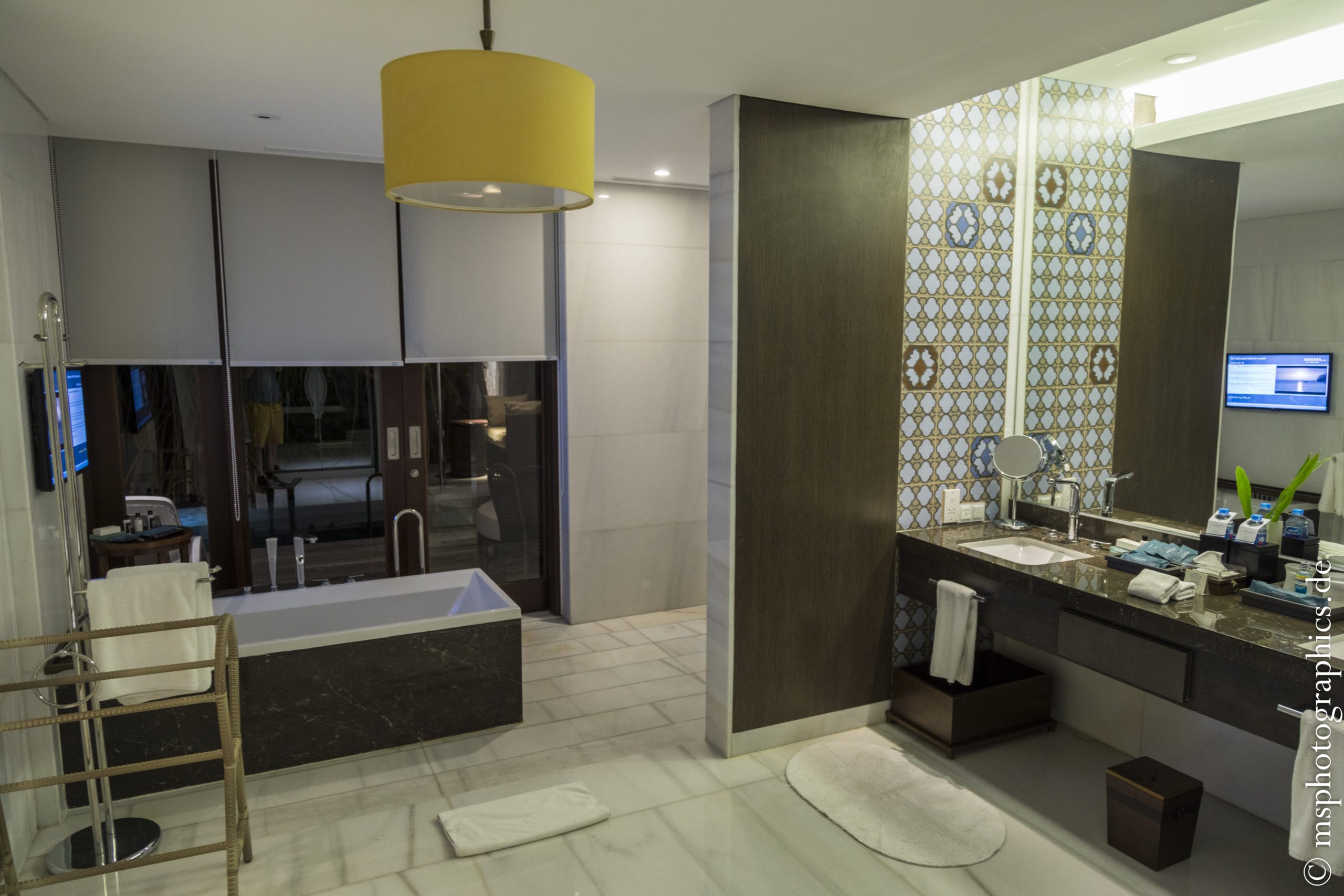
The hotel is relatively large, the rooms are clean and nothing is missing. If you want, you can reserve a room with a terrace, garden and private pool. The breakfast buffet is excellent and offers everything your heart desires. Excellent, Indonesian coffee included.
The journey from Denpasar in Bali to Banyuwangi in Java:
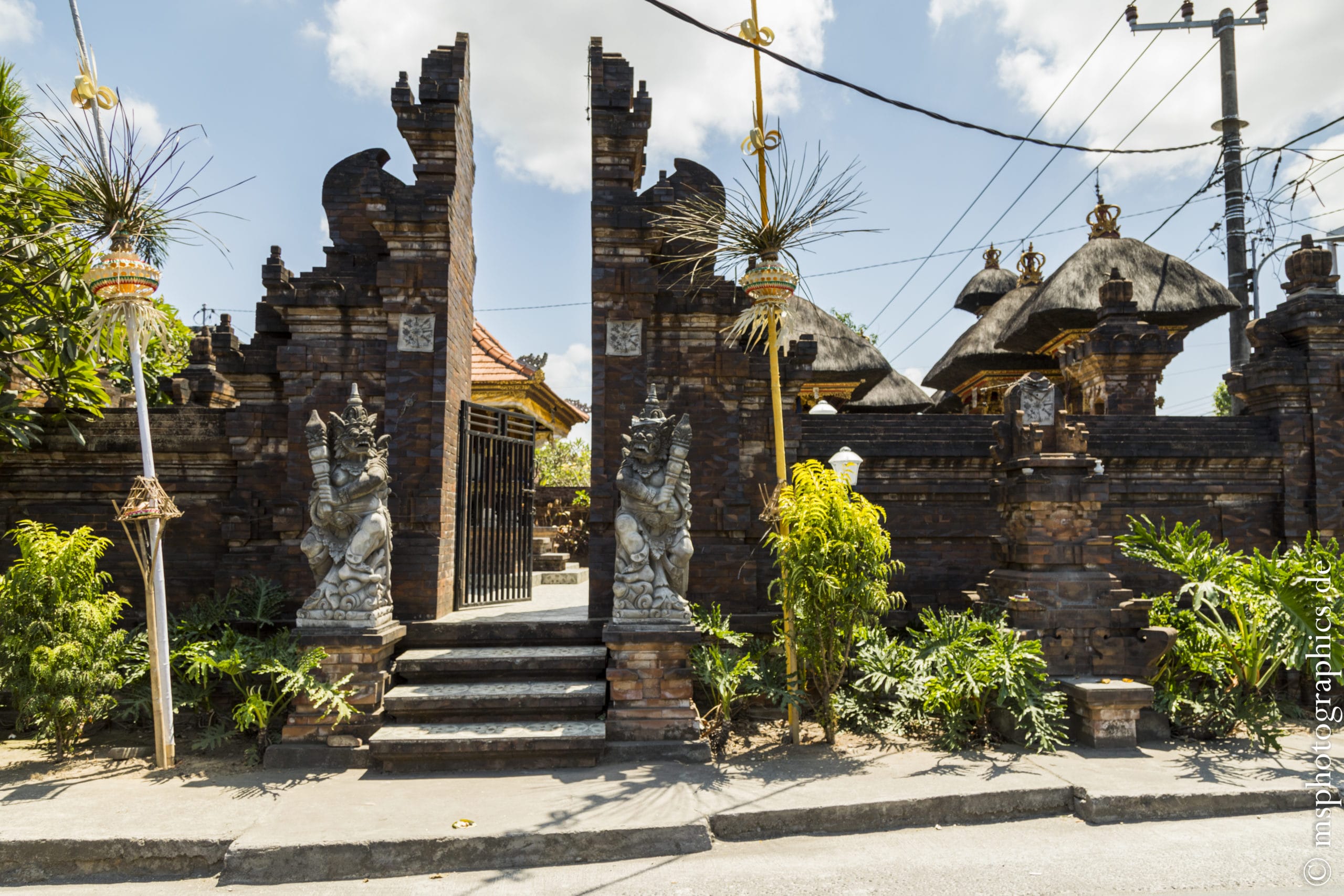
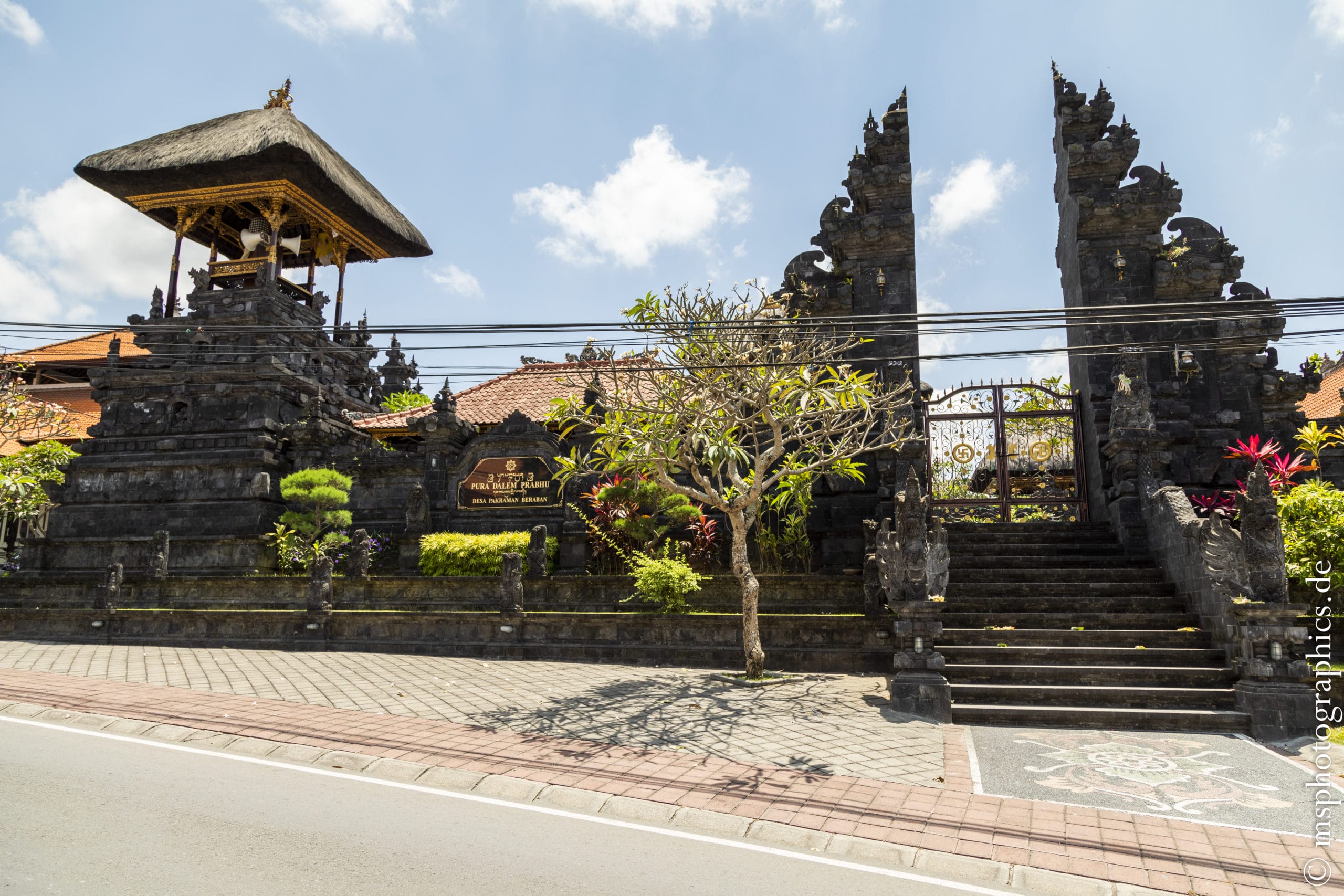
After breakfast and check-out at the hotel, the five-hour drive from Denpasar passing the Tanah Lot temple complex to the ferry terminal in Gilimanuk began. From there we used the ferry to Banyuwangi on Java.
The sea temple Tanah Lot:
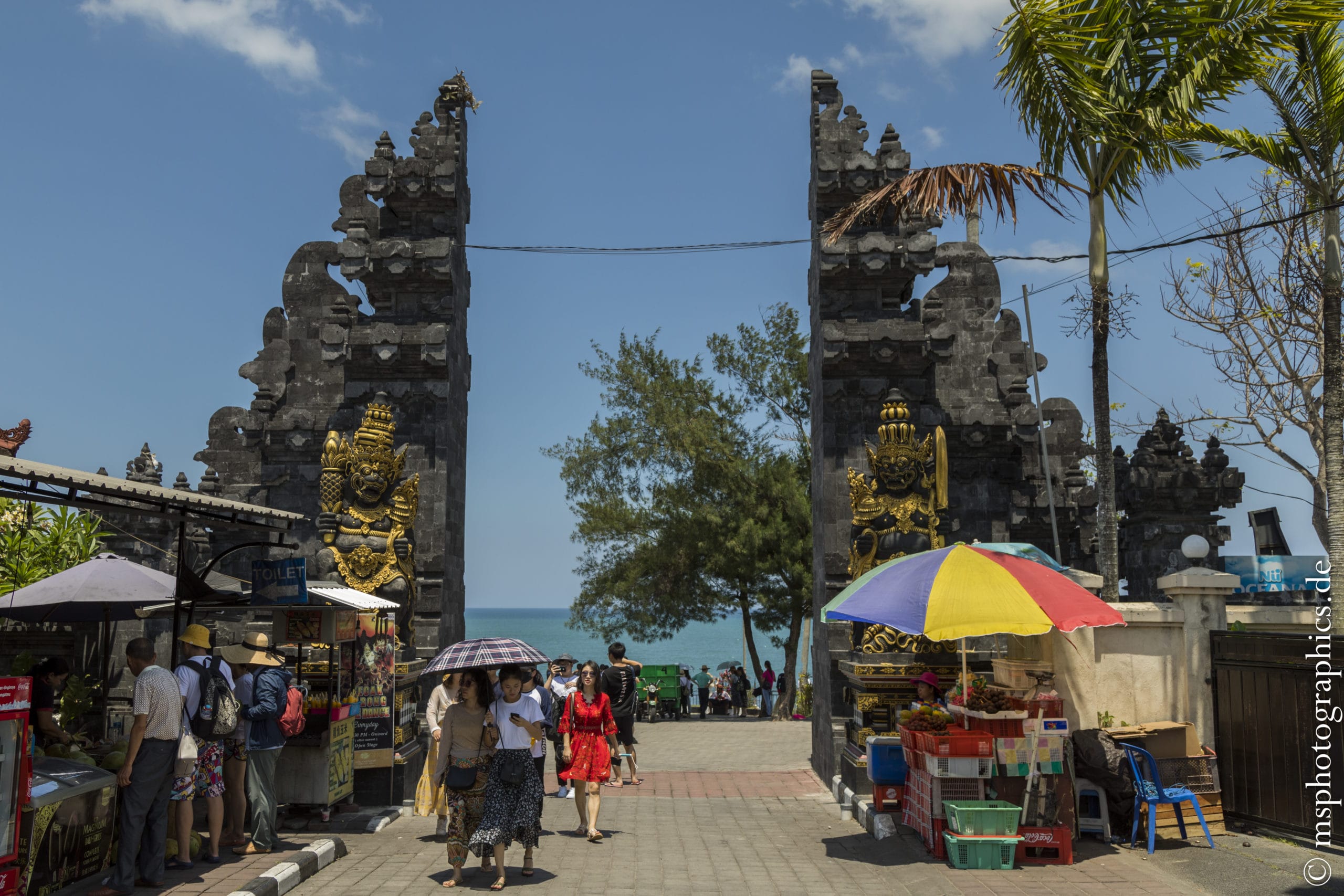
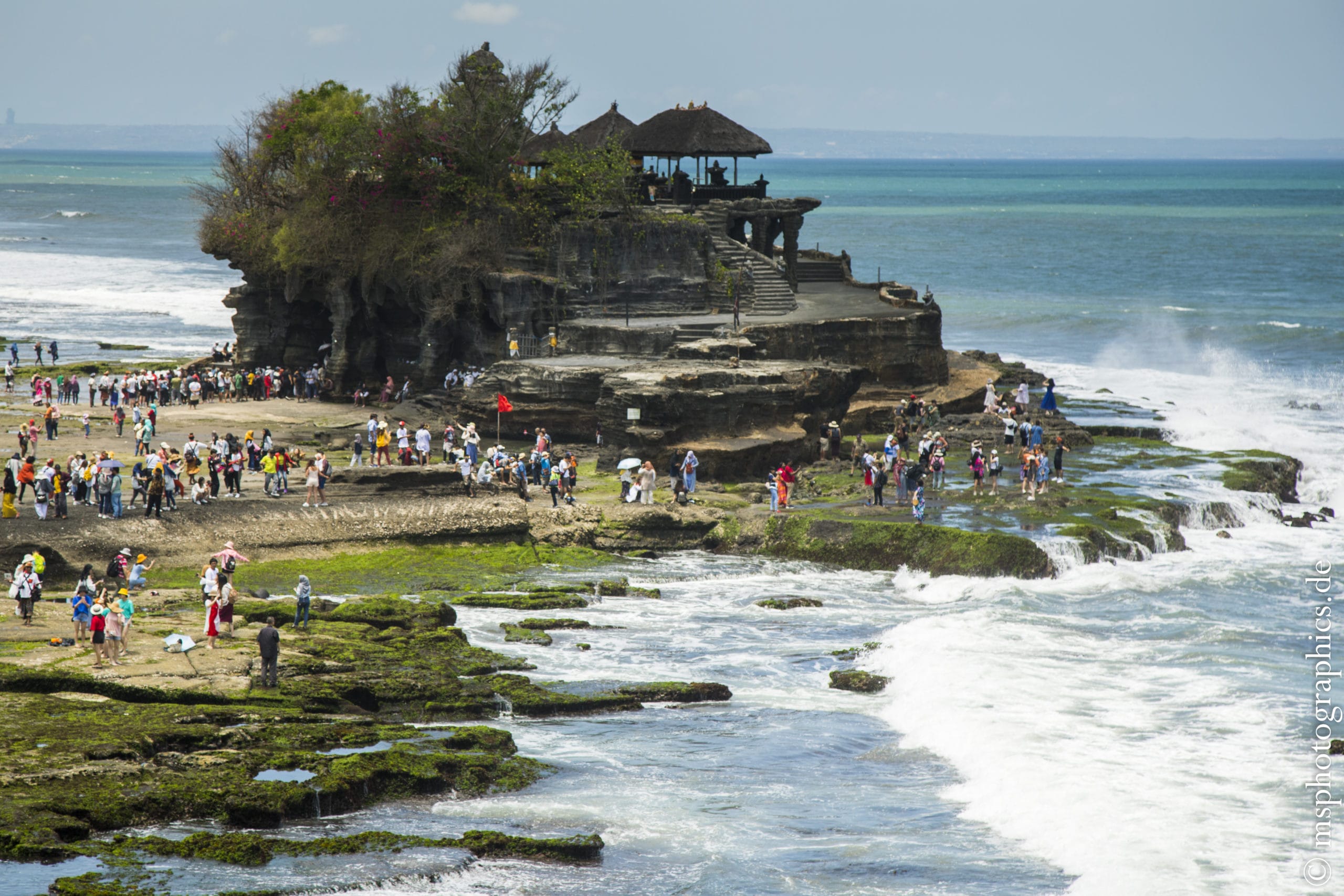
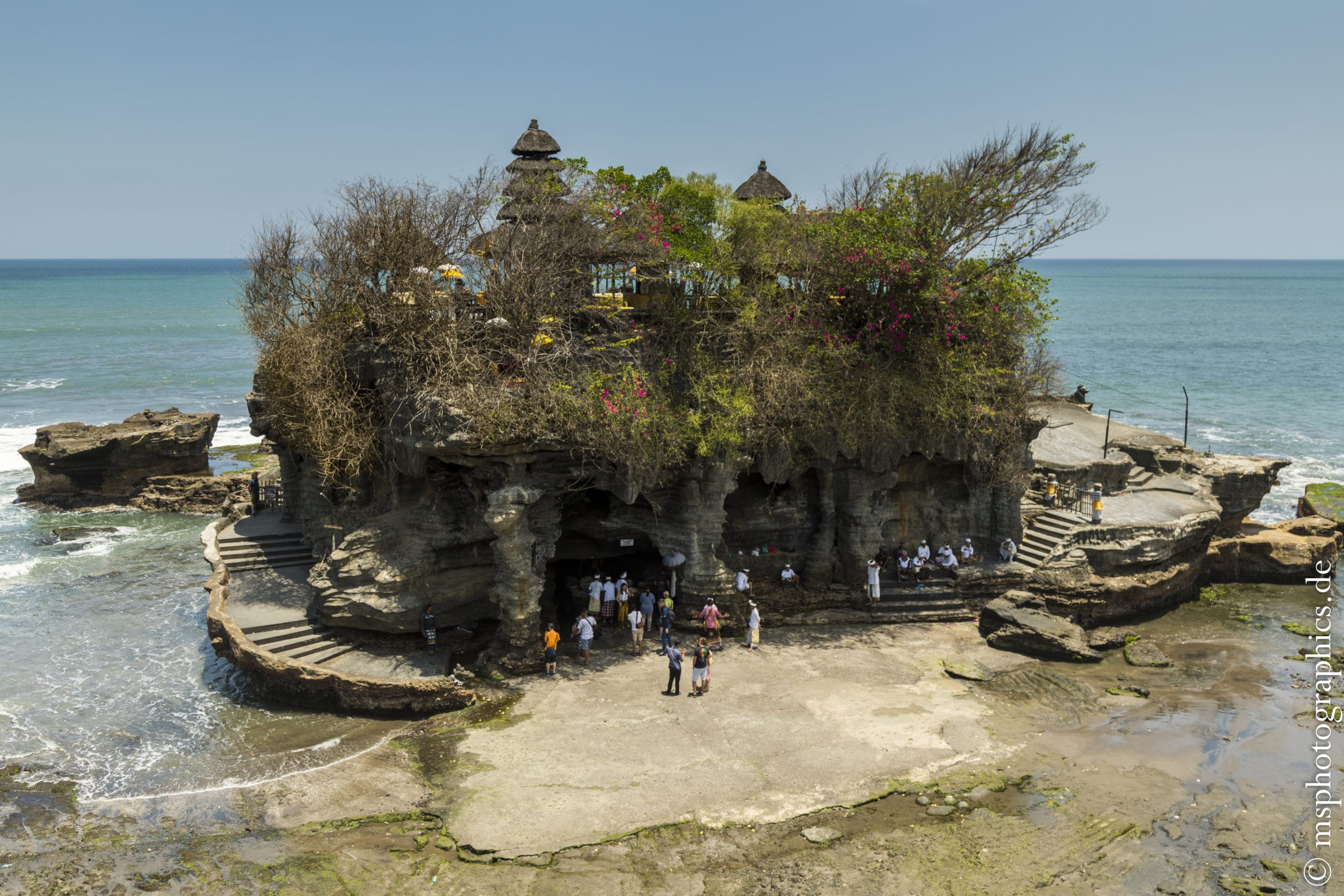
On the way we had a stop at the sea temple Tannah Lot. This temple, built on a rock in front of the sea, is completely surrounded by the sea at high tide. At low tide, however, it can be viewed without any problems and offers an impressive appearance. Allegedly there are more temples than residents in Bali, as almost every Balinese has their own small temple integrated into their home.
After visiting the sea temple Tanah Lot, the journey continued along the sea and through a forest area inhabited by monkeys towards Gilimanuk.
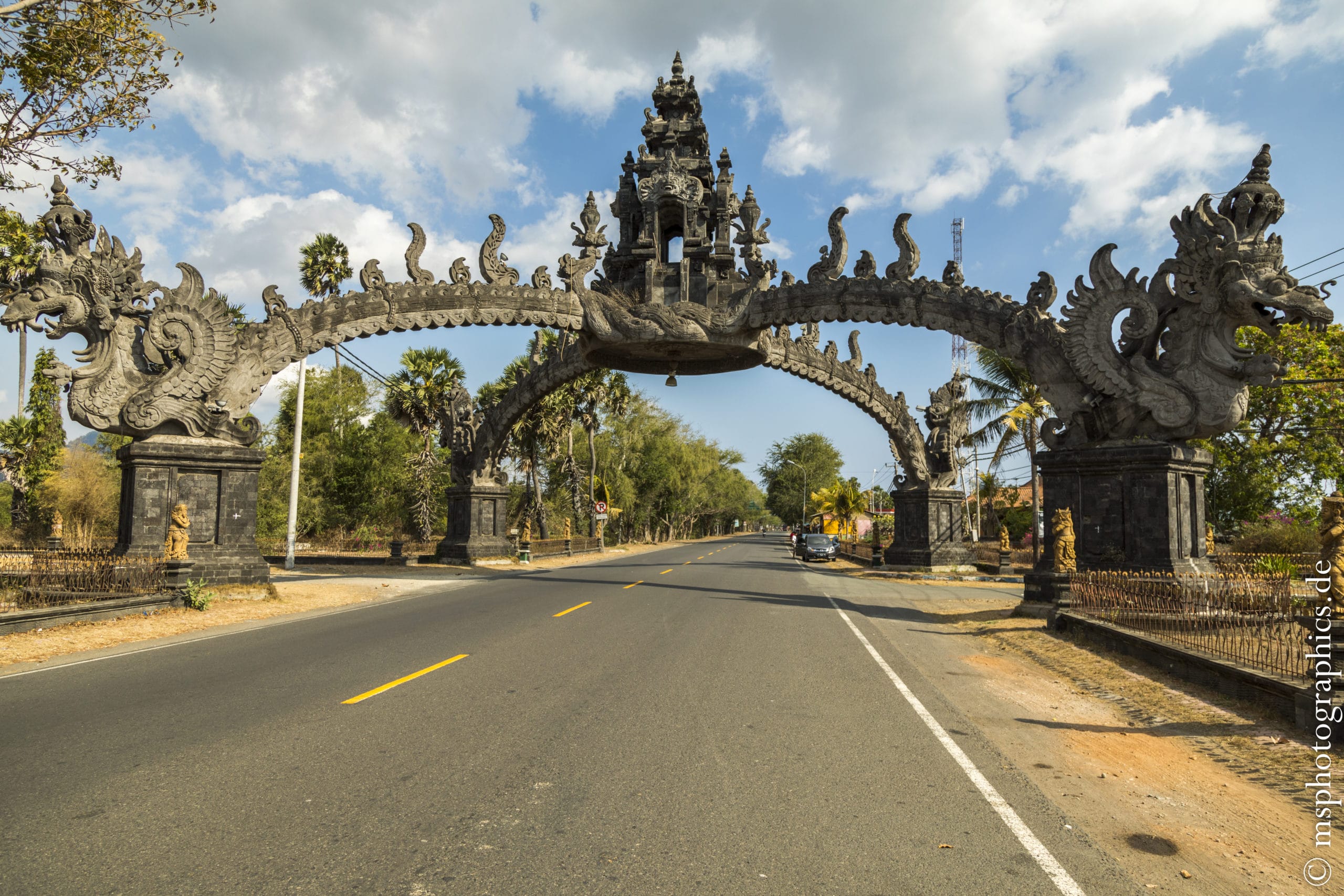
As a greeting and farewell, a huge gate adorned with dragons spans the street near the port of Gilimanuk.
The crossing from Bali to Java:
The ferry crossing from Bali to Java is a real adventure. The rocking ride on one of the car ferries takes around 45 minutes.
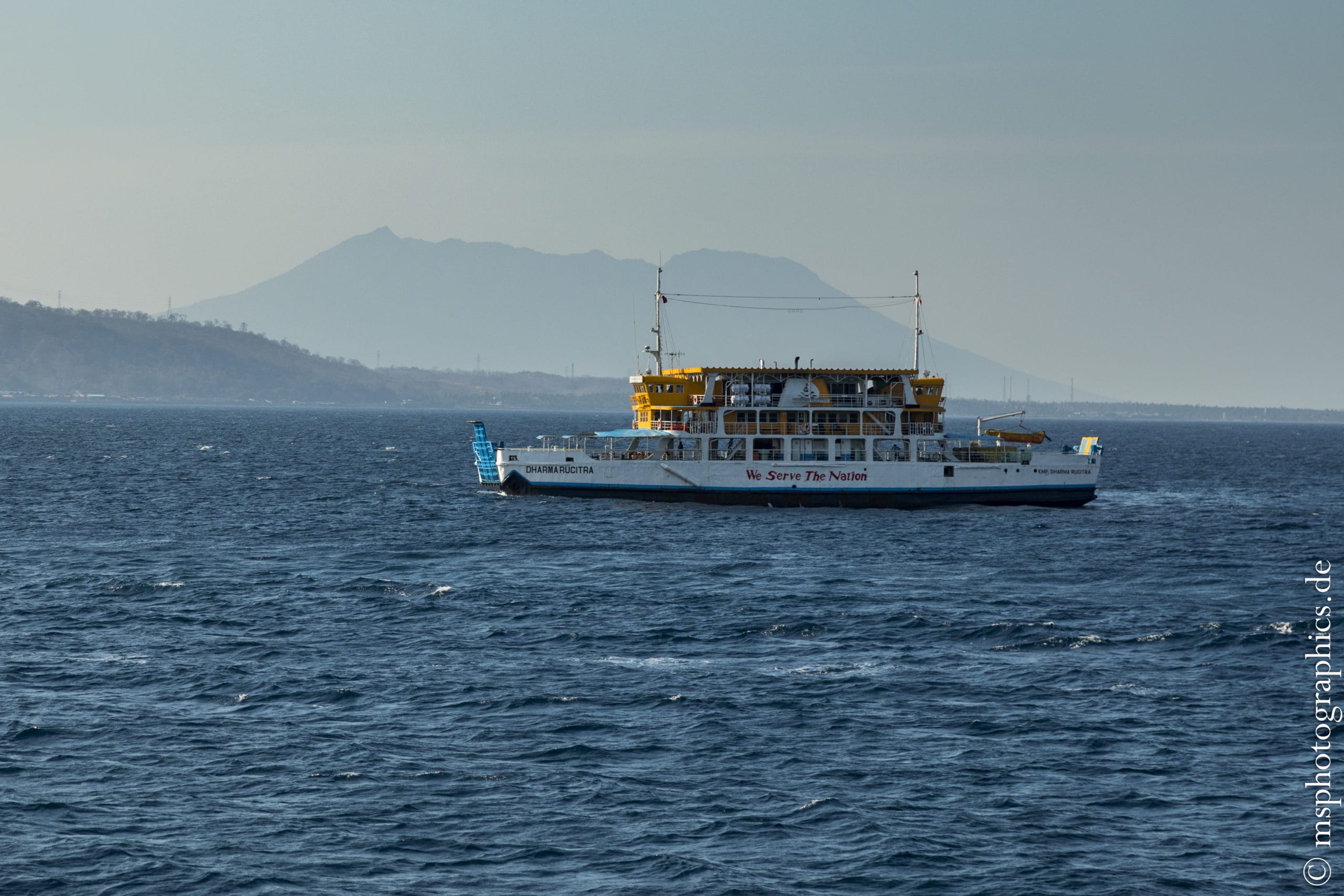

The best thing to be destructed from the swing on the ferry is to take a look on the breathtaking volcanic landscape of Java or enjoy a cool drink on board.
After arriving at the port of Ketapang, the drive takes about half an hour to the accommodation in Banyuwangi.
The accommodation “Grand Harvest Resort & Villas” in Banyuwangi:
Banjuwangi is the starting point for the hike to the Ijen volcano. The accommodation "Grand Harvest Resort & Villas”Is about a 20-minute drive from the parking at the foot of the Ijen. The hotel is therefore ideal for starting the hike to the blue fire of the sulfur mine around midnight.
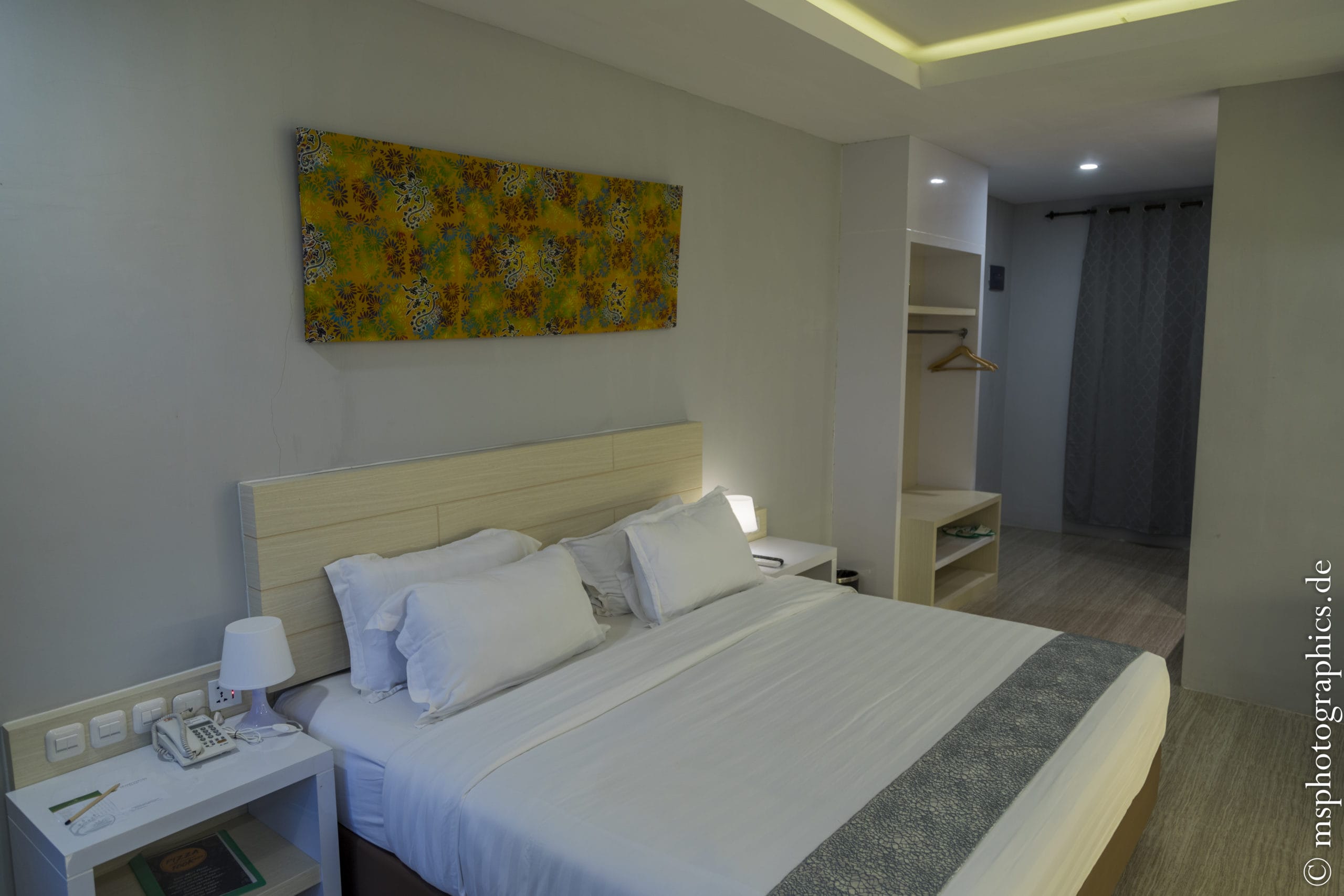
The rooms of the accommodation are less luxurious than the Anvaya Beach Resort, but with everything that is necessary. In addition, the rooms are very spacious for one or two nights.
During the day, the hotel complex, which is located in the middle of rice terraces, offers a wonderful view to the Ijen and its neighboring mountains.
A delicious breakfast buffet is available for refreshment after the return of the hike, swimming pools and bars are available as well.
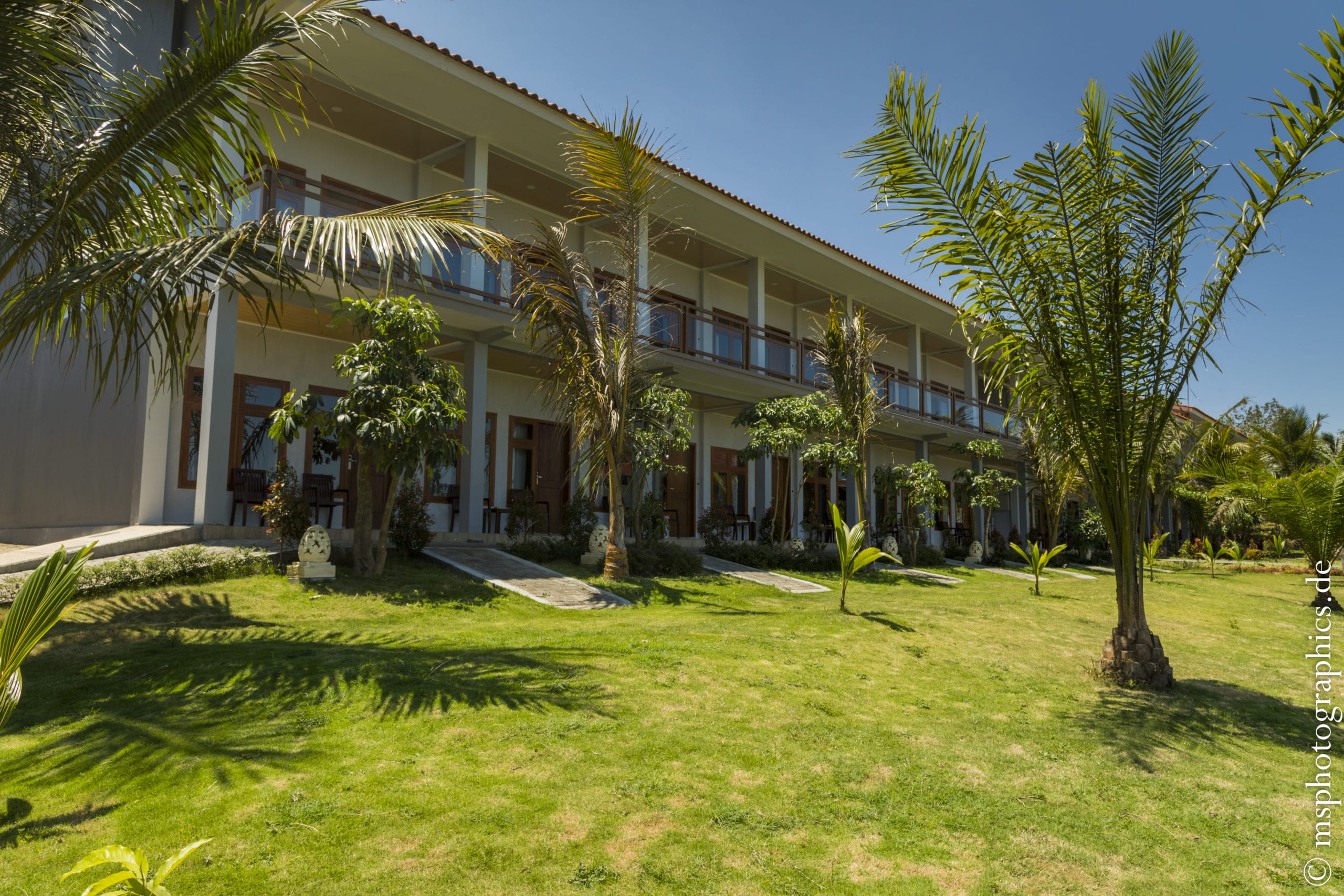
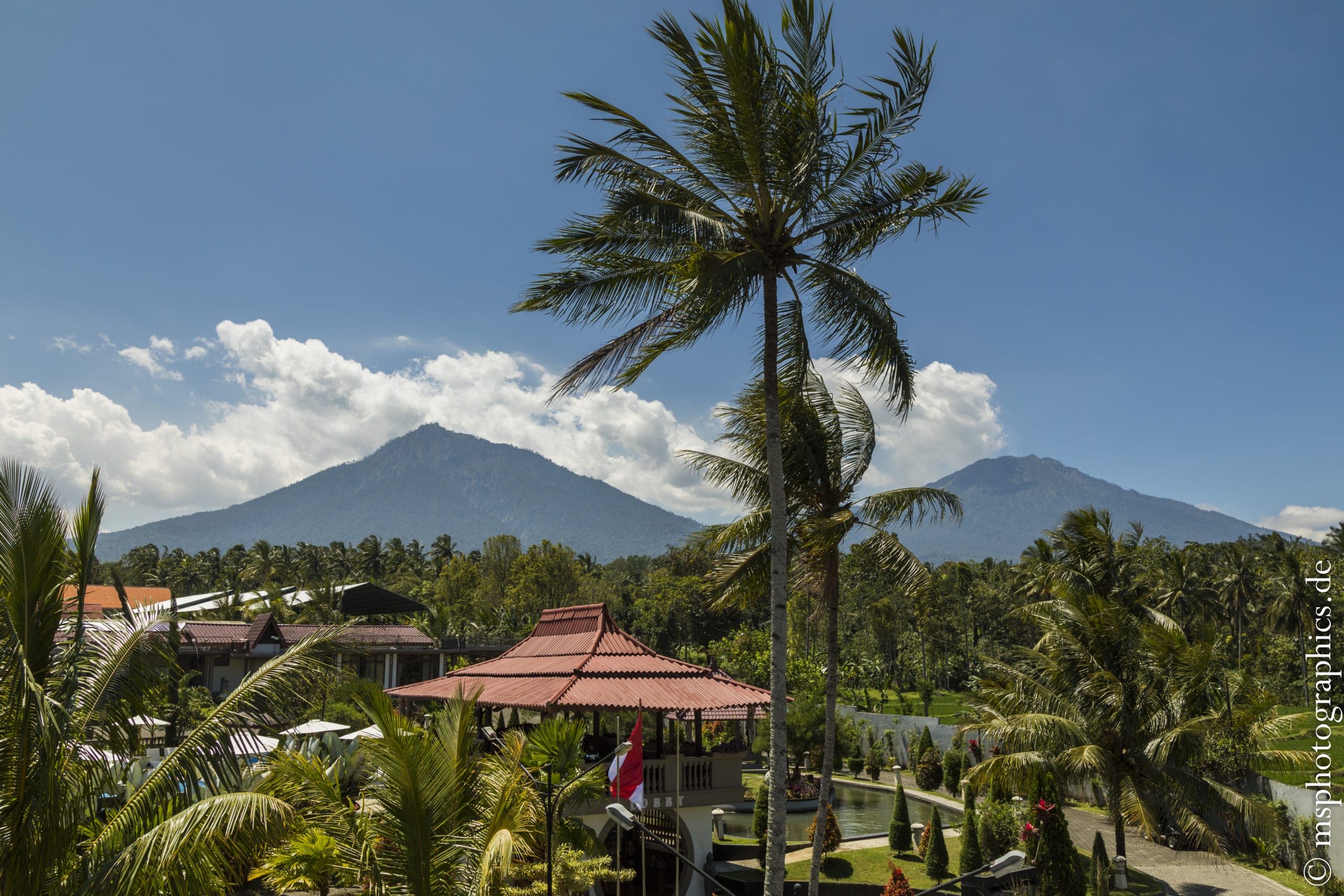
The volcano Ijen and its subsidiary volcano are seldom so cloudless and clear. It was very lucky that the weather was so perfect, because it even rained slightly the evening before the hike.
The hike to the crater lake of the Gunung Ijen volcano:
As agreed, the time to get up was punctually at 11:30 p.m. At midnight it was time to leave for the Ijen.
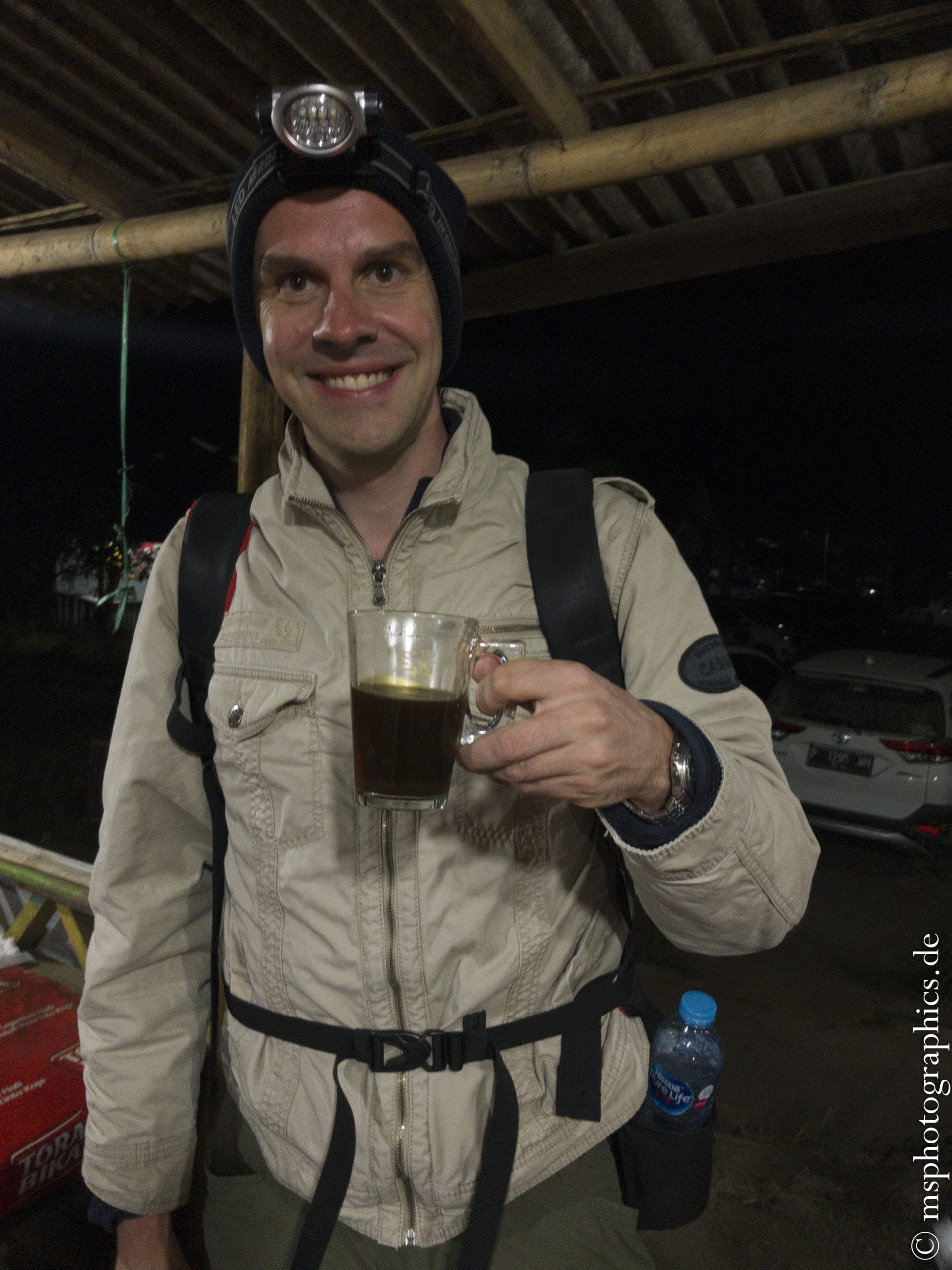
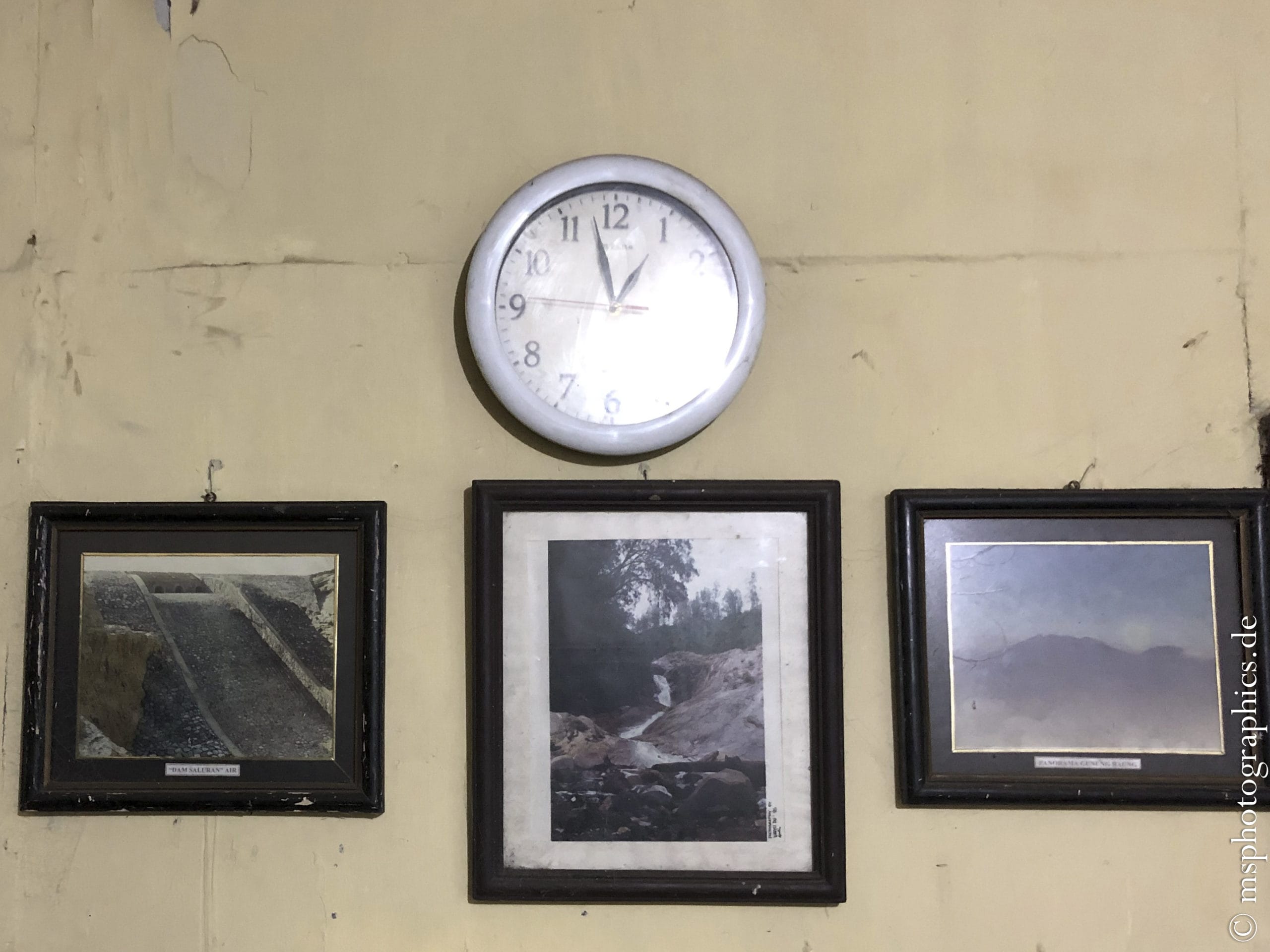
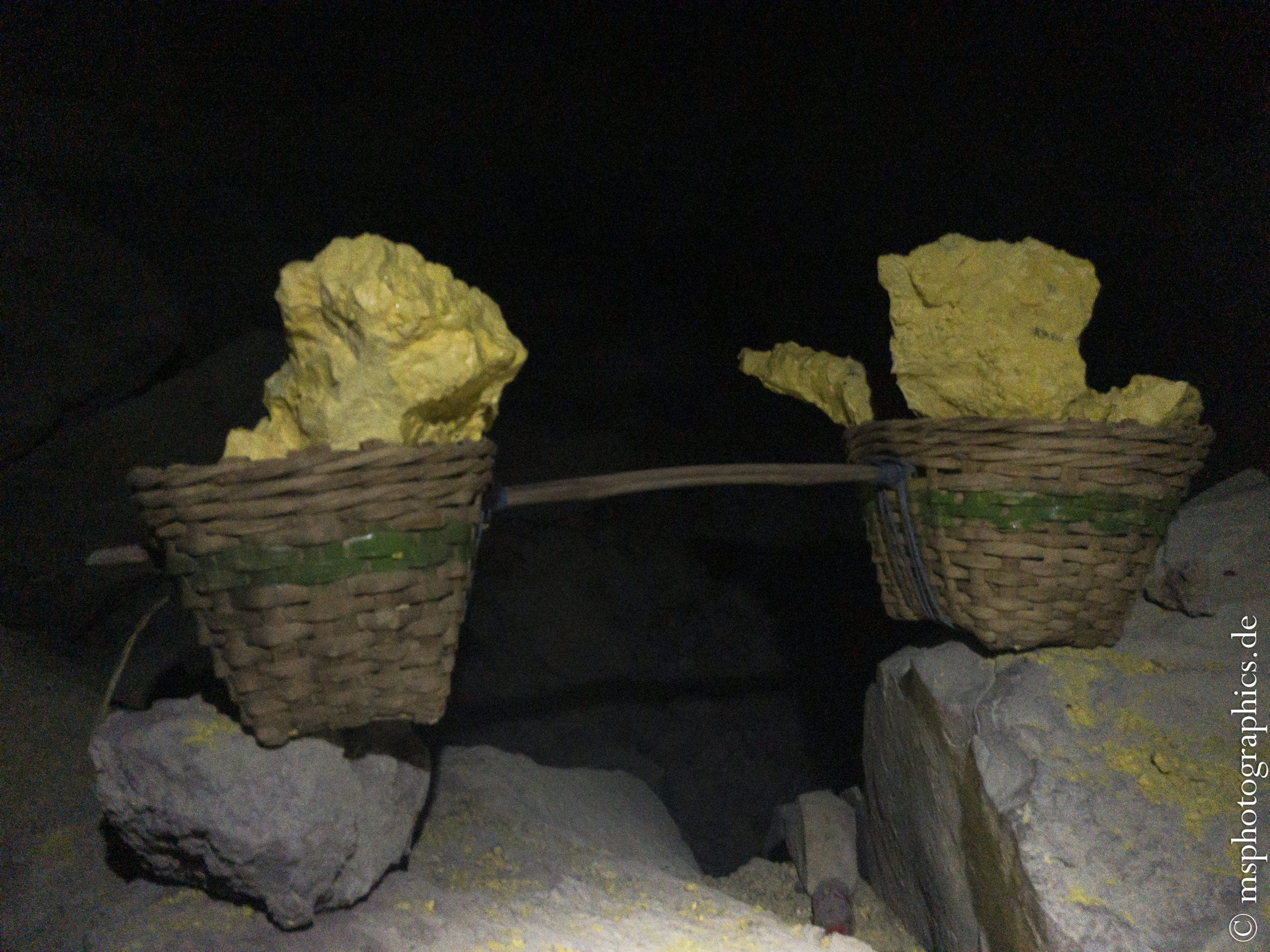
When we arrived at the parking lot we had an Indonesian coffee to wake up. 1:00 a.m., what an unusual time to drink coffee. Then, accompanied by a mountain guide, we went up to the crater and further into the crater to the edge of the sulfur mine, where the blue fire of the burning sulfur can be seen.
On the way, you repeatedly come across the workers who break down the sulfur and transport it out of the crater in baskets weighing up to 100 kilograms per basket.
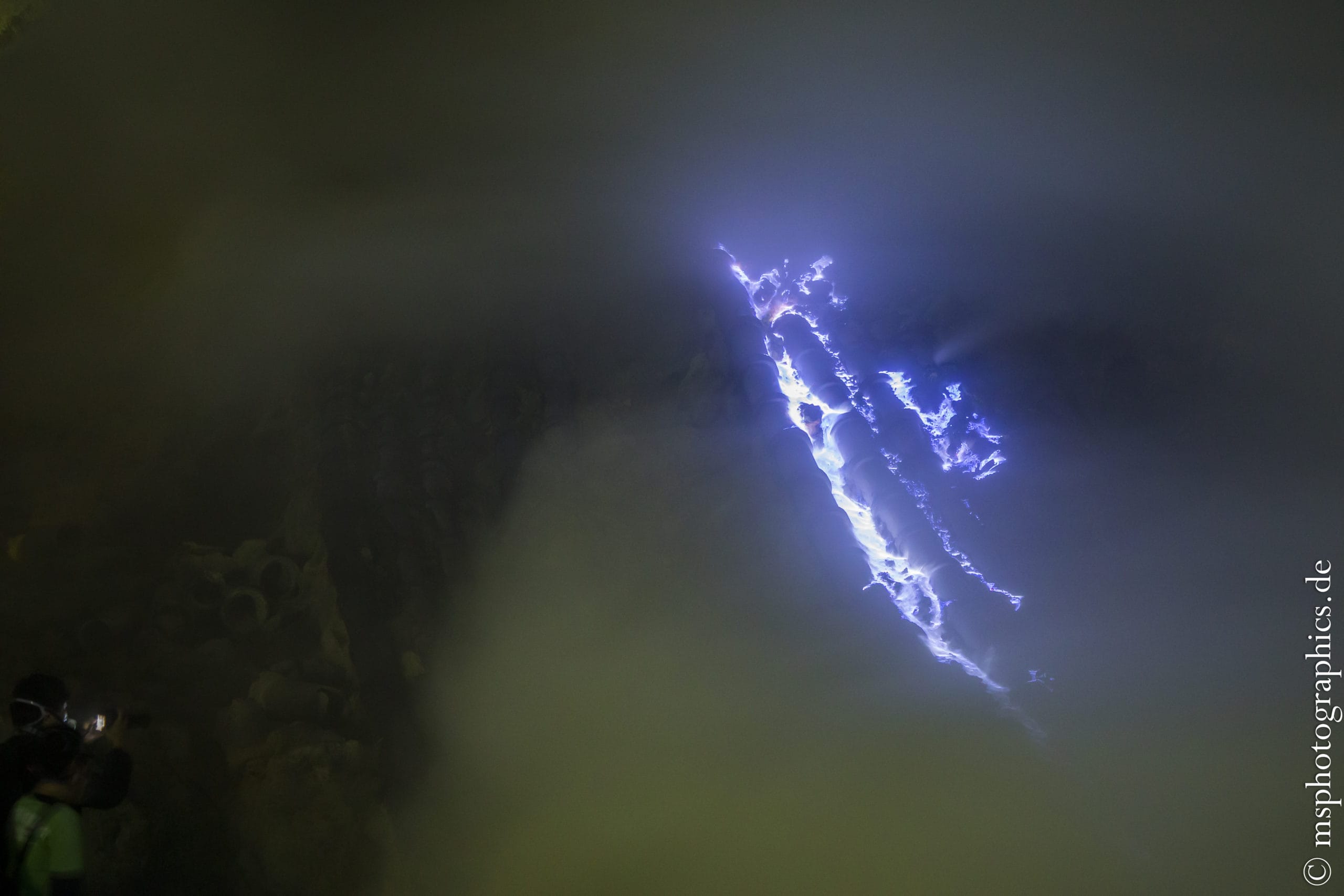
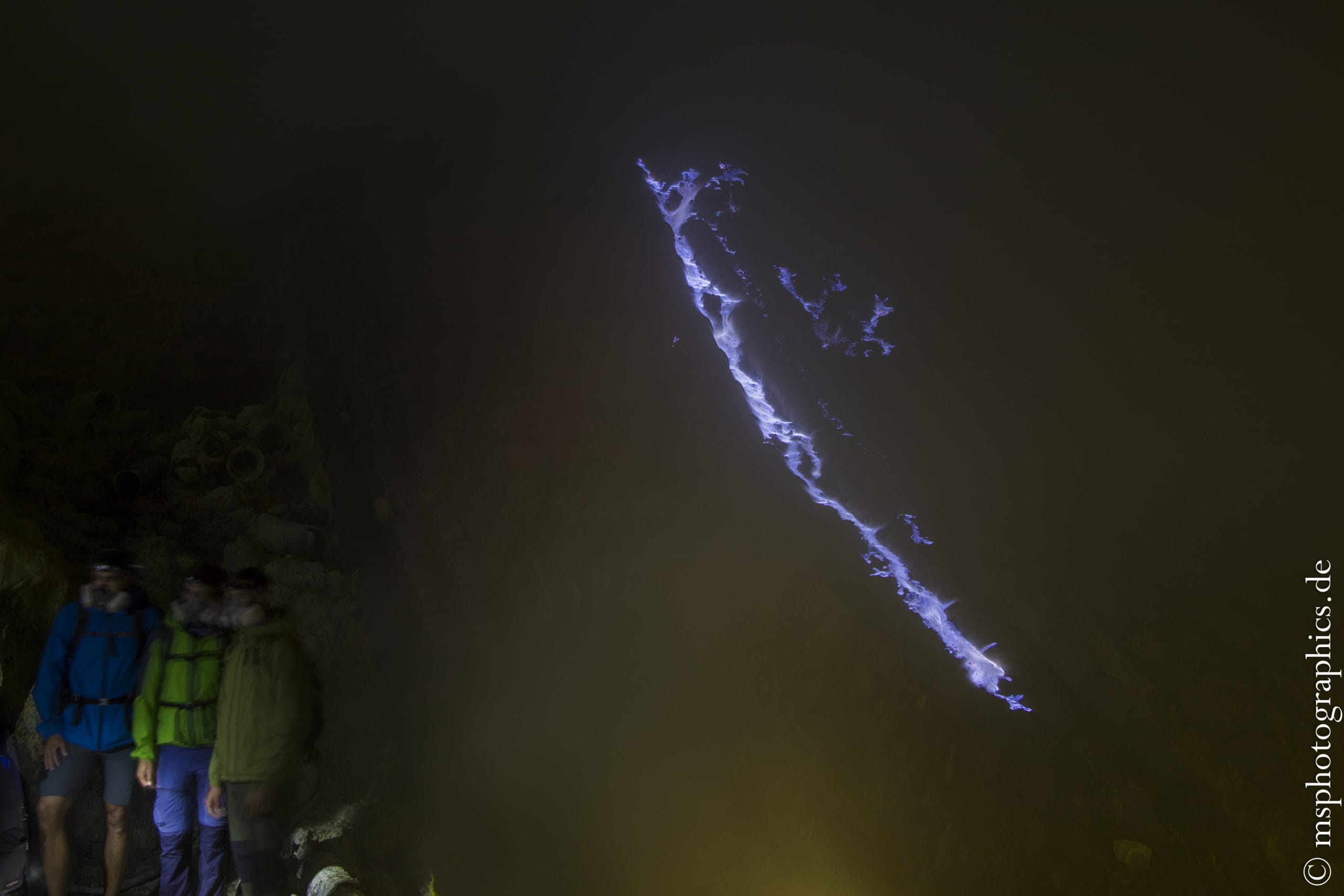
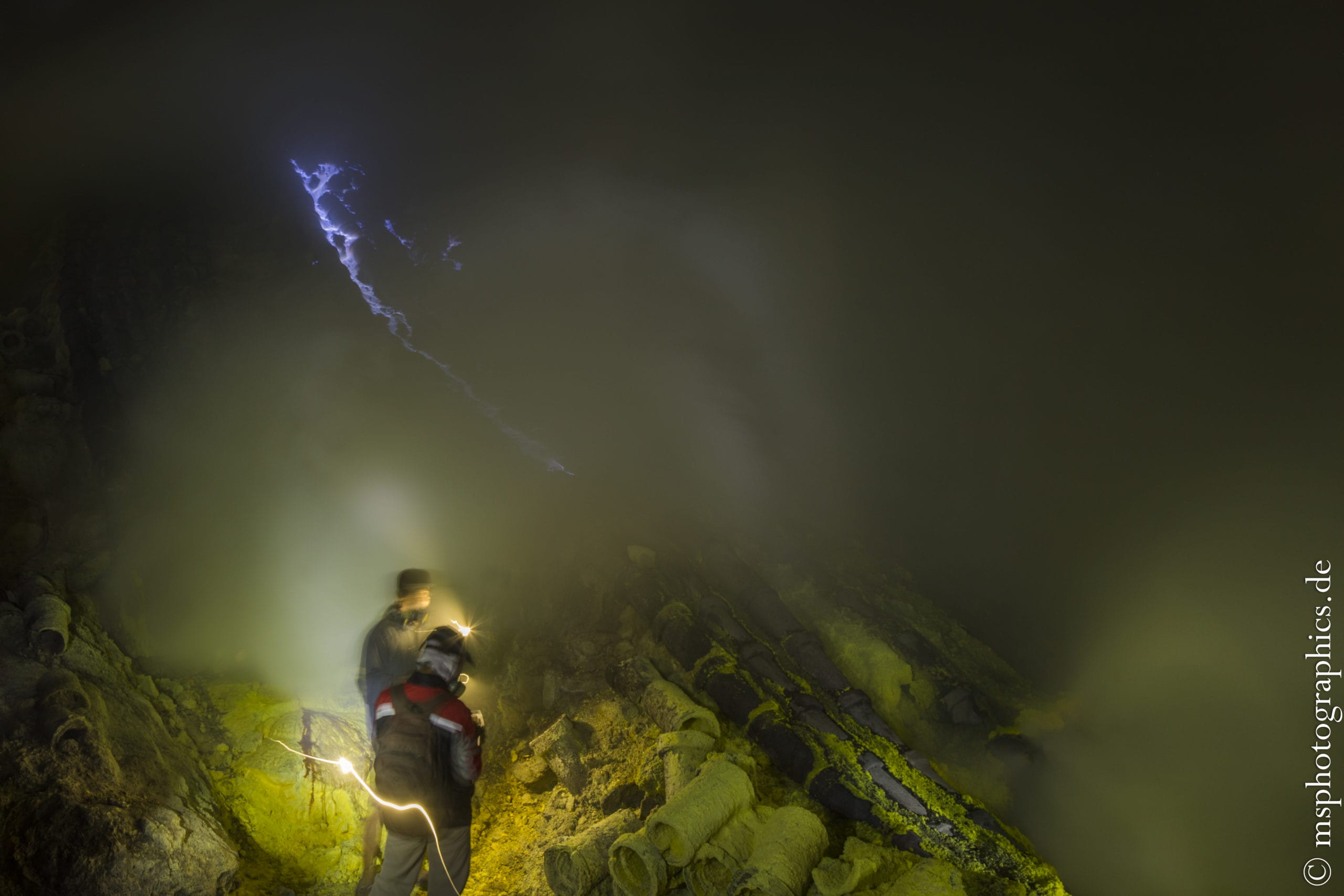
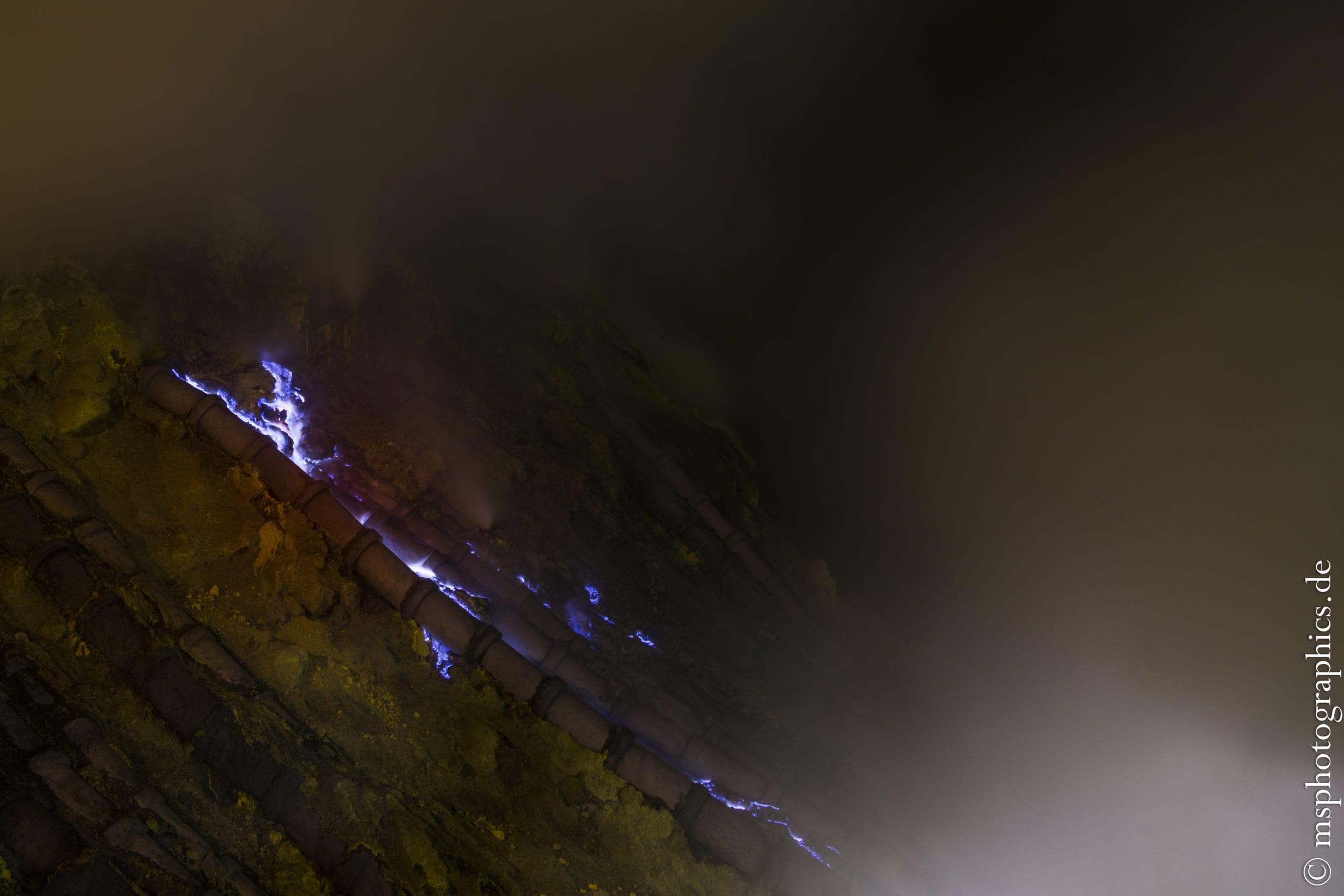
The blue fire of the Ijen is unique in the world. The world's largest sulfur mine is located in the crater, where the sulfur is still extracted in very strong manual work and transported over the edge of the crater into the valley.
Even without the weight of the sulfur, the hike to the blue fire is relatively strenuous and should not be underestimated. The blue fire can be seen until shortly before sunrise, after which it gives way to the yellow of the sulfur and the turquoise of the crater lake.
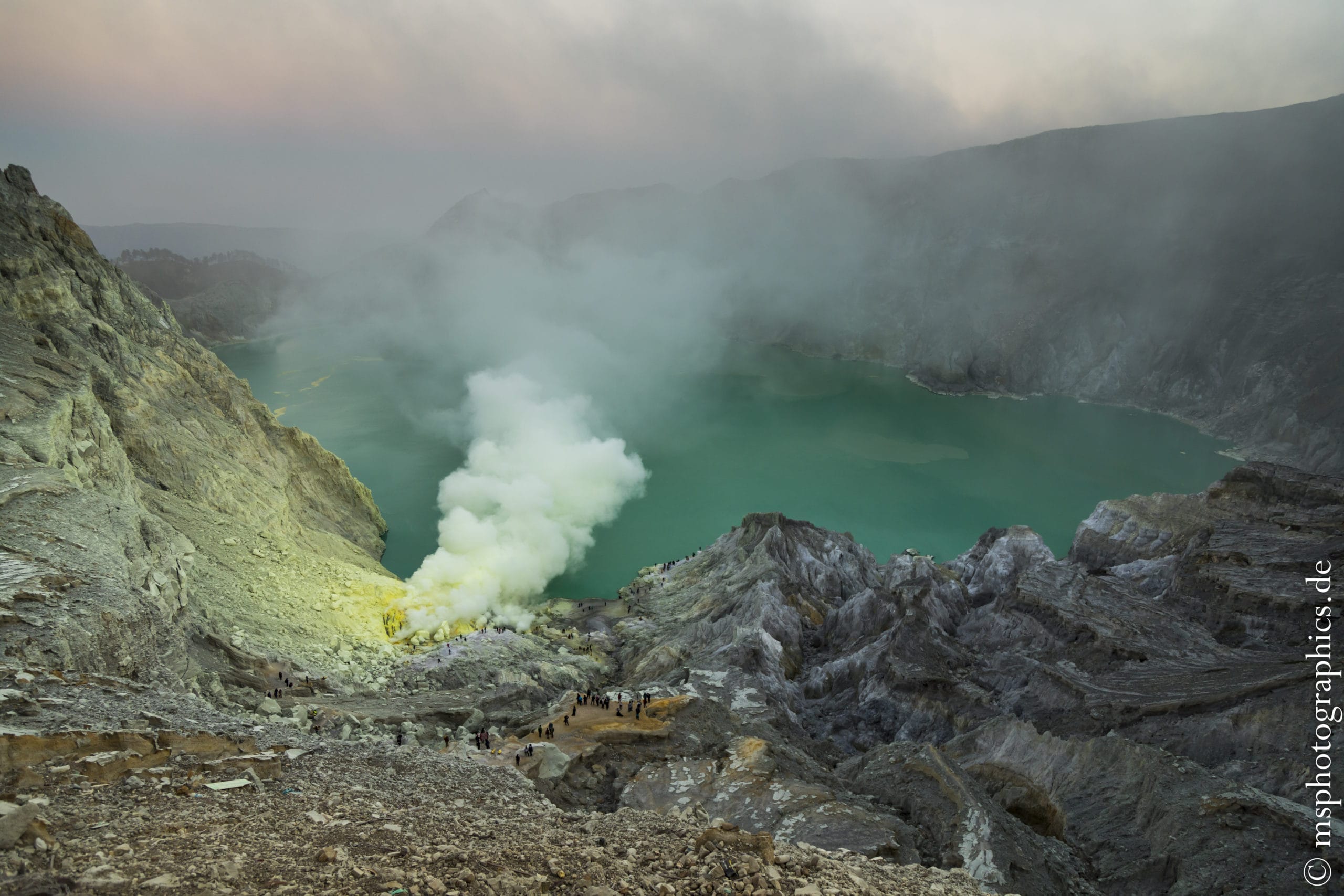
As soon as daylight illuminates the lake, it shines in dark turquoise. A gigantic column of smoke rises from the sulfur mine and it is only in daylight that you really realize why you should wear respiratory masks here. As soon as daylight illuminates the lake, it shines in dark turquoise. A gigantic column of smoke rises from the sulfur mine and it is only in daylight that you really realize why you should wear respiratory masks here.
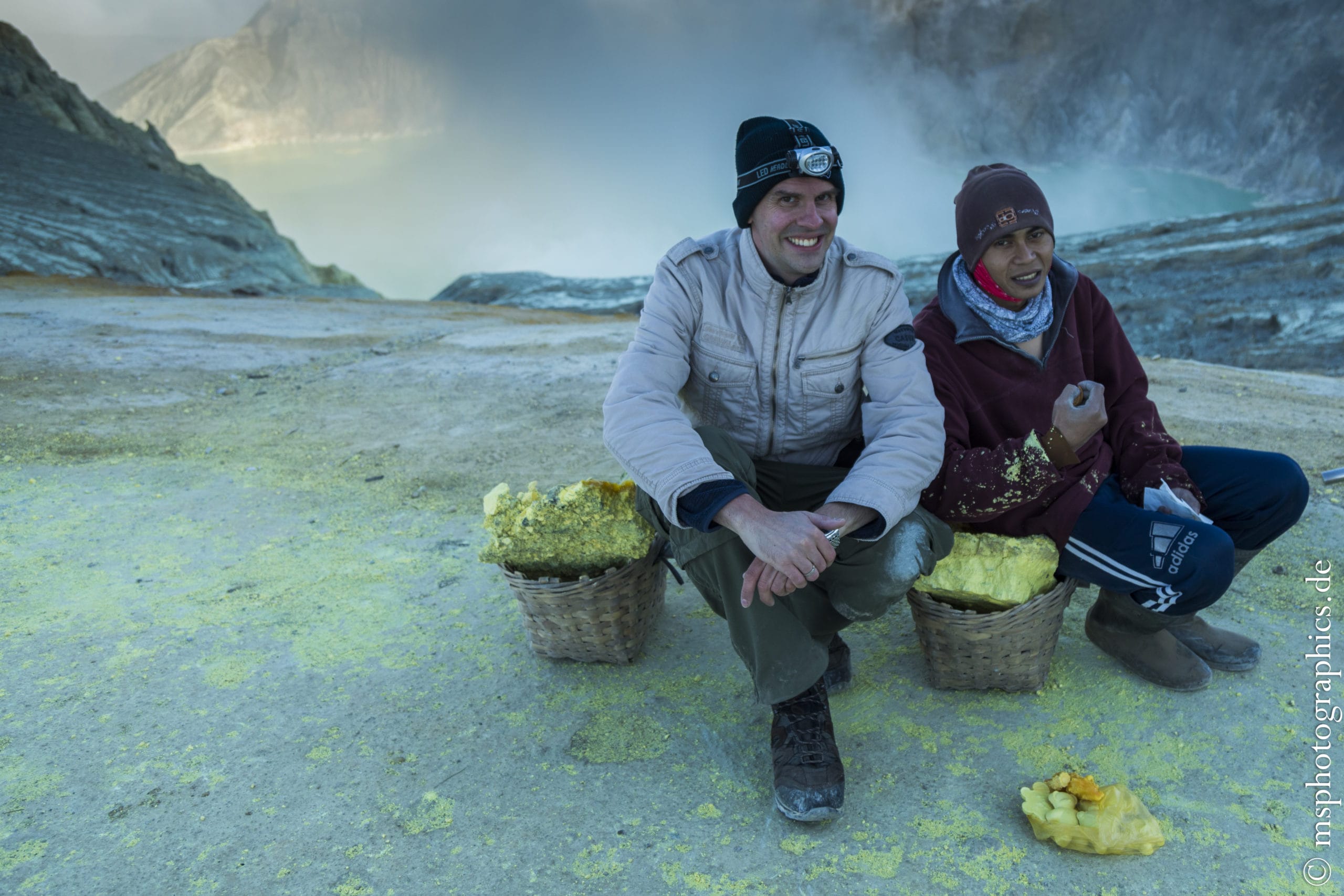
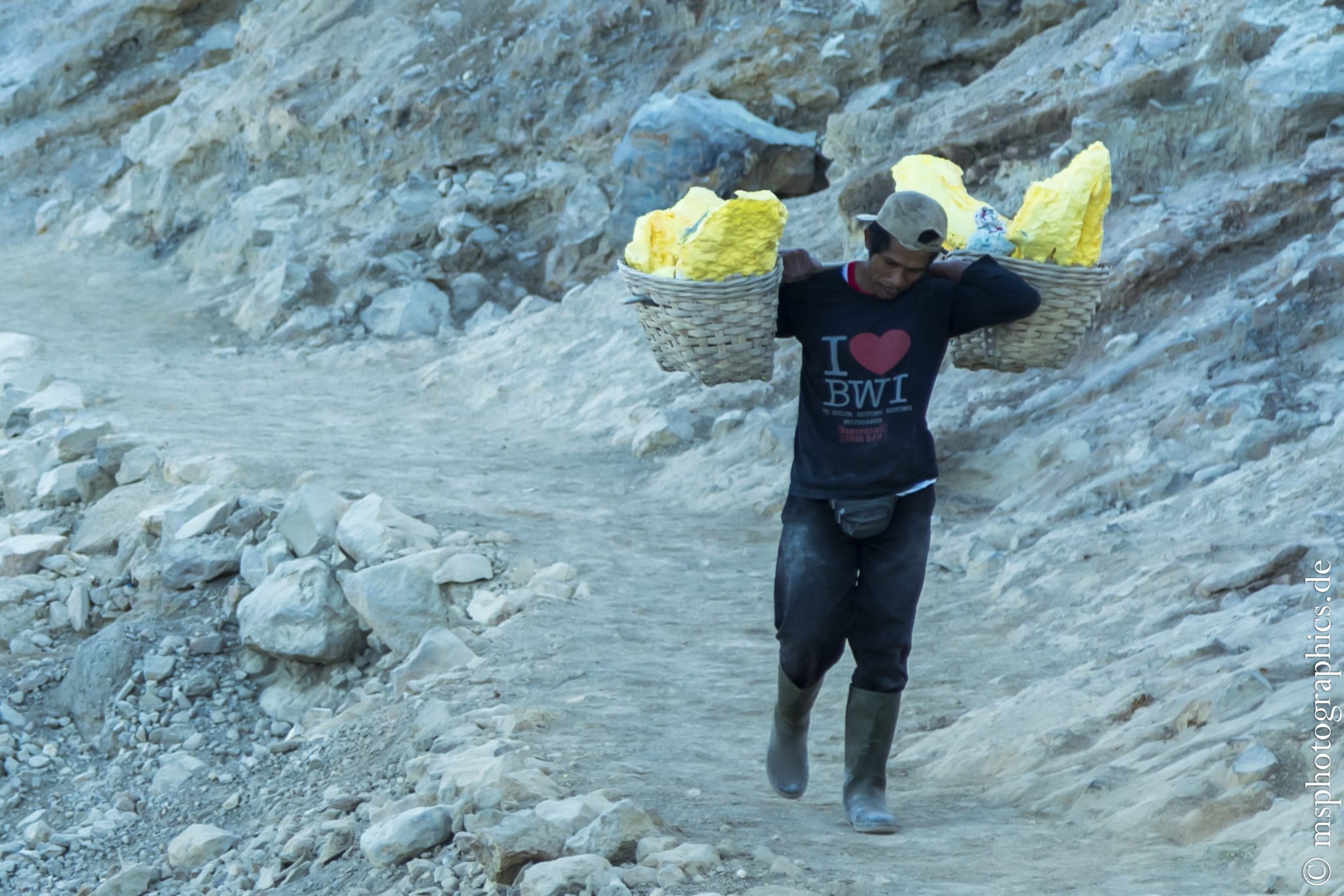
During the break and at work - the sulfur miners on the crater rim of Gunung Ijen.
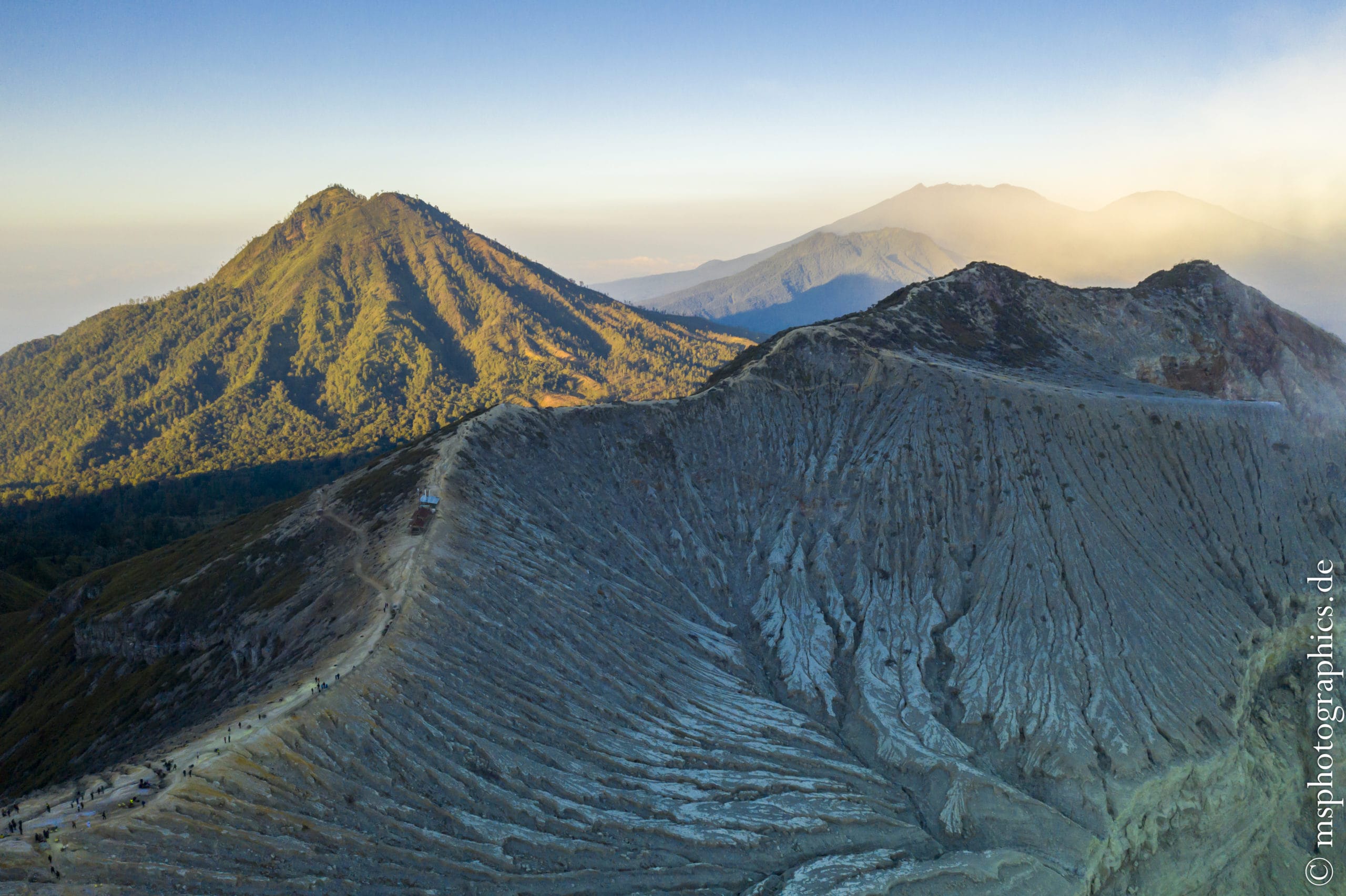
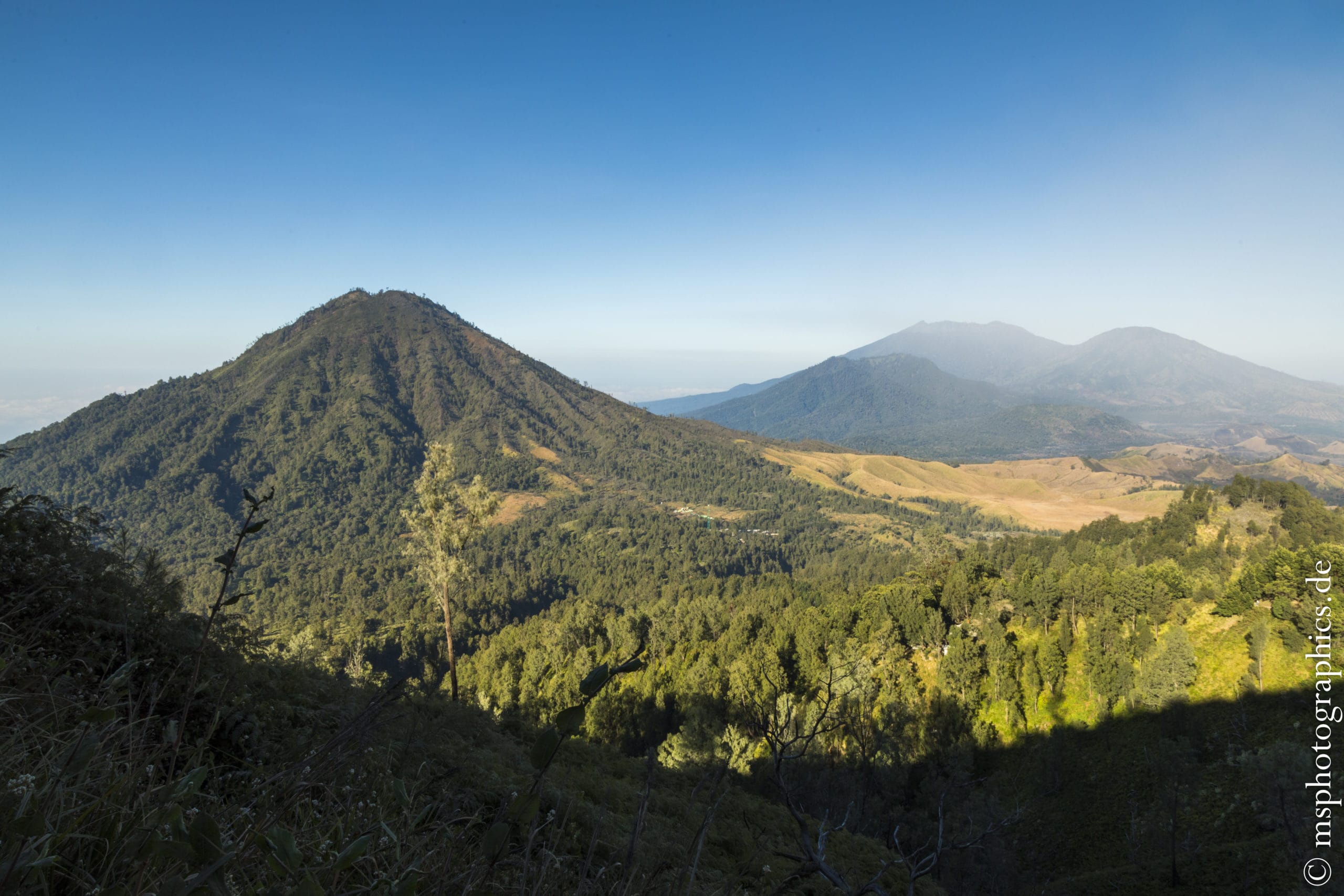
Before the sun has risen over the last mountain tops, the descent into the valley is due. At dawn, the view of the surrounding volcanoes is simply fantastic.
After arriving at the hotel, it was time to have breakfast. Afterwards, catching up on sleep was the order of the day until noon.
The Kalibendo coffee plantation with coffee roastery and the Kalibendo waterfall:
After “sleeping in” and having lunch, a trip to Kalibendo was on the program. Here you can take a nice walk passing a coffee plantation with a roastery and a waterfall in the jungle. The tour is ideal for loosening up your legs after the strain of the night.
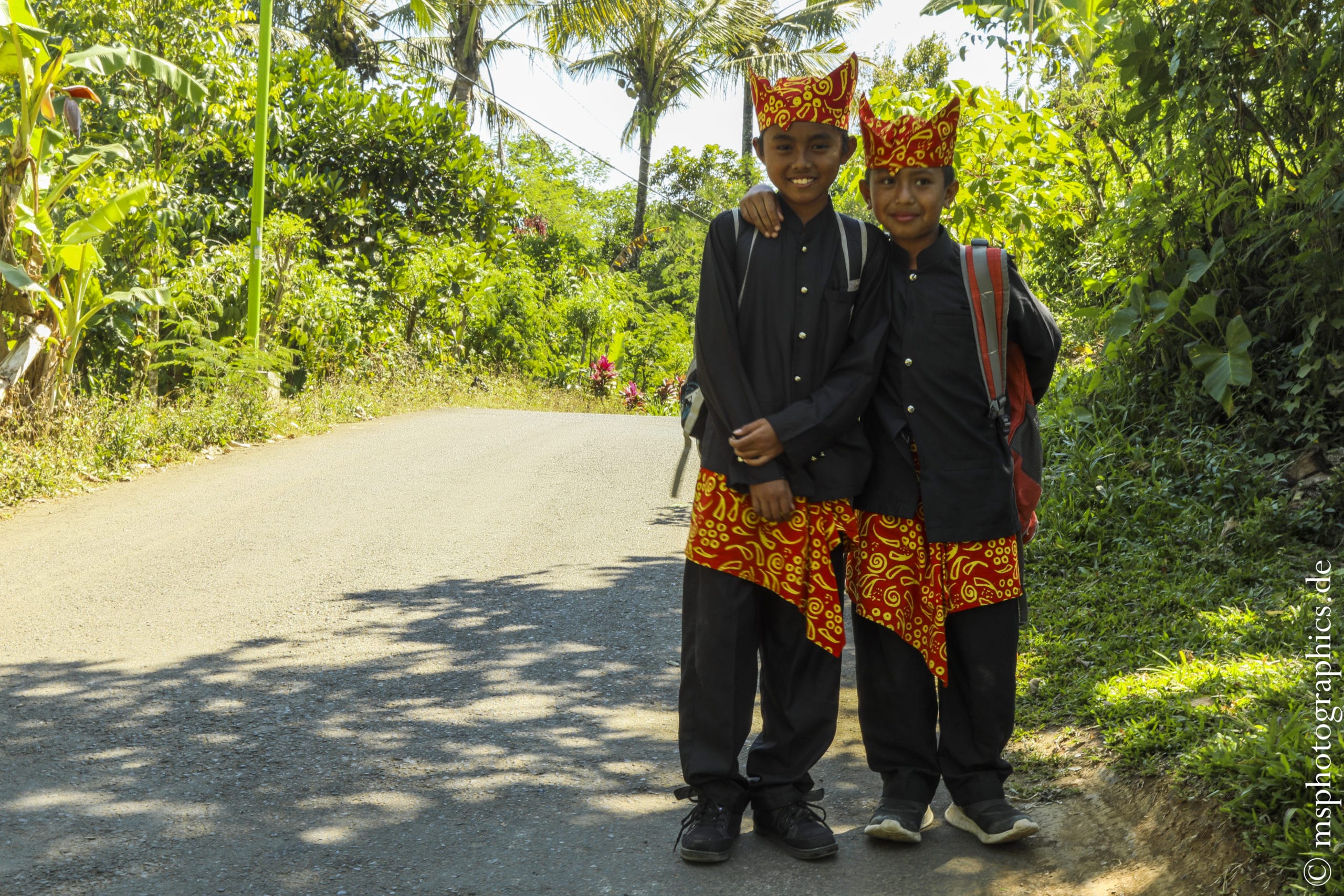
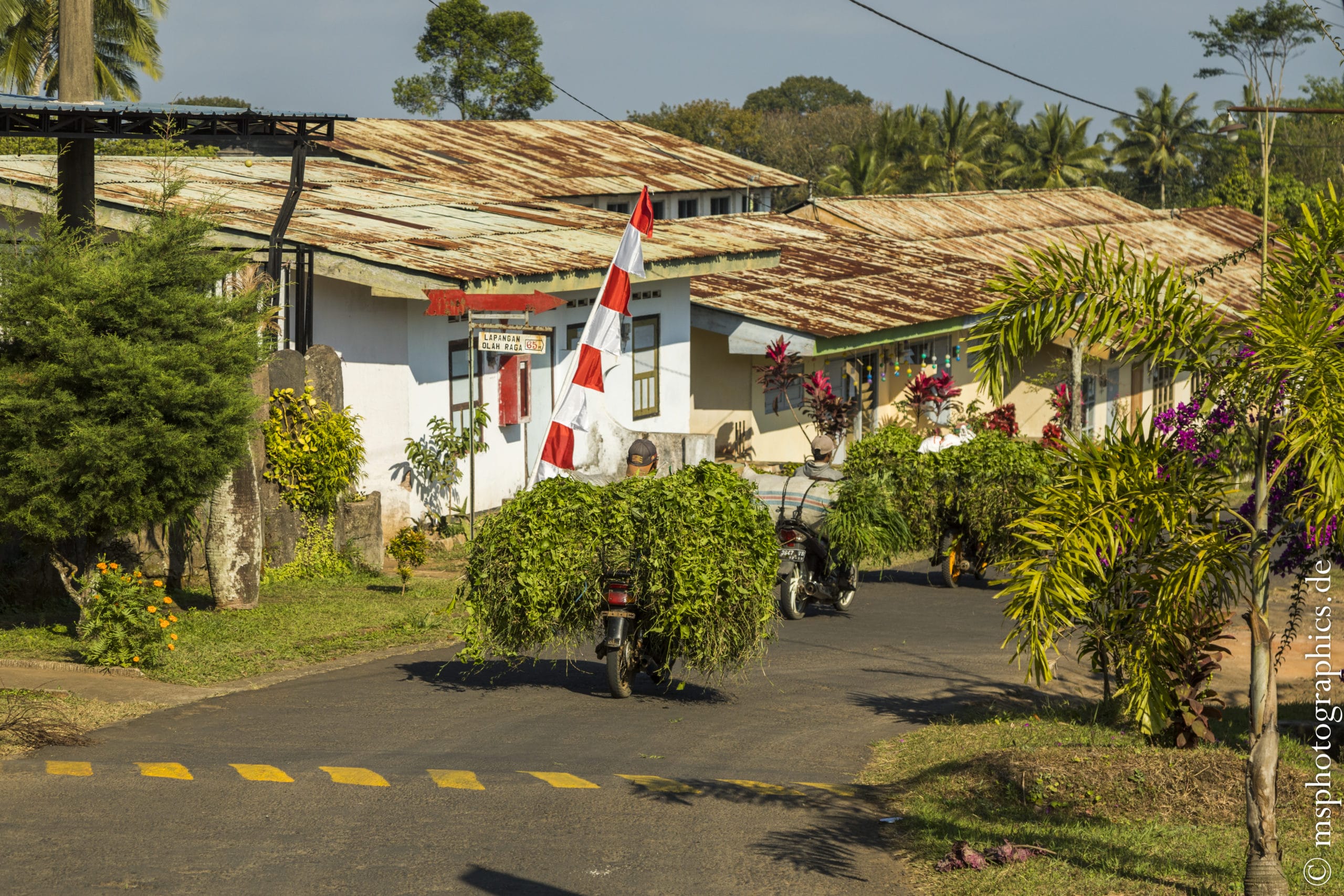
On the way to Kalibendo, two boys who had just left school willingly have themselves photographed in their traditional Indonesian school uniform.
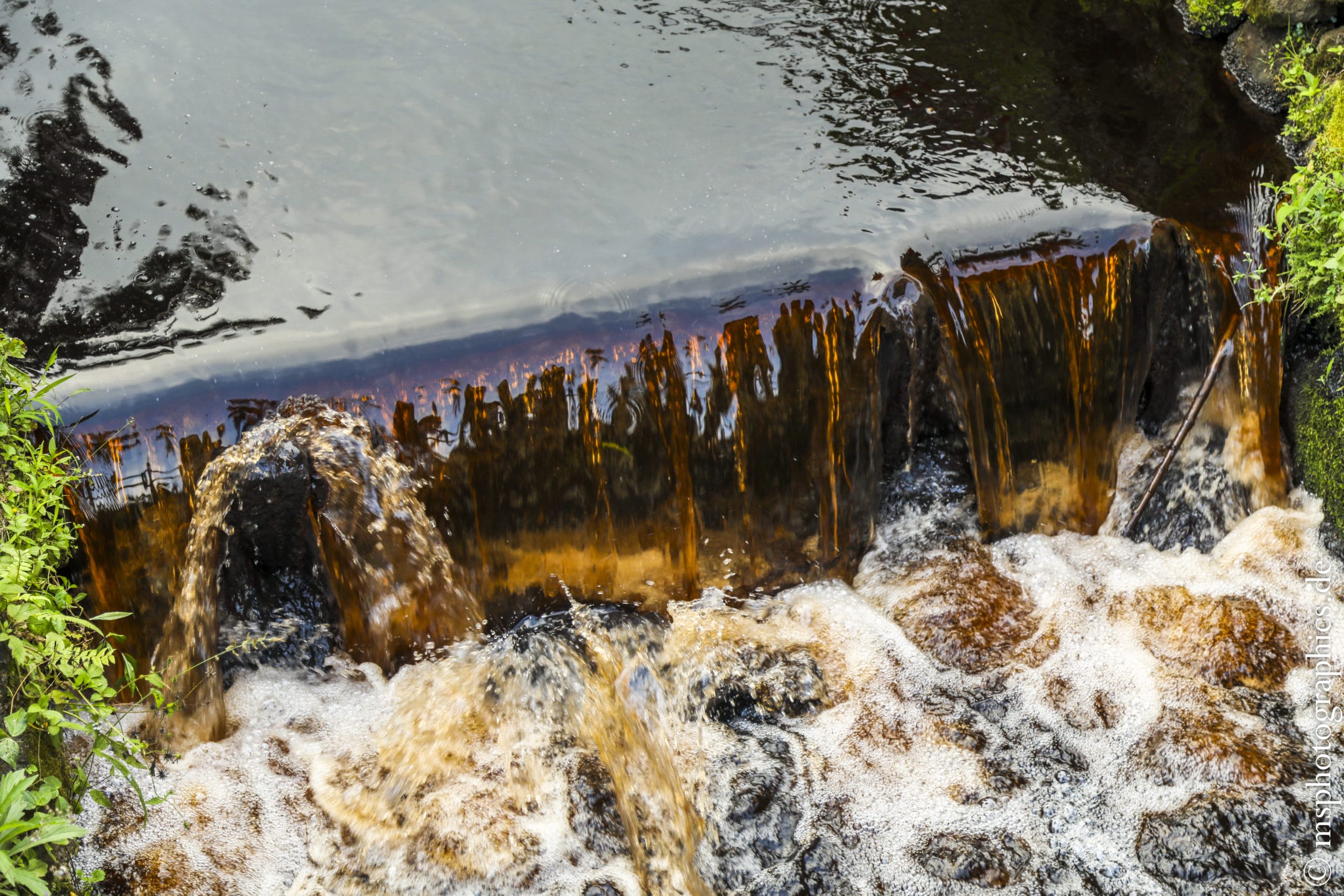
The Kalibendo coffee roastery. The colored water in the stream behind the roasting facility clearly shows that people are busy working here. Washing the roasted beans gives the stream its coffee-brown color.
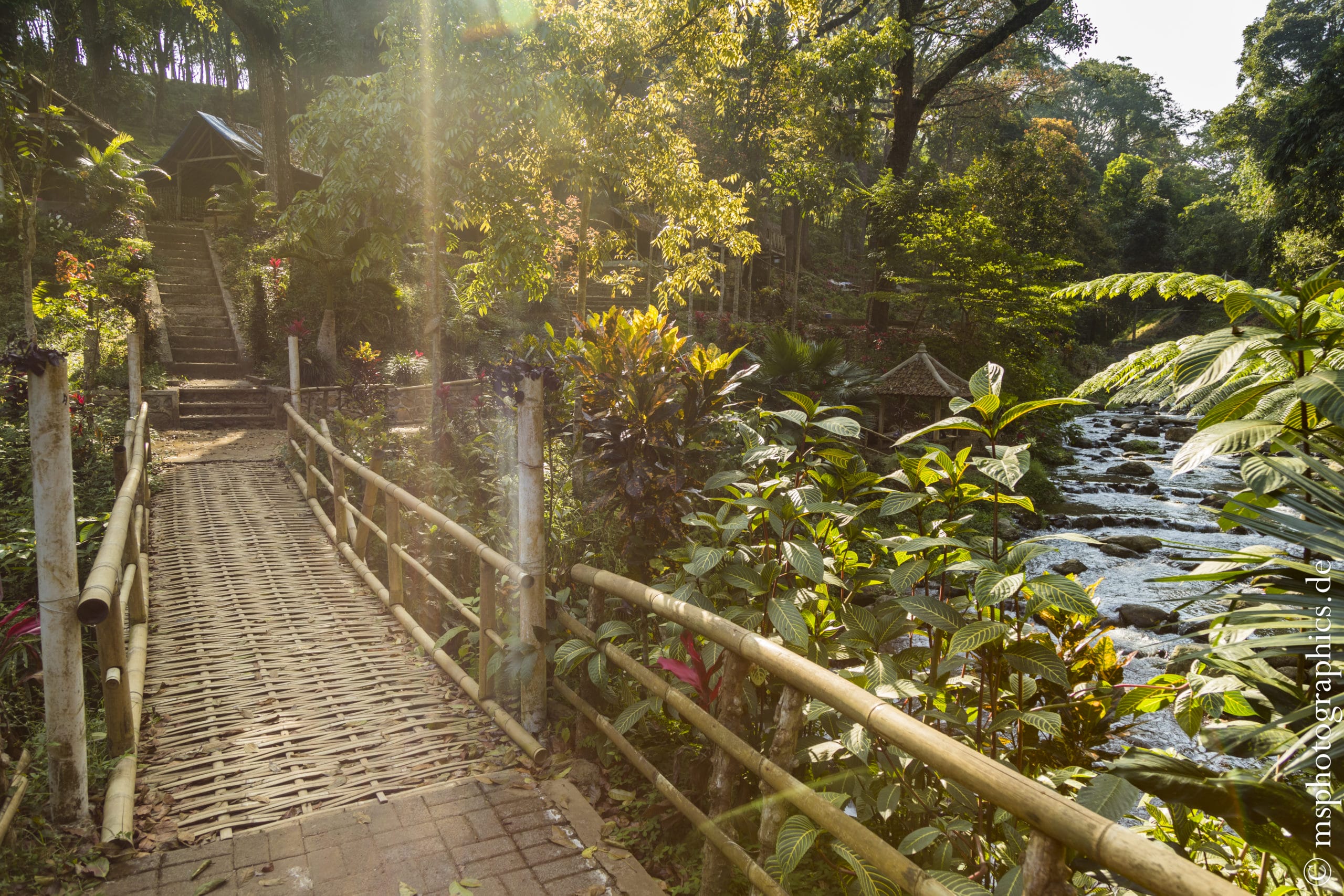
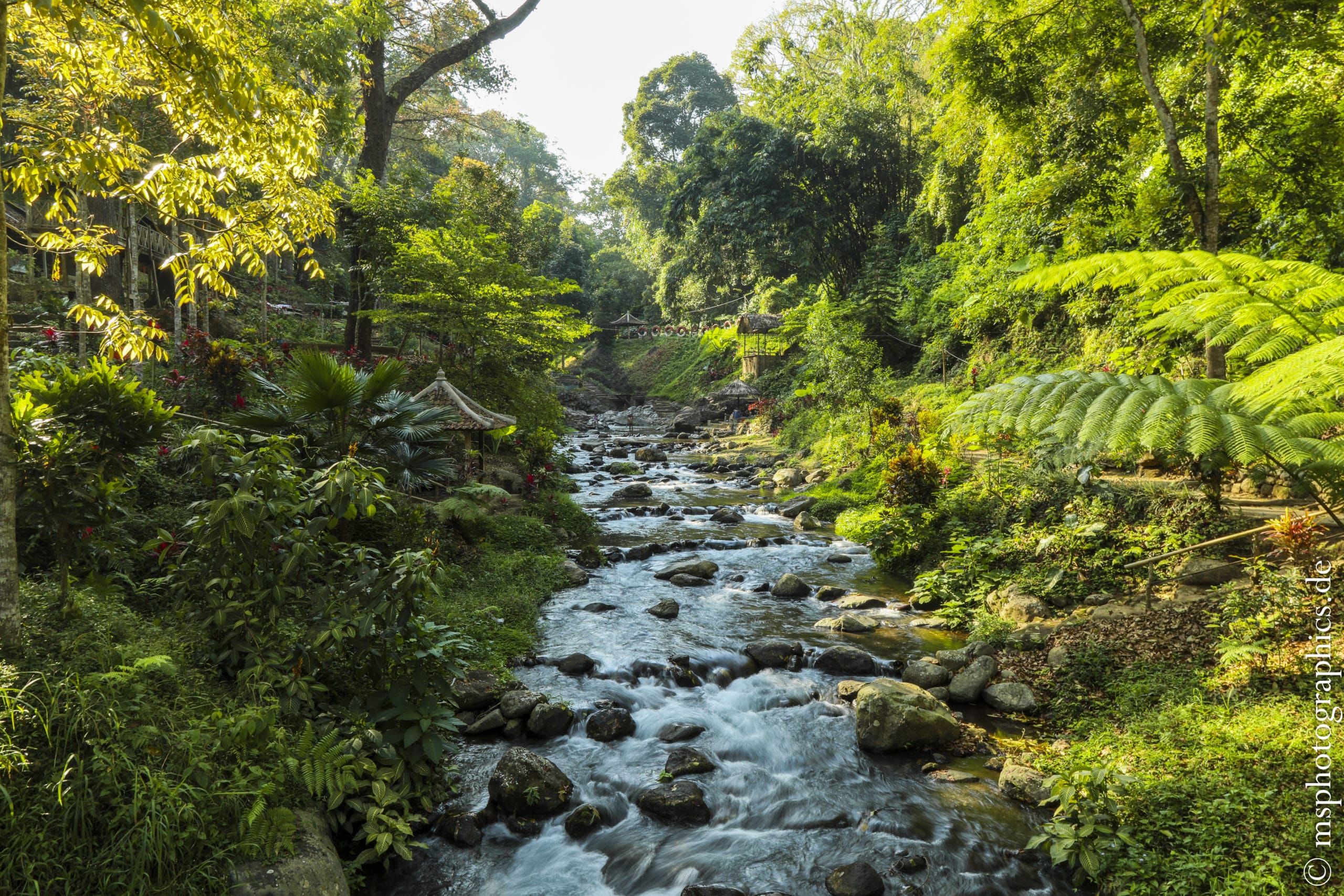
After a fresh cup of coffee straight from the plantation, the walk to the Kalibendo waterfall began. This can be reached after a relaxed 30 minute walk through the jungle of East Java.
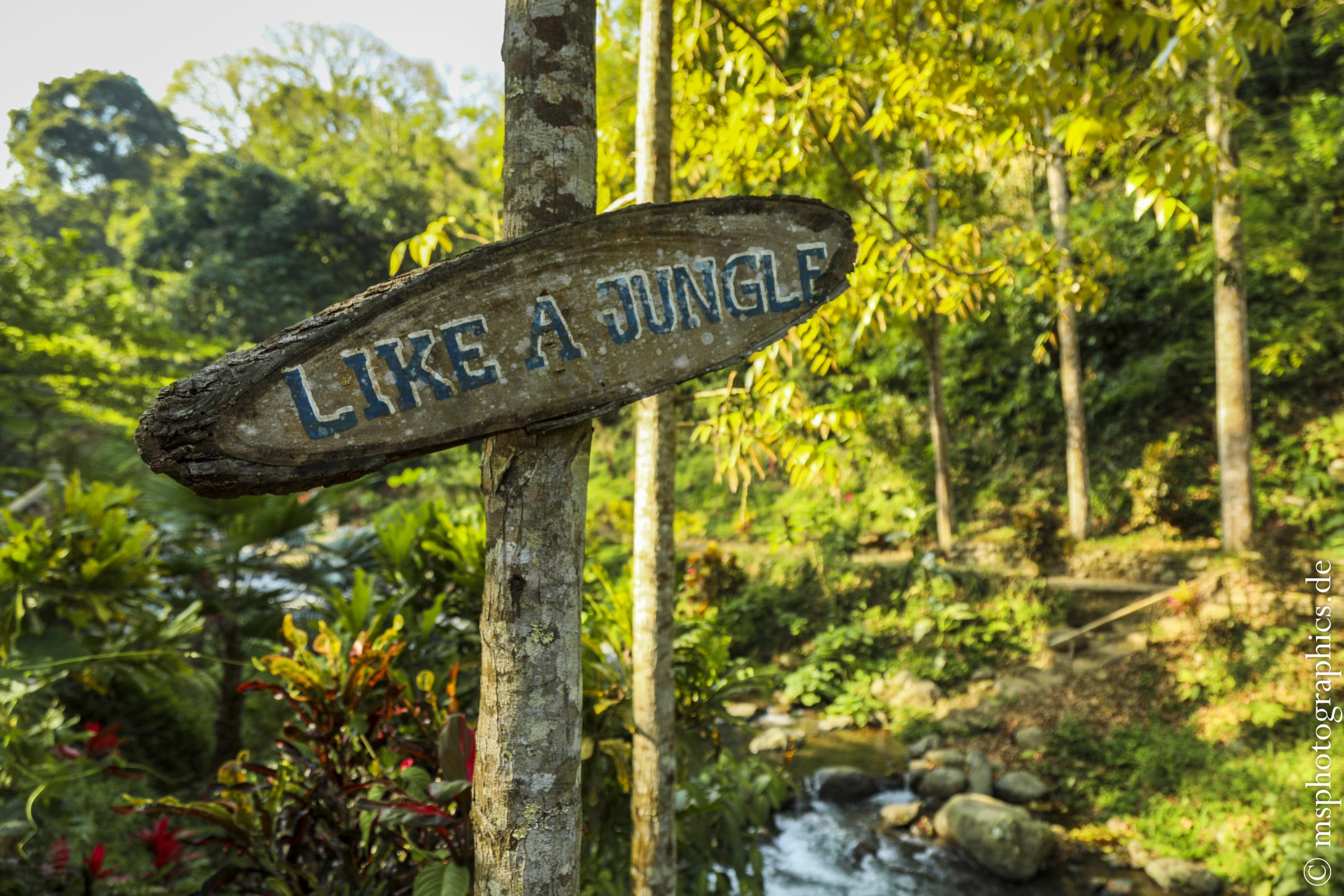
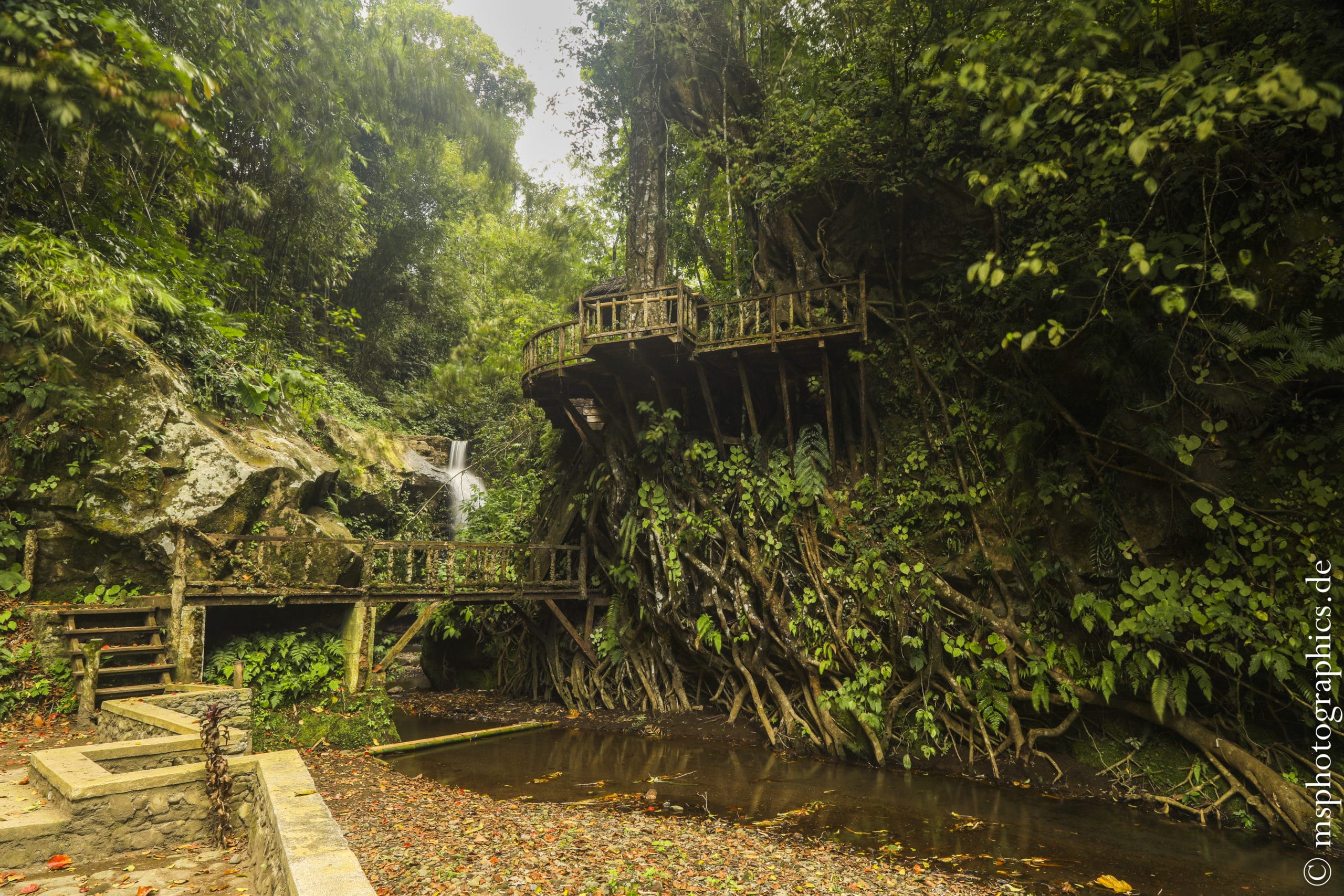
The path to the waterfall leads through fascinating, tropical vegetation, the hike is pure recreation and relaxation.
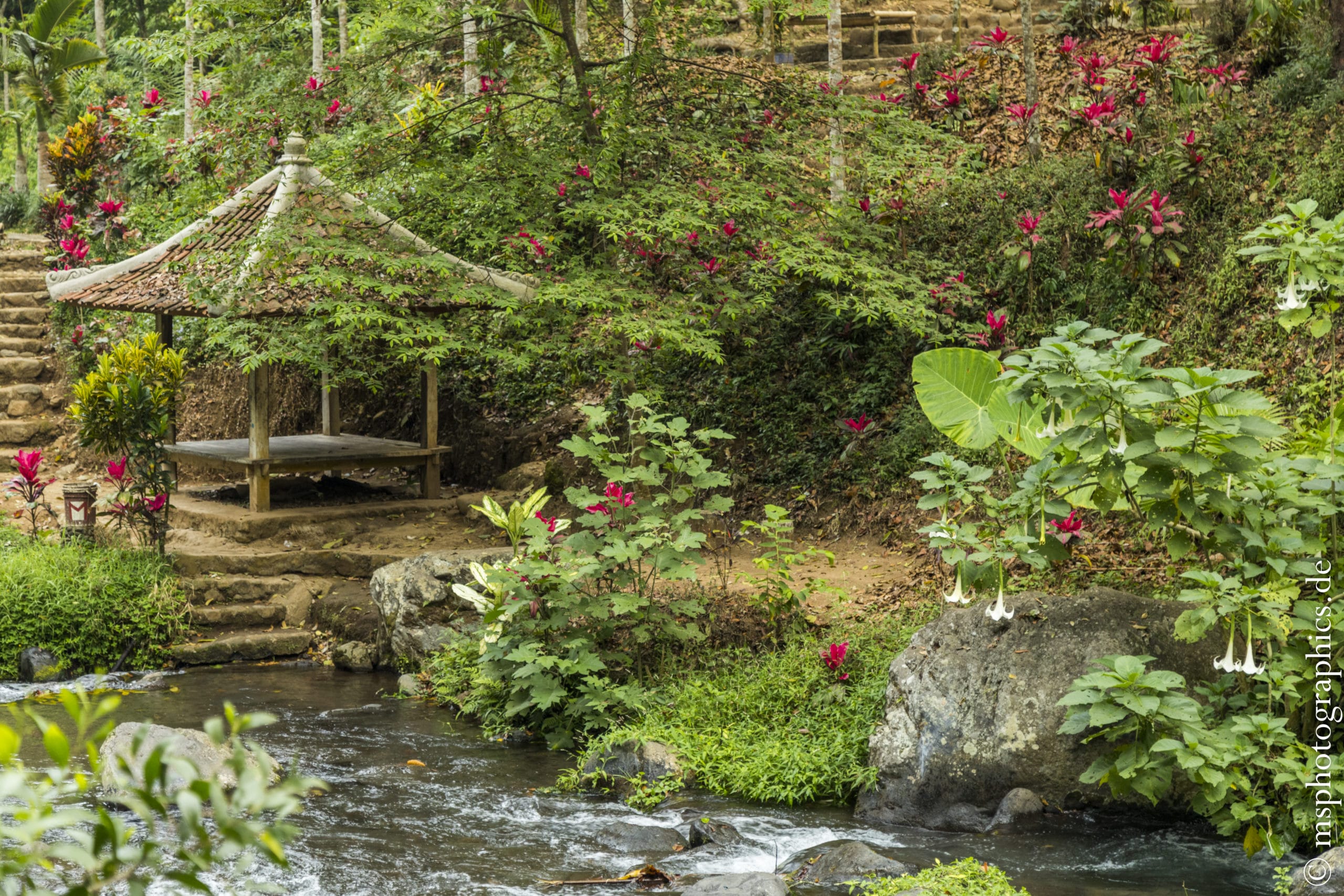
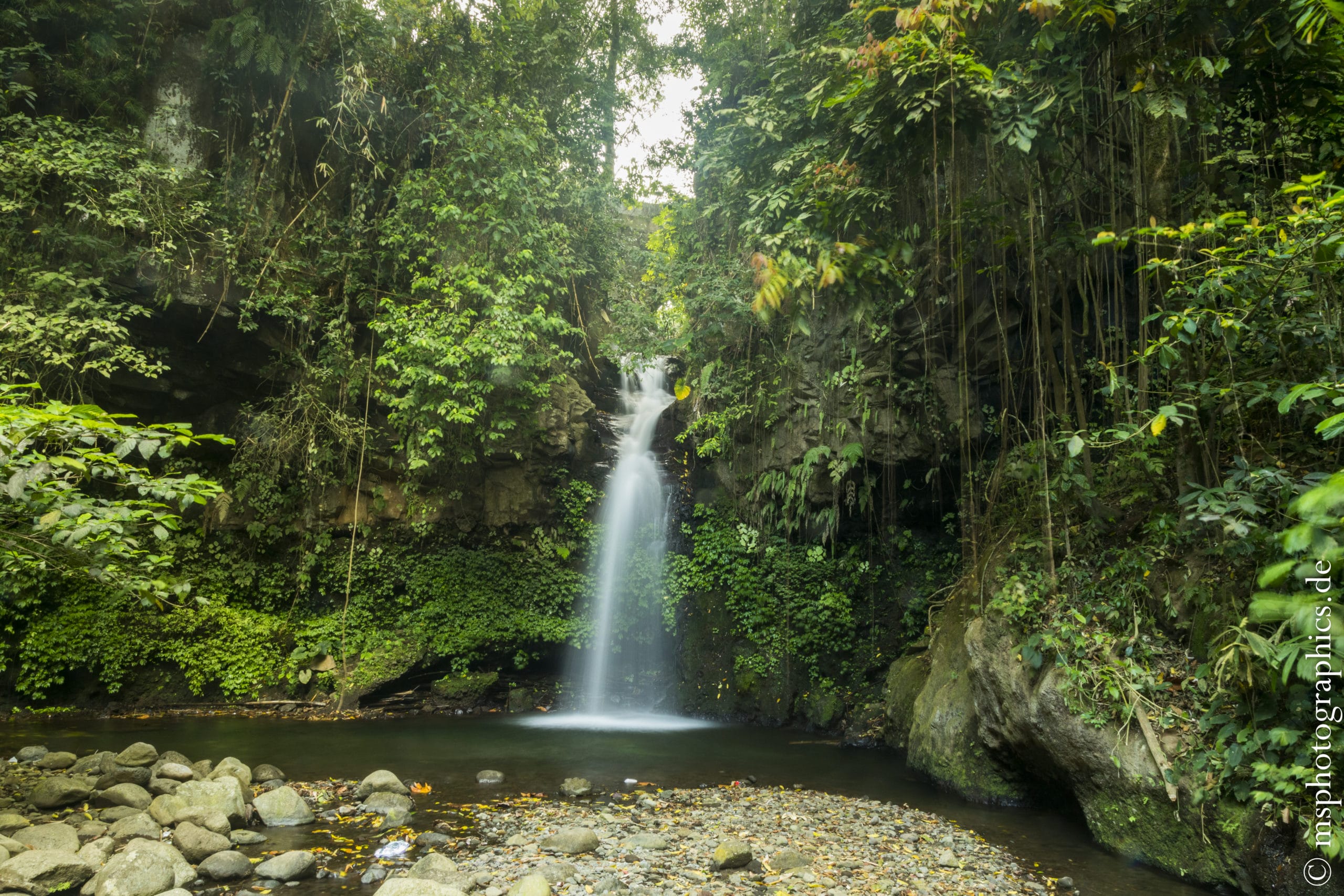
Along small picnic-pavilons, the path continues along the stream. At the end of the trail you finally reach the Kalibendo waterfall. Then we went back to our accommodation for dinner.
Drive to Bromo-Tengger-Semeru National Park:
The next morning there was a six-hour drive to the Gunung Bromo volcano. This is located in the Bromo-Tengger-Semeru National Park. On the way there there was a short stop at the outflow of the Ijen crater lake.
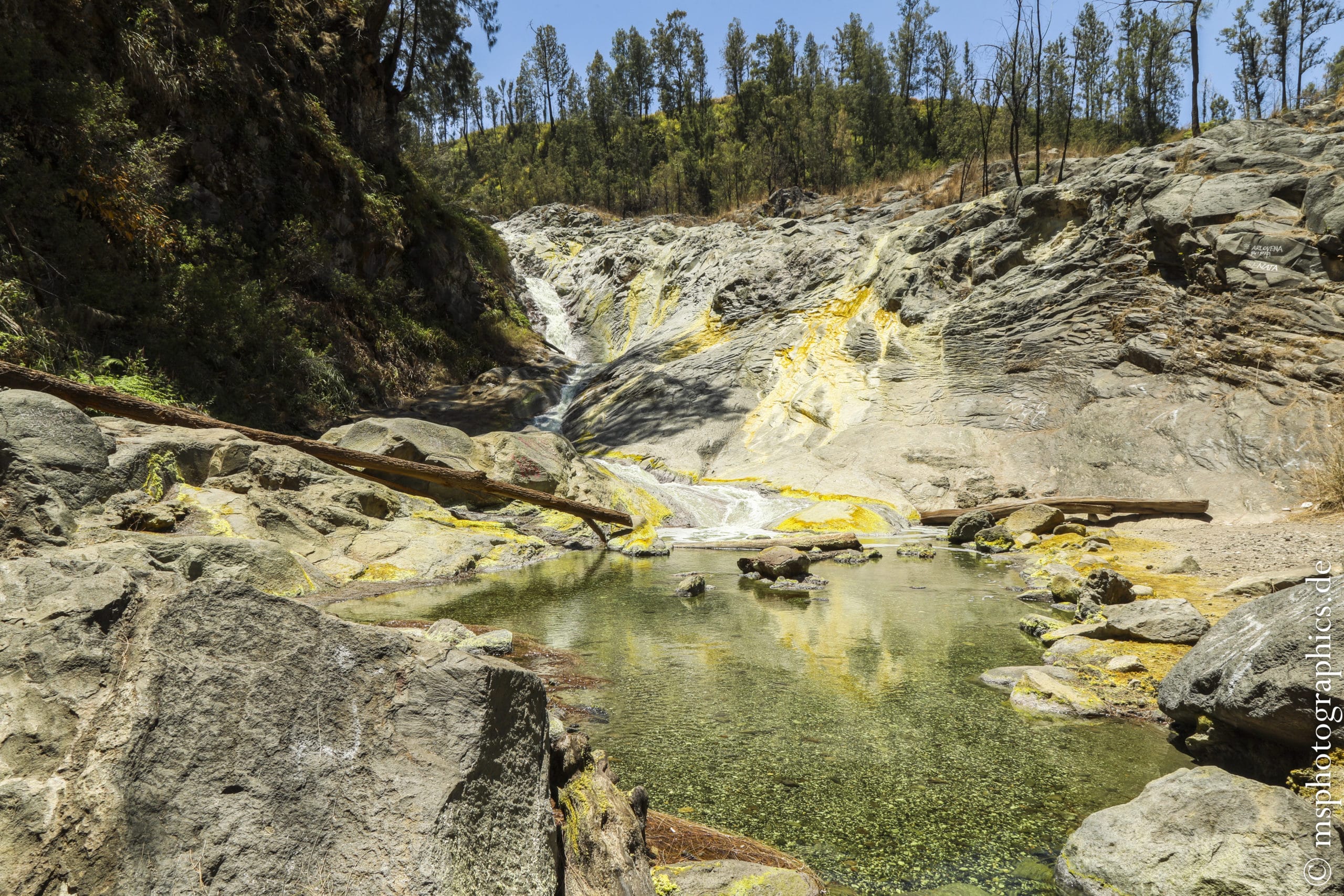
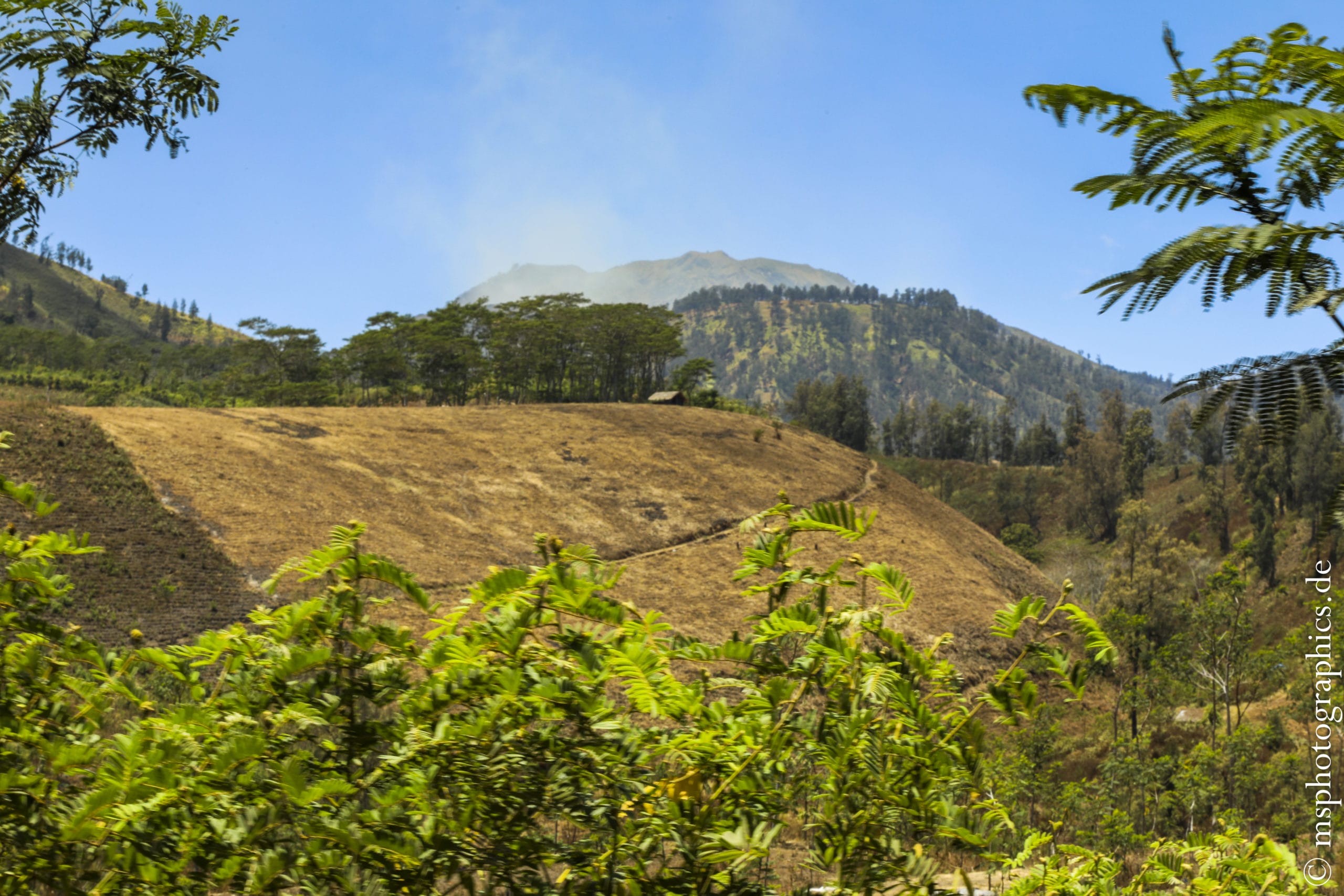
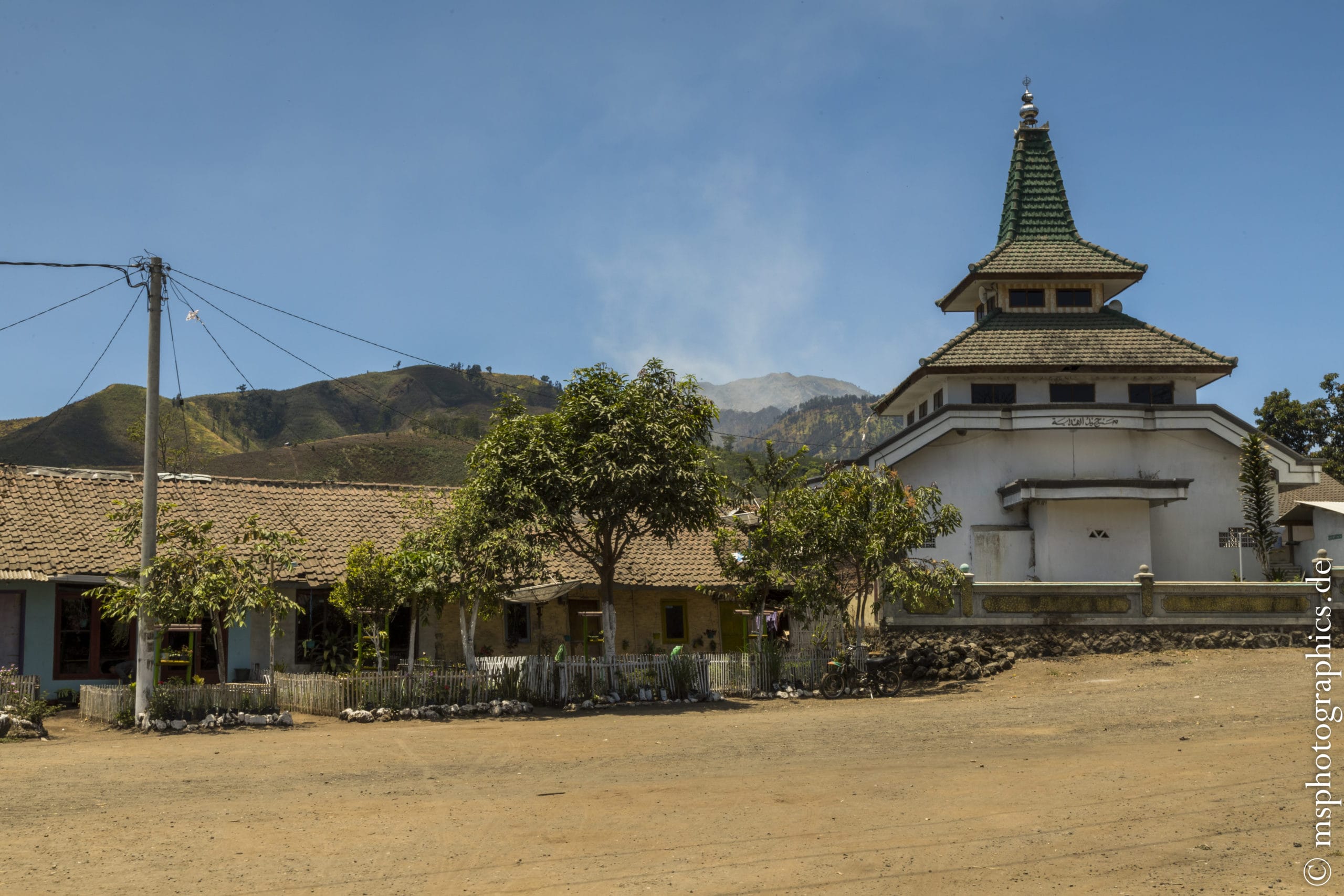
One last look at Gunung Ijen before continuing towards Bromo-Tengger-Semeru National Park.
Arrival at Bromo-Tengger-Semeru National Park:
When we arrived at Bromo-Tengger-Semeru National Park, it was almost dark. After checking in at the hotel the observation of the Milky Way was on the program before going back to the accommodation.
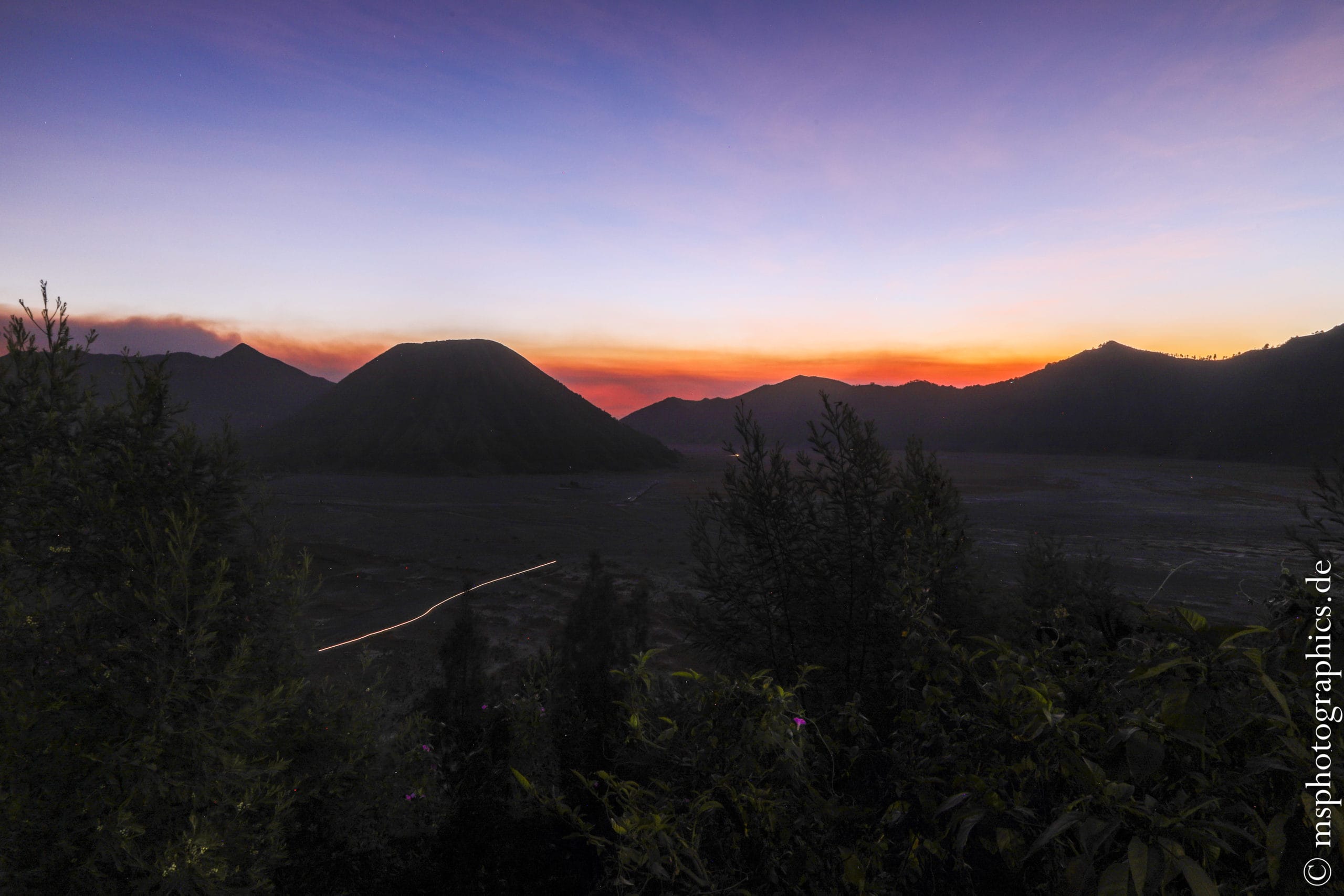
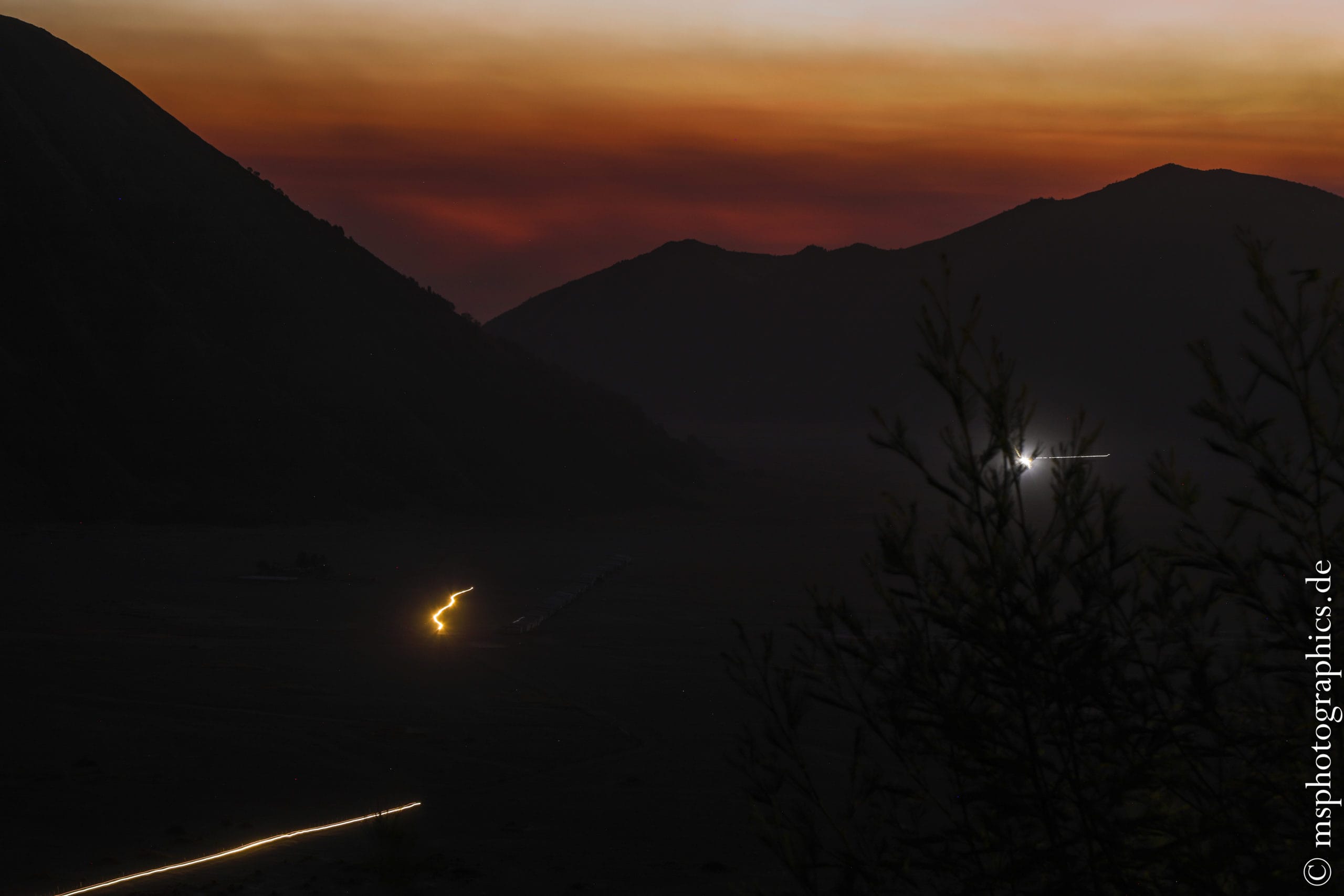
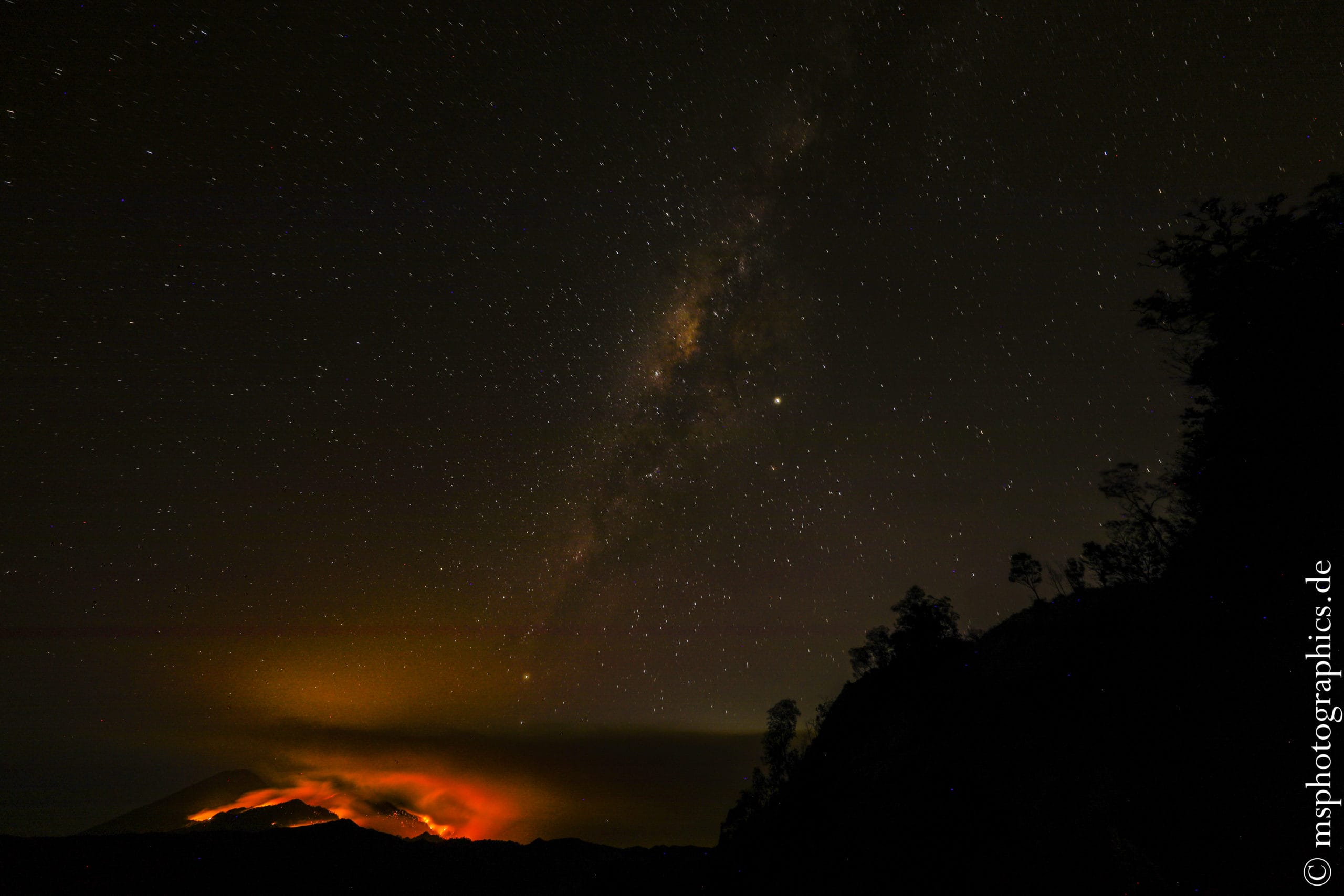
It was a fascinating and majestic sight to see the Milky Way galaxy over the glowing Semeru volcano. For the next morning it is planned to watch the sunrise over the caldera.
The sky stayed clear overnight and so there was an unforgettable sunrise from the viewpoint Kingkong Hill over the entire Bromo-Tengger-Semeru National Park. In the afternoon, it was time to rest and it was planned to watch the sunset at the Mentingen Hill viewpoint, 500 meters away from the hotel.
Unfortunately, the weather at sunset didn't really play along and thick fog came in, preventing any view of the sun. After dinner it was time to go to bed early again, because for the next morning after sunrise, the ascent of Bromo and the return trip to Bali were on the agenda.
The hike to the crater of the Gunung Bromo volcano:
Shortly after sunrise the next morning there was a unique view from the hotel over the caldera towards the Gunung Bromo volcano. The previous evening's fog filled the entire pool. The Bromo gave smoke signals in the background.
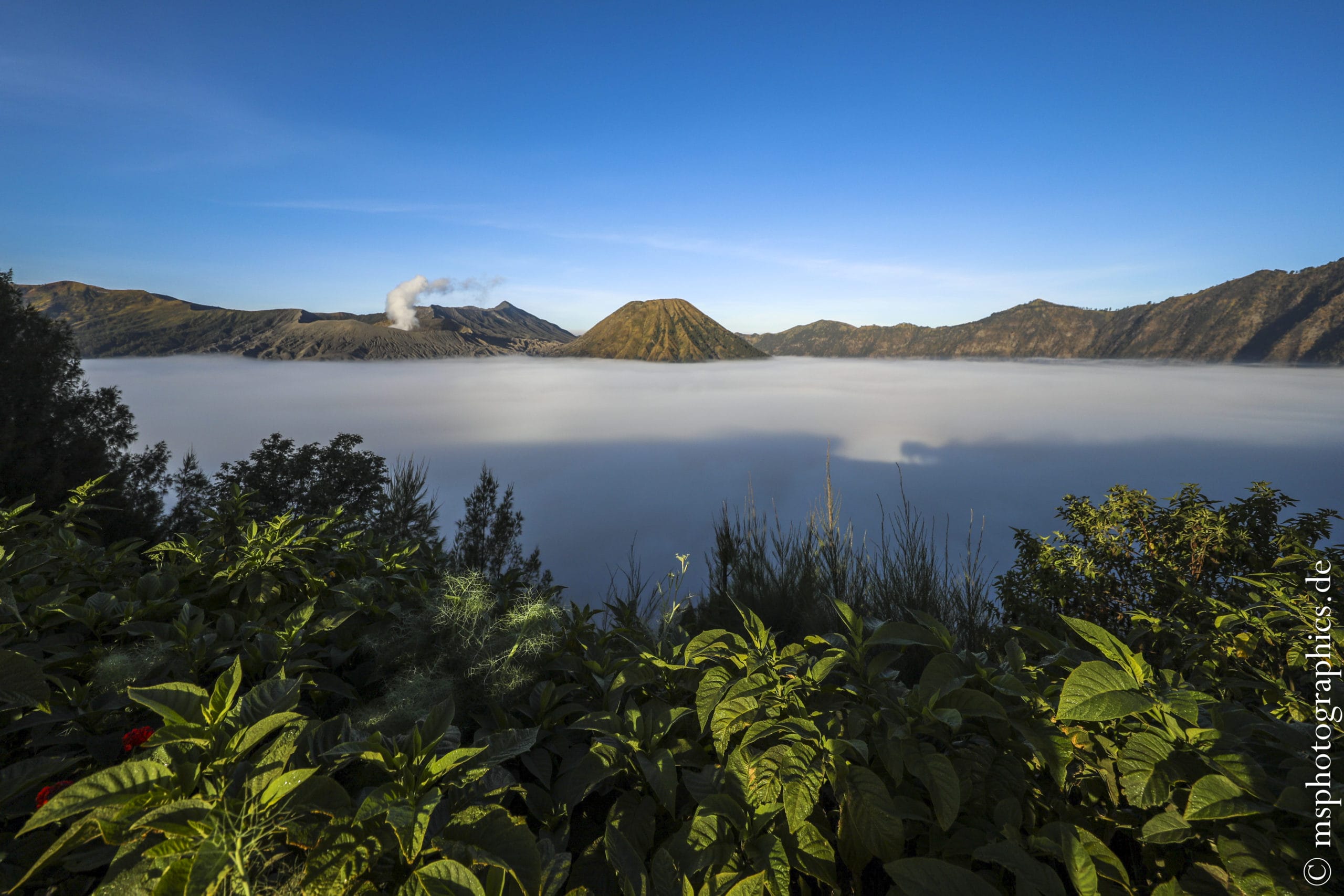
Before breakfast, before the fog had cleared, we took the jeep over the ash field towards the Gunung Bromo volcano. The last kilometer is either on foot or on horseback to the crater.
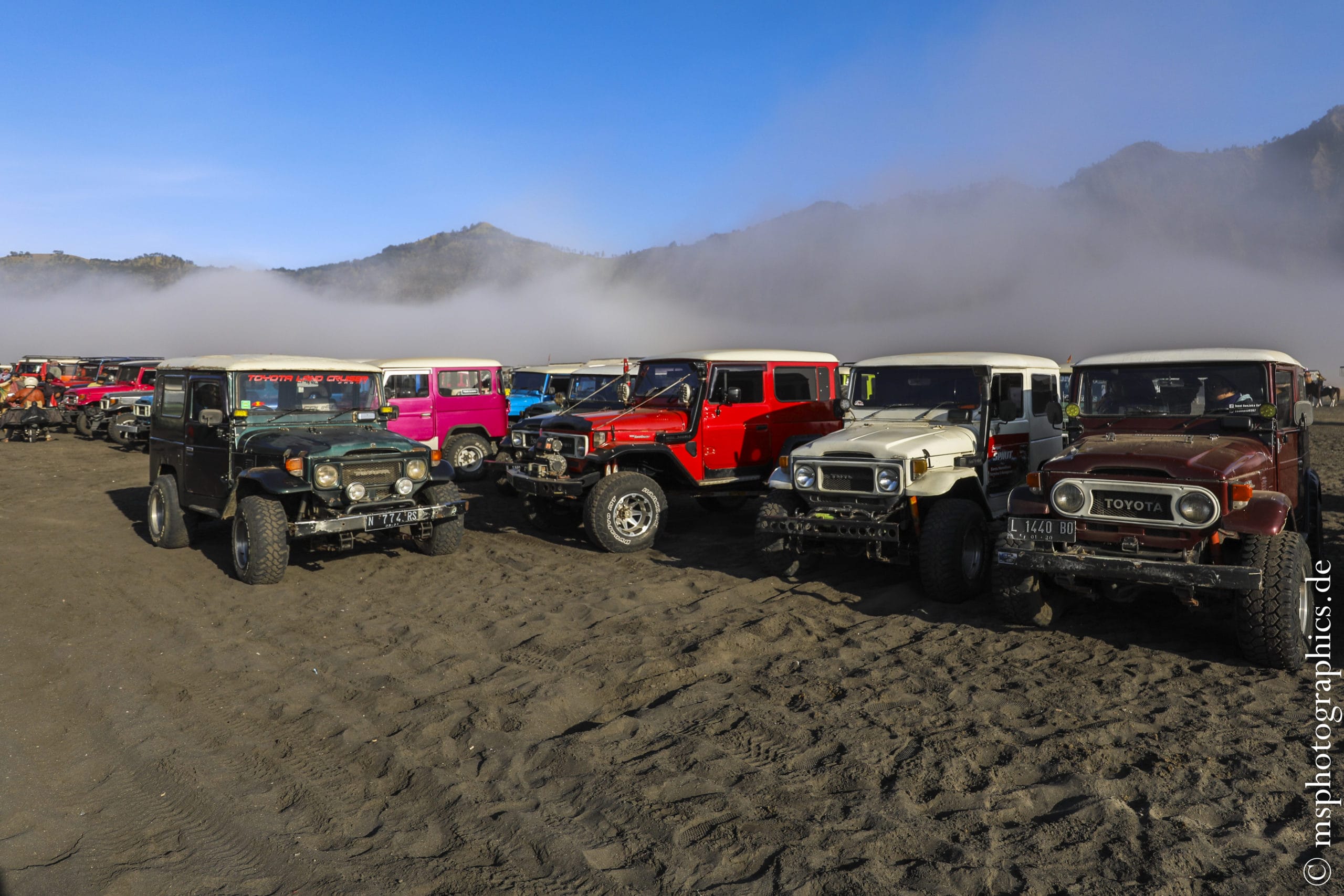
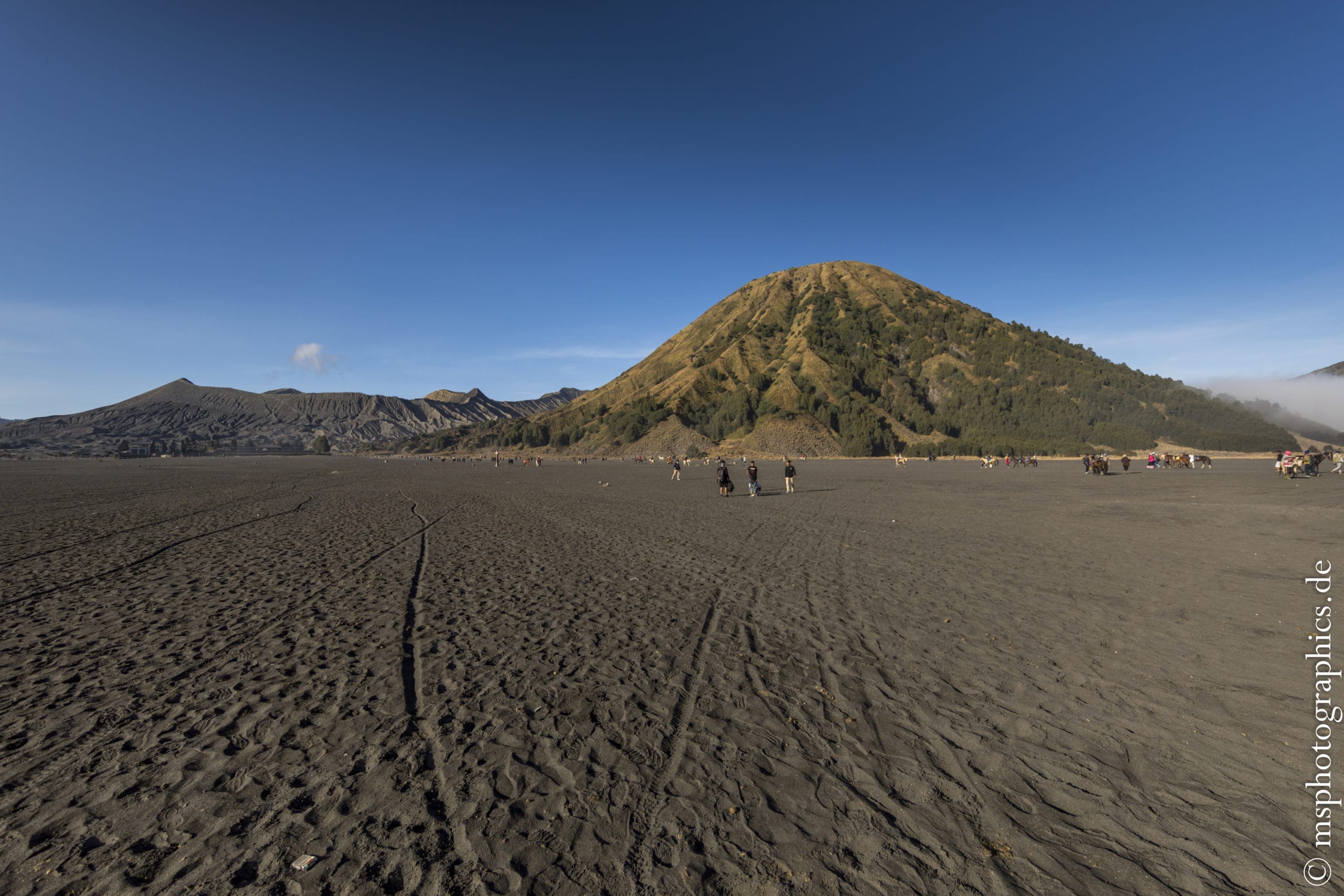
Although it was an absolute dream day, there were occasional stormy gusts, a dust mask and sunglasses are highly recommended here. Sturdy, high shoes are advantageous if you don't want to have to constantly empty the volcanic ash from your shoes.
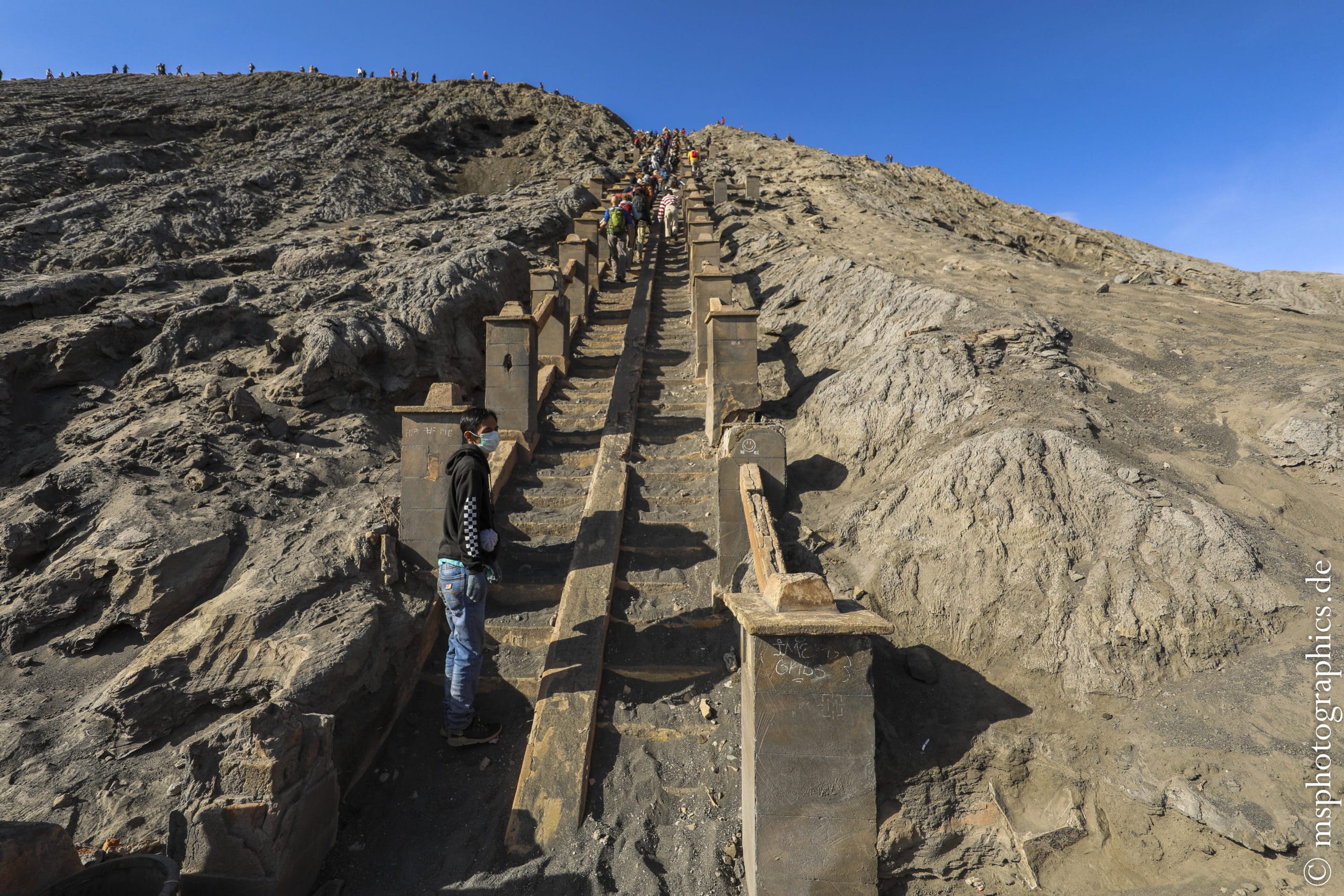
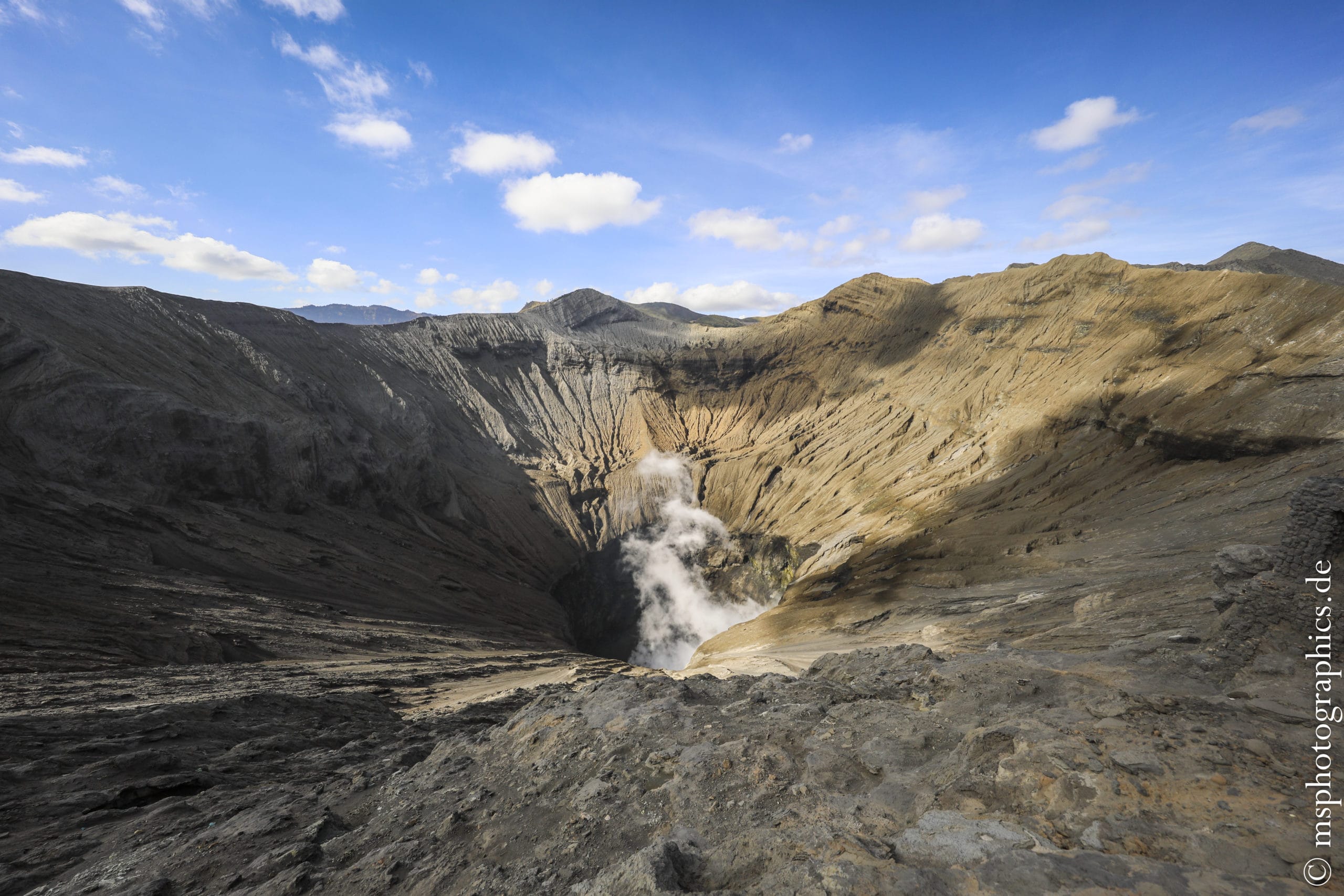
The ascent to the crater leads over a narrow, steep and ash-covered staircase. Once at the top you can see the mighty crater of Bromo, which makes a noise like a jet taking off.
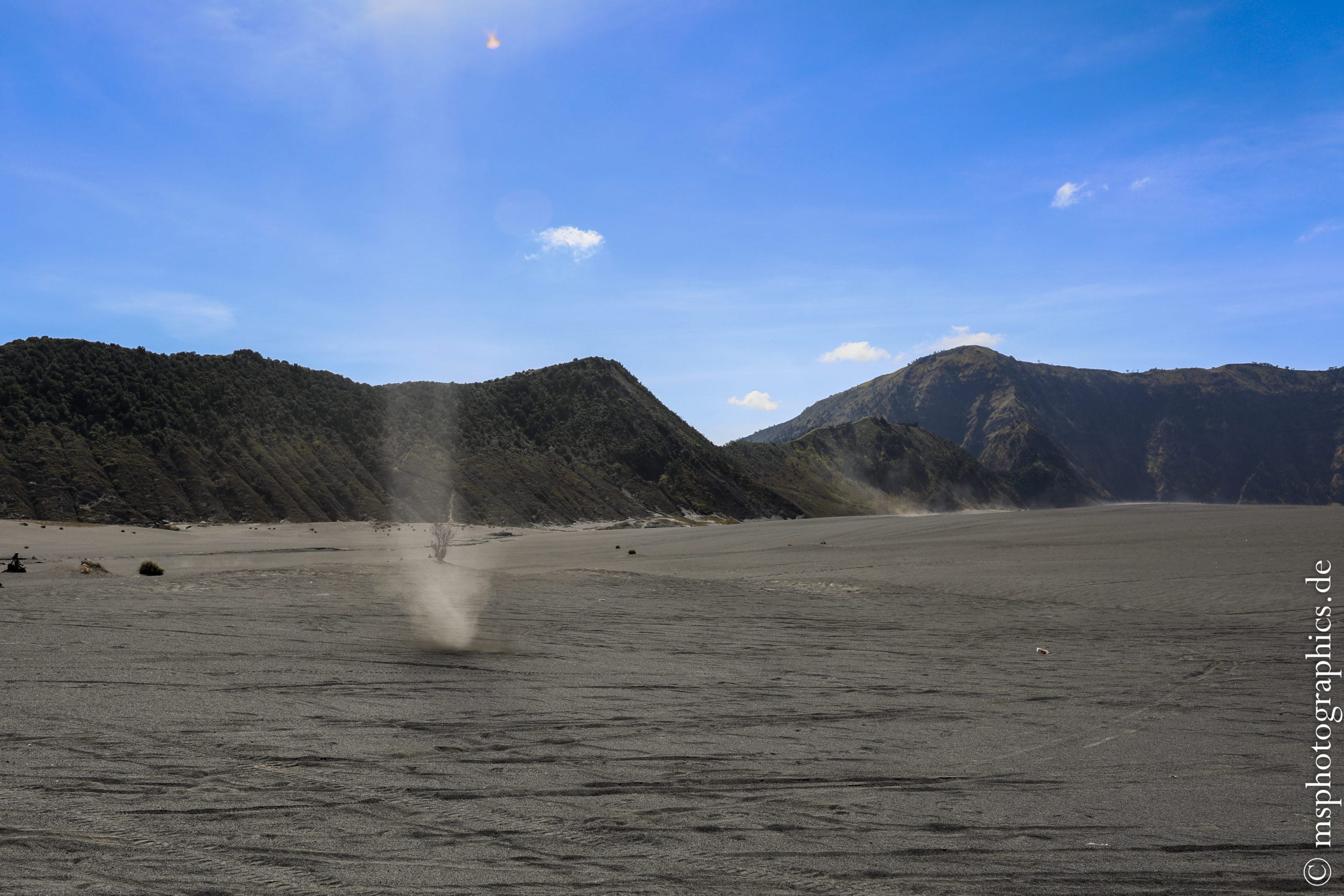
After visiting the crater and hiking through the ash desert of Gunung Bromo, we went back to the hotel for breakfast. After checking out, the approximately 6-hour drive back to the island of Bali was announced.
Back in Bali - the Mimpi Resort Menjangan:
Right on time for dinner, we arrived at the next destination, where the hotel Mimpi Resort Menjangan was booked. Actually, a diving excursion was planned for the next day. However, it had to be postponed because of the aforementioned Bali Bellis. As a result, this day was practically a day of rest in the hotel complex.
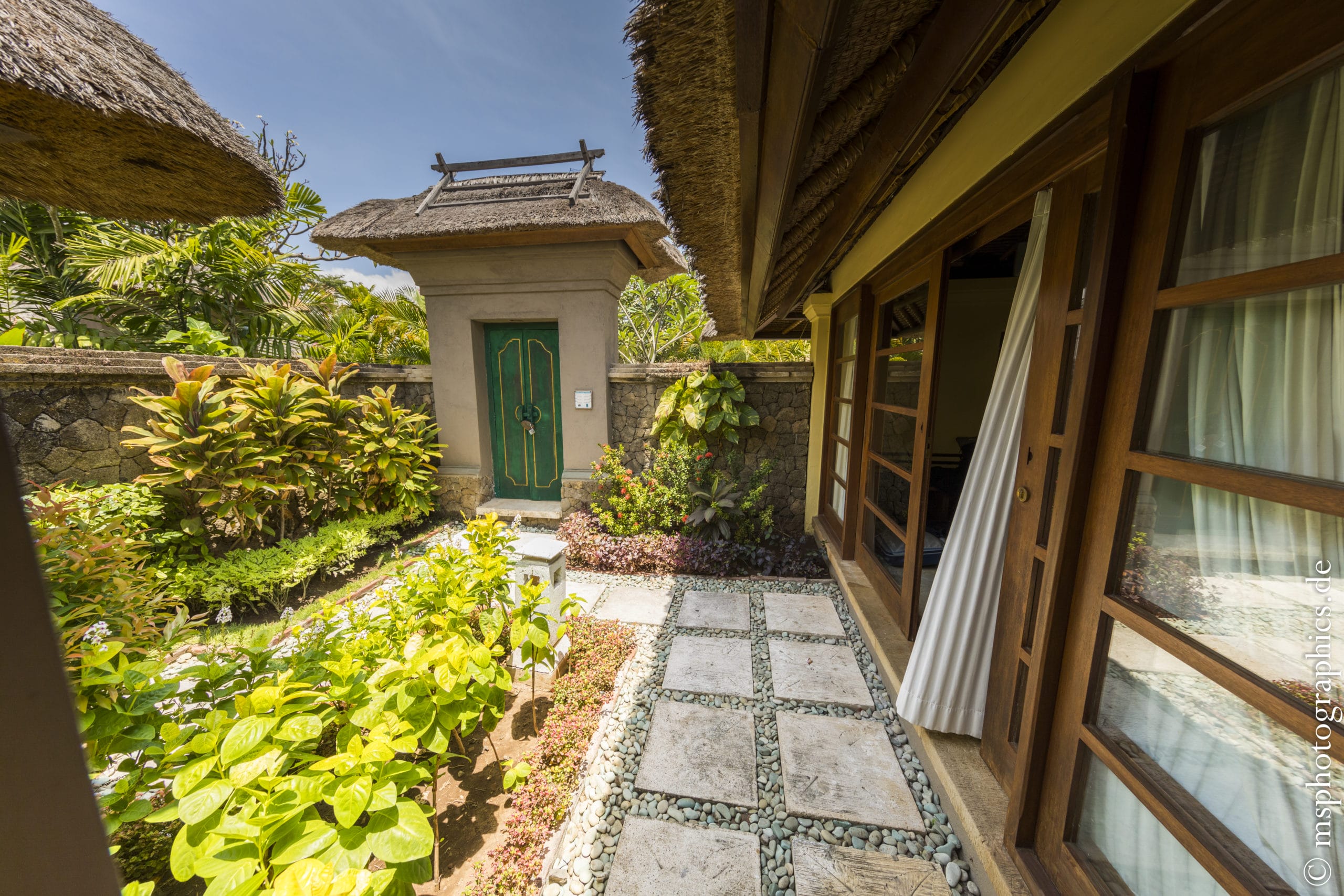
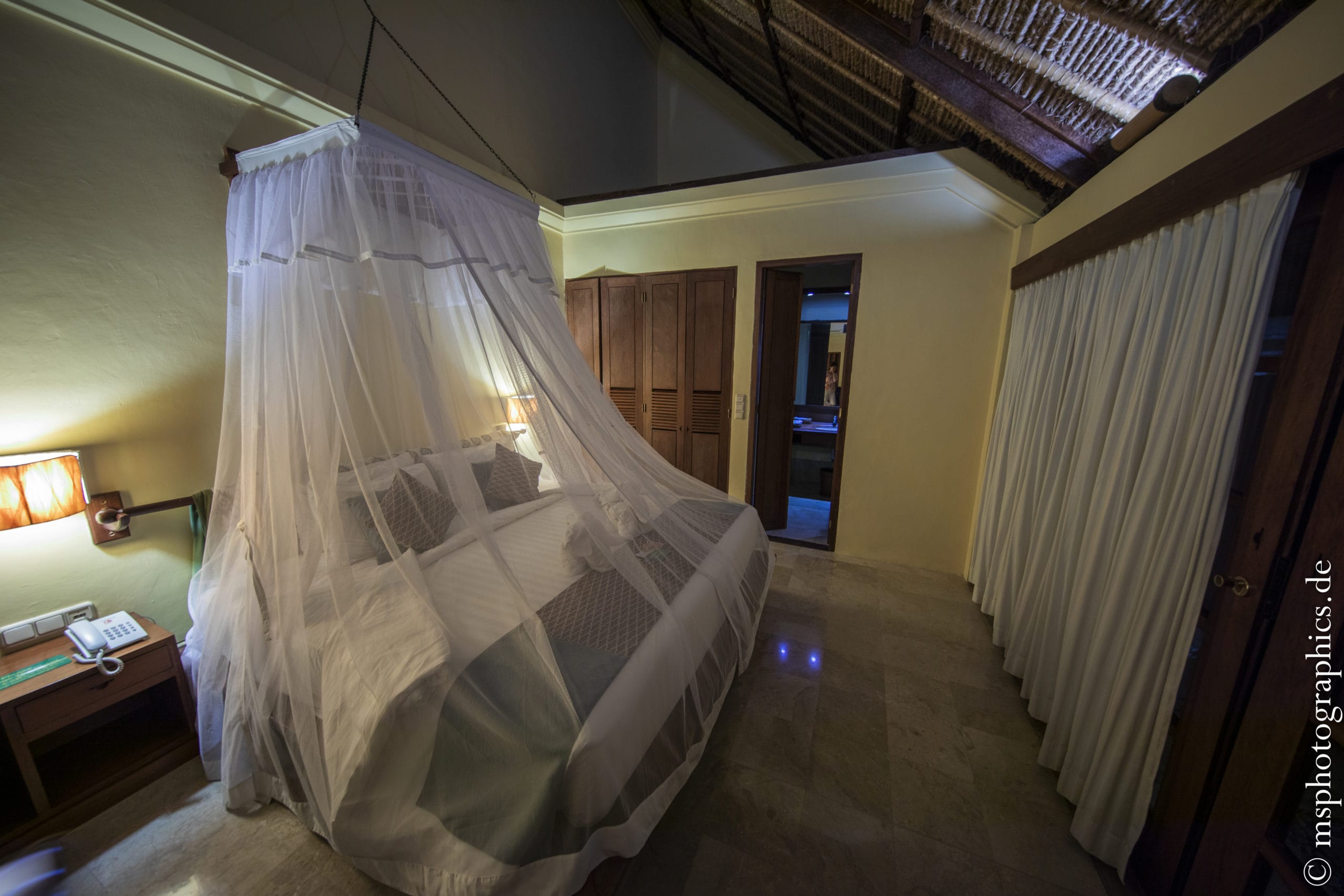
The hotel complex alone offers enough to fill several days. Breakfast, lunch and dinner can be enjoyed directly at the water, a bath in a hot spring, which is partly connected to the rooms, or a massage with spa make the time entertaining.
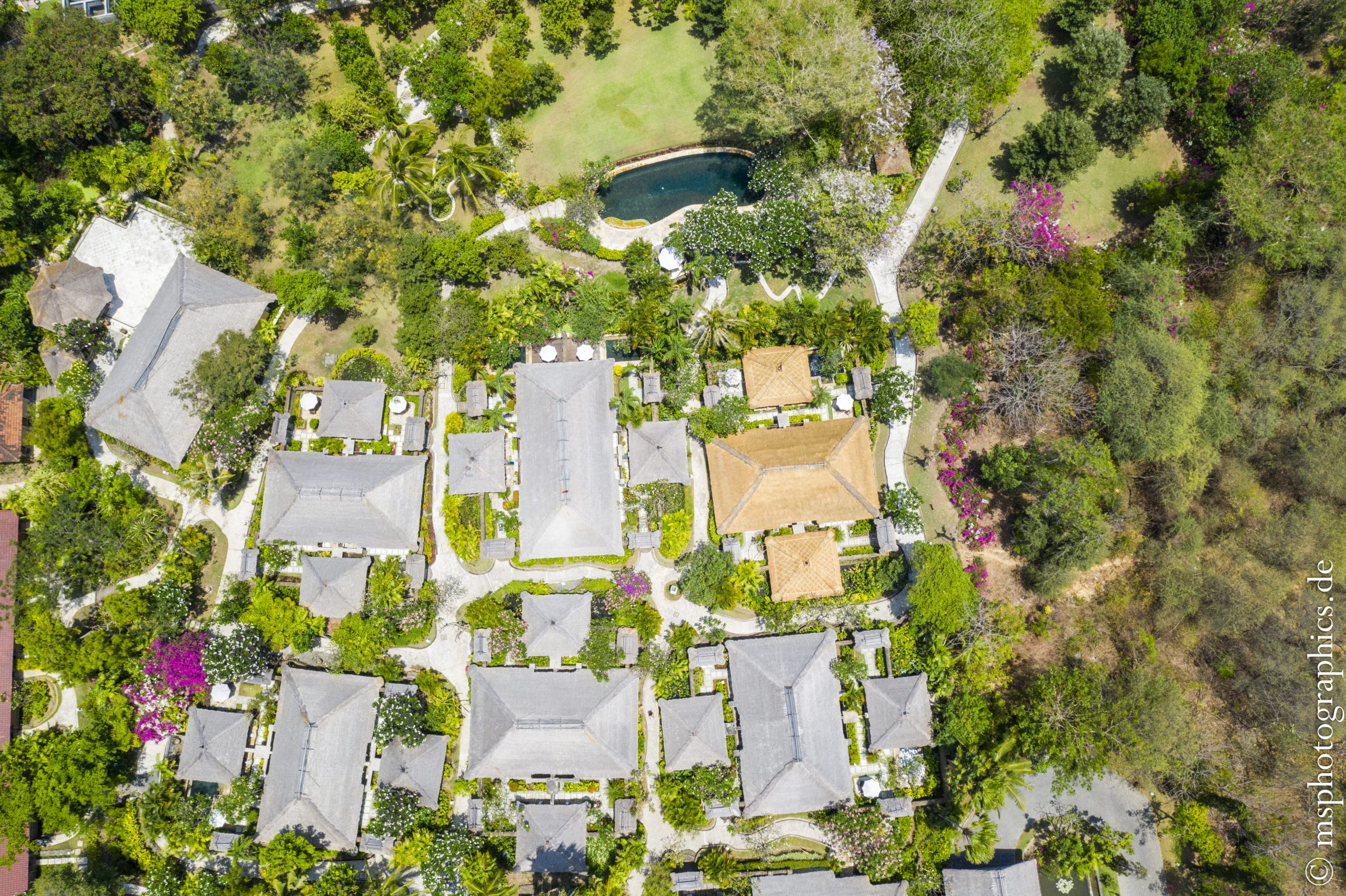
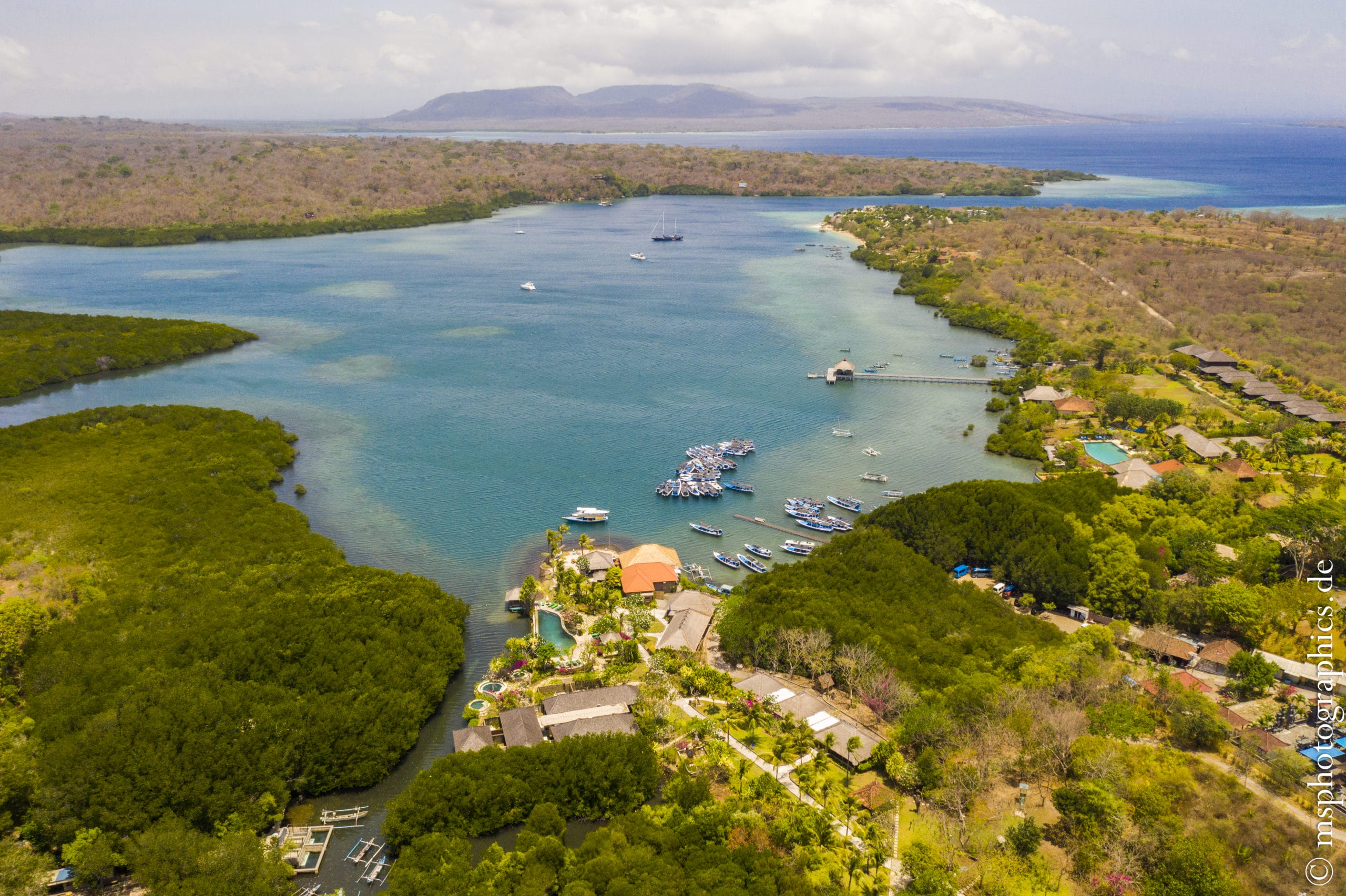
From the hotel you can also undertake diving trips to one of the most beautiful diving areas in Bali - if you want and your health plays along.
In the afternoon it was time to check out again and the journey continued towards Munduk.
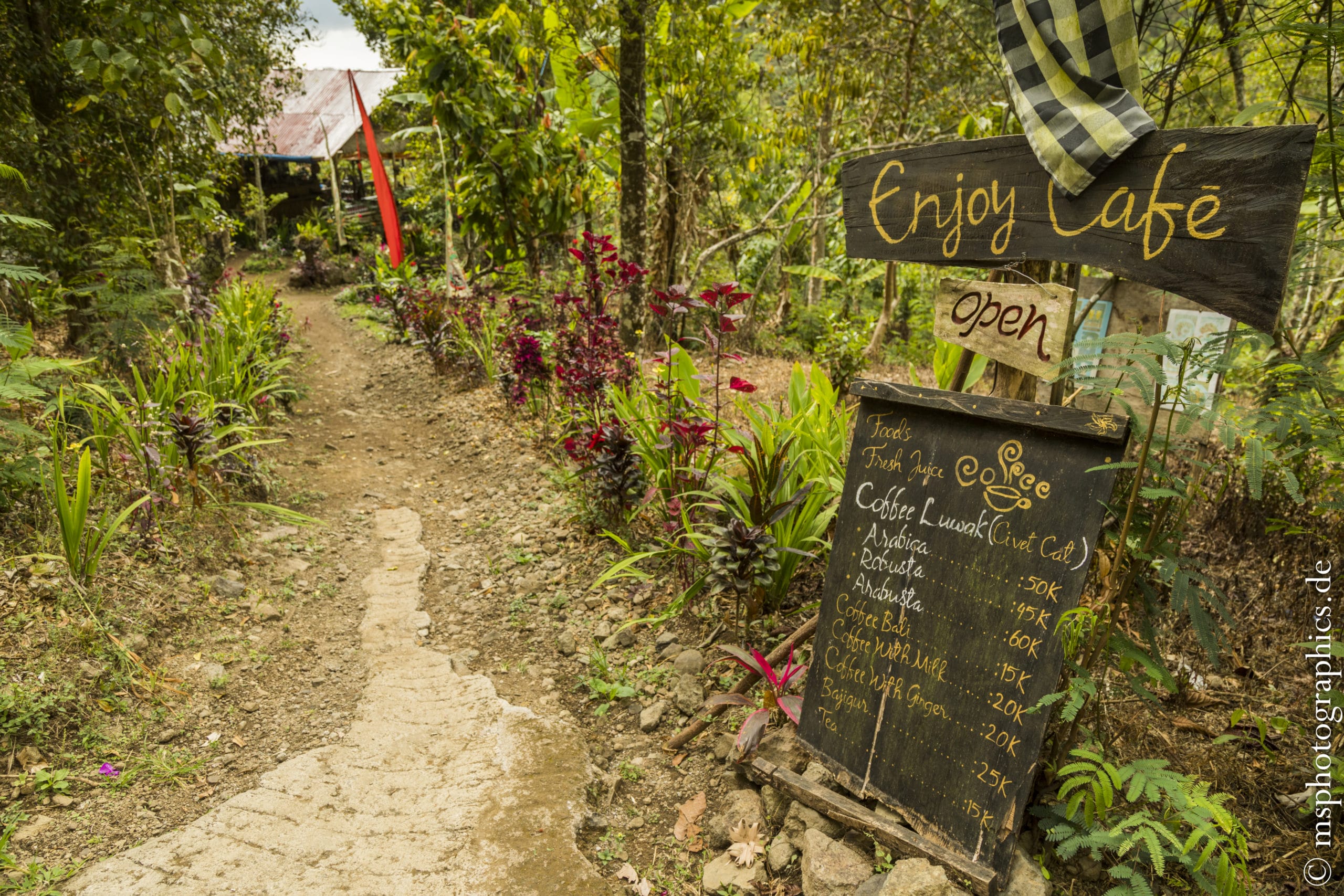
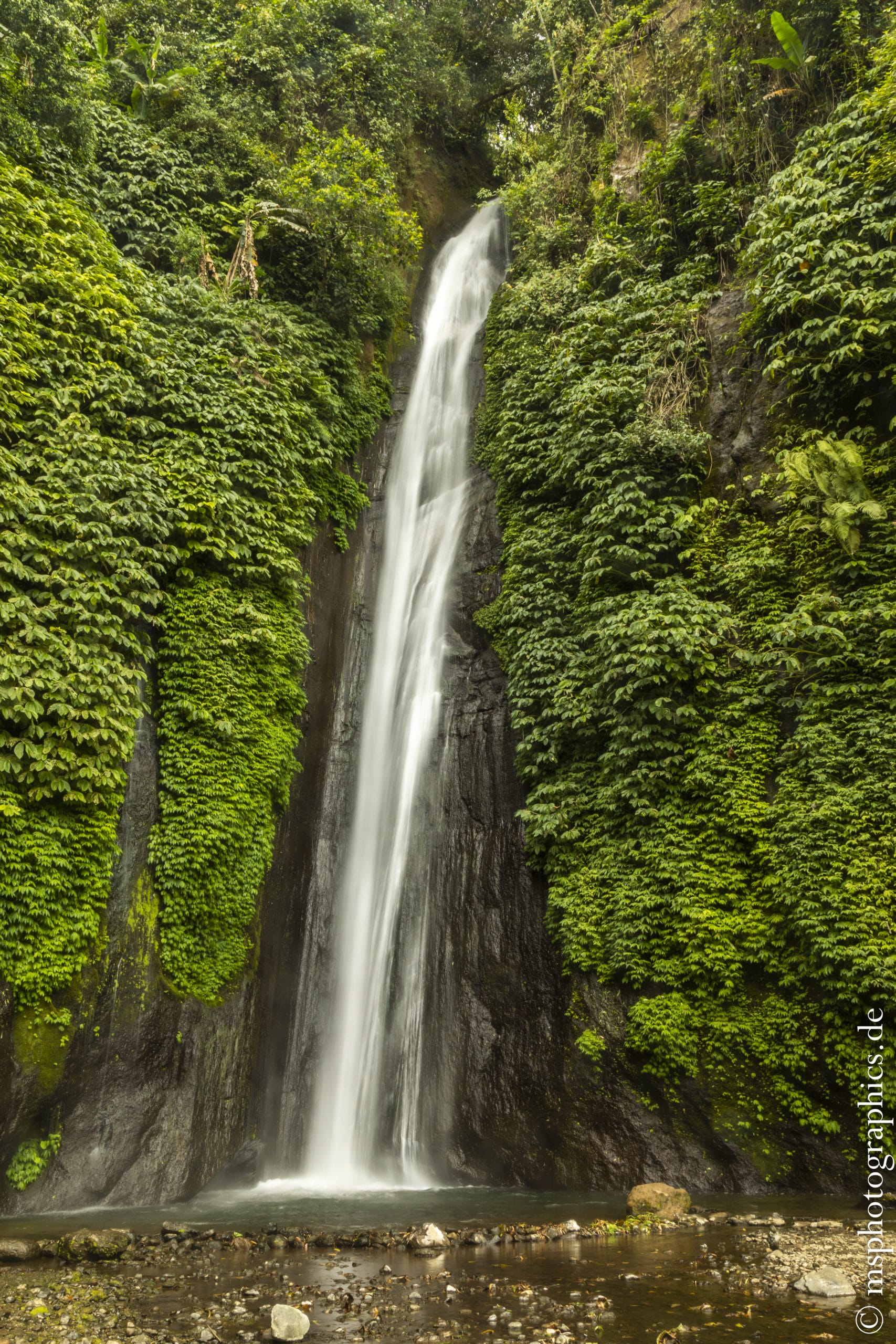
There was good coffee on the way and a visit to the Munduk waterfall was planned.
The accommodation Puri Lumbung Cottages in Munduk:
The tour continued towards Munduk. The goal was the accommodation Puri Lumbung Cottages in Munduk.
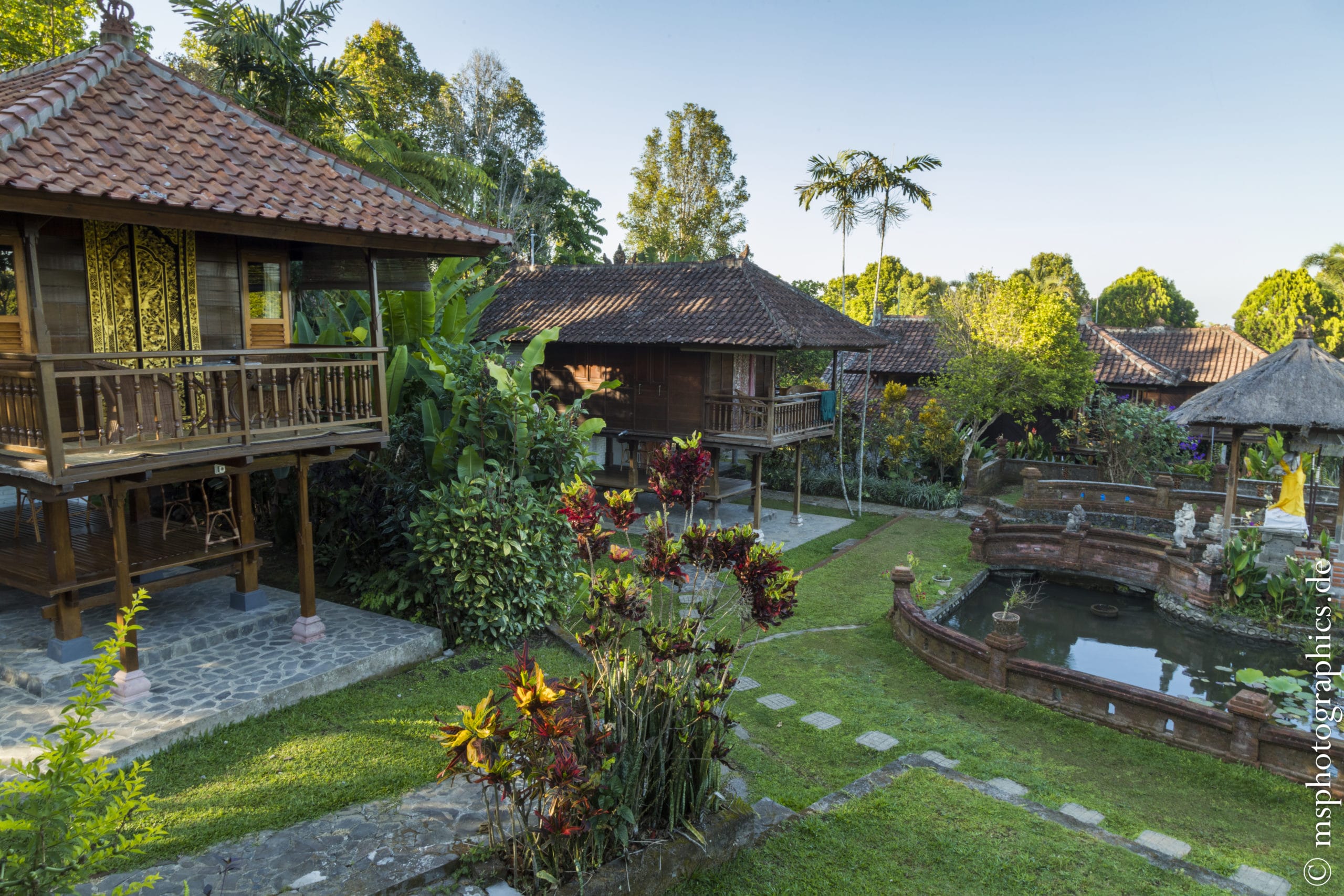
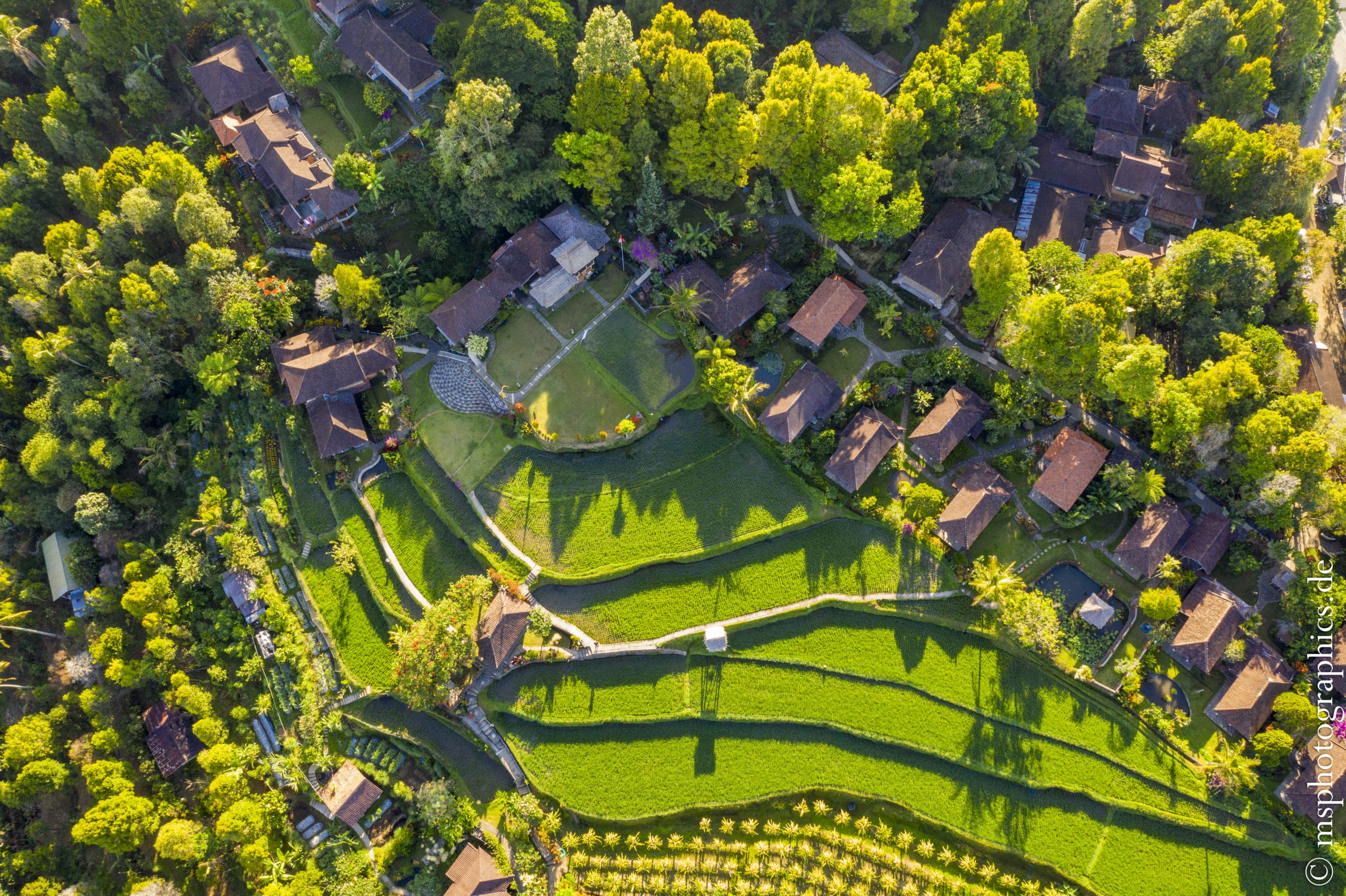
The small huts of the property are scattered in the middle of the beautifully landscaped rice terraces. An excellent breakfast is included. The on-site restaurant also offers excellent lunches and dinners.
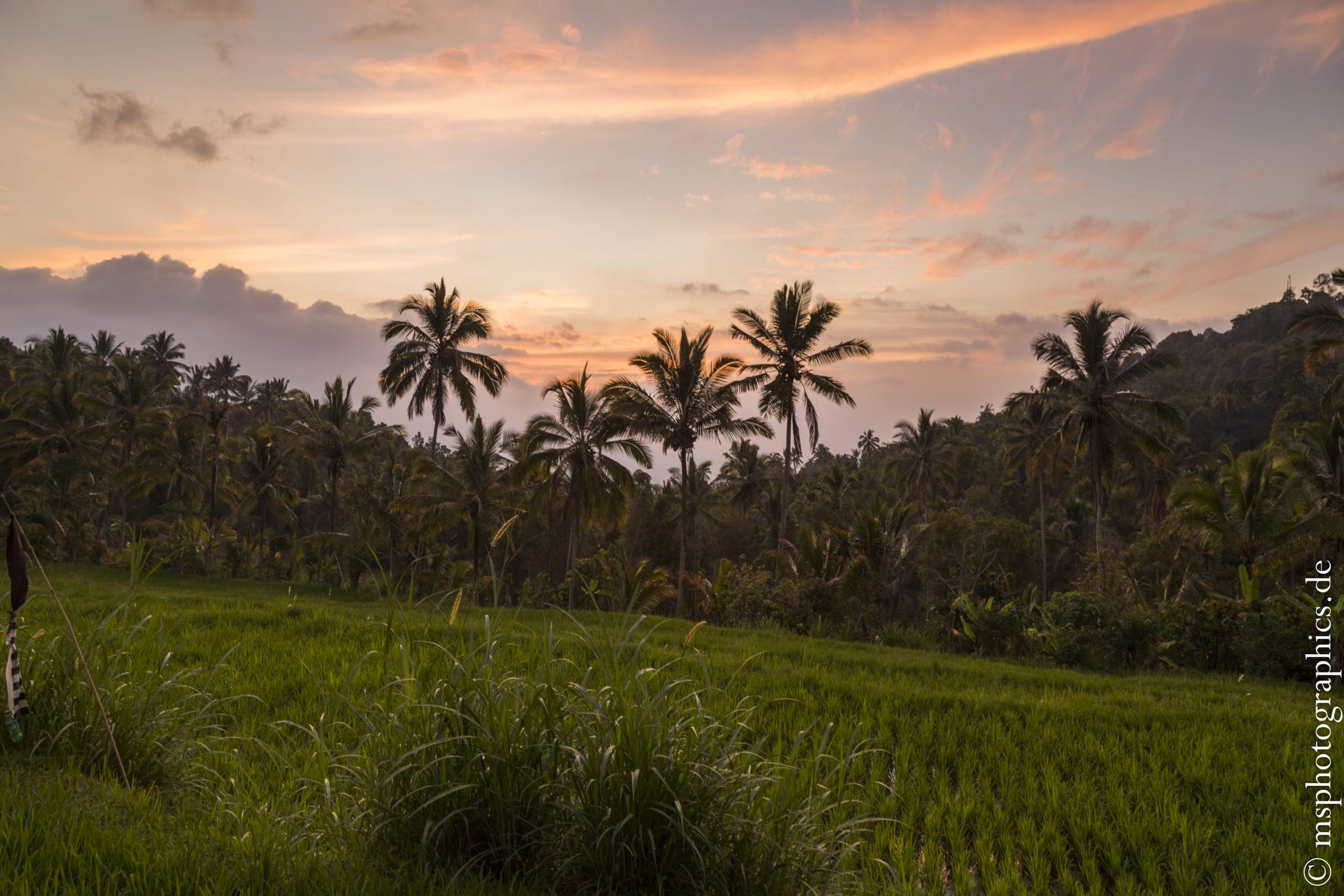
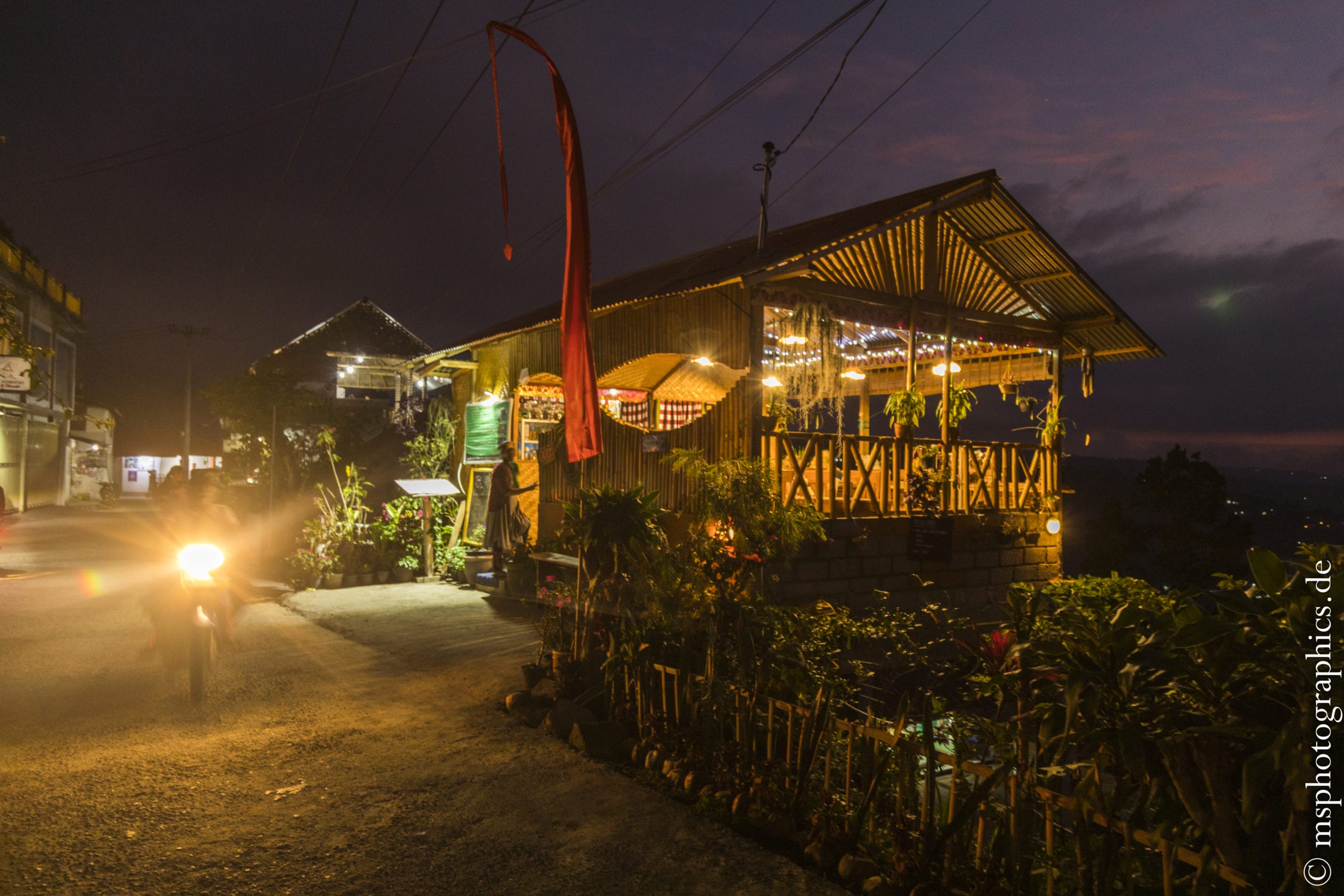
After checking in, it was just the right time to take a stroll around the area to watch the sun set and darken. The next morning, after breakfast and checking out, a hike through the jungle of Bali was planned.
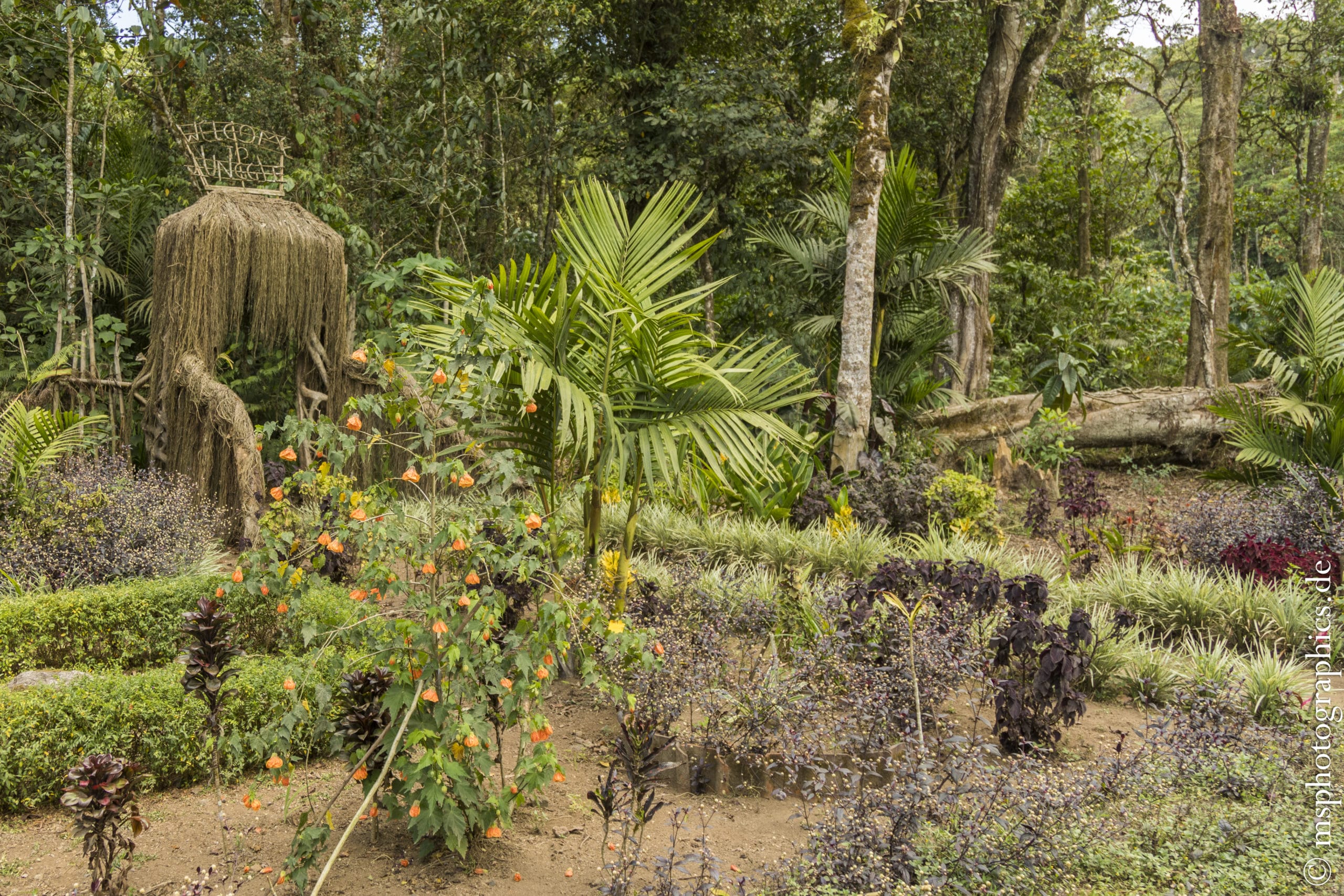
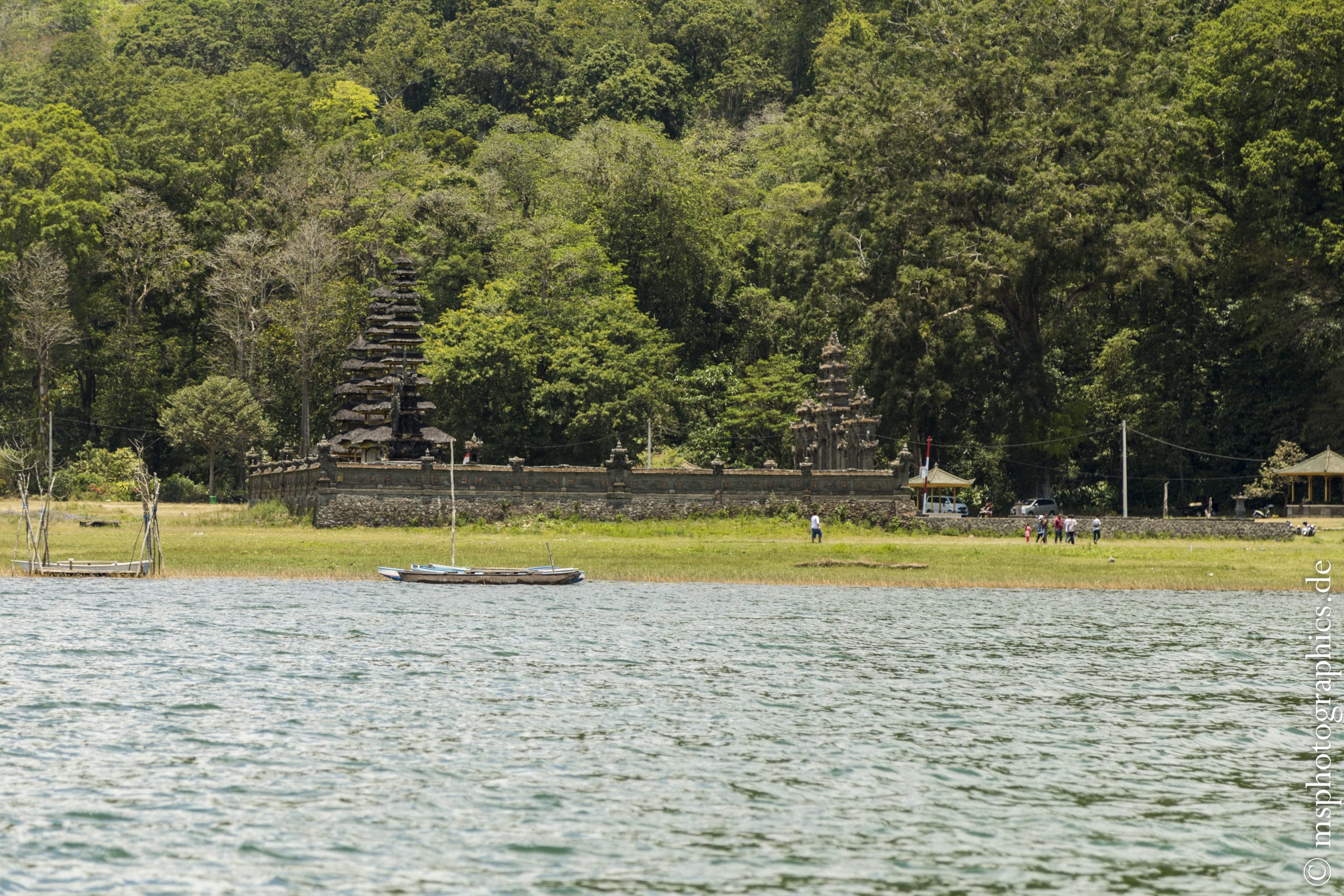
Once you have crossed the tropical jungle, you come to Lake Danau Tamblingan. From there you take a small boat to the Hindu temple Pura Ulun Danu Tamblingan, a small temple complex right at the lake.
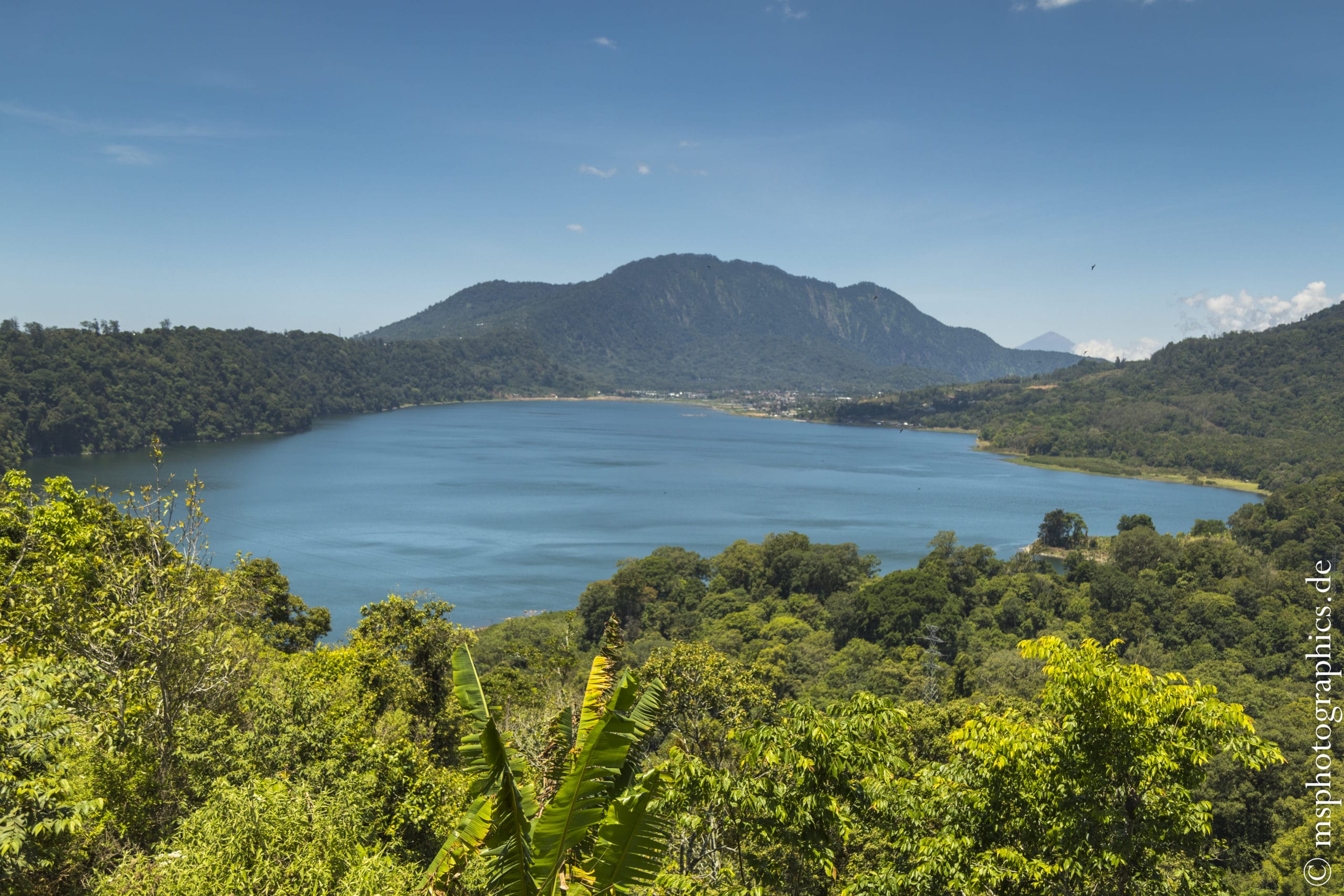
Then we went on by car, along the green lakes to the temple complex Pura Ulun Danau Beratan, one of the most famous temple complexes in Bali. On the way, from above Lake Danau Buyan, you have a fantastic view over the lakes. Gunung Agung volcano can be seen in the background when the weather is clear.
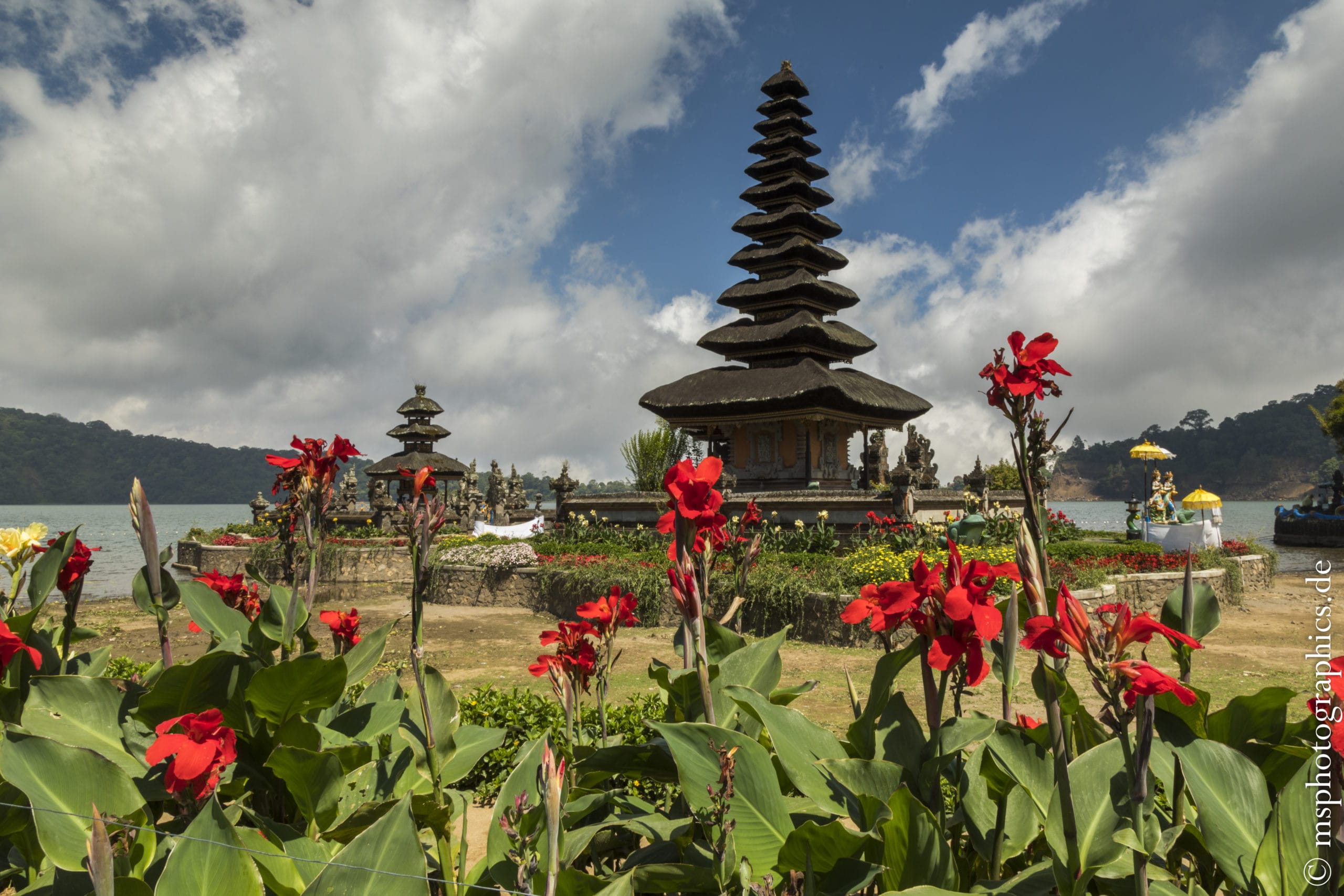
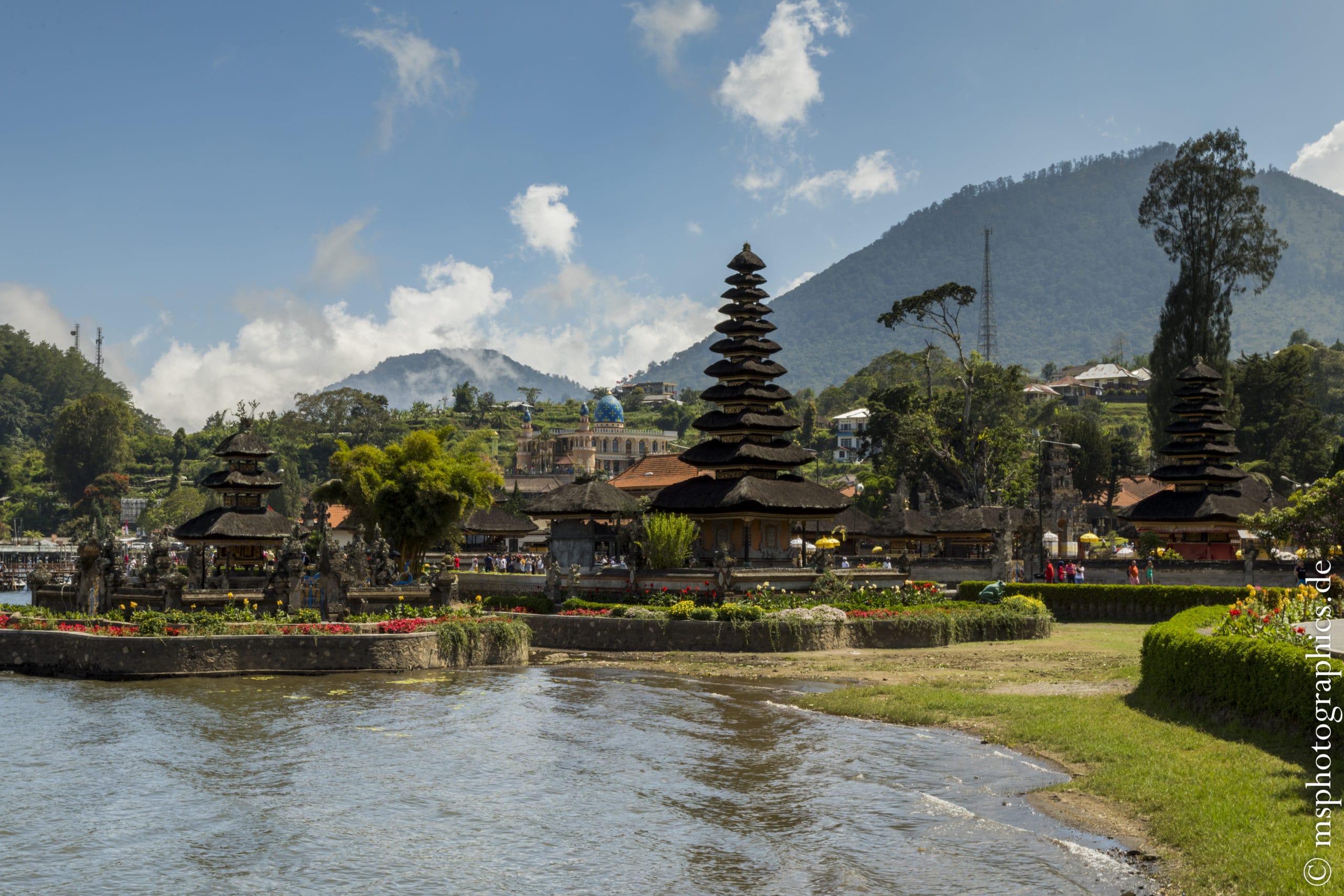
The temple complex Pura Ulun Danau Beratan is located on the shores of Lake Danau Beratan and for me, not only because of its popularity, but much more because of its location with the mountain panorama in the background, it is one of the most beautiful temples on the island of Bali.
The accommodation Kamandalu Ubud:
The next destination was Ubud, where the accommodation Kamandalu Ubud was reserved.
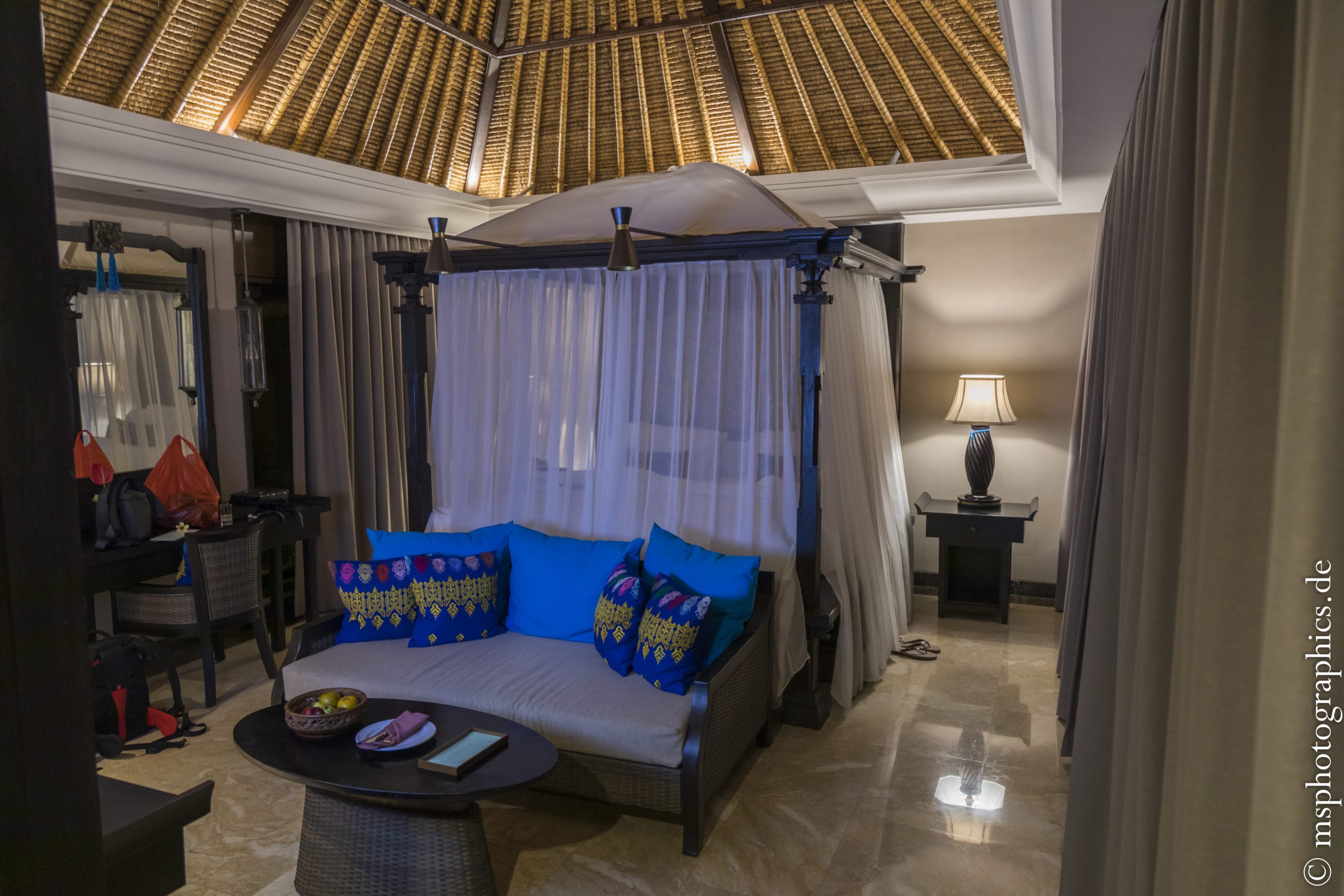
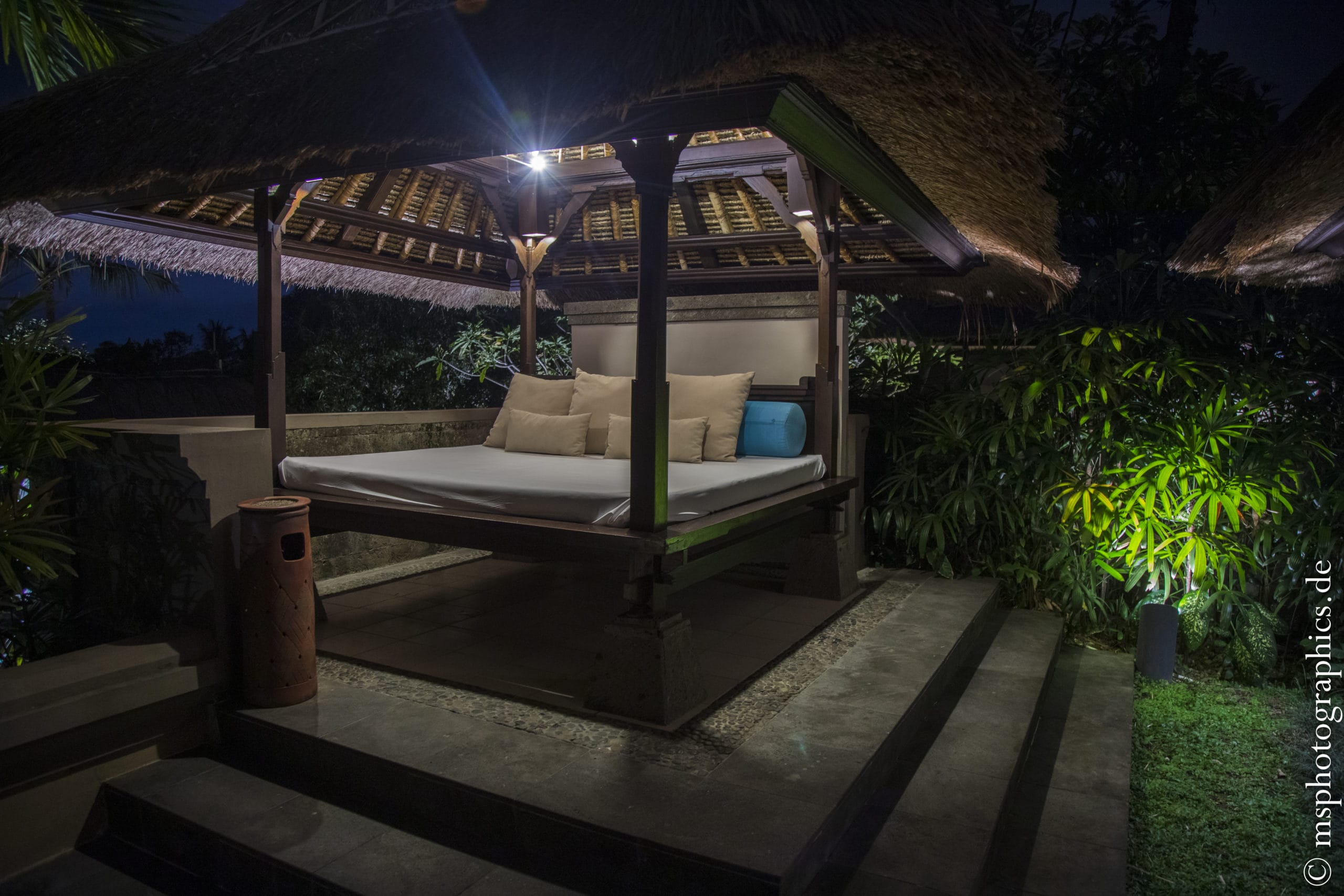
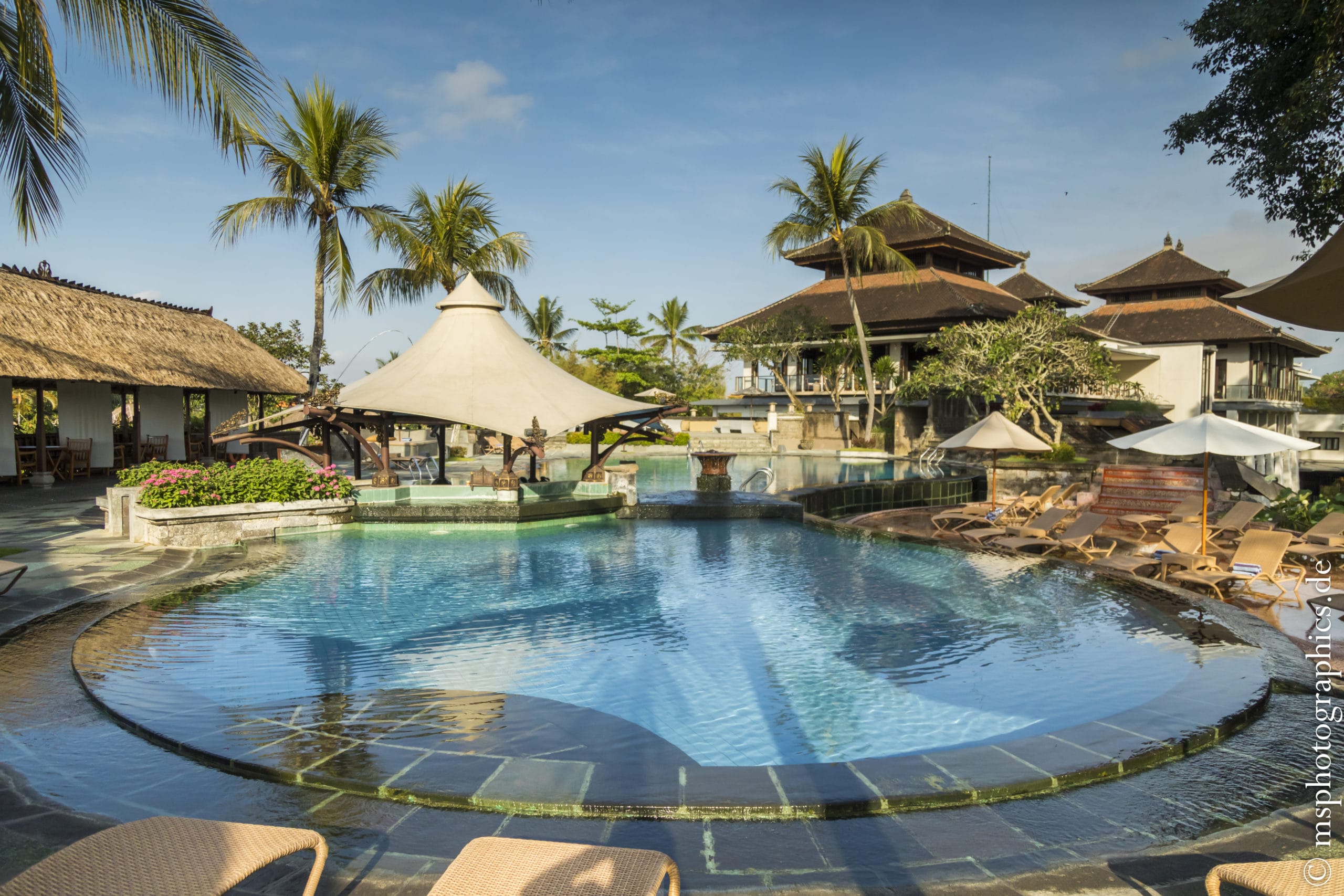
The Kamandalu Ubud is also a fantastic hotel to relax and enjoy. There are restaurants with excellent food by the hotel's pool. An excellent breakfast is also offered. If you want, you can have your food served in the water in a separate pool.
Sights in and around Ubud:
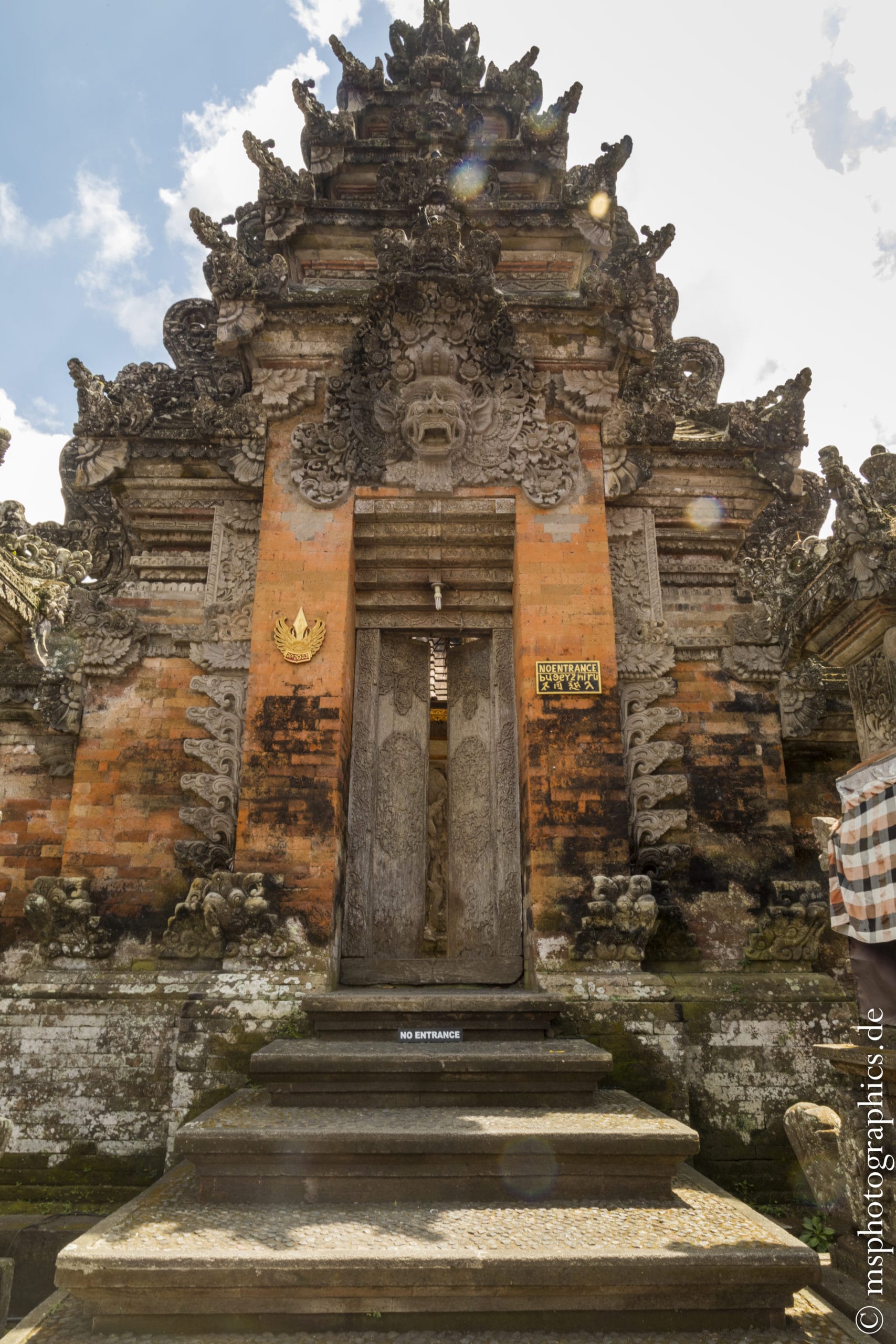
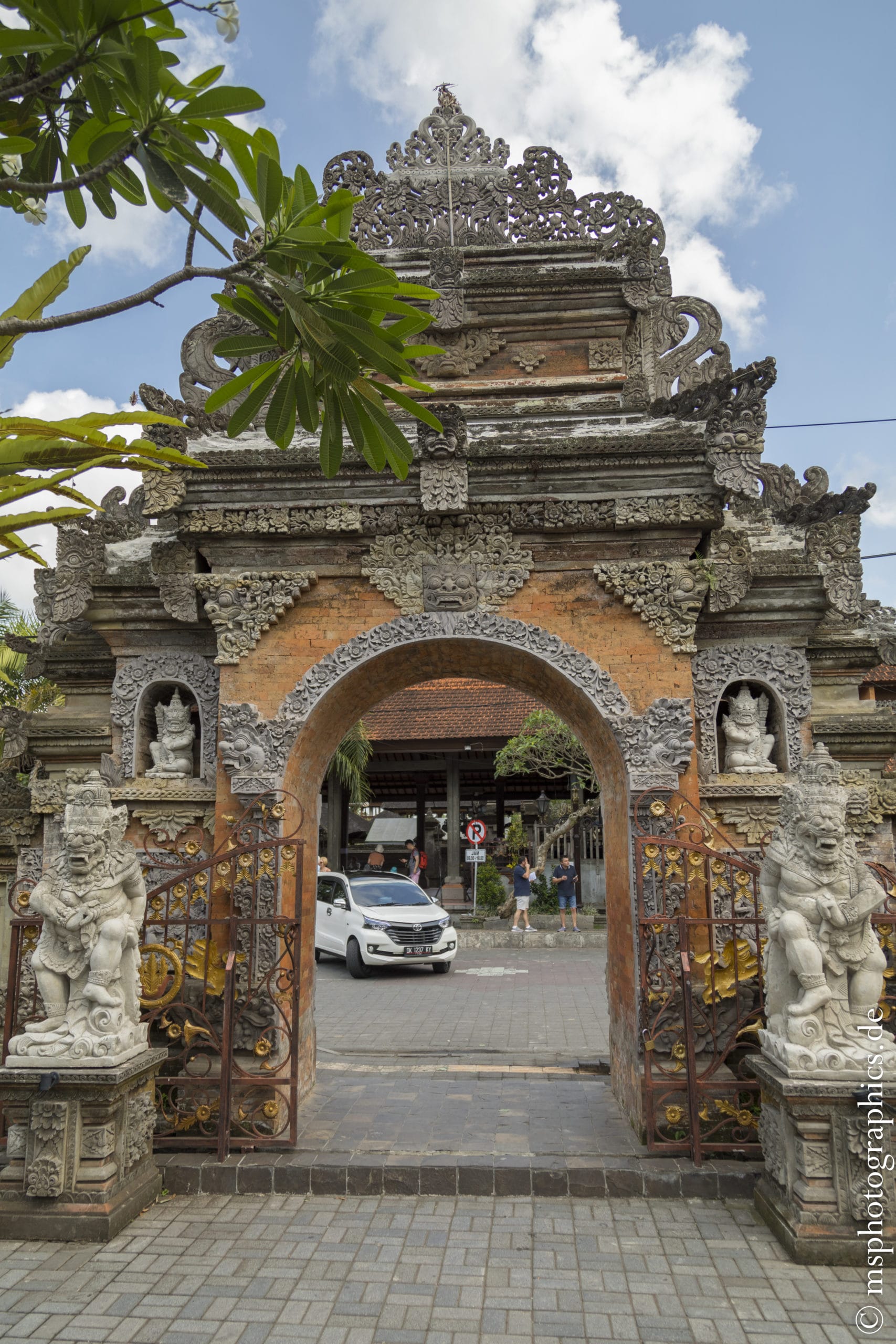
The Ubud area has quite a few attractions to offer. Among other things, the historic Ubud Palace is architecturally a real eye-catcher. If you want, you can buy traditional Indonesian souvenirs at the Ubud Market.
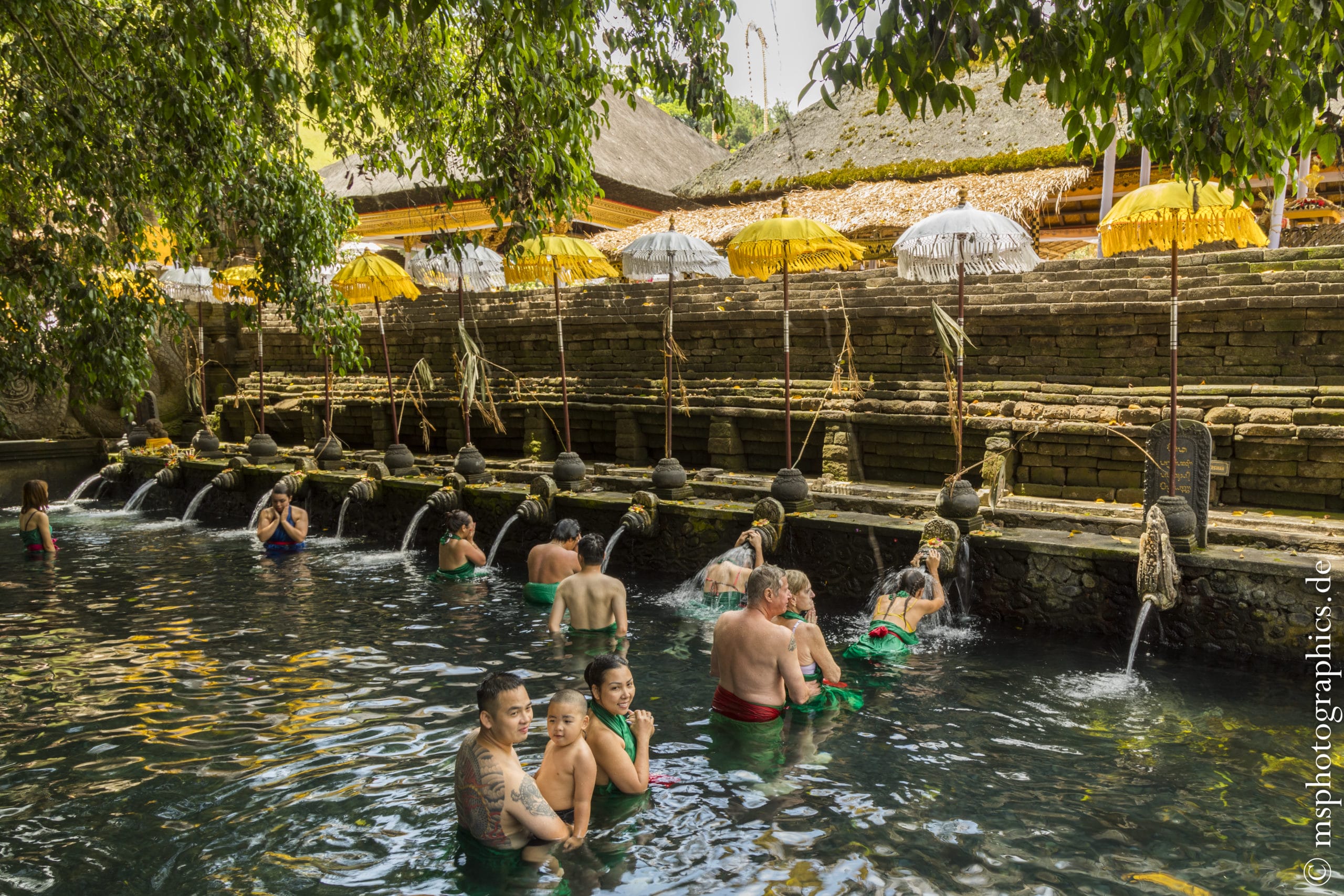
Spiritually it continues at the Tampak Siring water temple. Here you can wash your body in crystal clear spring water - of course only if you wear traditional prayer clothes.
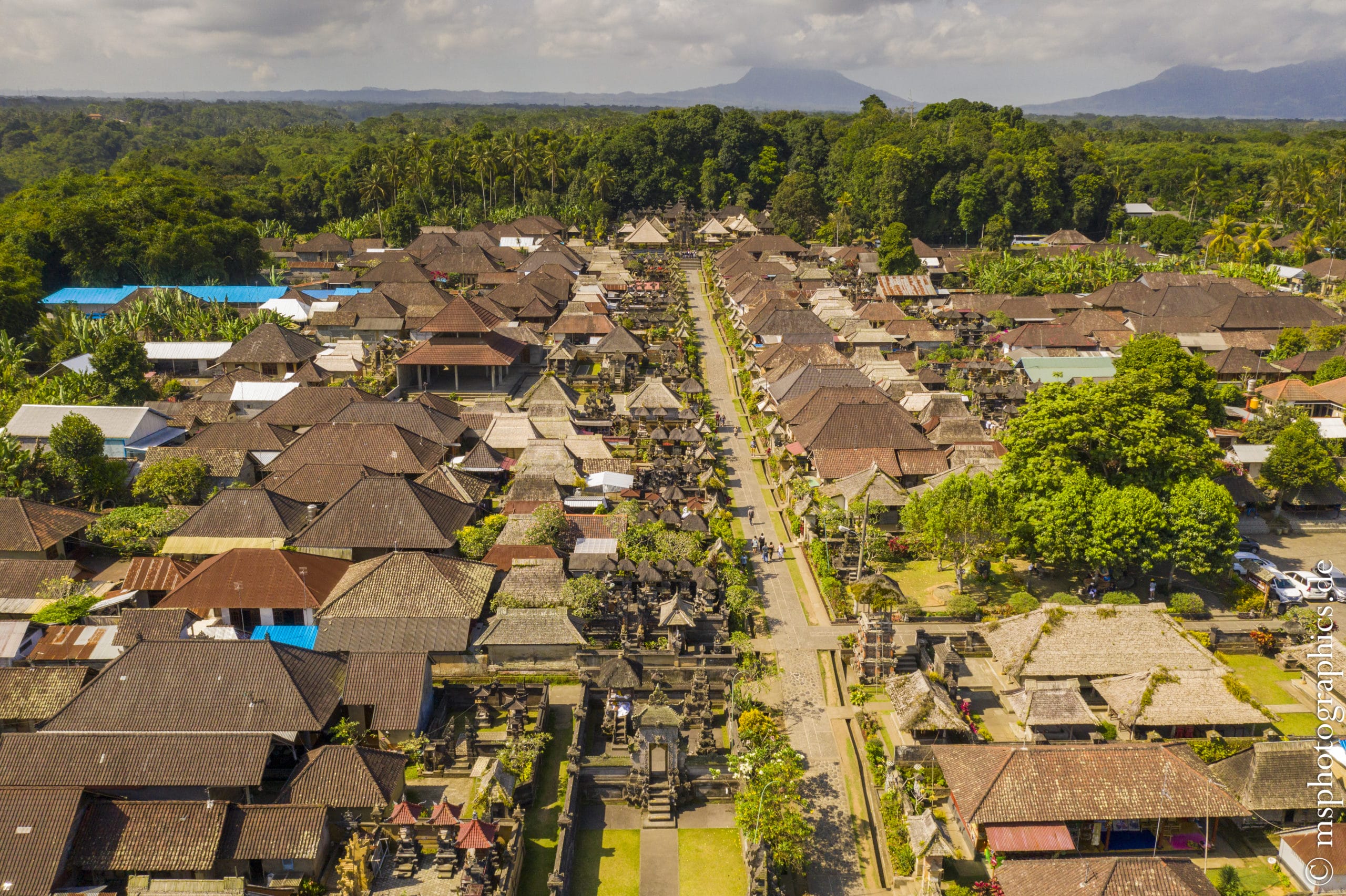
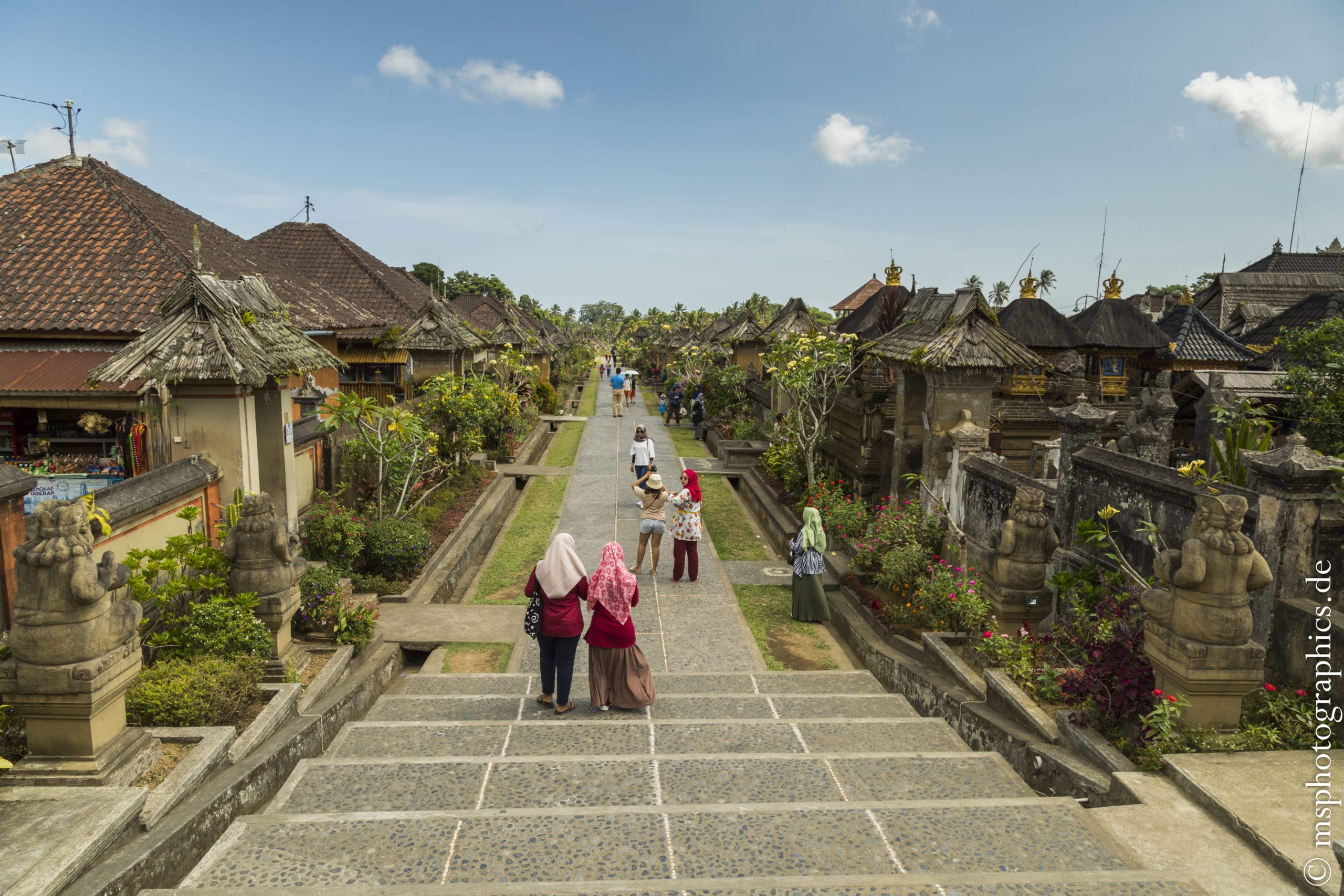
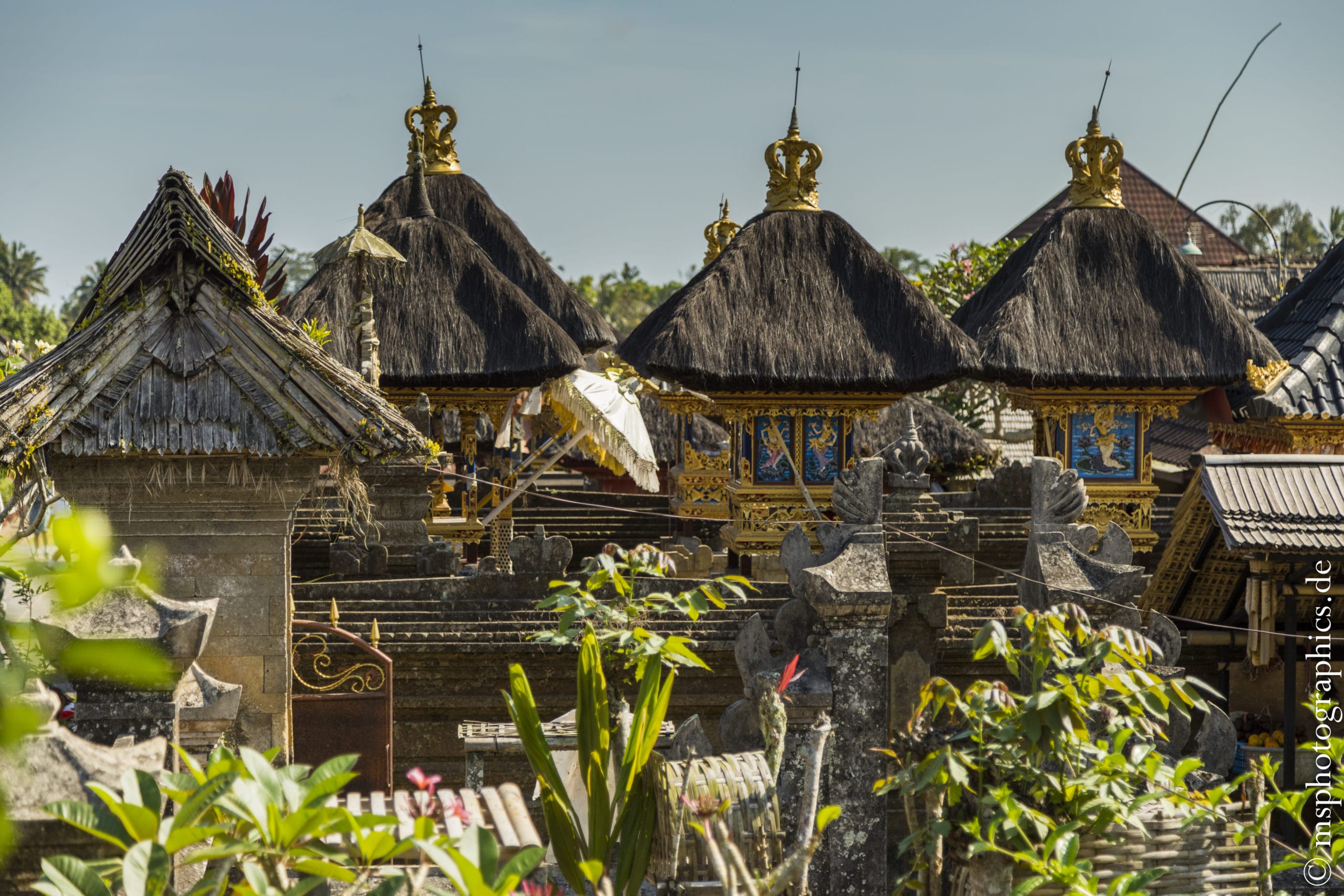
A visit to an old Balinese village was less religious, but just as culturally interesting. To see how the residents used to and still live here is impressive. Each of the houses has its own temple integrated into the property. Here it becomes clear how important religion is in Bali.
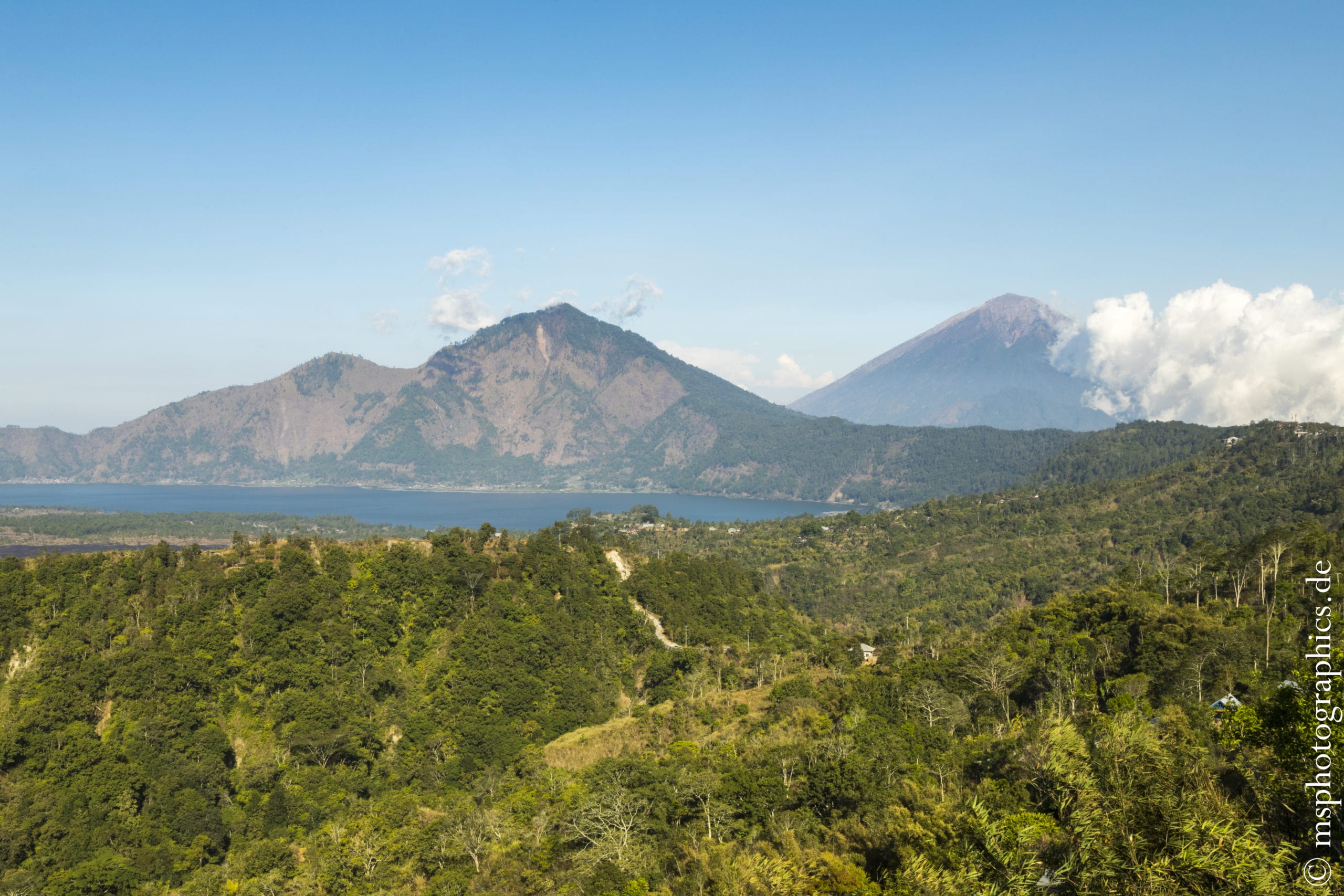
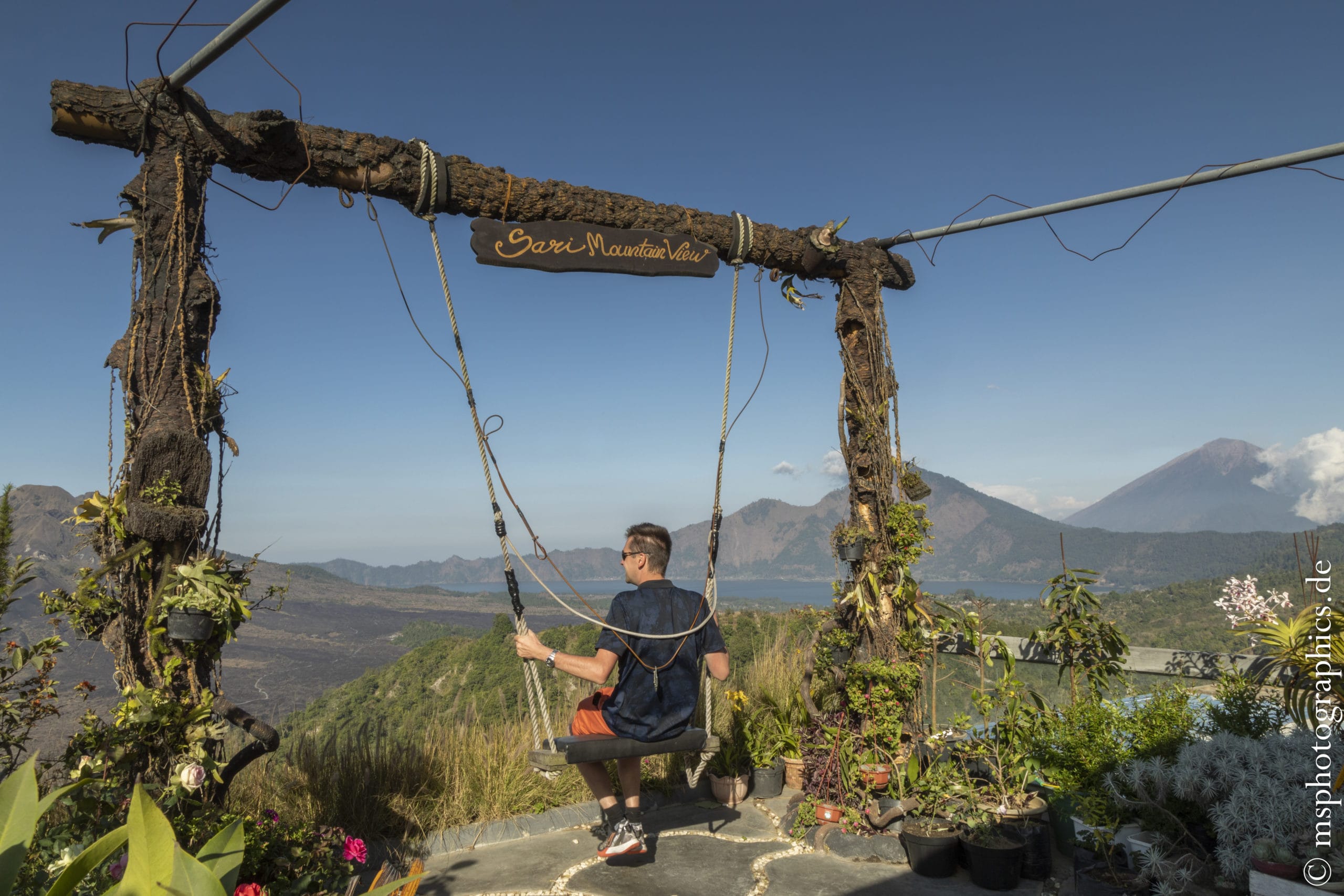
The route continued via Kintamani, from where you have a wonderful view of the Gunung Agung and Gunung Batur, the active volcanoes of Bali, to the rice terrace of Tegallalang.
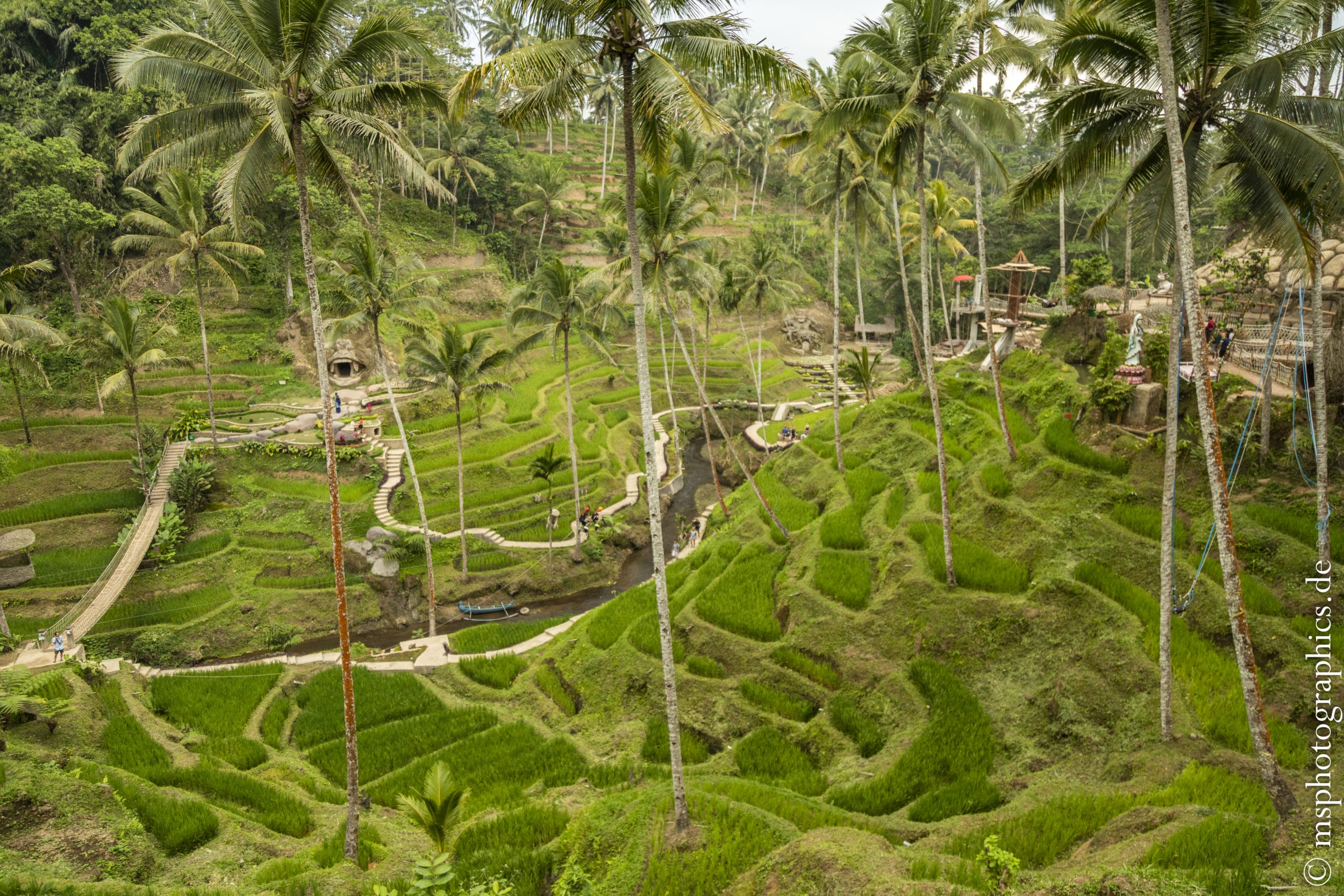
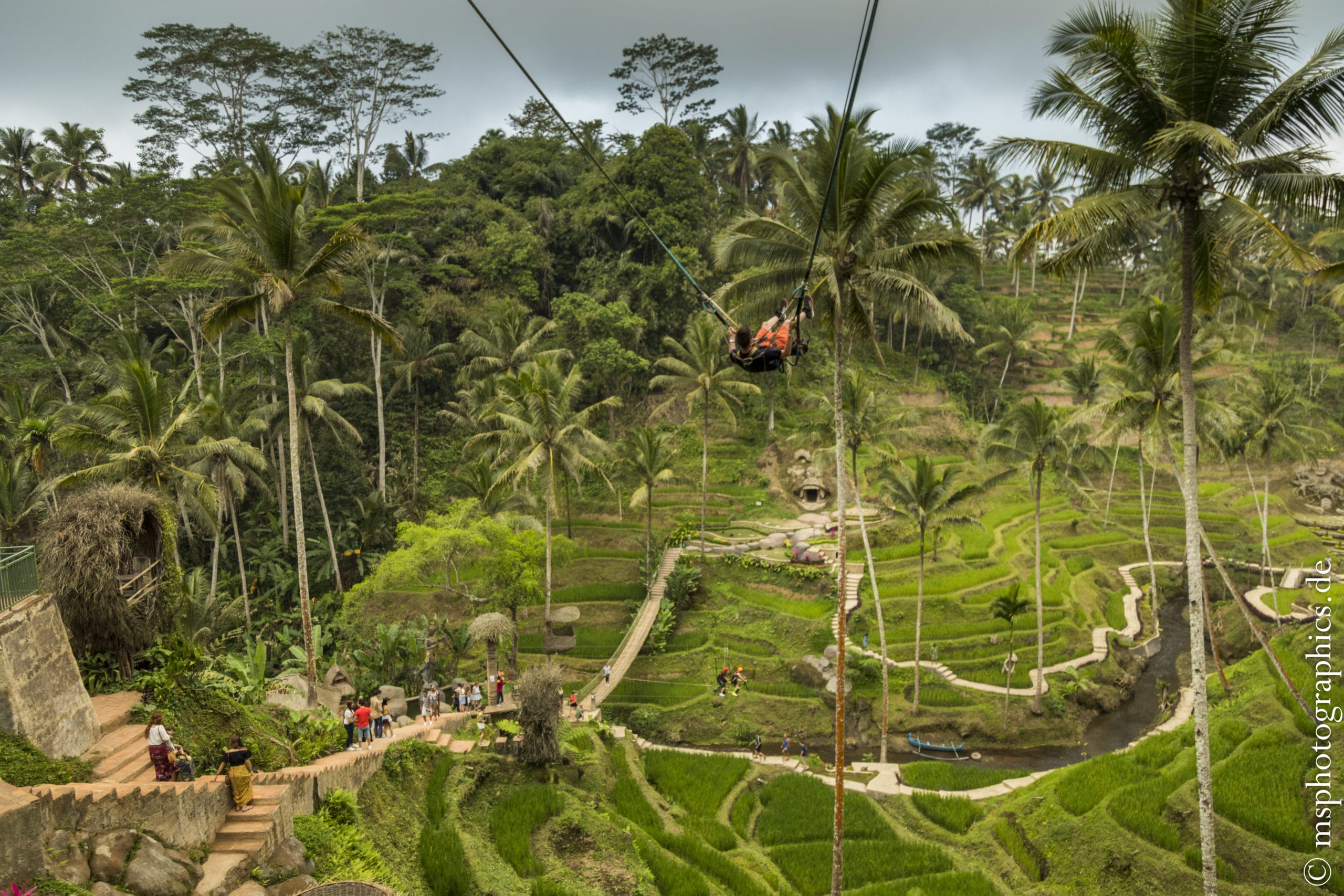
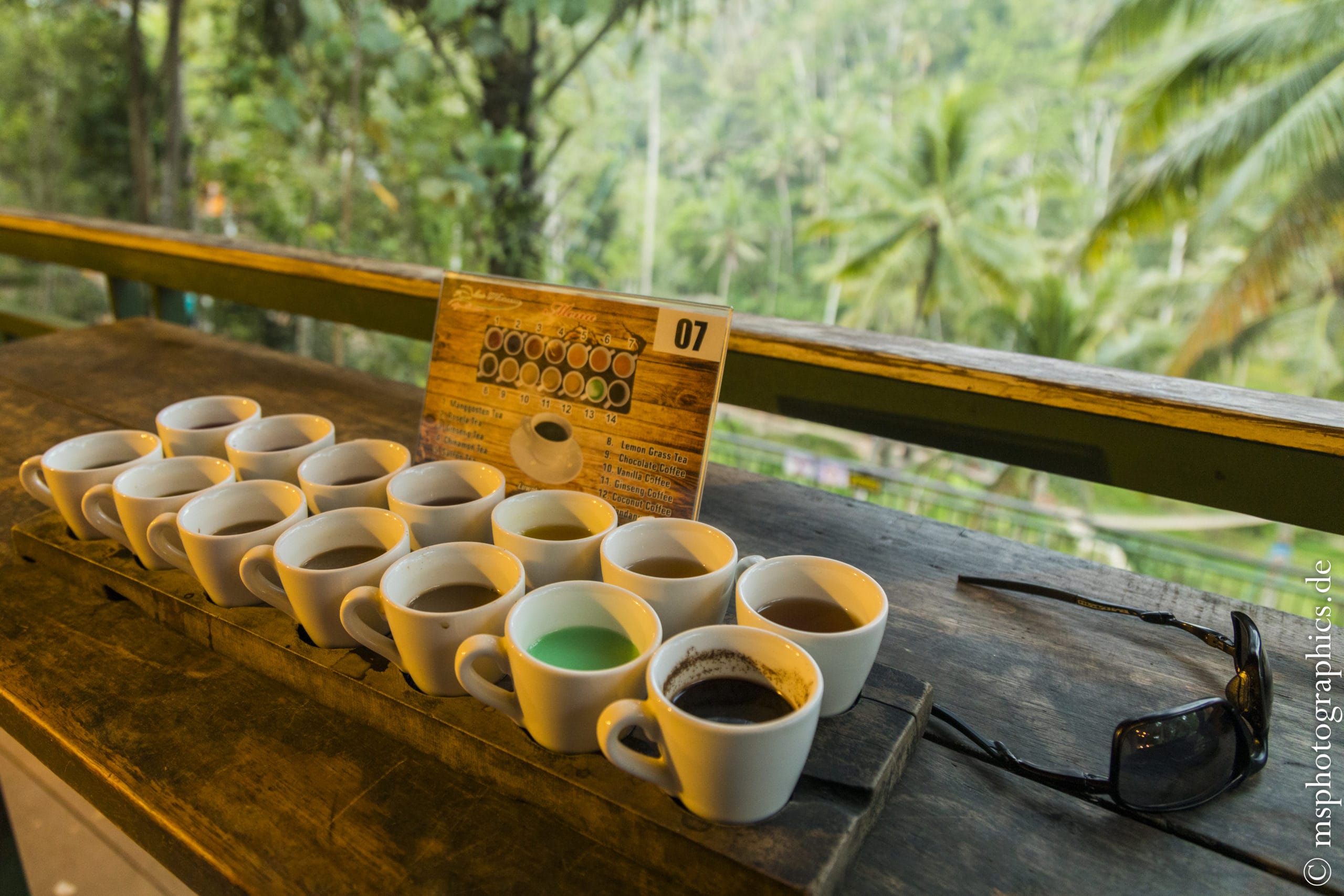
Surrounded by tropical forest, overgrown with palm trees, the Tegallalang rice terrace is located in hilly terrain. If you dare to try the famous Bali Swing, a swing over the rice fields, fastened between palm trees. At the end of the day, visitors can enjoy a culinary tasting of local coffee products. After the coffee tasting we went back to Kuta for the last two nights in the accommodation “The Anvaya Beach Resort Bali”.
The southern peninsula of Bali:
A tour around the southern peninsula of Bali was planned for the penultimate day. In the morning the postponed dive was made up, then the individual sights of the peninsula were visited.
Diving in Bali - a fascinating experience
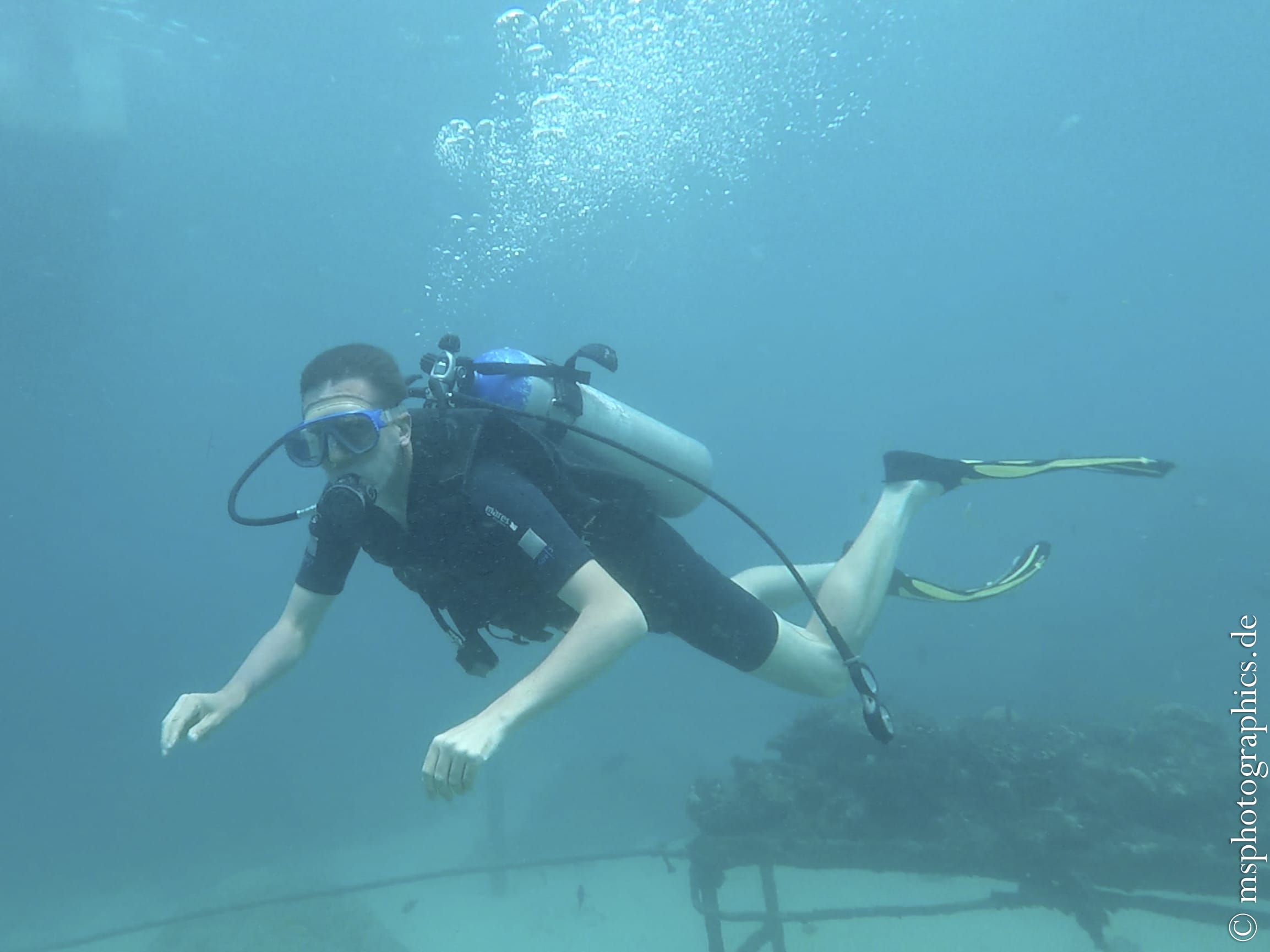
After breakfast at the Anvaya Beach Resort, the tour began in the direction of the southern peninsula of Bali, the Nusa Dua and the first stage goal was the catch-up dive at Tanjung Benoa Beach.
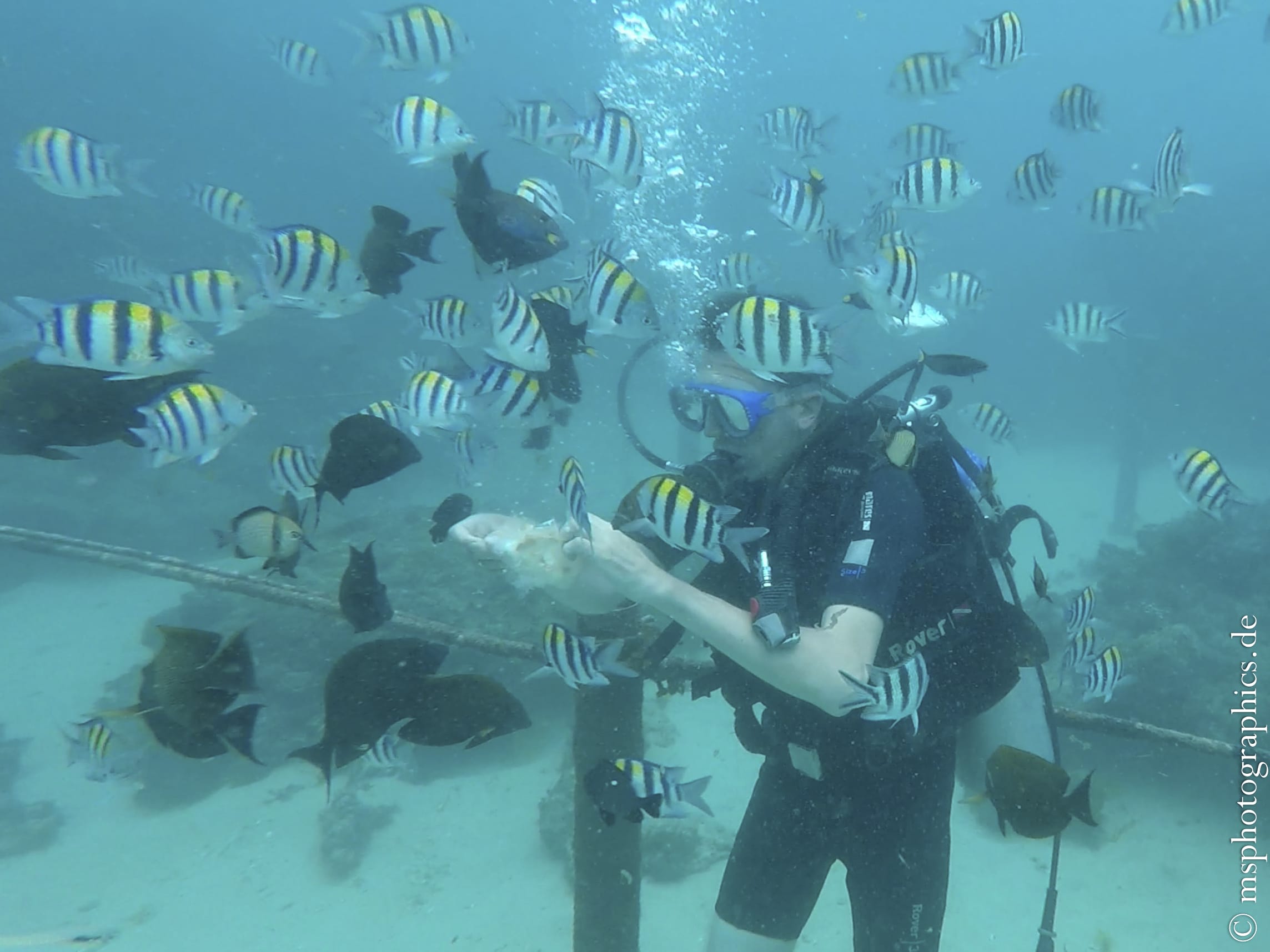
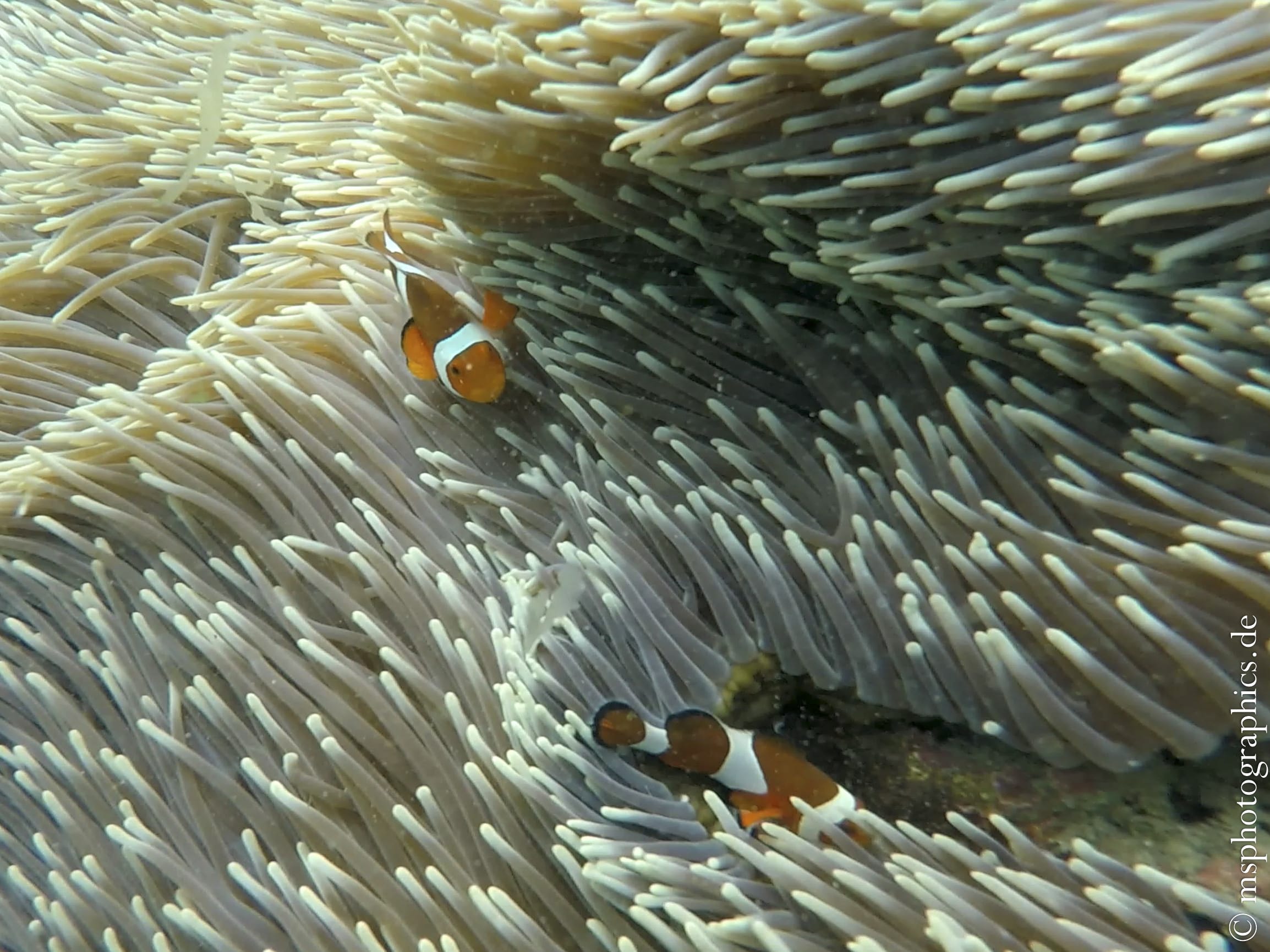
Even for absolute newbies, it is a great experience, a real adventure, to experience the underwater world up close and to see the biodiversity of the oceans with your own eyes. In addition, you quickly realize that diving is a pretty strenuous sport.
Sightseeing on Bali's small south peninsula
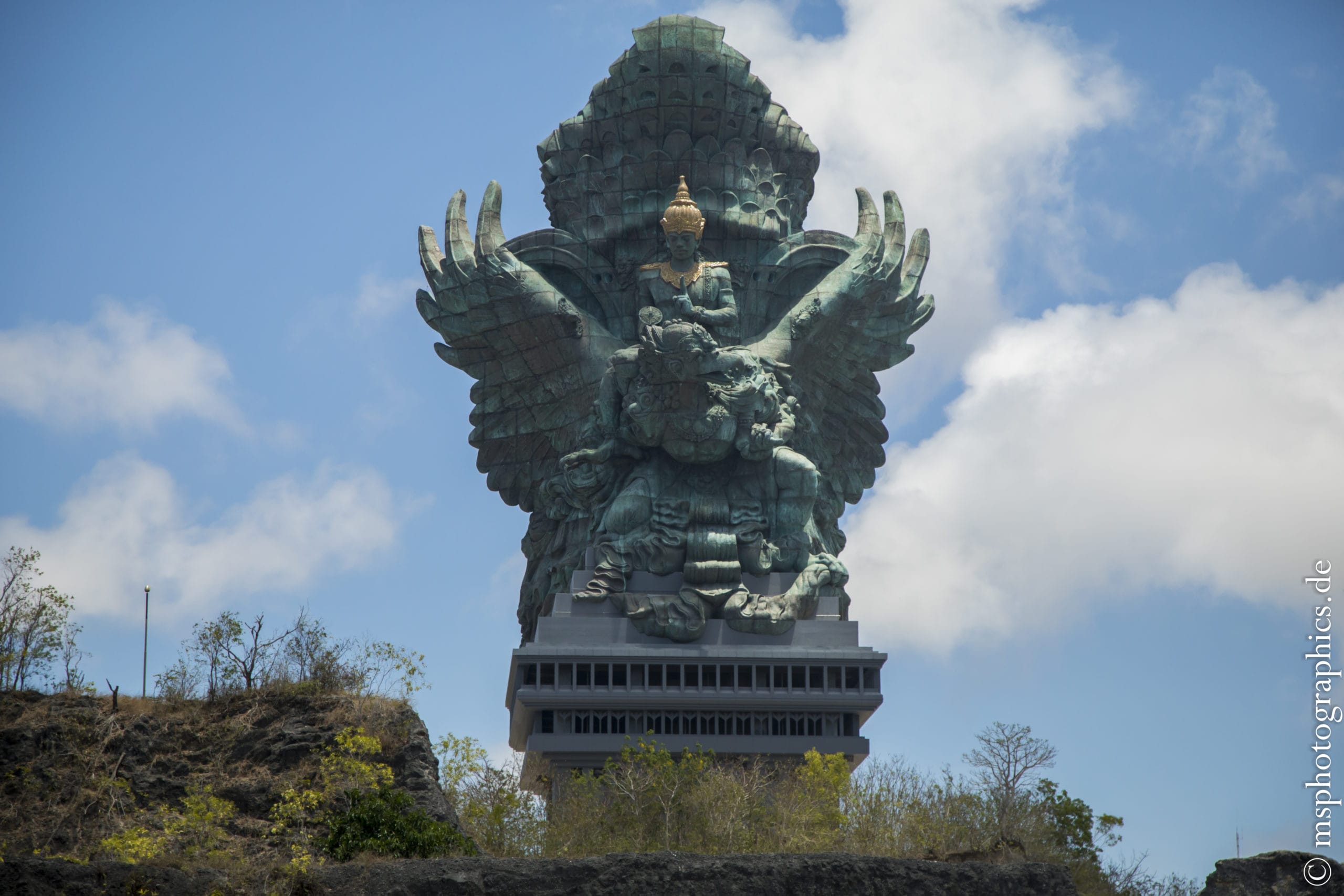
After the dive, the next sight, the GWK statue, was on the plan. For me personally, a destination that you don't necessarily have to have on your travel plan. The GWK statue is the symbol of Bali, a statue similar to the Statue of Liberty of New York. Viewing was not possible at the time of my visit. Perhaps the interior of the statue offers more than it appears from the outside.
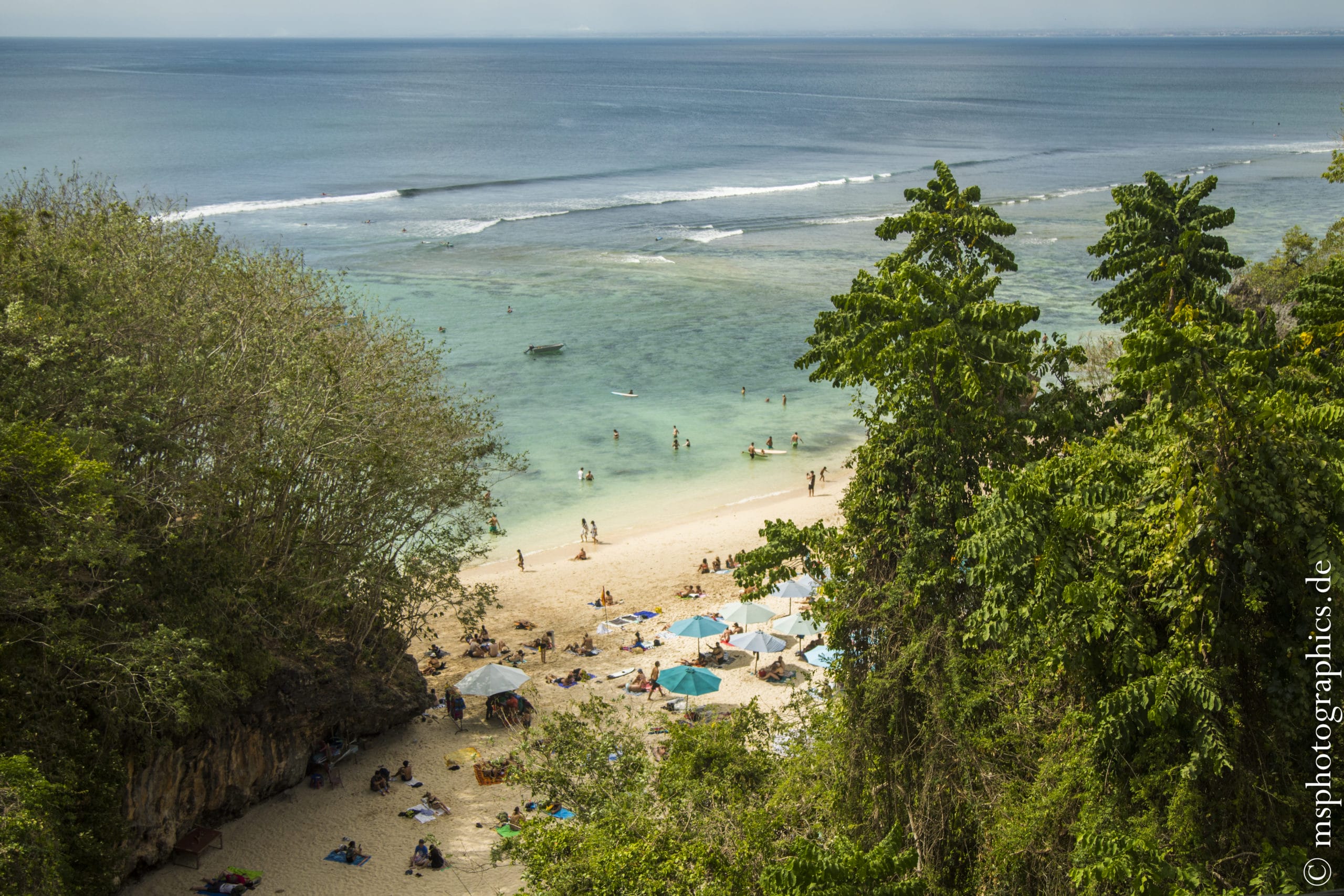
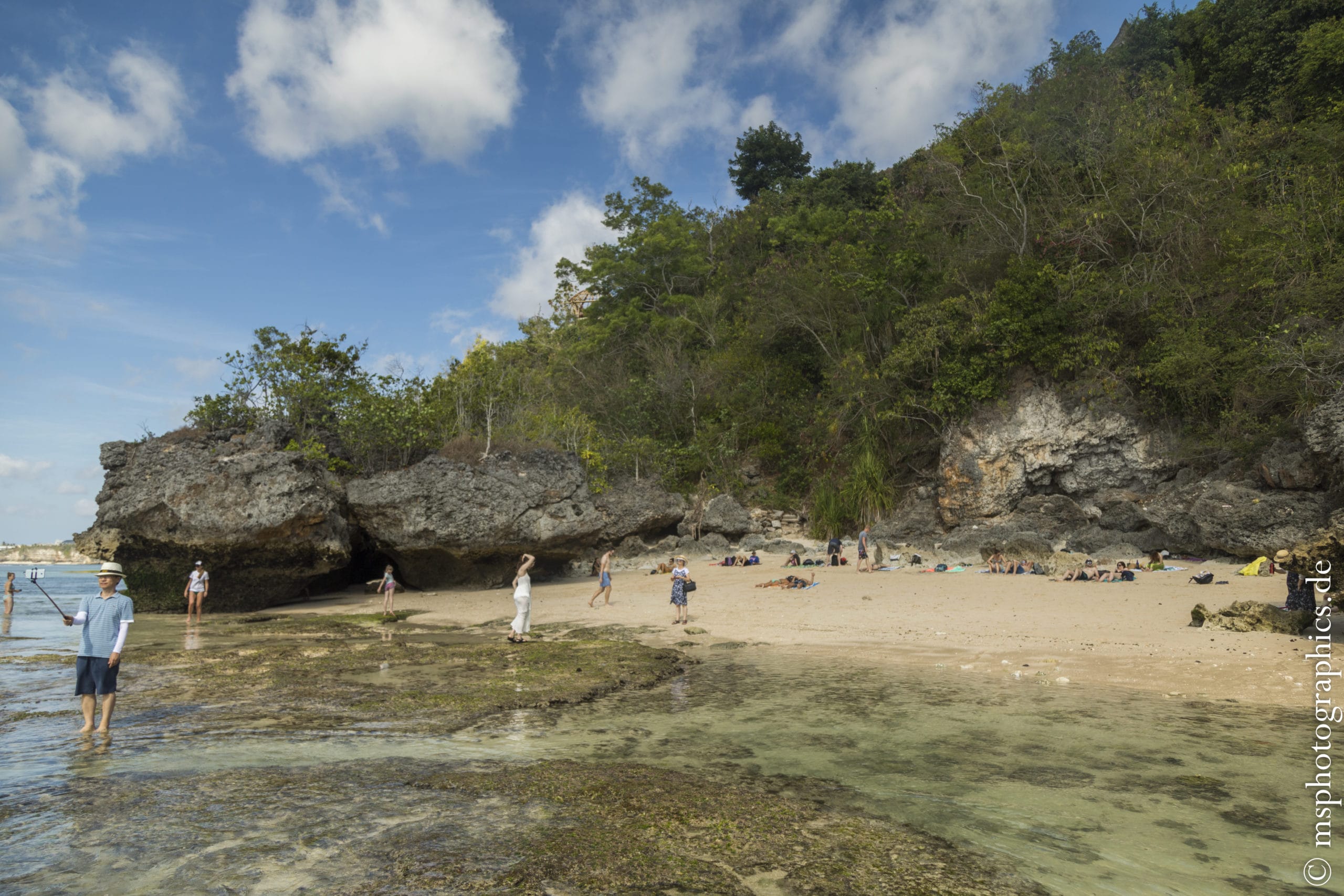
In the afternoon the tour led to Padang Padang Beach, a small, beautiful beach below rocky cliffs. Not too crowded and a nice place to linger and listen to the sound of the sea. After the break on the beach, the last sight of the trip was on the program. The temple complex of Uluwatu.
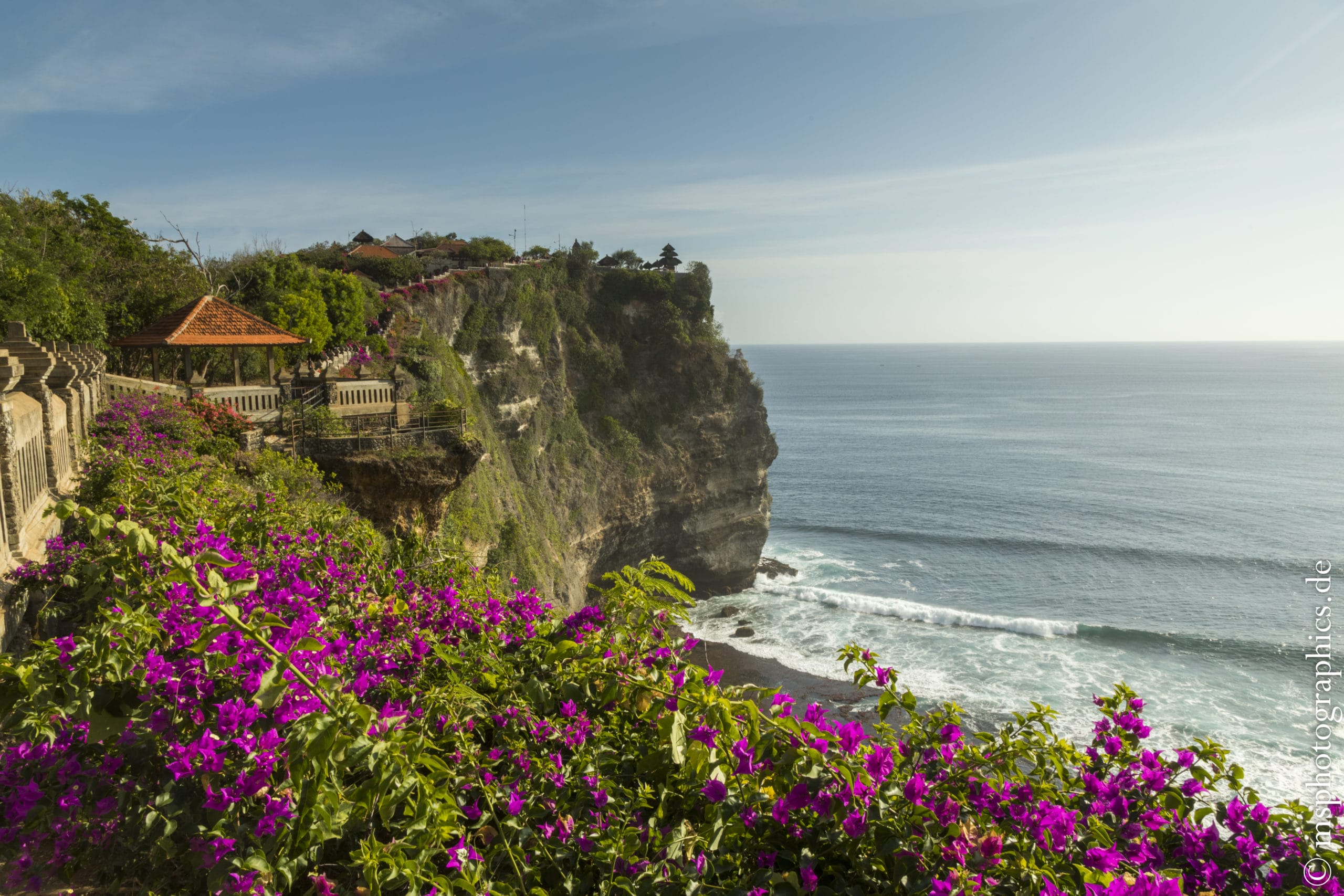
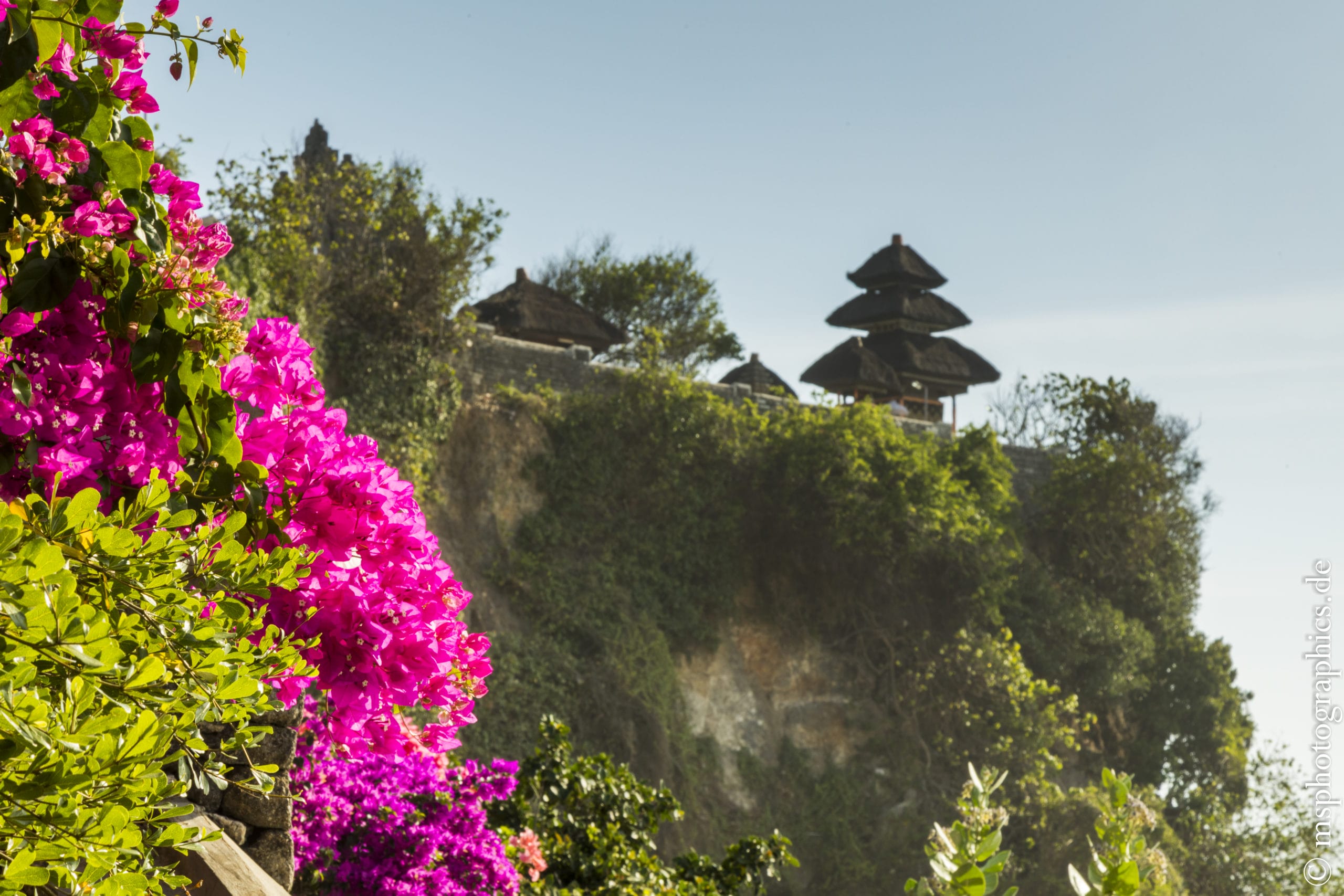
The temple complex of Uluwatu is also a temple in traditional Balinese style. What makes it special is its location, relatively exposed on the steep coast in the extreme southwest of Bali. You should especially watch out for the wild monkeys, who will dispute everything that is not safely stowed away.
The last day, day of departure:
The last day was at leisure, with no fixed program. In the morning there was time to have breakfast and relax in the hotel and the luggage was prepared for the return flight in the evening.
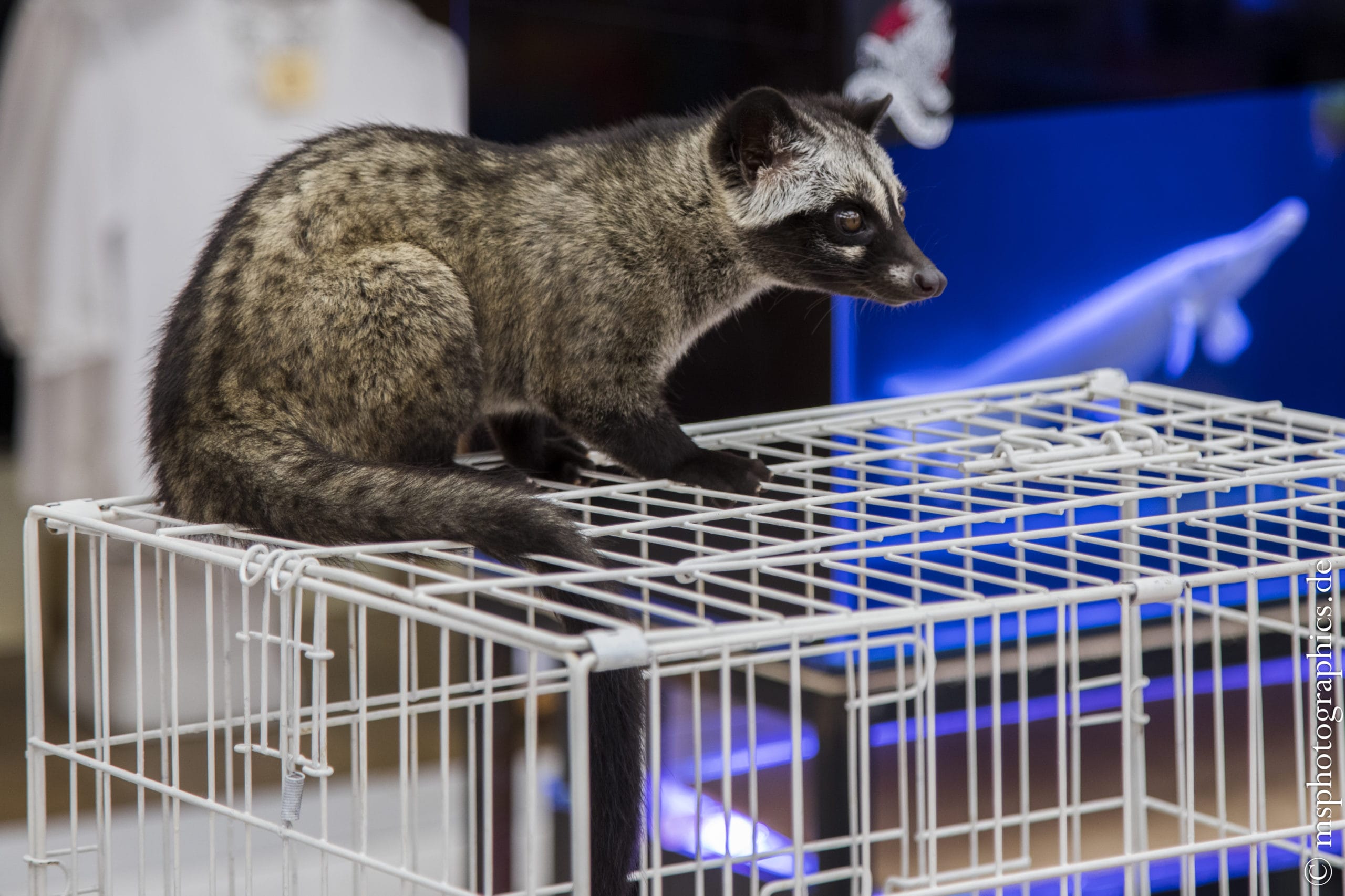
In the afternoon we went shopping. Coincidentally, in one of the nearby malls there were still some Luwaks, crawling cats that are used for the production of the expensive Luwak coffee, to be seen.
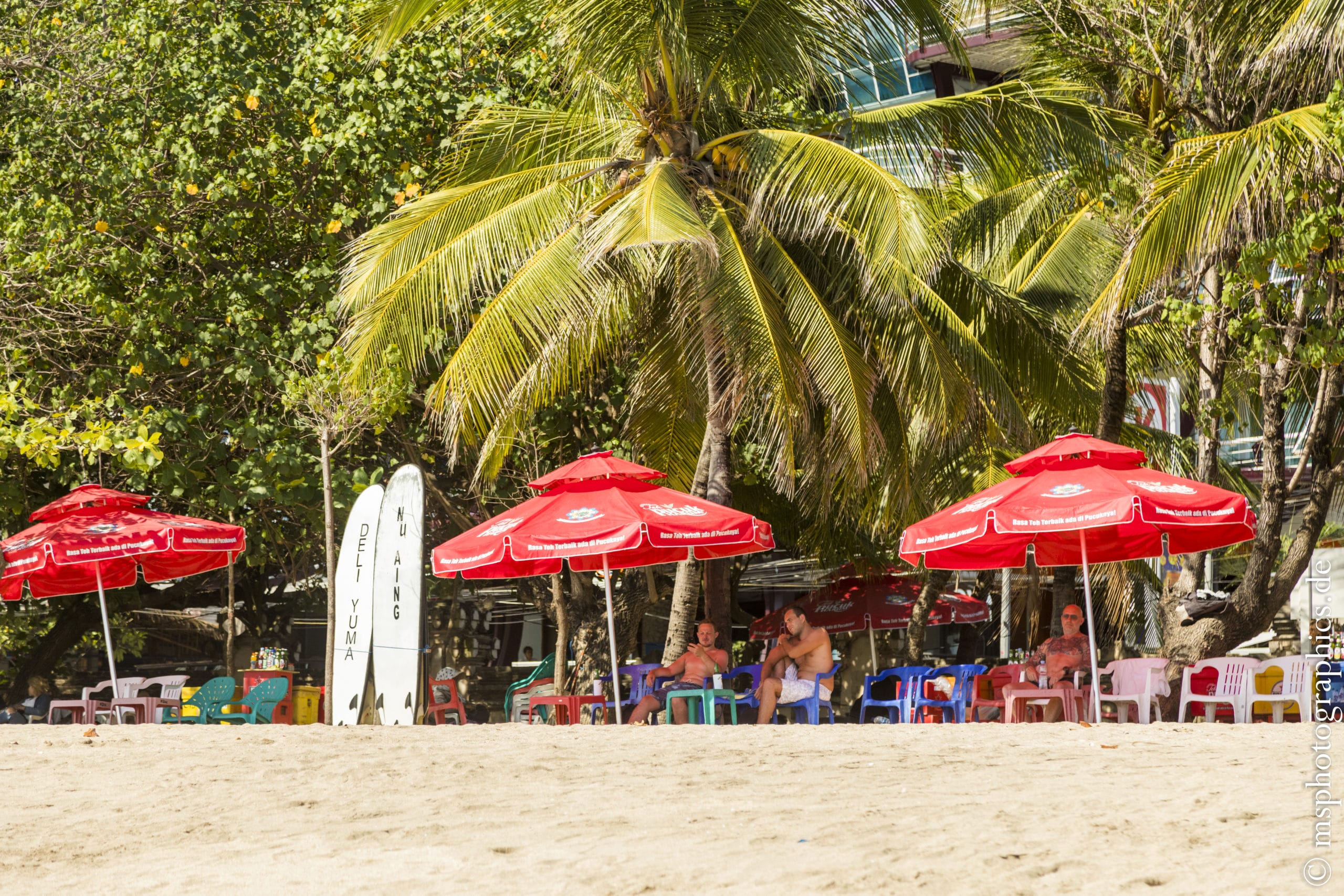
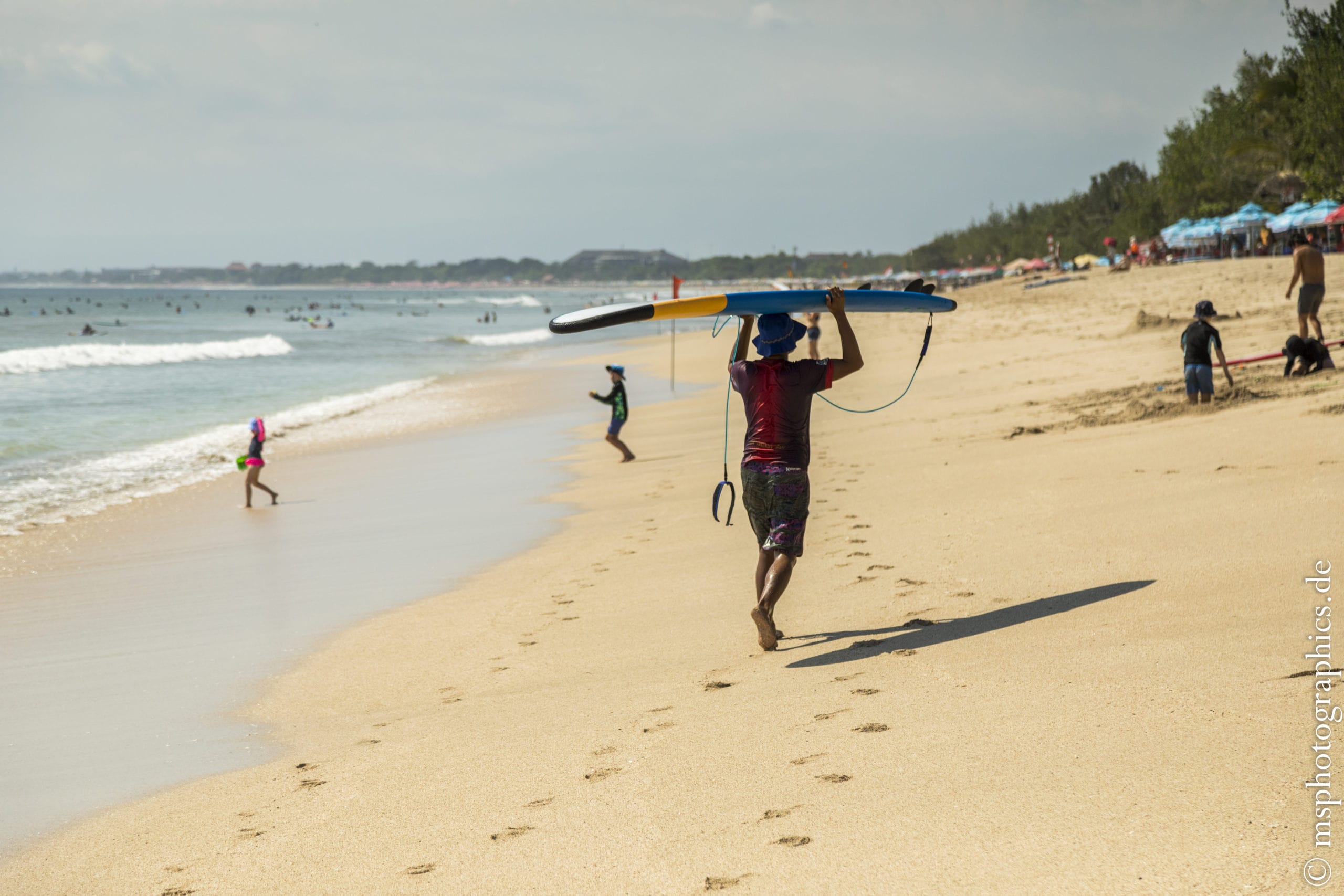
Then it was time to relax and stroll along the beaches from Kuta Beach up to Double Six Beach.
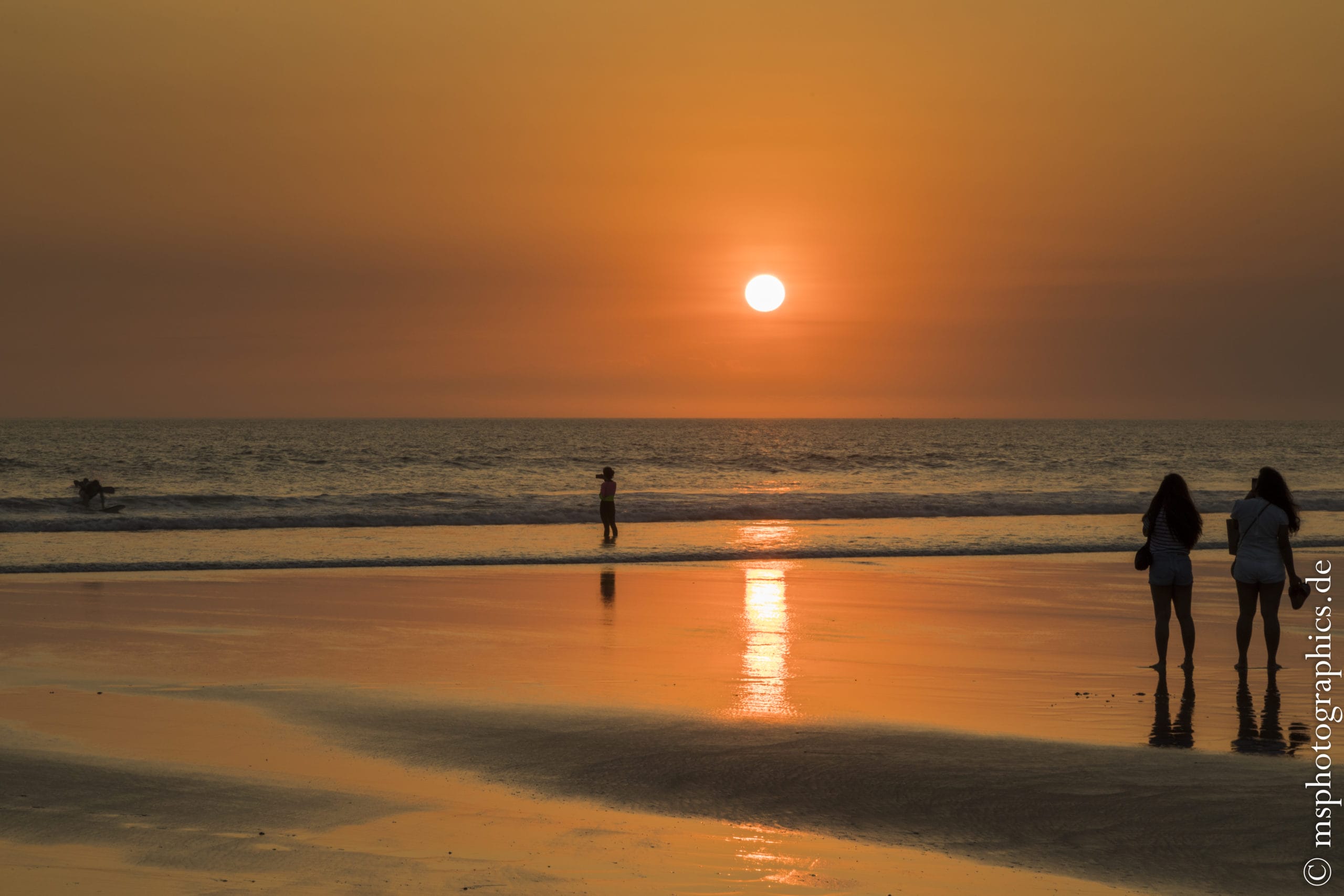
There was a fantastic sunset to see before we went back to the airport after dinner and the flight back to Beijing took off.
Conclusion:
Bali & East Java in 12 days was a dream. The first days in Java were really exhausting with the tour of the volcanic landscapes. Nevertheless, the impressions made up for the hardships.
More quiet and more relaxed, thanks in part to the impeccable hotels, Bali continued with cultural, spiritual and culinary highlights. Rounded off and embedded in a breathtakingly beautiful landscape and nature, the trip was an unforgettable experience, also thanks to the perfect pre-organization.
You could well and gladly extend the duration to 14 days or even three weeks, but this trip far exceeded my expectations.
This report is part of my series Southeast Asia travel reports – there you will find an overview of all countries.
0 Comments